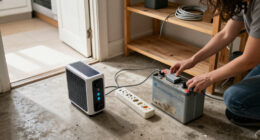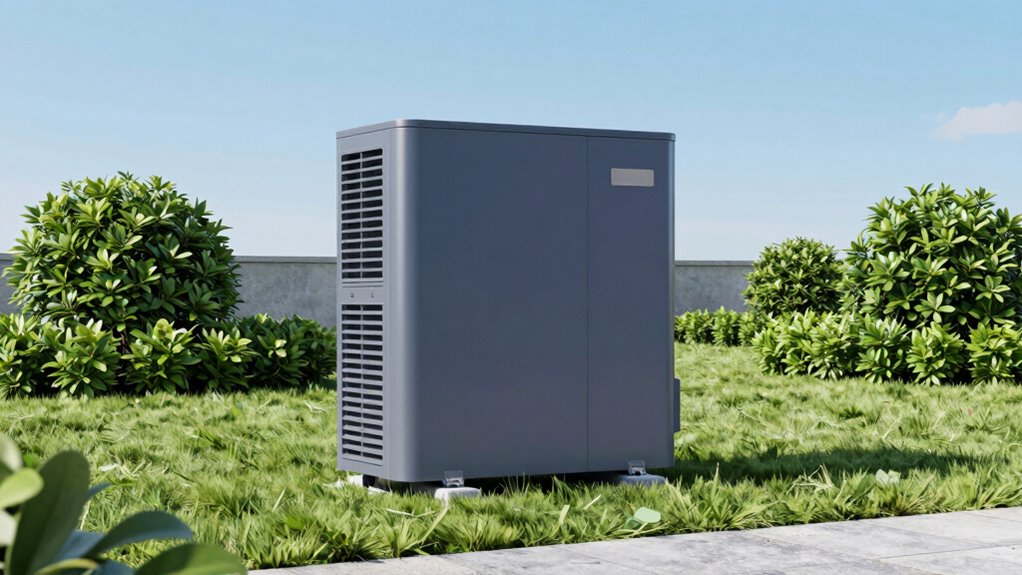

Choosing between an above-ground or in-ground heat pump depends on your needs, climate, and budget. Above-ground units are easier and cheaper to install, making them a good choice if you want a quick setup and less invasiveness. In-ground systems cost more initially but offer higher efficiency and durability long-term, especially in stable underground temperatures. To find the best fit for your home and discover key factors influencing each option, explore further details below.

Get backup power and energy gear delivered free with Prime
- Fast, free delivery on millions of items
- Prime Video, Amazon Music and more included
- Member-only deals all year
Key Takeaways
- Consider installation costs: above-ground units are cheaper and easier to install, while in-ground systems have higher upfront costs but lower long-term expenses.
- Assess space and site conditions: above-ground units require proper airflow and noise mitigation, whereas in-ground systems need adequate space for burying loops.
- Evaluate climate factors: in-ground systems perform better in extreme temperatures due to underground temperature stability, while above-ground units may be affected by weather.
- Prioritize long-term efficiency: in-ground geothermal systems offer higher efficiency and durability, potentially saving money over time.
- Match system choice to your needs: choose above-ground for simplicity and minimal disruption, or in-ground for maximum efficiency and longevity.
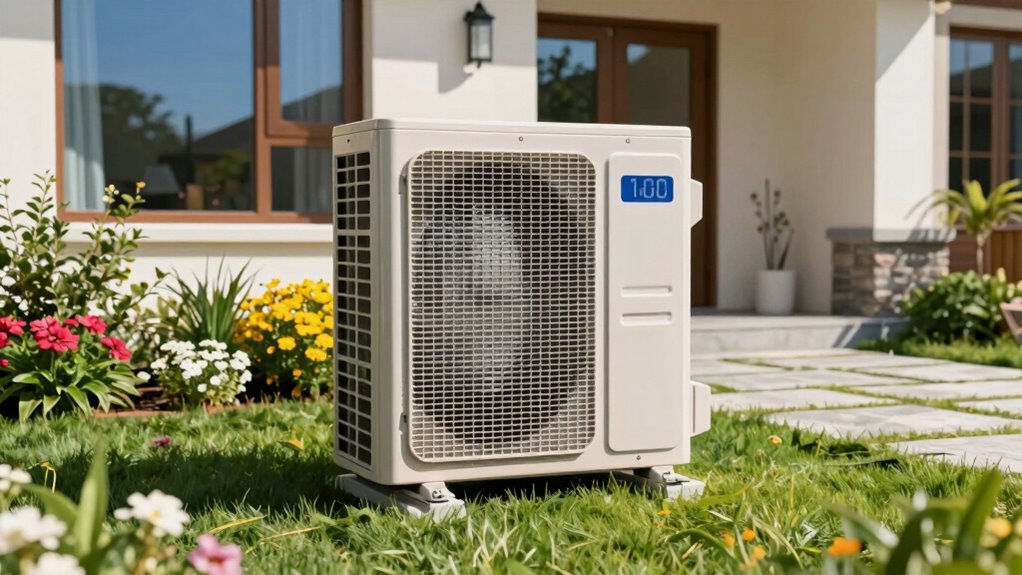
Choosing the right heat pump can considerably impact your home’s comfort and energy bills. When you’re deciding between above-ground and in-ground options, understanding how each affects energy efficiency is essential. Energy-efficient heat pumps can lower your heating and cooling costs, making your home more comfortable year-round. To maximize these benefits, you need to contemplate installation considerations carefully. The placement, setup, and type of heat pump all influence how well your system performs and how much it costs to operate over time.
Choosing the right heat pump impacts comfort, energy bills, and long-term efficiency through proper installation and placement.
Above-ground heat pumps are typically easier to install and maintain. They sit outside your home, similar to traditional air conditioning units, which means you don’t need extensive excavation or groundwork. Because of their placement, these units are often more accessible for repairs and regular maintenance. However, their performance can be affected by extreme weather conditions, such as high winds, snow, or debris, which may reduce energy efficiency. Proper installation considerations for above-ground units include ensuring good airflow around the unit, a solid foundation to prevent shifting, and positioning that minimizes noise disturbance to your home or neighbors. Additionally, climate considerations play a significant role in determining the overall efficiency and longevity of your system.
In-ground heat pumps, often geothermal systems, are installed below the frost line in your yard or property. They leverage the stable underground temperature, which tends to be more consistent than outside air, resulting in higher energy efficiency. Over time, this can translate to lower energy bills and a more reliable heating and cooling system. But installation considerations for in-ground units are more complex and costly initially. You need adequate space, proper site assessment, and professional installation to guarantee the loop system is correctly buried, sealed, and insulated. This upfront investment pays off through superior efficiency and longevity, but it’s essential to weigh these factors against your budget and property conditions. Additionally, understanding the microplastics in dust that can settle on outdoor units is important for maintaining optimal performance. Proper maintenance, including keeping outdoor units free of debris and dust, can further enhance efficiency.
Ultimately, your choice depends on your home’s specific needs, local climate, and available space. Above-ground units may suit those seeking a straightforward, less invasive solution, while in-ground systems appeal to homeowners prioritizing long-term efficiency and durability. Whichever you choose, focus on proper installation considerations to optimize energy efficiency and ensure your heat pump performs reliably for years to come. Your decision should balance initial costs, ongoing energy savings, and the long-term comfort of your home.
As an affiliate, we earn on qualifying purchases.
Frequently Asked Questions
What Is the Typical Lifespan of an Above-Ground Heat Pump?
An above-ground heat pump typically lasts around 10 to 15 years. You’ll notice that its efficiency comparison to in-ground models might decline over time, but it usually maintains lower noise levels, making it a quieter choice. Regular maintenance can extend its lifespan, ensuring you get the most out of your investment. Keep an eye on its performance, and replace it when efficiency drops considerably or noise levels increase.
How Much Does Installation Cost for Inground Systems?
Think of installation costs for inground systems as building a castle in the sand—more involved than above-ground options. Typically, you’ll spend between $10,000 and $25,000, depending on yard size and soil conditions. The installation process is more complex, requiring excavation and special equipment, which adds to the cost. Comparing this to above-ground systems, inground options are a bigger investment but can offer greater long-term efficiency.
Are There Specific Climate Conditions Better Suited for Each Type?
You’ll find that climate compatibility plays a big role in choosing between above-ground and inground heat pumps. Above-ground systems work well in milder climates, while inground units excel in colder areas due to their efficiency. Keep in mind, installation challenges can be higher for inground systems in harsh or rocky soils, so assess your local climate and soil conditions carefully to guarantee the best fit and performance for your home.
Can a Heat Pump Be Used for Both Heating and Cooling Effectively?
Think of a heat pump as a versatile artist, painting comfort across seasons. Yes, it can effectively handle both heating and cooling, making your home a climate-controlled sanctuary. Its energy efficiency shines brightest when switching modes, saving you money. When considering a cost comparison, you’ll find it’s a smart investment for year-round comfort, blending functionality with savings, much like a maestro conducting a harmonious indoor environment.
What Maintenance Is Required for Above-Ground Versus Inground Heat Pumps?
You need to perform regular maintenance on both above-ground and inground heat pumps to guarantee energy efficiency and manage noise levels. For above-ground units, keep filters clean, check refrigerant levels, and clear debris around the unit. Inground units require periodic inspections of the underground piping and ensuring the area remains clear. Both types benefit from professional tune-ups annually to maintain peak performance and quiet operation.
As an affiliate, we earn on qualifying purchases.
Conclusion
Think of choosing your heat pump like planting a tree. Above-ground units are the sturdy, accessible saplings, easy to tend and move if needed. Inground systems are the deep-rooted giants that stand the test of time, blending seamlessly into your landscape. Your choice depends on your yard and plans, but whichever you pick, you’re planting the foundation for cozy comfort and energy savings. With the right decision, your home will flourish, season after season.
As an affiliate, we earn on qualifying purchases.
As an affiliate, we earn on qualifying purchases.
Halloween Picks
halloween
As an affiliate, we earn on qualifying purchases.