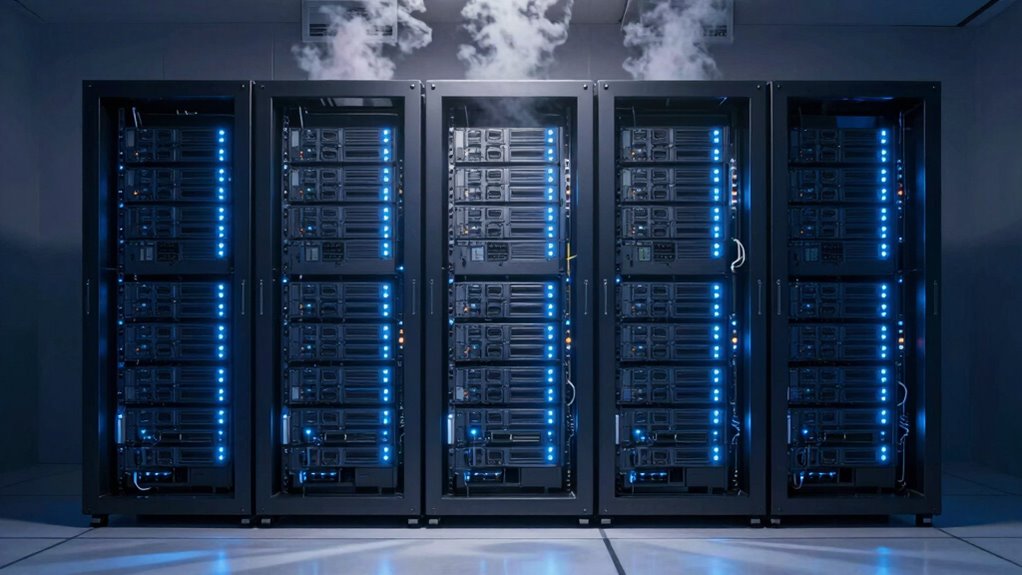

Cooling problems in your data closet can sneak up quickly if airflow isn’t managed properly or equipment isn’t spaced correctly. Hot spots develop fast, causing temperatures to rise unexpectedly and risking hardware failures. Poor airflow, clutter, or improper placement can make cooling efforts ineffective, leading to sudden overheating. Staying vigilant with sensors and adjusting setups proactively helps prevent costly downtime. Keep going to uncover how you can identify and fix these hidden cooling challenges before they catch you off guard.

Get backup power and energy gear delivered free with Prime
- Fast, free delivery on millions of items
- Prime Video, Amazon Music and more included
- Member-only deals all year
Key Takeaways
- Hot spots can develop quickly due to poor airflow management, causing rapid temperature increases.
- Equipment clustering or improper placement restricts airflow, leading to sudden overheating.
- Inadequate monitoring delays detection of temperature spikes, risking hardware damage.
- Recirculation of warm air accelerates temperature rise unnoticed.
- Lack of ongoing airflow adjustments allows small issues to escalate rapidly.
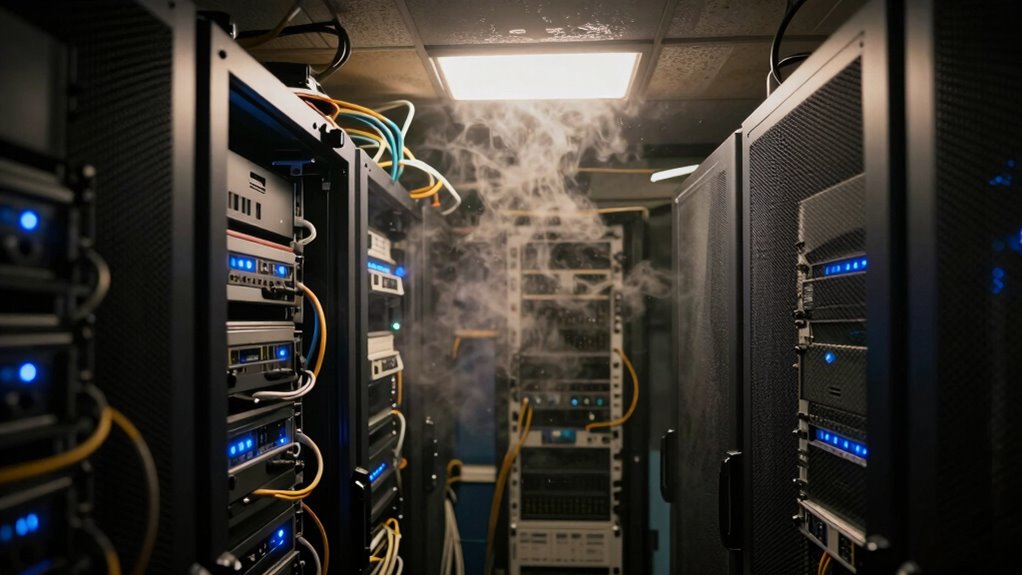
Data closets are critical to your IT infrastructure, but their cooling systems often face challenges that can jeopardize equipment performance. If you don’t actively manage airflow and equipment placement, you risk overheating components, which can lead to costly downtime or hardware failures. The key to avoiding this issues starts with understanding how to enhance airflow within your data closet. Poor airflow management creates hot spots where heat accumulates, and this can happen quickly if vents, fans, or cooling units aren’t correctly positioned. When airflow isn’t properly directed, cool air may bypass hot equipment, or warm air may recirculate, raising the temperature beyond safe levels. To prevent this, you need to set up your airflow pathways deliberately—using blanking panels to fill gaps, installing proper vents, and ensuring cool air flows to where it’s needed most. Additionally, understanding the importance of ethics in technology can help foster responsible decision-making around equipment updates and energy consumption, ultimately supporting sustainable cooling practices.
Effective airflow management prevents hot spots and overheating in your data closet.
Equally important is equipment placement. When servers and networking gear are clustered haphazardly or placed too close to heat sources, heat builds up rapidly. You should arrange your equipment in a way that promotes consistent airflow and minimizes heat buildup. Position heat-generating devices in designated racks or areas, leaving sufficient space between units to facilitate air movement. Avoid stacking equipment vertically or tightly packing racks, which restricts airflow and exacerbates heat retention. Also, consider the orientation of your equipment; aligning servers to promote front-to-back airflow ensures cool air enters and hot air exits efficiently. Proper equipment layout is crucial for maintaining optimal airflow and preventing hotspots. Regularly reviewing and adjusting your layout based on airflow patterns can help identify potential problem areas before they become critical. Incorporating airflow patterns analysis and temperature sensors can also reveal inefficiencies that might not be immediately obvious.
Regular monitoring is essential to catch temperature spikes before they become critical. Use temperature sensors and airflow meters to track hot spots and airflow patterns continuously. When you notice areas where temperatures climb or airflow becomes stagnant, take corrective action immediately—whether that means repositioning equipment, adjusting vents, or increasing cooling capacity. Remember, hot spots can develop unexpectedly, especially when new equipment is added or layout changes are made. Staying vigilant allows you to maintain ideal conditions and avoid the sudden, sneaky rise in temperature that can damage your hardware. Incorporating continuous monitoring practices ensures ongoing protection for your data center environment.
Ultimately, managing airflow and equipment placement isn’t a one-time task but an ongoing process. It requires constant attention and adjustments as your data closet evolves. When you prioritize airflow enhancement and strategic equipment placement, you create a more efficient cooling environment that prevents overheating, extends hardware lifespan, and keeps your IT operations running smoothly. If you ignore these principles, you risk facing sudden cooling failures that can disrupt your entire infrastructure, often when you least expect it. Proper planning and proactive management are your best defenses against the fast-approaching data closet cooling problem.
data center airflow management tools
As an affiliate, we earn on qualifying purchases.
As an affiliate, we earn on qualifying purchases.
Frequently Asked Questions
How Often Should Data Closet Cooling Systems Be Inspected?
You should inspect your data closet cooling systems at least quarterly. Regular checks help guarantee proper airflow management, preventing hotspots that can damage your hardware. During inspections, verify that airflow isn’t obstructed and that cooling units operate efficiently. Also, confirm your hardware redundancy plans are intact, so if one system fails, others can handle the load. Consistent inspections help catch problems early, saving you from costly downtime or hardware failures.
What Are the Signs of Imminent Cooling Failure?
A stitch in time saves nine, and spotting cooling failure signs early can save your equipment. Watch for rising data humidity levels, which indicate poor air circulation. Unusual hot spots or inconsistent airflow management can also signal impending issues. Listen for strange noises from cooling units and monitor temperature fluctuations. Addressing these signs promptly keeps your data closet cool and prevents costly downtime.
Can Passive Cooling Methods Prevent Temperature Spikes?
Passive cooling methods like passive ventilation and thermal insulation can help prevent temperature spikes in your data closet. By promoting airflow naturally, passive ventilation reduces heat buildup, while thermal insulation minimizes heat transfer from external sources. Together, these strategies maintain a more stable temperature, lowering the risk of overheating. Implementing them effectively can buy you time and reduce reliance on active cooling systems, keeping your equipment safe and operational.
How Does Ambient Room Temperature Affect Cooling Efficiency?
Ambient room temperature directly impacts your cooling efficiency; higher temperatures make it harder for your cooling system to maintain ideal conditions. Proper ambient regulation helps stabilize temperature, ensuring your data closet stays within safe limits. When the room’s temperature is consistent, your cooling system works more efficiently, preventing sudden spikes. By controlling ambient temperature, you enhance temperature stability, reduce energy use, and protect your equipment from overheating.
What Are Cost-Effective Ways to Upgrade Cooling Infrastructure?
Think of upgrading your cooling system like giving your data closet a breath of fresh *sigh*. To do this cost-effectively, focus on thermal management and airflow optimization. Install adjustable vents or fans, seal gaps to prevent hot spots, and add simple ducting solutions. These upgrades improve airflow efficiency, reduce energy costs, and keep temperatures steady without breaking the bank, ensuring your equipment stays cool and reliable.
As an affiliate, we earn on qualifying purchases.
Conclusion
Don’t let the quiet threat of overheating catch you off guard. Your data closet’s cooling problem is like a ticking time bomb, waiting to disrupt your entire operation when you least expect it. Stay vigilant, monitor your systems regularly, and act before disaster strikes. Because in the world of data, a small oversight can cascade into chaos—reminding you that prevention isn’t just smart, it’s essential. Protect your data’s future before the silence turns into a storm.
rack blanking panels for cooling
As an affiliate, we earn on qualifying purchases.
As an affiliate, we earn on qualifying purchases.
As an affiliate, we earn on qualifying purchases.
Fall Picks
fall essentials
As an affiliate, we earn on qualifying purchases.