Vaulted ceilings change your whole-house fan planning because the increased height affects airflow and fan placement. Traditional fans are designed for standard ceilings and may not work as effectively in high, vaulted spaces. You might need larger or more powerful fans, or even multiple units, to guarantee proper ventilation. Proper positioning is essential for efficient air circulation. Keep exploring to discover how to optimize your fan setup and enjoy better comfort in vaulted spaces.

Get backup power and energy gear delivered free with Prime
- Fast, free delivery on millions of items
- Prime Video, Amazon Music and more included
- Member-only deals all year
Key Takeaways
- Vaulted ceilings elevate ceiling height, requiring more powerful or multiple fans for effective air circulation.
- Fan placement is more complex due to the increased height and varied angles of vaulted spaces.
- Traditional fan models may be insufficient; larger or fans with longer downrods are often necessary.
- Airflow patterns differ, necessitating strategic positioning to ensure even ventilation across the space.
- Architectural style influences fan selection, affecting size, design, and placement for optimal performance.
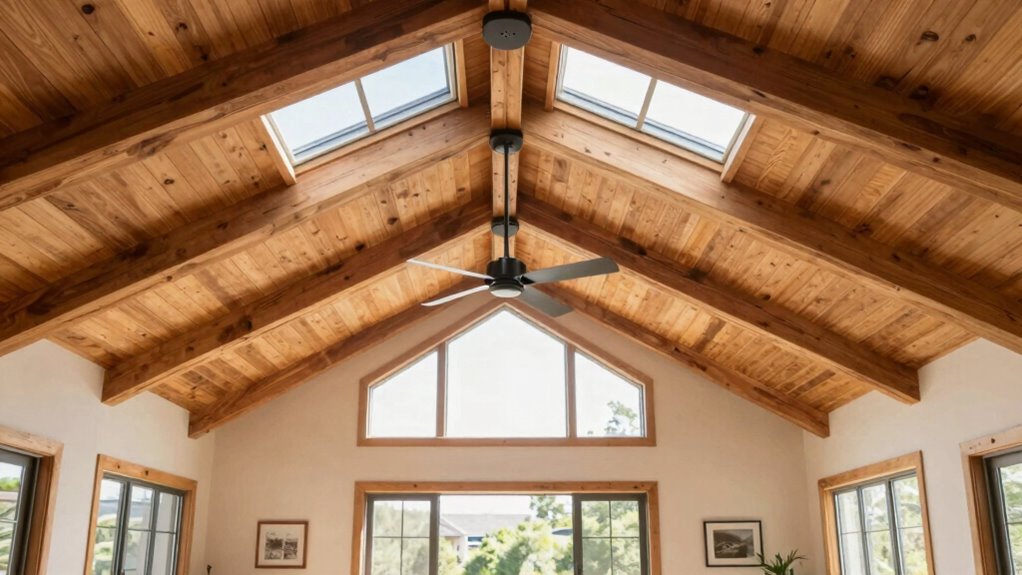
Vaulted ceilings can transform the look and feel of your home, creating an open, airy atmosphere that enhances natural light and spaciousness. They elevate the ceiling height considerably, making rooms feel larger and more inviting. But when it comes to planning a whole-house fan, vaulted ceilings introduce unique considerations that you need to understand. The architectural style of your home often dictates whether vaulted ceilings fit seamlessly or require adjustments for ideal ventilation.
Vaulted ceilings add spaciousness but require careful planning for effective whole-house fan placement and ventilation.
Because vaulted ceilings increase the overall ceiling height, they can pose challenges for traditional whole-house fan placement. In standard homes with standard ceiling heights, fans are typically installed in the ceiling’s center, where they can circulate air efficiently through the entire house. With vaulted ceilings, the fan’s effectiveness depends on its placement relative to the highest point of the ceiling. If installed too low or off-center, the fan might not adequately circulate air across the space, reducing its cooling efficiency. You need to think about the ceiling height carefully—an excessively high vaulted ceiling might require a more powerful fan or multiple units for even coverage. Additionally, airflow patterns can be more complex in these spaces, requiring careful planning to achieve optimal ventilation.
The architectural style of your home also influences your planning. For example, modern or contemporary designs often incorporate open-plan layouts with high ceilings, making it tempting to rely on a single, centrally located fan. However, traditional or rustic styles, which might feature exposed beams and varied ceiling heights, call for more strategic placement of fans. These styles might also favor ceiling fans with longer downrods or larger blades to ensure better air movement in the expansive, vaulted space. You should also think about the aesthetic impact: some fans may look out of place in a more ornate or historical architectural style, so choosing a design that complements your home’s style is essential. Additionally, understanding the architectural design of vaulted ceilings can help you select the most effective ventilation solutions. This way, you’ll enjoy the benefits of an open, airy space without sacrificing comfort or efficiency.
Considering ventilation needs specific to vaulted ceilings can further improve overall comfort and air circulation in your home.
large capacity whole house fan for vaulted ceilings
As an affiliate, we earn on qualifying purchases.
As an affiliate, we earn on qualifying purchases.
Frequently Asked Questions
How Do Vaulted Ceilings Affect Insulation Options for Fans?
Vaulted ceilings can complicate insulation options for fans because they create insulation barriers that limit airflow. You might face airflow challenges, making it harder to efficiently circulate air throughout your home. To address this, you should consider installing specialized insulation and fan systems designed for high, vaulted ceilings. Properly sealing and insulating these areas guarantees your whole-house fan works effectively, overcoming the unique airflow challenges posed by vaulted ceilings.
Can Existing Fixtures Interfere With Fan Installation in Vaulted Ceilings?
Existing fixtures can interfere with fan installation in vaulted ceilings, making ceiling modifications necessary. You might need to relocate or remove fixtures like lights or fans to guarantee proper placement and operation of your whole-house fan. Planning ahead helps you avoid unexpected fixture interference, and consulting a professional can guide you through the necessary ceiling modifications, ensuring safe and efficient installation without compromising your vaulted ceiling’s aesthetic or functionality.
Are There Specific Safety Concerns With High Ceilings and Fans?
When installing fans in high ceilings, safety concerns include proper lighting placement to prevent glare and guarantee visibility. You should also consider aesthetic aspects, like how the fan complements your decor and the room’s proportions. Make sure the fan is securely mounted to avoid accidents, and check that the clearance from the ceiling is sufficient to prevent contact. Proper planning ensures safe, functional, and attractive fan installation in high ceilings.
How Does Ceiling Height Impact Fan Efficiency and Airflow?
Your ceiling height can dramatically amplify or hamper fan efficiency and airflow. Taller ceilings create a vast space where airflow dynamics become complex, making fan placement a game-changer. If placed too low, the fan struggles to circulate air effectively; too high, and its power is wasted. Properly positioning your fan in relation to the ceiling height ensures ideal airflow, maximizing cooling and energy savings—turning your home into the ultimate comfort zone.
What Are the Cost Differences for Installing Fans in Vaulted vs. Flat Ceilings?
Installing fans in vaulted ceilings generally costs more due to increased fan height and the need for longer downrods or custom mounts, which add to installation expenses. Additionally, aesthetic considerations come into play, as you might want a fan that complements the unique architectural style. In contrast, flat ceilings usually require standard fans, making installation simpler and more budget-friendly, with fewer customization needs.
high ceiling ceiling fans with long downrod
As an affiliate, we earn on qualifying purchases.
As an affiliate, we earn on qualifying purchases.
Conclusion
Imagine trying to fill a giant, open jar with water—it’s doable, but it takes more effort and planning. That’s what vaulted ceilings do to your whole-house fan setup. They can turn a straightforward project into a puzzle, requiring careful design to guarantee proper airflow. But with the right planning, you’ll find your home cools quickly, just like filling that jar efficiently. Embrace the challenge, and your house will feel like a gust of fresh air.
energy efficient attic fans for vaulted ceilings
As an affiliate, we earn on qualifying purchases.
As an affiliate, we earn on qualifying purchases.
decorative ceiling fans for vaulted ceilings
As an affiliate, we earn on qualifying purchases.
As an affiliate, we earn on qualifying purchases.
Columbus Day / Indigenous Peoples' Day Picks
long weekend sales
As an affiliate, we earn on qualifying purchases.