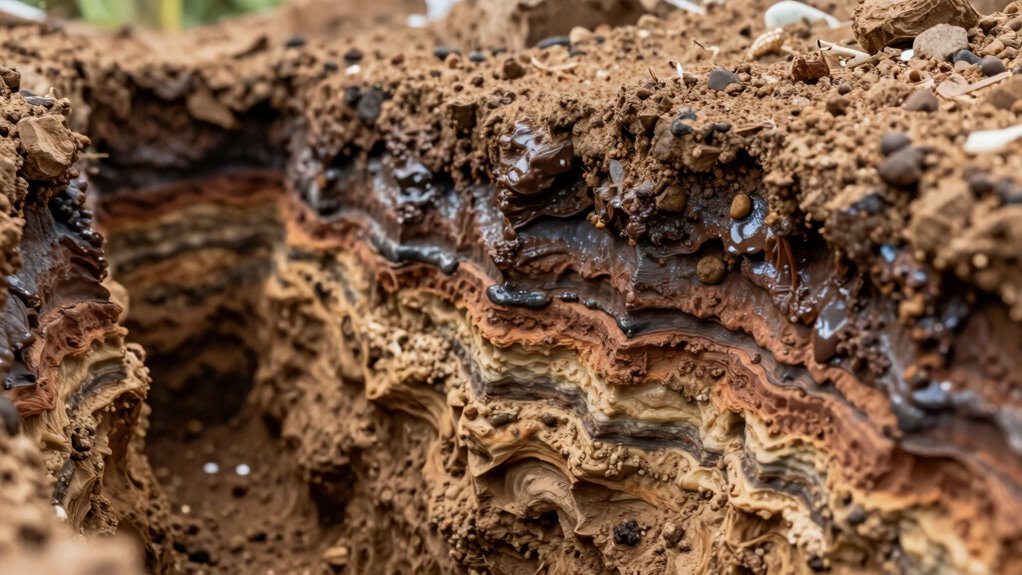

The trench depth you choose affects your horizontal loop’s heat transfer and electrical efficiency. Shallow trenches limit soil’s thermal mass and can cause heat buildup, while deep trenches expose the loop to soil with varying moisture and mineral content, impacting conductivity and resistance. Proper depth maximizes soil’s thermal capacity and stabilizes system performance. If you want to discover how soil conditions influence the ideal trench depth, keep exploring more details.
Key Takeaways
- Shallow trenches reduce soil’s thermal mass, impairing heat dissipation and increasing temperature fluctuations.
- Deeper trenches expose the loop to soil layers with varying moisture and mineral content, affecting heat transfer.
- Optimal trench depth balances soil’s thermal conductivity and electrical resistivity for efficient heat exchange.
- Seasonal soil temperature variations at different depths influence the loop’s operational stability.
- Soil profile analysis helps determine the trench depth that maximizes heat transfer and electrical performance.

Understanding how trench depth affects loop performance is crucial for enhancing underground cable systems. When you’re designing a horizontal loop, the depth at which you bury the cable plays a significant role in how effectively it will transfer heat and conduct electricity. One of the key factors influenced by trench depth is soil thermal properties. The soil surrounding your loop acts as a heat sink, absorbing and dissipating heat generated by the electrical current passing through the cable. If you dig too shallow, the soil might not have enough thermal mass or stability to efficiently transfer heat away from the loop, leading to higher operating temperatures. Conversely, if you go too deep, the soil’s thermal properties could change, especially if you encounter layers with different moisture content or mineral composition, which can alter the heat transfer rate.
Electrical resistance is another crucial aspect impacted by trench depth. As the cable is buried at varying depths, the soil’s thermal and electrical properties come into play. Soil with higher moisture content or better conductivity can lower the electrical resistance of the loop, improving its efficiency. When you position the cable at a greater depth, you might encounter soil with different resistivity due to variations in composition, moisture, or compaction. These changes can increase electrical resistance, causing more power loss and reducing the system’s overall efficiency. Thus, selecting the ideal trench depth isn’t just about avoiding physical interference or ease of installation; it’s about understanding how soil thermal properties and electrical resistance interact at different depths.
Furthermore, the soil’s thermal conductivity and specific heat capacity influence how well heat is transferred away from the cable. If you bury the loop too shallow, the soil might heat up rapidly, leading to thermal buildup that hampers performance. Burying it at the right depth ensures that the soil’s heat absorption capacity is maximized, maintaining more stable operating temperatures. The depth also influences how environmental factors, such as moisture levels or seasonal temperature changes, affect the system. Deep trenches tend to shield the cable from temperature fluctuations on the surface, promoting more consistent performance. Additionally, understanding the soil composition at different depths can help optimize trench planning and improve system longevity. Recognizing the soil’s thermal properties at various depths is essential for achieving optimal performance and durability. Conducting a soil profile analysis prior to installation can further refine depth choices, ensuring the system is customized to specific conditions.
A thorough assessment of the soil profile before installation can help identify the ideal trench depth for specific conditions. In essence, the trench depth that maximizes loop performance balances soil thermal properties and electrical resistance. By understanding these interactions, you can design underground cables that stay cooler, operate more efficiently, and last longer. Proper trench depth takes into account the thermal and electrical characteristics of the soil, ensuring your system functions reliably over its lifespan.

Truper Tru Pro California Trenching Shovel, 5-Inch Steel Blade, 48-Inch Fiberglass Handle with 9-Inch Cushion Grip, Heavy-Duty Trenching and Cleaning Tool (Model TRS-5CF / 33437)
- Blade Size: 4-inch trenching blade
- Handle Material: 48-inch fiberglass handle
- Grip Type: 9-inch cushion non-slip grip
As an affiliate, we earn on qualifying purchases.
As an affiliate, we earn on qualifying purchases.
Frequently Asked Questions
How Does Soil Type Affect Optimal Trench Depth?
Soil type considerably affects your ideal trench depth because soil stability and moisture content influence heat transfer efficiency. In stable, dry soils, you can trench deeper without risking collapse, improving performance. Conversely, moist or unstable soils require shallower trenches to prevent shifting or failure. Understanding these soil characteristics helps you determine the best depth, ensuring your horizontal loop remains secure and efficient for heat exchange.
What Safety Considerations Are Involved in Deeper Trenches?
When digging deeper trenches, you need to prioritize trench safety to prevent accidents. Be aware of excavation hazards like soil collapse, utility lines, and unstable walls. Always use proper shoring, bracing, and safety equipment. Keep the trench slopes compliant with safety standards, and monitor for signs of shifting soil. Proper training and regular inspections help reduce risks, ensuring you maintain a safe work environment during deep trench excavation.
How Does Trench Depth Impact Installation Costs?
Like the Wright brothers adjusting their plane, you’ll find that increasing trench depth raises installation costs. Deeper trenches require more precise trench alignment and heavier excavation equipment, which can slow down progress and increase labor expenses. The deeper you go, the more materials and effort are needed, making the project pricier. So, plan carefully—balancing depth with budget to guarantee a smooth, cost-effective installation.
Are There Environmental Regulations Influencing Trench Depth Choices?
Yes, environmental regulations influence your trench depth choices. You must adhere to regulatory compliance and permitting requirements that specify minimum and maximum trench depths to protect underground ecosystems and prevent contamination. These regulations ensure your installation minimizes environmental impact while meeting safety standards. Failing to follow them can delay your project and result in penalties. Always check local, state, and federal guidelines before finalizing trench depth to guarantee full compliance.
Can Trench Depth Variations Improve Long-Term System Durability?
Yes, adjusting trench depth can improve your system’s durability by enhancing thermal conductivity and moisture retention. Deeper trenches often access more stable ground temperatures, reducing thermal stress, while retaining moisture helps maintain consistent soil conditions. These factors minimize wear on the loop over time, leading to a longer-lasting system. By carefully selecting trench depth, you optimize performance and durability, ensuring your geothermal system remains efficient and reliable for years to come.

Groline Soil Test Direct Soil Conductivity Tester HI98331
- No soil slurries needed: Steel penetration electrode for direct testing
- Automatic temperature compensation: Built-in temperature sensor
- Ideal for environmental and agricultural testing: Versatile testing applications
As an affiliate, we earn on qualifying purchases.
As an affiliate, we earn on qualifying purchases.
Conclusion
Understanding how trench depth impacts your horizontal loop’s performance is essential. When you get it right, you’re ahead of the game, maximizing efficiency and longevity. Don’t let small details slip through the cracks—they can make all the difference in your project’s success. Remember, a stitch in time saves nine, so invest in proper trenching now to avoid bigger headaches later. Your future self will thank you for making the right call today.

Gardner Bender HST-1300 Underground Cable Kit for Waterproof, 14-8 AWG, UF Copper Wire-Includes: 8 inch. Heavy-Wall Heat Shrink & Screw Splice Connectors , Black
- Reliable underground cable kit: Suitable for waterproof wiring
- Durable construction: Long-lasting and sturdy
- Made in China: Manufactured in China
As an affiliate, we earn on qualifying purchases.
As an affiliate, we earn on qualifying purchases.

YAMRON 4-in-1 Soil Moisture Meter Digital Plant Temperature/Soil Moisture/pH Meter/Sunlight Intensity Backlight LCD Display Soil Test Meter for Gardening, Farming and Outdoor Plants
- 4-in-1 Soil Testing: Measures moisture, pH, temperature, sunlight
- Large Backlit LCD: Easy reading in day or dark
- Quick Accurate Results: Fast soil pH, moisture, temperature detection
As an affiliate, we earn on qualifying purchases.
As an affiliate, we earn on qualifying purchases.