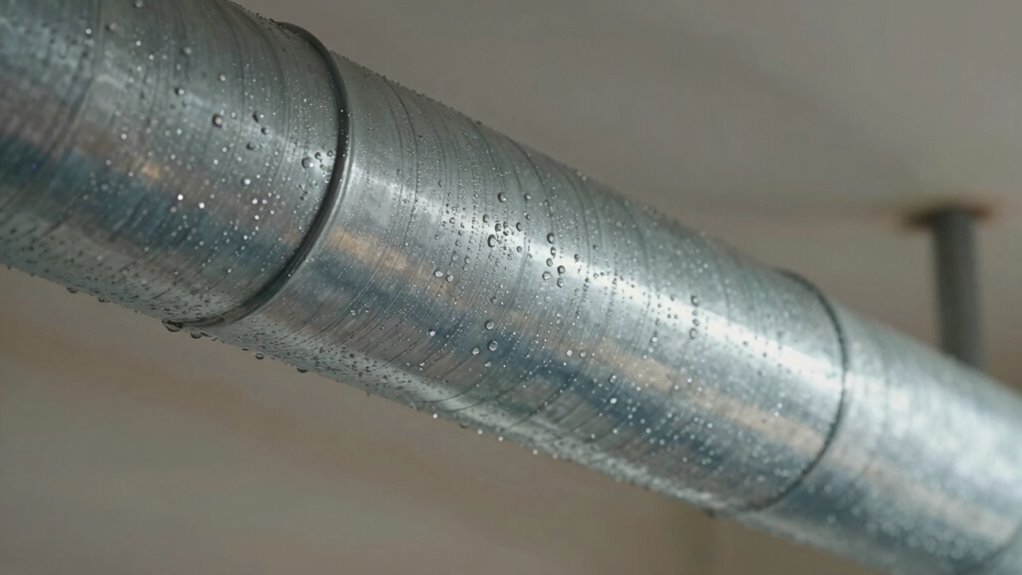

The duct-sweat mystery begins with understanding dew point—the temperature at which air becomes saturated with moisture. When your duct surfaces cool below this point, water condenses into tiny droplets, causing sweat. High humidity makes it easier for ducts to reach dew point, especially if they’re poorly insulated or face temperature fluctuations. Managing humidity and insulating ducts are key to preventing condensation. Keep exploring, and you’ll uncover how these factors come together to solve the puzzle.

Get backup power and energy gear delivered free — and shop member deals
- Fast, free delivery on millions of items
- Access to Prime Big Deal Days deals on October 6–7
- Prime Video, Amazon Music and more included
Key Takeaways
- Duct sweat occurs when surface temperature drops below the dew point, causing moisture to condense.
- High indoor humidity increases the likelihood of duct surfaces reaching dew point and sweating.
- Proper insulation maintains duct surface temperatures above dew point, preventing condensation.
- Temperature fluctuations can cause ducts to cool below dew point, leading to moisture buildup.
- Controlling indoor humidity levels reduces the risk of duct sweat and related moisture problems.

Have you ever noticed tiny droplets forming on the outside of your air duct or vents, leaving you puzzled? You might think it’s just a bit of condensation, but there’s often a deeper reason behind it. This phenomenon, commonly called duct sweat, starts with understanding the dew point — the temperature at which air becomes saturated with moisture and water begins to condense. When warm, humid air comes into contact with cooler surfaces, like your ductwork, the moisture in the air turns into tiny droplets. This process is closely tied to humidity control in your home, but it’s also influenced by insulation issues that can make the problem worse. Proper humidity management is essential for preventing excess moisture that can lead to duct sweat. If your ducts aren’t properly insulated, they become vulnerable to temperature fluctuations. Without good insulation, the metal surfaces of your ducts can cool down quickly, especially if your home’s temperature drops or if you have a high level of indoor humidity. When the surface temperature dips below the dew point, moisture from the air condenses on the duct’s exterior. That’s why you see those droplets — it’s a direct result of the air’s humidity meeting the cooler surface. Proper insulation acts as a barrier, keeping your duct surfaces closer to room temperature and preventing them from reaching the dew point, consequently reducing or eliminating the droplets. Insulation quality plays a crucial role in maintaining consistent surface temperatures and preventing condensation. Additionally, ventilation can help reduce indoor humidity levels, further decreasing the chances of duct sweat forming. Improving air circulation can aid in distributing humidity more evenly throughout your home, reducing localized condensation. Using a dehumidifier can help maintain ideal humidity levels, making it less likely for dew to form on your ducts. Keep in mind that a balanced humidity level not only prevents moisture buildup but also contributes to overall comfort and energy efficiency. When humidity is too high, it becomes harder to keep the air dry, and your AC has to work extra to remove moisture, which can lead to increased energy costs. Moreover, understanding the dew point is fundamental to diagnosing and preventing moisture issues in home ventilation systems.
As an affiliate, we earn on qualifying purchases.
Frequently Asked Questions
How Does Dew Point Relate to Indoor Humidity Levels?
Dew point directly affects indoor humidity levels because it indicates when moisture in the air condenses. When indoor temperature fluctuates near the dew point, humidity control becomes tricky, leading to condensation and potential duct sweat. To prevent this, you should maintain a consistent indoor temperature and humidity level, especially during temperature fluctuations. This helps avoid excess moisture, reducing duct sweating and improving overall indoor air quality.
Can Duct Sweating Cause Mold Growth?
Yes, duct sweating can cause mold growth if you ignore ventilation issues and poor air quality. When moisture from sweating ducts lingers, it creates a cozy mold nursery. You might think your home’s just “moist” enough, but neglecting proper airflow invites mold, which can compromise air quality and your health. So, keep those ducts dry and ventilated—unless you’re aiming for an indoor fungi farm.
What Tools Are Best for Measuring Dew Point?
You should use a digital or sling psychrometer to measure dew point accurately. Make certain your thermometer is properly calibrated for precise readings, and compare your results with dew point charts to interpret the data correctly. These tools help you determine when the air’s moisture content reaches the dew point, which is essential for preventing duct sweating and mold growth. Regular calibration and referencing dew point charts keep your measurements reliable.
Does Duct Insulation Prevent Sweating?
Yes, duct insulation can prevent sweating by maintaining proper temperature control. When you optimize airflow and choose high-quality insulation materials, you reduce the chances of condensation forming on ducts. Proper insulation keeps the air inside the ducts at a stable temperature, preventing dew point issues. By focusing on airflow and insulation, you effectively minimize sweating, ensuring your HVAC system operates efficiently and your space stays dry and comfortable.
How Often Should Duct Systems Be Inspected for Moisture?
You should inspect your duct system at least once a year, especially when seasons change, since moisture issues can sneak up unexpectedly. Proper duct design and airflow optimization reduce the risk of sweating and condensation. Regular inspections help catch early signs of moisture, mold, or leaks that might otherwise go unnoticed. Staying proactive guarantees your system remains efficient, prevents damage, and maintains healthier indoor air quality over time.
As an affiliate, we earn on qualifying purchases.
Conclusion
So, next time your ductwork is dripping, don’t panic—just check the dew point. Think of it as your modern-day magic mirror, revealing the secret temperature secrets of your home. Remember, even in a world of smartphones, a simple hygrometer can solve the mystery faster than a knight finds his lance. Stay vigilant, keep an eye on the moisture, and your home will stay comfy—no more “smoking” ducts to spoil your day.
As an affiliate, we earn on qualifying purchases.
As an affiliate, we earn on qualifying purchases.
Halloween Picks
halloween
As an affiliate, we earn on qualifying purchases.