
To analyze a heat pump, you use energy balance equations to track heat and work flows across components like the compressor, evaporator, and condenser. These equations help you understand how energy inputs and outputs relate, assess efficiency, and identify where improvements can be made. Focusing on enthalpy changes and work input allows you to evaluate system performance. Continue exploring to uncover how these equations can optimize your heat pump’s operation effectively.
Key Takeaways
- Energy balance equations quantify heat transfer and work input within each heat pump component, facilitating performance evaluation.
- They relate enthalpy changes and work input in the compressor to assess power consumption and efficiency.
- For evaporators and condensers, energy balances equate heat absorbed or rejected to refrigerant enthalpy changes.
- These equations help determine the system’s Coefficient of Performance (COP) by analyzing energy flows.
- Analyzing energy balances identifies inefficiencies and guides system optimization for improved sustainability.

Understanding energy balance equations is essential when analyzing heat pumps, as they form the foundation for evaluating system performance. These equations help you quantify how energy flows into and out of the system, enabling you to assess efficiency and identify areas for improvement. At the core of this analysis are thermodynamic cycles, which describe the processes that transfer heat from the outside environment to the interior space. By examining these cycles, you can understand how effectively a heat pump moves heat and how various components contribute to overall performance.
Understanding energy balance equations is vital for evaluating heat pump performance and efficiency.
A key aspect of the thermodynamic cycle in a heat pump involves the compressor, which plays a crucial role in pressurizing the refrigerant. The compressor’s efficiency directly impacts the energy balance calculations because it determines how much work input is required to compress the refrigerant and how much heat is generated during compression. Higher compressor efficiency means less energy is wasted, and the system operates closer to its ideal cycle. When analyzing the energy balance equations, you’ll need to account for compressor work, which is expressed as an energy input, and compare it with the heat transfer processes occurring in the evaporator and condenser.
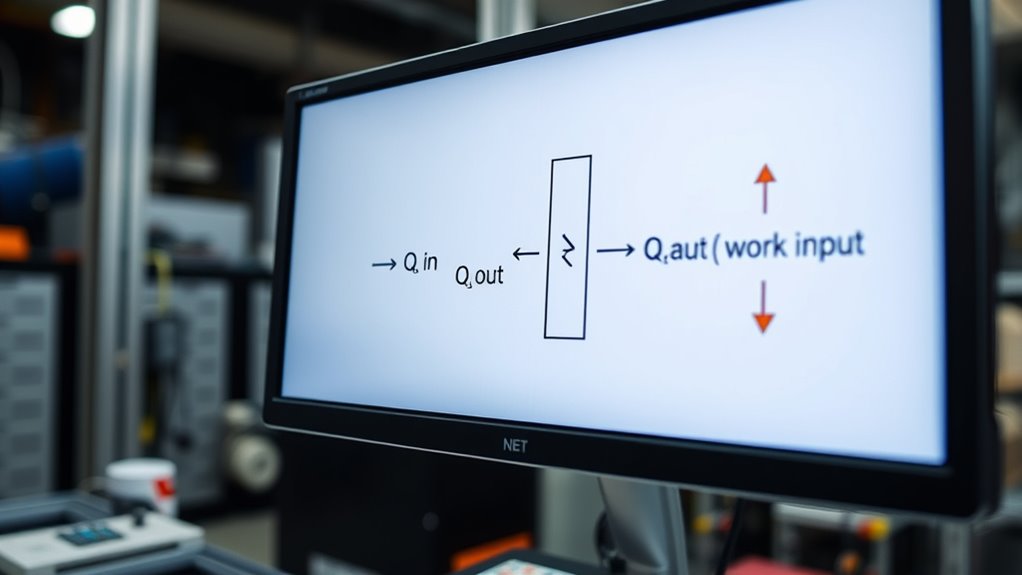
In practical terms, you’ll start by writing the energy balance equations for each component, such as the compressor, evaporator, and condenser. For the compressor, the equation considers the work input and the change in enthalpy of the refrigerant. The goal is to accurately measure how much energy is consumed during compression and how effectively this energy translates into moving heat. For the evaporator and condenser, the equations balance the heat absorbed or released with the energy supplied or removed from the refrigerant. These balances help you determine the coefficient of performance (COP), a key indicator of efficiency.
Understanding how thermodynamic cycles operate and how compressor efficiency influences the energy balance gives you a clear picture of a heat pump’s performance. When you analyze these equations, you can identify inefficiencies, such as excessive compressor work or heat leaks, that could reduce system effectiveness. Improving compressor efficiency not only lowers energy consumption but also enhances the overall heat transfer process, making your system more sustainable and cost-effective. Additionally, recognizing the impact of color accuracy on the clarity of visual information can be important when monitoring system performance via visual displays or diagnostic images. In essence, mastering the energy balance equations, especially in relation to thermodynamic cycles and compressor efficiency, empowers you to optimize heat pump operation and achieve better energy management.

AEOCKY Dehumidifier with Pump Energy Star Most Efficient 2024 5500 Sq.Ft
- Industry-Leading Dehumidifier Brand: Trusted by millions, top Amazon U.S. 2025
- Upward Drainage Pump: 5m hose for flexible, automatic drainage
- Smart Compressor Dehumidifier: 5500 sq.ft capacity, ENERGY STAR Most Efficient 2024
As an affiliate, we earn on qualifying purchases.
As an affiliate, we earn on qualifying purchases.
Frequently Asked Questions
How Do Refrigerant Properties Affect Energy Balance Calculations?
Refrigerant properties greatly impact your energy balance calculations because refrigerant thermodynamics determine how efficiently heat transfers occur. Property variability, such as changes in pressure and temperature, influences the refrigerant’s phase and capacity. As these properties fluctuate, they affect the heat pump’s performance, making accurate calculations essential. You need to think about how refrigerant thermodynamics and property variability alter the energy flows to optimize system efficiency and proper operation.
What Role Does Heat Exchanger Efficiency Play in Energy Analysis?
Think of the heat exchanger as the heart of your heat pump, pumping energy efficiently. Its performance directly influences your system’s energy analysis because higher heat exchanger efficiency metrics mean less energy loss. When you focus on optimizing heat exchanger performance, you guarantee your heat pump operates smoothly, saving energy and improving overall effectiveness. Fundamentally, good heat exchanger efficiency keeps the system’s rhythm steady, maximizing your energy savings.
How Are Transient Conditions Incorporated Into Energy Balance Models?
You incorporate transient conditions into energy balance models through dynamic modeling, which captures how system states change over time. Using time-dependent analysis, you track variables like temperature and flow rates, updating equations as conditions vary. This approach allows you to simulate real-world fluctuations, ensuring your model accurately reflects the heat pump’s performance during start-up, shutdown, or variable load scenarios, providing a more all-encompassing understanding of its operation under transient conditions.
What Impact Do Auxiliary Components Have on Overall System Energy?
Did you know auxiliary components can boost overall system efficiency by up to 30%? They substantially impact your heat pump’s energy by supporting system integration, reducing workload on the main components, and improving performance. These auxiliary equipment, like fans or pumps, help optimize energy use, especially during variable conditions. Incorporating them into your system ensures better reliability and energy savings, making your heat pump more effective and cost-efficient.
How Is Energy Loss Due to System Leaks Accounted For?
You account for energy loss due to system leaks through leak detection methods, which help identify where leaks occur. Once detected, you perform loss quantification by measuring the amount of refrigerant or energy escaping. This data allows you to adjust your system’s energy balance, ensuring accurate performance assessments. Regular leak detection and quantification help prevent efficiency decline and maintain peak operation, saving energy and reducing costs over time.

Air Conditioner Refrigerant Low and High Pressure Gauge 70mm/2.7inch
- Premium Material: High-quality construction with clear dial
- Size: 70mm/2.7-inch dial, 1/8'' NPT inlet
- Compatibility: Suitable for R410A, R134A, R22
As an affiliate, we earn on qualifying purchases.
As an affiliate, we earn on qualifying purchases.
Conclusion
By examining the energy balance equations, you see how heat pumps transfer energy efficiently, confirming their effectiveness. The theory that heat pumps operate ideally when properly balanced holds true, emphasizing the importance of accurate calculations. When you understand these equations, you can better analyze and improve heat pump performance. This confirms that maintaining proper energy balance isn’t just theoretical—it’s essential for maximizing efficiency and saving energy in real-world applications.

Electric A/C Compressor for Tesla Model 3 Model Y 2020-2026, 1501256-00
- Vehicle Compatibility: Fits Tesla Model 3 2021-2023
- OEM Replacement Part: Replaces original AC compressor numbers
- High-Quality Construction: Made with durable aluminum and steel
As an affiliate, we earn on qualifying purchases.
As an affiliate, we earn on qualifying purchases.

HVAC Service & Troubleshooting Log: Step-by-Step Diagnostic Workbook for AC, Heat Pump, Furnace & Refrigeration Technicians – Track Electrical, Airflow, and System Repairs
As an affiliate, we earn on qualifying purchases.
As an affiliate, we earn on qualifying purchases.