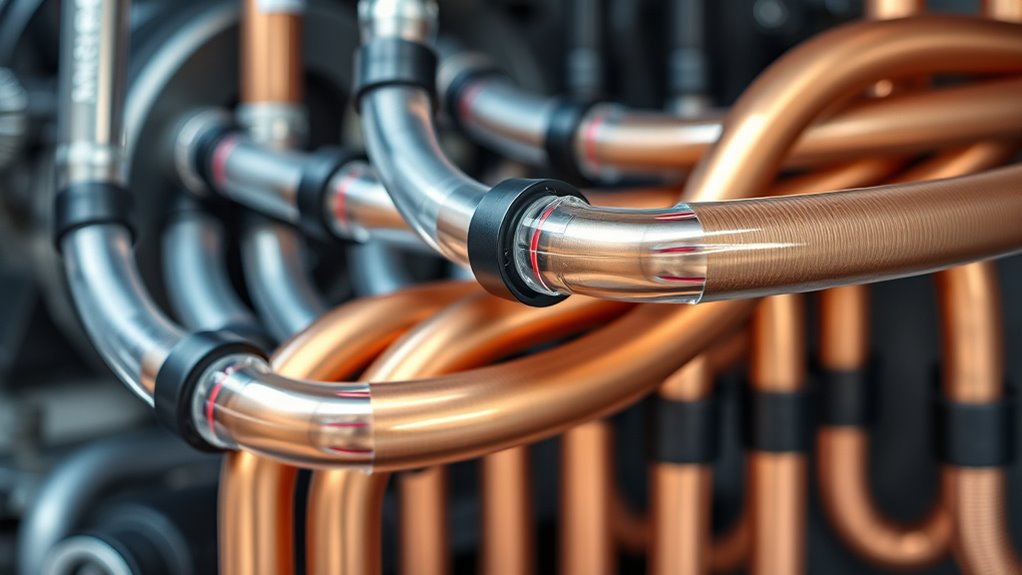

In HVAC and heat pump systems, common heat transfer fluids include water, glycol mixtures, and refrigerants like R-134a or R-410A, which effectively transfer heat and maintain system efficiency. Natural refrigerants such as CO₂ and ammonia are gaining popularity because of their lower environmental impact. Fluids’ thermal conductivity, specific heat, and viscosity influence performance and safety. To find out which fluid suits your needs best and learn more about their applications, keep exploring these options.

Get backup power and energy gear delivered free with Prime
- Fast, free delivery on millions of items
- Prime Video, Amazon Music and more included
- Member-only deals all year
Key Takeaways
- Common heat transfer fluids include water, glycol mixtures, and specialized synthetic oils for HVAC and heat pump systems.
- Natural refrigerants like CO₂ and ammonia are eco-friendly options with high thermal efficiency.
- Fluids must have suitable thermal conductivity, specific heat, and low viscosity for optimal system performance.
- Safety considerations include flammability, toxicity, and stability under operational temperature and pressure ranges.
- Environmental impact influences the choice, favoring low-GWP and ozone-friendly fluids over traditional CFCs and HCFCs.

Heat transfer fluids are vital for efficiently moving thermal energy in various industrial and technological applications. When it comes to HVAC systems and heat pumps, choosing the right fluid is essential to guarantee optimal performance, safety, and sustainability. Your selection depends largely on the thermal properties of the fluid, which determine how effectively it can absorb, transfer, and release heat. Thermal conductivity, specific heat capacity, and viscosity are key factors in this decision. A fluid with high thermal conductivity heats up and cools down quickly, enabling rapid heat exchange. Conversely, high specific heat capacity allows the fluid to carry more energy without a significant temperature increase, making it more efficient for long-distance heat transfer. Viscosity impacts how easily the fluid circulates within the system, affecting overall efficiency and pump energy consumption.
As you evaluate different heat transfer fluids, you should also pay close attention to their environmental impact. Many traditional fluids, such as certain refrigerants, have been found to contribute to ozone depletion or global warming due to their high global warming potential (GWP) and ozone depletion potential (ODP). For example, chlorofluorocarbons (CFCs) and hydrochlorofluorocarbons (HCFCs) were once common but are now phased out in many regions because of their environmental harm. You might consider alternative fluids like hydrofluoroolefins (HFOs) or natural refrigerants such as CO2, ammonia, or hydrocarbons, which tend to have a lower environmental footprint. These options can reduce your system’s overall environmental impact while maintaining efficient heat transfer performance.
It’s also important to consider the safety and stability of the fluids you choose. Some fluids can be flammable or toxic, which increases risk during handling and operation. Others may degrade over time, leading to system inefficiencies or maintenance issues. When evaluating thermal properties and environmental impact, you should also look into how these fluids behave under different temperature ranges and pressures typical of your HVAC or heat pump system. Fluids with stable thermal properties across these ranges guarantee consistent performance and longevity of your equipment. Additionally, understanding the off-gassing potential of a fluid is crucial, as it can impact indoor air quality and environmental safety.
As an affiliate, we earn on qualifying purchases.
Frequently Asked Questions
How Do I Choose the Right Heat Transfer Fluid for My System?
To select the appropriate heat transfer fluid, you need to take into account fluid compatibility with your system components and your desired level of system efficiency. Look for a fluid that matches your temperature range and is compatible with seals and materials. Also, prioritize fluids with good thermal stability and low environmental impact. Doing so guarantees ideal performance, prevents leaks or damage, and maximizes your system’s efficiency.
Are There Environmental Impacts Associated With Various Heat Transfer Fluids?
Ironically, choosing a heat transfer fluid might seem harmless, but you’ll face environmental concerns like fluid degradation and potential leaks. Some fluids contain chemicals that harm the ozone layer or contribute to global warming, making eco-conscious choices essential. Always consider the environmental impacts of your options, opting for fluids with lower toxicity and better stability, so you minimize environmental harm while maintaining system efficiency.
What Are the Safety Precautions for Handling Heat Transfer Fluids?
When handling heat transfer fluids, you should prioritize chemical safety by wearing appropriate personal protective equipment like gloves, goggles, and long sleeves to prevent skin and eye contact. Always work in well-ventilated areas, follow manufacturer guidelines, and store fluids properly to avoid spills or leaks. Be aware of potential hazards and have emergency procedures in place, ensuring your safety while managing these substances effectively.
How Often Should Heat Transfer Fluids Be Replaced or Serviced?
Ever wondered how often you should replace or service your heat transfer fluids? Typically, you should check your system annually, as fluid degradation can occur over time, impacting efficiency. Regular system maintenance helps identify issues early and guarantees ideal performance. Generally, fluids need replacement every 3 to 5 years, but this varies depending on usage and fluid type. Stay proactive, and your system will run smoothly and safely.
Can Heat Transfer Fluids Be Recycled or Reused?
Yes, you can recycle or reuse heat transfer fluids, which helps reduce environmental impact. Fluid recycling involves collecting used fluids, filtering, and restoring them for future use, saving costs and minimizing waste. Reusing fluids ensures you extend their lifespan, but always check for contamination or degradation. Proper recycling practices support eco-friendly operations and compliance with environmental regulations, making it a wise choice for your HVAC or heat pump system.
glycol heat transfer fluid for heat pumps
As an affiliate, we earn on qualifying purchases.
As an affiliate, we earn on qualifying purchases.
Conclusion
Just like Icarus relied on the sun’s warmth, your choice of heat transfer fluids powers your HVAC or heat pump system. By selecting the right fluid, you guarantee efficient, reliable performance—avoiding the pitfalls of poor choices that can lead to system failure. Remember, in this dance of heat, the fluid is your guiding star. Keep it well-chosen, and your comfort will shine as brightly as the mythic sun itself.
As an affiliate, we earn on qualifying purchases.
natural refrigerants CO2 ammonia
As an affiliate, we earn on qualifying purchases.
As an affiliate, we earn on qualifying purchases.
Fall Picks
fall essentials
As an affiliate, we earn on qualifying purchases.