Humidity affects how heat feels because it influences how well your body can cool itself through sweating. When humidity is high, moisture in the air makes sweat evaporate less efficiently, trapping heat close to your skin. This makes you feel hotter than the actual temperature, especially when dew points exceed 60°F. Poor airflow and saturated air worsen this effect. Keep exploring to understand how humidity truly impacts your comfort and health in hot conditions.

Get backup power and energy gear delivered free — and shop member deals
- Fast, free delivery on millions of items
- Access to Prime Big Deal Days deals on October 6–7
- Prime Video, Amazon Music and more included
Key Takeaways
- High humidity reduces sweat evaporation, impairing the body’s ability to cool down, making heat feel more intense.
- Increased dew point indicates higher moisture content, which amplifies the perception of heat.
- Moist air traps heat near the skin, preventing heat dissipation and increasing discomfort.
- Saturated air with limited airflow further hampers evaporative cooling, intensifying the heat sensation.
- Elevated humidity levels alter heat perception regardless of actual temperature due to impaired cooling mechanisms.
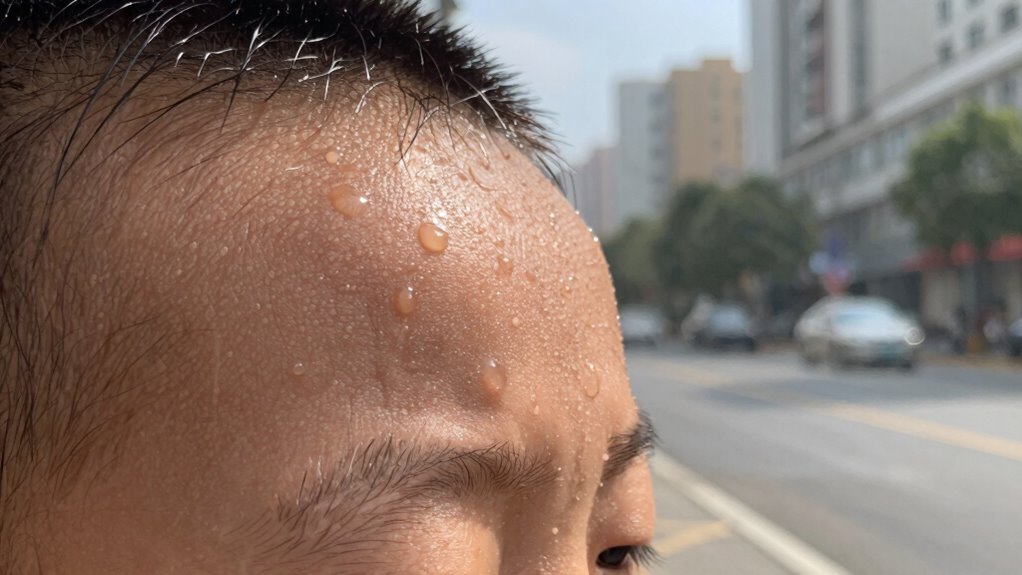
Have you ever noticed how hot days feel even more oppressive when the humidity rises? It’s a common experience, but understanding why requires looking at how moisture in the air influences your perception of heat. Humidity isn’t just about how damp it feels; it’s deeply connected to the dew point and moisture levels in the atmosphere. These factors work together to change how your body perceives temperature, making it seem hotter than the thermometer indicates.
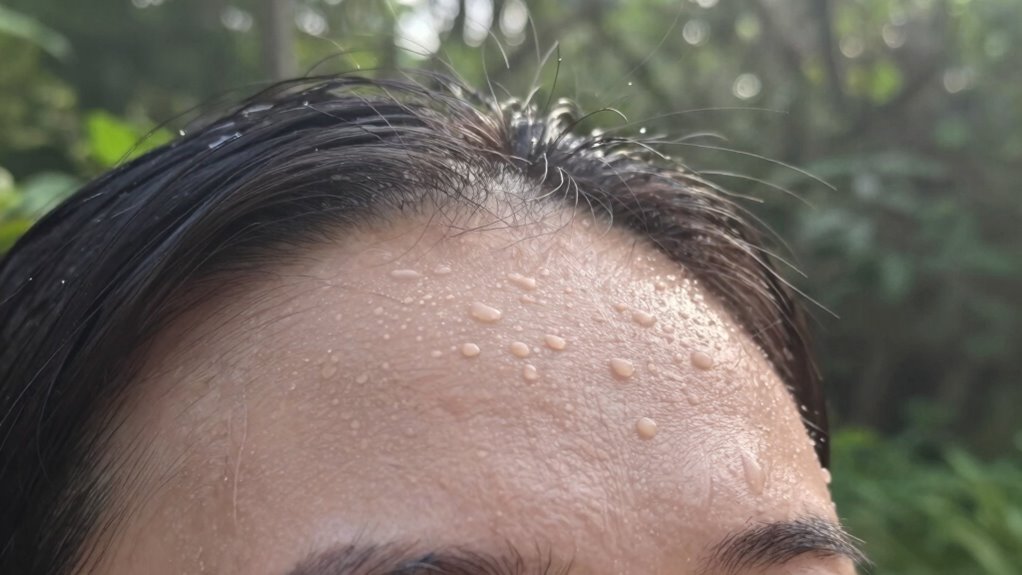
The dew point is a key indicator of humidity because it measures the temperature at which air becomes saturated with moisture and dew begins to form. When the dew point is high, it means there’s a significant amount of moisture in the air. This high moisture content affects your body’s ability to cool itself through evaporation. When you sweat, your body relies on the evaporation of sweat to lower your internal temperature. But if the moisture levels are high and the dew point is elevated, the air is already near saturation, so sweat doesn’t evaporate as efficiently. As a result, you feel much hotter because your body struggles to cool itself effectively. Moisture content in the air plays a crucial role in this process, directly impacting heat perception. Additionally, the presence of dust or pollutants can further hinder cooling by affecting air quality.
Moisture levels in the air directly impact how hot it feels because they influence your body’s heat regulation. On a humid day, the high moisture content traps heat close to your skin, preventing heat from dissipating. This creates a sense of increased heat, even if the actual temperature isn’t exceptionally high. Conversely, on a dry day with lower moisture levels, sweat evaporates quickly, helping you stay cooler and making the temperature feel more tolerable. Fundamentally, your perception of heat is not just about the air temperature itself but how well your body can shed heat through evaporation, which is hindered when humidity is high. Additionally, ambient moisture can influence the effectiveness of your body’s cooling mechanisms, especially in combination with other environmental factors.
Understanding the relationship between humidity and temperature helps clarify why high humidity can make hot days feel even more oppressive, emphasizing how environmental factors influence heat perception. As humidity rises, the dew point increases, signaling that moisture levels are also rising. When the dew point is above 60°F (15.5°C), many people start to feel noticeably uncomfortable. As it approaches 70°F (21°C) or higher, the heat may feel oppressive. This is because the elevated dew point indicates saturated air, reducing sweat’s cooling effect and intensifying the sensation of heat. So, even if the thermometer reads a modest temperature, high humidity can make it feel much hotter. That’s why you often hear weather reports mention both temperature and humidity levels—because both together determine how hot it really feels, not just the number on the thermometer.
Additionally, understanding the concept of evaporative cooling helps explain why humidity impacts heat perception so strongly. When the air is saturated with moisture, the evaporation rate slows down, making it harder for your body to cool itself effectively. This is why in environments where airflow is limited, the heat can become even more oppressive, as the cooling process is further hindered.
As an affiliate, we earn on qualifying purchases.
Frequently Asked Questions
How Does Humidity Affect Sweat Evaporation?
Humidity affects sweat evaporation by making it harder for your sweat to turn into vapor. When the air is humid, there’s more moisture in the atmosphere, so sweat on your skin doesn’t evaporate as quickly. This keeps your skin moist longer, making you feel hotter and stickier. In low humidity, sweat evaporates faster, cooling your skin more effectively. So, humidity directly impacts how efficiently your sweat cools you down.
Can Humidity Influence Body Temperature Regulation?
Yes, humidity influences your body’s temperature regulation. High humidity reduces sweat efficiency because moisture stays on your skin longer, making it harder for your body to cool down. This can lead to increased body temperature and discomfort, affecting skin comfort. When humidity is low, sweat evaporates more easily, helping your body stay cooler and more comfortable. So, humidity plays a vital role in how effectively your body manages heat.
Why Does Humidity Feel Different Indoors Versus Outdoors?
You feel like you’re walking into a sauna indoors because of poor humidity control, making the air seem thick and oppressive. Outdoors, the breeze helps your sweat evaporate, cooling you down and making it feel more comfortable. Indoor air often lacks this natural airflow, so humidity can build up, intensifying the heat sensation. That’s why indoor humidity feels so much more stifling and overwhelming than fresh outdoor air.
Does High Humidity Increase Risk of Heat-Related Illnesses?
Yes, high humidity increases your risk of heat-related illnesses. When air moisture levels are high, your body struggles to cool down through sweating because the sweat doesn’t evaporate efficiently. This humidity discomfort makes it harder to regulate your temperature, leading to quicker dehydration and heat exhaustion. To stay safe, stay hydrated, wear light clothing, and try to stay in air-conditioned or shaded areas during hot, humid days.
How Do Different Humidity Levels Impact Athletic Performance?
High humidity can hinder your athletic performance by making it harder for your body to cool down through sweating. In humid conditions, you should adjust your hydration strategies, drinking more fluids, and choose lightweight, moisture-wicking clothing to stay comfortable. Lower humidity levels help you stay cooler and perform better, so keep an eye on the weather and adapt your gear and hydration to maintain ideal performance.
air purifier with humidity control
As an affiliate, we earn on qualifying purchases.
As an affiliate, we earn on qualifying purchases.
Conclusion
So, next time you step outside and feel the heat cling to you, remember it’s not just the temperature — it’s the humidity. It’s the moisture in the air that makes the heat feel hotter, the sweat slower to evaporate, and your comfort harder to find. Humidity and heat work together, shaping how you experience each day. Embrace the change, adjust your expectations, and stay cool, because understanding this dance helps you stay one step ahead.
personal handheld fan for hot weather
As an affiliate, we earn on qualifying purchases.
As an affiliate, we earn on qualifying purchases.
dehumidifier for high humidity rooms
As an affiliate, we earn on qualifying purchases.
As an affiliate, we earn on qualifying purchases.
Halloween Picks
halloween
As an affiliate, we earn on qualifying purchases.