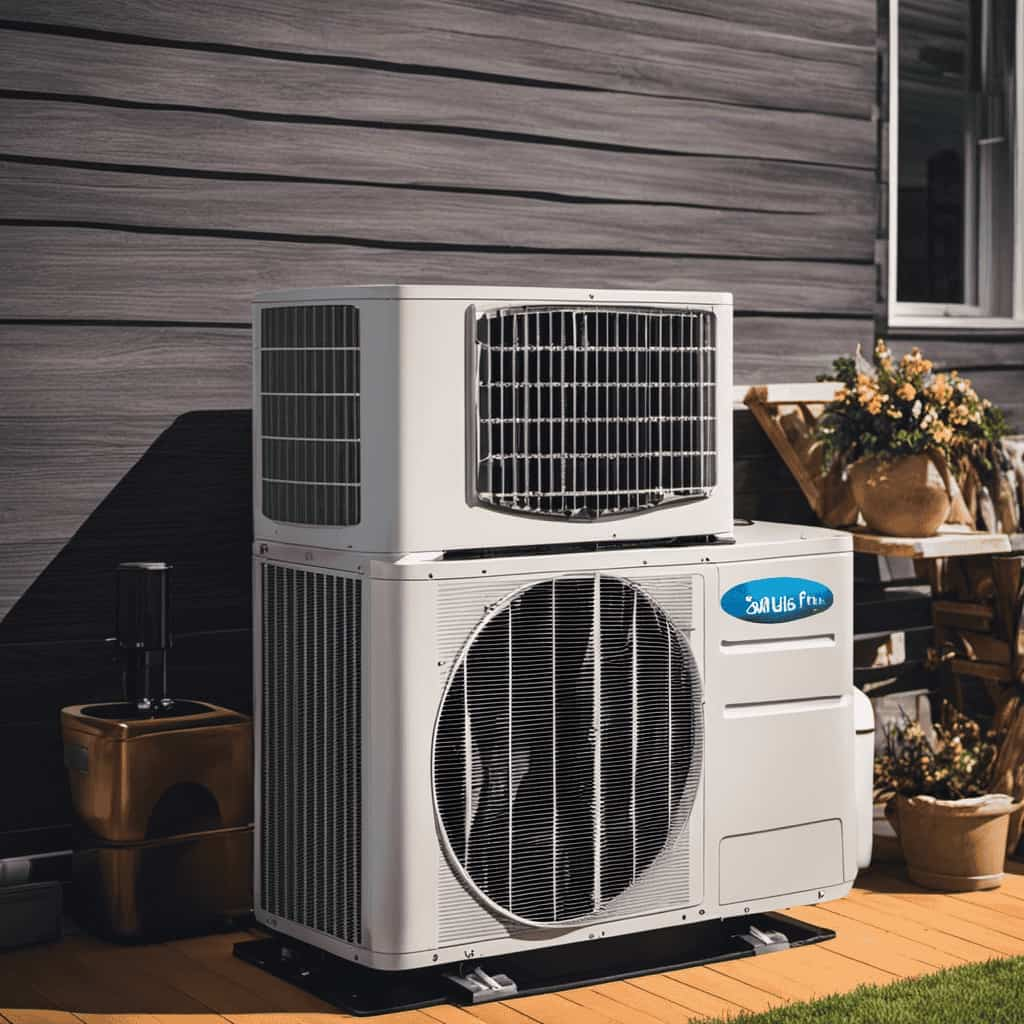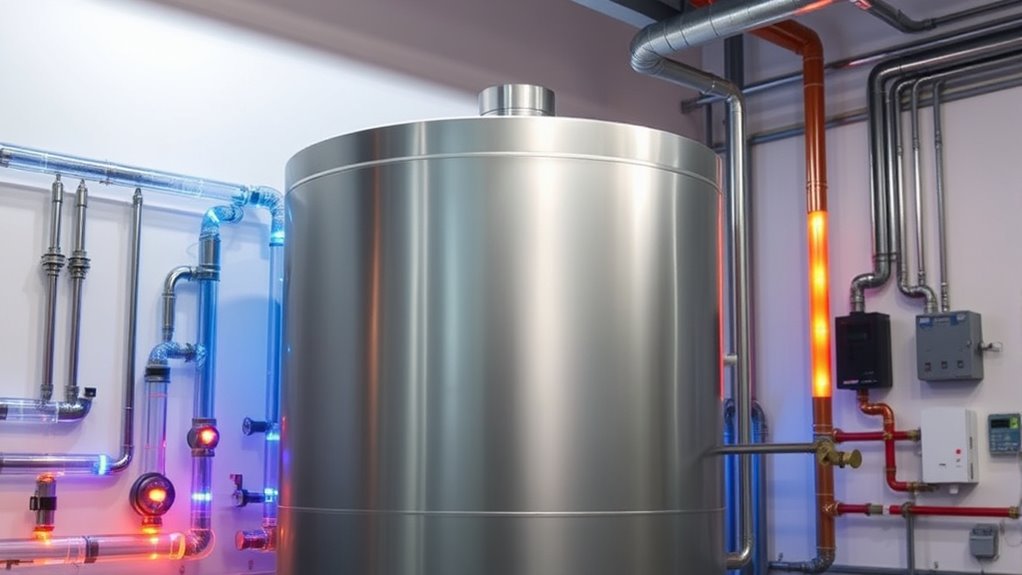

Thermal storage technologies for heating and cooling let you store excess heat for later use, making your energy system more efficient and sustainable. You can choose between phase change materials, which absorb and release heat during melting and solidifying, or sensible storage, where heat is stored by raising the temperature of materials like water or sand. Both methods improve temperature control and reduce energy costs. If you keep exploring, you’ll discover how these systems can address your specific heating and cooling needs.
Key Takeaways
- Thermal storage technologies enable efficient heating and cooling by storing excess thermal energy for later use.
- Phase change materials (PCMs) store heat through solid-liquid transitions, offering high energy density and temperature control.
- Sensible storage uses mediums like water or rocks to store heat by raising their temperature, suitable for large-scale applications.
- Both methods improve system efficiency, reduce energy costs, and support sustainable energy systems in buildings and district heating.
- The choice between phase change and sensible storage depends on space availability, capacity needs, and specific heating or cooling requirements.
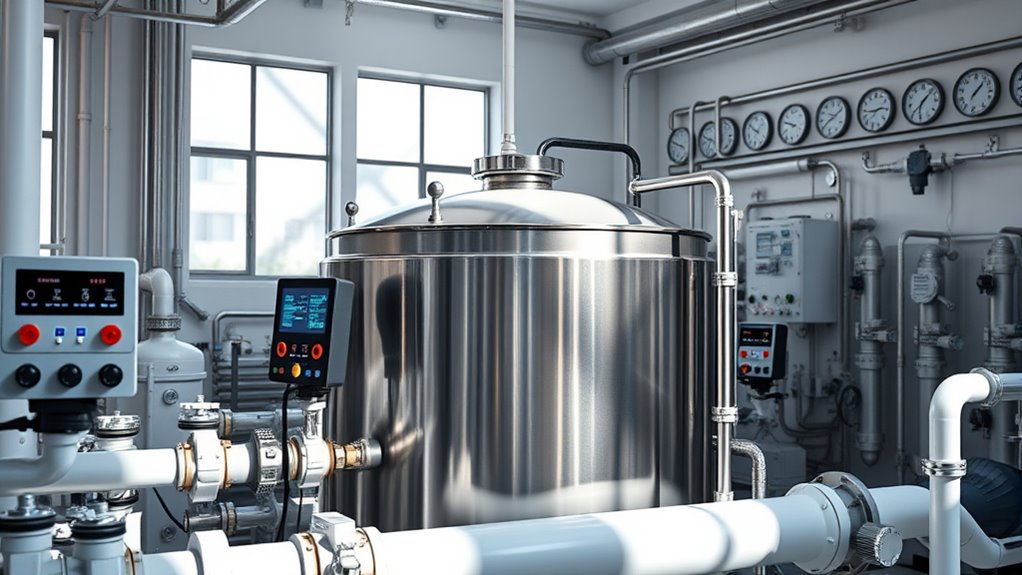
Have you ever wondered how we can store excess heat for later use? Thermal storage technologies make that possible, allowing us to capture, hold, and release heat efficiently. When it comes to storing thermal energy, two main methods stand out: phase change and sensible storage. Understanding these methods helps you grasp how thermal energy systems work and how they can benefit heating and cooling applications.
Phase change storage relies on the unique properties of materials that absorb or release heat as they change states, typically from solid to liquid and vice versa. Imagine a material that melts at a specific temperature, absorbing a significant amount of heat during the process. When you need the stored heat, the material solidifies, releasing that stored energy. This process enables precise temperature control and high energy density, making phase change materials (PCMs) ideal for applications like maintaining comfortable indoor temperatures or providing backup heat. You’ll find PCMs integrated into building materials, such as wallboards or insulation, where they can help moderate temperature fluctuations throughout the day. Because phase change storage involves the material’s latent heat, it allows you to store large amounts of energy in a relatively small space, making it efficient and versatile.
Phase change storage uses materials that absorb or release heat during state transitions, enabling efficient, compact thermal energy storage.
On the other hand, sensible storage works by raising or lowering a material’s temperature without changing its state. Think of water in a tank heated during the day and then used to provide warmth when needed. The process is straightforward: you store heat by increasing the temperature of a medium, like water, sand, or rocks, and retrieve it by cooling that medium down. Sensible storage systems are often simpler and less expensive to implement than phase change systems, making them suitable for larger-scale applications such as thermal reservoirs or district heating networks. These systems are easy to operate, and you can monitor and control the stored energy by measuring temperature changes. While sensible storage generally requires more space because it relies on temperature differences, it offers durability and ease of maintenance.
Both methods play crucial roles in modern thermal energy storage. Phase change storage excels in compactness and temperature precision, while sensible storage offers simplicity and capacity for large-scale applications. Your choice depends on factors like space, cost, and the specific heating or cooling needs you’re trying to meet. By understanding how phase change and sensible storage work, you can better appreciate the innovative ways we’re making heating and cooling more efficient, sustainable, and adaptable to our energy demands.
Frequently Asked Questions
What Are the Environmental Impacts of Thermal Storage Systems?
You might wonder about the environmental impacts of thermal storage systems. These systems often have a lower ecological footprint because they reduce energy consumption and utilize recyclable materials. However, some storage materials are not easily recyclable, which can increase waste. Overall, choosing systems with high material recyclability minimizes environmental harm, helping you cut emissions and waste, making thermal storage a more sustainable option for heating and cooling needs.
How Cost-Effective Are Thermal Storage Solutions in the Long Term?
A penny saved is a penny earned, and thermal storage solutions pay off over time. You’ll find that despite the initial investment and maintenance costs, these systems reduce energy bills and enhance efficiency. Long-term, they’re cost-effective because they optimize energy use and lower operational expenses. Over the years, your savings grow, making thermal storage a smart investment that balances upfront costs with ongoing financial benefits.
Can Thermal Storage Be Integrated With Renewable Energy Sources?
Yes, you can integrate thermal storage with renewable energy sources to enhance energy synergy. This integration allows you to store excess renewable energy, like solar or wind, for later use, reducing reliance on fossil fuels. By pairing thermal storage with renewables, you optimize energy efficiency, lower costs, and support sustainable practices. This seamless renewable integration helps you manage supply fluctuations and ensures consistent heating and cooling, making your system more resilient and eco-friendly.
What Are the Common Challenges in Implementing Thermal Storage?
You face challenges in implementing thermal storage, mainly related to storage capacity and system scalability. Limited storage capacity can restrict how much thermal energy you can store, affecting efficiency. Additionally, scaling up the system to meet growing demands often involves significant costs and technical adjustments. These issues require careful planning to make sure your thermal storage system integrates smoothly, maintains performance, and adapts as your energy needs evolve.
How Does Thermal Storage Affect Overall Building Energy Efficiency?
Imagine your building breathing with better energy flow—you’ll notice improved efficiency. Thermal storage reduces energy waste by shifting heating and cooling loads to off-peak hours, complementing good building insulation. When you optimize system integration, your building conserves energy and lowers costs. This seamless coordination guarantees your HVAC functions more efficiently, making your space comfortable while cutting down on unnecessary energy consumption, ultimately enhancing your building’s overall energy performance.
Conclusion
You now see how thermal storage technologies can revolutionize heating and cooling, making your energy use more efficient and sustainable. By harnessing these innovative systems, you’re fundamentally tapping into the power to transform entire cities’ energy footprints. It’s like holding the future of comfort and sustainability in your hands—an unstoppable force that could change the world, one thermostat at a time. Embrace these solutions and be part of the climate-saving revolution!