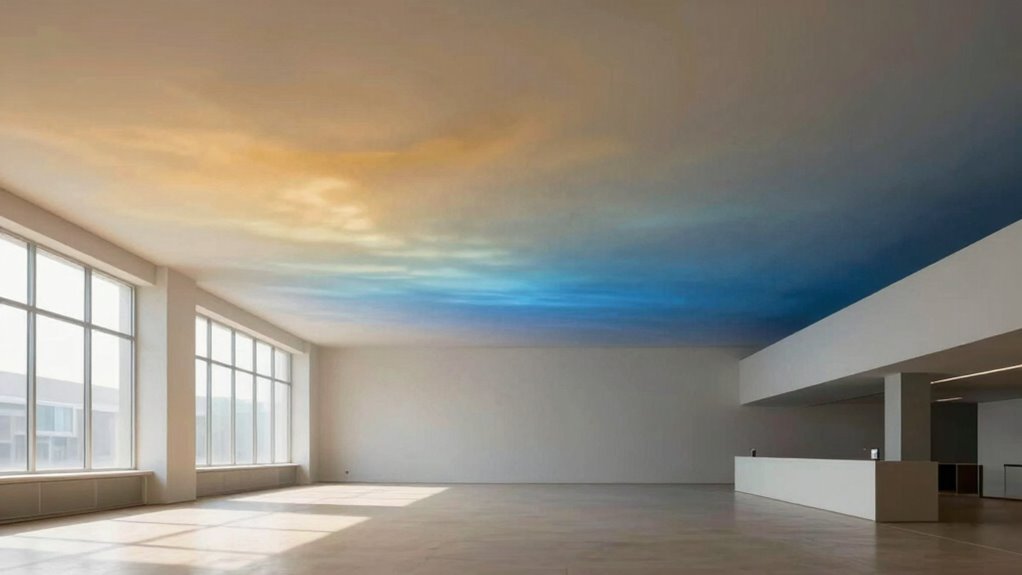

In tall rooms, warm air naturally rises and forms layers, causing a problem called thermal stratification. This means the upper part of your room feels hot, while the lower areas stay cooler, making you uncomfortable and increasing your energy bills. Without proper air circulation, this separation persists. Installing fans or improving airflow can help mix the air and balance temperatures. If you keep exploring, you’ll discover simple ways to fix this hidden issue effectively.

Get backup power and energy gear delivered free with Prime
- Fast, free delivery on millions of items
- Prime Video, Amazon Music and more included
- Member-only deals all year
Key Takeaways
- Warm air naturally rises, creating distinct temperature layers from floor to ceiling in tall rooms.
- Lack of air circulation stabilizes warm upper layers, trapping heat at the top.
- Tall rooms often experience uneven temperatures, with cooler lower areas and discomfort.
- Proper air movement via fans or vents helps mix air and reduce thermal stratification.
- Addressing stratification improves comfort, energy efficiency, and prevents unnecessary heating costs.
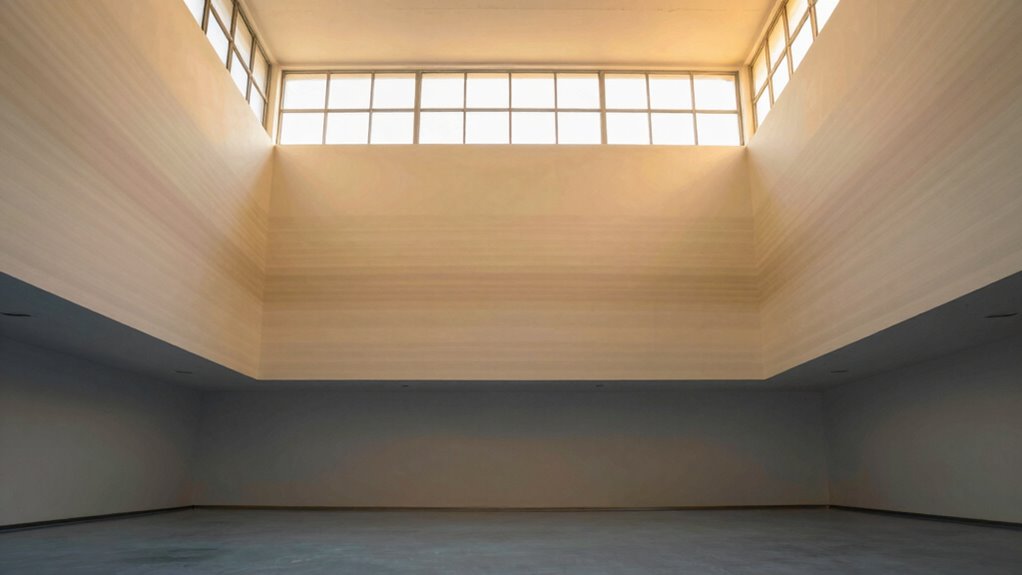
Have you ever wondered why the upper parts of tall rooms tend to feel warmer than the lower areas? It’s a common phenomenon caused by a process called thermal stratification, where temperature layers form within a space. This happens because warm air is less dense, so it naturally rises, creating a temperature difference from the floor to the ceiling. You might notice that even with a heater on, the lower part of the room remains cooler, which can lead to discomfort and inefficient heating. The key to understanding this issue lies in how air circulation influences temperature layering. Without proper movement of air, these layers become stable, trapping warm air at the top and leaving the lower areas underserved. Proper air circulation can also prevent energy waste caused by uneven heating. Air circulation plays an essential role in breaking down these temperature layers. When air moves freely throughout the room, it helps distribute heat more evenly, preventing the formation of distinct layers. Ceiling fans, for instance, can be surprisingly effective in mixing the air and reducing the temperature gap. When you run a fan counterclockwise in summer, it pushes the warm air down, making the room feel cooler. In winter, a clockwise rotation can help circulate warm air trapped near the ceiling back down to the lower levels. Without such circulation, the warm air stays aloft, and the lower parts of your tall room remain chilly, regardless of the heat source. This phenomenon is especially pronounced in open spaces, where natural convection currents are less constrained. Additionally, understanding the physics of heat transfer can deepen your knowledge of how these layers form and persist.
Temperature layering is a natural consequence of how heat behaves in open spaces, especially tall ones. As warm air rises and cools near the ceiling, it creates a distinct stratification. If you don’t actively disrupt this layering, the room’s temperature profile remains uneven, leading to energy waste and discomfort. When you only heat the lower part of the room, the upper areas become excessively warm, and your heating system works harder than necessary. This imbalance not only wastes energy but also causes uneven comfort levels, which can be frustrating during colder months. Recognizing the influence of thermal stratification can empower you to implement effective solutions for a more comfortable environment. To combat the thermal stratification problem, you need to encourage better air circulation. Installing fans, using strategic vent placement, or employing air circulators can help mix the layers of air and promote a more uniform temperature. This way, your tall room becomes more comfortable, and your heating or cooling systems operate more efficiently. Understanding how air circulation influences temperature layering enables you to take simple steps toward a more balanced, energy-efficient environment. Instead of battling the natural tendency of warm air to rise, you harness it by promoting movement, ensuring that every part of your tall room remains comfortable and well-heated. Additionally, utilizing scent technology like aroma diffusers can help create a calming atmosphere that complements your climate control efforts.
As an affiliate, we earn on qualifying purchases.
Frequently Asked Questions
How Does Room Shape Affect Thermal Stratification?
Room shape influences thermal stratification by affecting air circulation and ceiling height. In tall rooms, the increased ceiling height causes warm air to rise and form layers, making it harder to maintain uniform temperature. A room with a compact shape promotes better air circulation, reducing temperature layers. Understanding how these factors interact helps you design spaces that minimize stratification, ensuring more consistent comfort throughout the room.
Can Lighting Influence Temperature Layers in Tall Rooms?
Lighting effects can subtly influence heat distribution in tall rooms, acting like invisible sculptors shaping warm layers. Bright, intense lights emit more heat, potentially disrupting temperature layers and encouraging mixing. Conversely, softer lighting produces less heat, allowing stratification to persist longer. So, by choosing your lighting carefully, you can either reinforce or gently break up those cozy temperature layers, making your space more comfortable and energy-efficient.
What Materials Reduce Stratification Effects?
Using materials with high insulation and surface reflectivity helps reduce stratification effects. Insulation minimizes temperature differences between the ceiling and floor by limiting heat transfer, while reflective surfaces bounce radiant heat, promoting even warmth distribution. You should choose materials like reflective paints or insulated panels, which work together to diminish the layers of temperature variation, creating a more uniform and comfortable environment in tall rooms.
How Does Occupancy Impact Thermal Layering?
Did you know that occupant behavior and furniture placement can markedly influence thermal layering? When you move or adjust furniture, it disrupts the natural stratification, encouraging better air mixing. Occupants who open windows or use fans also help reduce temperature differences. By being mindful of these factors, you can improve comfort and energy efficiency in tall rooms, preventing the upper layers from becoming excessively warm and stagnant.
Are There Specific HVAC Designs to Prevent Stratification?
Yes, you can prevent stratification by implementing effective HVAC designs that promote air circulation and proper ventilation strategies. Installing ceiling fans or high-volume low-speed (HVLS) fans helps distribute air evenly, reducing temperature layers. Additionally, integrating displacement ventilation or underfloor air distribution systems encourages consistent airflow, minimizing thermal layering. These approaches guarantee a comfortable environment, improve energy efficiency, and maintain uniform temperatures throughout tall rooms.
As an affiliate, we earn on qualifying purchases.
Conclusion
Think of tall rooms as mountains, where warmth rises like a hidden treasure, creating unseen layers. By understanding thermal stratification, you become a skilled explorer, traversing these peaks and valleys. Instead of fighting the ascent, harness it—allowing comfort to flow naturally from floor to ceiling. When you embrace this symbolism, you’ll see your space not as a challenge, but as a landscape waiting to be mastered, turning a hidden problem into an elegant harmony.
As an affiliate, we earn on qualifying purchases.
As an affiliate, we earn on qualifying purchases.
Halloween Picks
halloween
As an affiliate, we earn on qualifying purchases.