
Get backup power and energy gear delivered free with Prime
- Fast, free delivery on millions of items
- Prime Video, Amazon Music and more included
- Member-only deals all year
Complete the kit


Key Takeaways
- The Generac 22 kW standby system is the strongest all-around fit for buyers who want automatic backup, a transfer switch, and cellular connectivity.
- The Generac 26 kW model serves homes with greater backup demands, while its added capacity may exceed what a smaller home needs.
- Portable models dominate the fuel-flexibility choices: several Westinghouse and DuroMax options run on multiple fuels, but they require hands-on setup during an outage.
- Portable wattage labels alone do not show whether a unit can start large appliances or support a home’s desired circuits; buyers need to match starting and running loads.
- The lineup’s biggest dividing line is installation and operation: standby systems are fixed, professionally installed solutions, while portable generators are movable but need safe outdoor placement and connection planning.
| DuroStar DS13000MX 13,000-Watt 500cc Dual Fuel Portable Generator |  | Best Value Whole-Home Portable | Wattage: 13,000 Watts | Engine: 500cc | Fuel Type: Gasoline / Propane (Dual Fuel) | VIEW LATEST PRICE | See Our Full Breakdown |
| Westinghouse WGen14500TFc 18000 Peak Watt Tri-Fuel Portable Generator with CO Sensor |  | Best High-Capacity Portable | Peak Watts (Gas): 18,000 | Running Watts (Gas): 14,500 | Engine: 713cc Westinghouse V-Twin OHV | VIEW LATEST PRICE | See Our Full Breakdown |
| Generac 22 kW Whole Home Standby Generator with Transfer Switch and Cellular Connectivity |  | Best Standby for Most Homes | Power Output: 22 kW | Type: Whole-home standby generator | Connectivity: Built-in cellular | VIEW LATEST PRICE | See Our Full Breakdown |
| Generac 26kW Whole-Home Standby Generator with Cellular Connectivity |  | Best Premium Whole-Home Standby | Power Output: 26 kW | Type: Whole-home standby generator | Connectivity: Built-in cellular | VIEW LATEST PRICE | See Our Full Breakdown |
| Westinghouse WGen9500DF Dual-Fuel Portable Generator |  | Best for Essential Circuits | Running Power: 9,500 W (gas) / 8,500 W (propane) | Peak Power: 12,500 W (gas) / 11,200 W (propane) | Engine: 457cc 4-stroke OHV | VIEW LATEST PRICE | See Our Full Breakdown |
| Westinghouse 13,500-Peak-Watt Tri-Fuel Portable Generator with Remote Electric Start |  | Best for Fuel Flexibility | Fuel types: Gasoline, propane, natural gas | Gasoline output: 13,500 peak watts; 10,500 running watts | Propane output: 12,500 peak watts; 9,500 running watts | VIEW LATEST PRICE | See Our Full Breakdown |
| Generac 14 kW Whole-Home Standby Generator with Transfer Switch and Cellular Connectivity |  | Best for Automatic Backup | Generator type: Home standby | Power output: 14 kW | Transfer switch: Included in product title | VIEW LATEST PRICE | See Our Full Breakdown |
| DuroMax XP13000EH 13,000-Watt Dual-Fuel Portable Generator |  | Best for Rugged Portable Backup | Model: XP13000EH | Power output: 13,000 watts | Fuel types: Gasoline or propane | VIEW LATEST PRICE | See Our Full Breakdown |
| Westinghouse 14,500-Watt Tri-Fuel Portable Generator with Remote Electric Start |  | Best High-Capacity Tri-Fuel Portable | Fuel types: Gasoline, propane, natural gas | Gasoline output: 14,500 peak watts; 11,500 running watts | Propane output: 13,500 peak watts; 10,500 running watts | VIEW LATEST PRICE | See Our Full Breakdown |
| DuroMax XP15000HX 15,000-Watt Dual-Fuel Portable Generator |  | Best Maximum Portable Output | Model: XP15000HX | Power output: 15,000 watts | Fuel types: Gasoline or propane | VIEW LATEST PRICE | See Our Full Breakdown |
| whole house generator | Engine | Fuel Types | Power Output |
|---|---|---|---|
| DuroStar DS13000MX 13,000-Watt | 500cc | — | — |
| Westinghouse WGen14500TFc 1800 | 713cc Westinghouse V-Twin OHV | Gasoline / Propane / Natural Gas | — |
| Generac 22 kW Whole Home Stand | — | — | 22 kW |
| Generac 26kW Whole-Home Standb | — | — | 26 kW |
| Westinghouse WGen9500DF Dual-F | 457cc 4-stroke OHV | Gasoline and Propane | — |
| Westinghouse 13,500-Peak-Watt | 500cc 4-stroke OHV | Gasoline, propane, natural gas | — |
| Generac 14 kW Whole-Home Stand | — | — | 14 kW |
| DuroMax XP13000EH 13,000-Watt | — | Gasoline or propane | 13,000 watts |
| Westinghouse 14,500-Watt Tri-F | 550cc 4-stroke OHV | Gasoline, propane, natural gas | — |
| DuroMax XP15000HX 15,000-Watt | 670cc OHV | Gasoline or propane | 15,000 watts |
More Details on Our Top Picks
DuroStar DS13000MX 13,000-Watt 500cc Dual Fuel Portable Generator
This option stands out for delivering 13,000 watts of dual-fuel power at a price point well below the Westinghouse WGen14500TFc, while still packing a 50-amp transfer switch-ready outlet that makes genuine whole-home backup possible rather than just running a few essentials. Compared with the DuroMax XP13000EH, the DuroStar’s all-metal steel frame and push-button electric start make it feel more purpose-built for permanent-ish home standby duty. The tradeoff is real, though: a 500cc engine drinks gasoline quickly at full load, so propane becomes the smarter default fuel for extended outages. Compared with the smaller WGen9500DF, you get roughly 3,500 more running watts — enough to run an AC compressor alongside household basics — but you give up any pretense of portability.
Pros:- Dual fuel flexibility lets you store propane for long outages instead of managing gasoline spoilage
- 13,000 watts is enough for most 200-amp service homes to run essential circuits plus an air conditioner
- 50-amp transfer switch-ready outlet simplifies professional whole-home hookup
- CO Alert auto-shutdown protects against dangerous exhaust accumulation near the house
Cons:- Heavy and bulky — expect two people and a plan to position it
- High gasoline consumption at full load means frequent refueling during extended outages
Best for: Homeowners who want true whole-home backup power without paying for a standby unit or a tri-fuel premium
Not ideal for: Anyone planning to move the generator regularly — it’s heavy and better treated as a semi-stationary backup
- Wattage:13,000 Watts
- Engine:500cc
- Fuel Type:Gasoline / Propane (Dual Fuel)
- Start Type:Remote Electric Start
- Outlets:50-Amp Transfer Switch-Ready Outlet
- Safety Features:CO Alert Carbon Monoxide Detection
- Construction:All-Metal Steel Frame
Our verdict“This pick makes the most sense for budget-conscious buyers who want whole-home-capable backup power and can live with the bulk and fuel appetite of a large portable.”
Westinghouse WGen14500TFc 18000 Peak Watt Tri-Fuel Portable Generator with CO Sensor
If your home has a large electrical load — well pumps, dual AC units, electric water heating — this is the portable that can actually keep up. The tri-fuel capability is the key differentiator: unlike the dual-fuel DuroStar DS13000MX, the WGen14500TFc can be plumbed directly into a natural gas line, which means effectively unlimited runtime during extended outages with no refueling logistics. The 713cc V-Twin engine produces cleaner power (under 5% THD) than most portables, making it safe for modern electronics and HVAC control boards. The tradeoffs are size and sound — at 74 dBA it’s loud enough that placement matters, and moving it is a two-person job at minimum. For buyers weighing this against a Generac standby, it costs less and offers fuel flexibility, but you still have to roll it out and start it yourself when the lights go out.
Pros:- Tri-fuel operation with natural gas hookup eliminates refueling during multi-day outages
- 18,000 peak watts handles large homes with heavy appliance loads
- Low THD output protects sensitive electronics and smart home devices
- Remote electric start plus multiple transfer-switch-ready outlets simplify whole-home integration
Cons:- Large and heavy, making storage and deployment genuinely difficult
- 74 dBA noise level is loud for residential neighborhoods, especially at night
Best for: Owners of larger homes with high-demand appliances who want standby-rivaling capacity without standby installation costs
Not ideal for: Suburban homes with close neighbors or tight lots — the 74 dBA noise level and large footprint make placement difficult
- Peak Watts (Gas):18,000
- Running Watts (Gas):14,500
- Engine:713cc Westinghouse V-Twin OHV
- Fuel Types:Gasoline / Propane / Natural Gas
- Run Time:Up to 16 hours at 25% load
- THD:Less than 5%
- Noise Level:74 dBA
- Start Type:Push button and remote electric start
- Safety Features:CO shutdown sensor, automatic low oil shutdown
Our verdict“This model is better suited to homeowners who need maximum portable power and have natural gas available — smaller households should step down to the DuroStar or WGen9500DF.”
Generac 22 kW Whole Home Standby Generator with Transfer Switch and Cellular Connectivity
This is where the whole-house category changes character. Unlike every portable in this lineup, the Generac 22 kW starts automatically within seconds of an outage — no rolling out a unit in a storm, no fueling, no manual transfer. The included transfer switch means a clean, code-compliant installation, and built-in cellular connectivity lets you confirm the generator is running from your phone even if you’re away from home. Compared with the Generac 26 kW, the 22 kW sacrifices a bit of headroom but will comfortably cover a typical 2,500–3,500 sq ft home, including central air. The honest tradeoff: real-time alerts and maintenance notifications sit behind a premium subscription, and professional installation plus a gas line connection add substantially to the true cost. The sloped-roof weather design and cold-start improvements matter if your outages coincide with winter storms.
Pros:- Automatic outage detection means backup power without any manual action
- Included transfer switch simplifies installation and code compliance
- Cellular remote monitoring works from anywhere via the Mobile Link app
- 5-year limited warranty and cold-weather design suited to storm-prone climates
Cons:- Real-time app updates and maintenance alerts require a paid premium subscription
- Requires professional installation and a permanent fuel supply, adding significant cost
Best for: Homeowners in outage-prone or cold-climate regions who want hands-free, automatic backup without manually managing a portable
Not ideal for: Renters or anyone without a natural gas or propane supply — and buyers unprepared for professional installation costs
- Power Output:22 kW
- Type:Whole-home standby generator
- Connectivity:Built-in cellular
- Remote Monitoring:Mobile Link app (premium subscription for real-time alerts)
- Cold-Weather Support:Improved cold-start performance
- Weather Design:Sloped roof and rear intake to reduce ice/snow intrusion
- Warranty:5-year limited warranty
Our verdict“This pick makes the most sense for homeowners who want true set-and-forget whole-home backup and are ready for the installation investment.”
Generac 26kW Whole-Home Standby Generator with Cellular Connectivity
For large homes with all-electric appliances — dual HVAC systems, electric dryers, well pumps, maybe a pool — the 26 kW output is what separates full-home coverage from load-shedding compromises. This model is better suited to buyers who found the Generac 22 kW’s ceiling too tight; that extra 4 kW is often the difference between running everything and making choices during an outage. Like its 22 kW sibling, it pairs automatic outage detection with Mobile Link remote monitoring, oil-level sensors, and cold-start support, all backed by a 5-year limited warranty. The same frustrations apply: the most useful app features — real-time status and maintenance alerts — live behind a premium subscription, which feels like a paywall on a machine this expensive. And unlike the Westinghouse WGen14500TFc, there’s no fuel flexibility to fall back on; you’re committed to your installed gas supply.
Pros:- 26 kW output covers even all-electric homes without load prioritization
- Automatic outage detection delivers seamless, hands-free backup
- Oil-level monitoring and improved cold-start performance for reliability in harsh conditions
- 5-year limited warranty with 24/7/365 customer support
Cons:- Real-time updates and maintenance alerts require a premium subscription
- Highest capacity in the lineup means the highest total investment once installation is included
Best for: Owners of large or all-electric homes who need maximum automatic backup capacity and never want to think about load management
Not ideal for: Smaller homes — the 22 kW Generac covers most households for less, making the extra capacity wasted money
- Power Output:26 kW
- Type:Whole-home standby generator
- Connectivity:Built-in cellular
- Monitoring App:Mobile Link
- Monitoring:Oil-level sensors
- Warranty:5-year limited warranty
- Customer Support:24/7/365
Our verdict“Choose this if your home’s total electrical demand genuinely exceeds what a 22 kW unit can cover — otherwise step down and save.”
Westinghouse WGen9500DF Dual-Fuel Portable Generator
Not everyone needs to run their entire house, and this model is the smartest fit for that buyer. With 9,500 running watts on gasoline (8,500 on propane), the WGen9500DF covers refrigeration, lighting, a furnace fan, sump pump, and some outlets — the essentials that actually matter during an outage — without the cost, weight, and fuel consumption of the DuroStar DS13000MX or WGen14500TFc. The three starting methods (remote, electric, recoil) give redundancy that larger units don’t always offer, and the onboard voltage/frequency/hour display makes monitoring straightforward. The compromises are real: expect some assembly out of the box, and you’ll need to size your expectations — central air and electric water heaters are generally off the table. For a transfer-switch hookup to a subpanel rather than the whole house, this is the value sweet spot.
Pros:- Dual-fuel operation provides fuel flexibility and easier long-term propane storage
- Remote, electric, and recoil start options give three layers of starting redundancy
- Transfer-switch-ready 50-amp outlet plus RV-ready connections cover most hookup scenarios
- Up to 12 hours of runtime on a single 6.6-gallon tank of gasoline
Cons:- Requires some assembly before first use
- Output drops noticeably on propane, and runtime varies with load and fuel type
Best for: Homeowners who only need to back up essential circuits — fridge, furnace, sump pump, lights — and want an affordable, flexible unit
Not ideal for: Households that expect to run central air conditioning or multiple high-draw appliances during an outage
- Running Power:9,500 W (gas) / 8,500 W (propane)
- Peak Power:12,500 W (gas) / 11,200 W (propane)
- Engine:457cc 4-stroke OHV
- Fuel Types:Gasoline and Propane
- Fuel Tank:6.6 gallons
- Runtime:Up to 12 hours
- Starting Methods:Remote electric, electric, and recoil
- Warranty:3-year limited warranty
Our verdict“This is the right choice for buyers backing up a subpanel of essentials rather than the whole house, especially those wanting to skip the bulk of a 13,000-watt unit.”
Westinghouse 13,500-Peak-Watt Tri-Fuel Portable Generator with Remote Electric Start
The 13,500-watt Westinghouse is a portable backup choice for households that want to switch among gasoline, propane, and natural gas. Its 10,500 running watts on gasoline and 50-amp outlet give it a path to transfer-switch connection, while remote, electric, and recoil starting offer several ways to get it running. Compared with the larger Westinghouse 14,500-Watt Tri-Fuel, this model provides less output, but its three fuel options and 19-hour maximum gasoline runtime still suit extended outages. The tradeoff is the weight and setup typical of a heavy-duty portable unit: it needs a suitable outdoor location and help to move, and minimal assembly is required. I’d choose it for fuel flexibility, rather than the more hands-off operation of Generac’s standby models.
Pros:- Runs on gasoline, propane, or natural gas
- Remote, electric, and recoil starting provide backup starting options
- Up to 19 hours of runtime on gasoline
- 50-amp outlet supports transfer-switch connection
Cons:- Heavy-duty size can make moving and positioning difficult
- Requires some assembly before use
Best for: Homeowners with a transfer switch who want to choose among gasoline, propane, and natural gas during outages
Not ideal for: Buyers seeking automatic outage response or a lightweight generator they can move without help
- Fuel types:Gasoline, propane, natural gas
- Gasoline output:13,500 peak watts; 10,500 running watts
- Propane output:12,500 peak watts; 9,500 running watts
- Natural gas output:10,000 peak watts; 8,500 running watts
- Engine:500cc 4-stroke OHV
- Fuel tank:9.5 gallons
- Maximum runtime:Up to 19 hours
- Starting methods:Remote, electric, recoil
- Safety:Automatic low-oil and carbon monoxide shutdown
Our verdict“Choose this Westinghouse if fuel flexibility and long gasoline runtime matter more than automatic standby operation.”
Generac 14 kW Whole-Home Standby Generator with Transfer Switch and Cellular Connectivity
Unlike the portable Westinghouse models in this roundup, this 14 kW Generac standby generator is designed to detect an outage and supply backup power automatically. That setup makes it a better fit for homeowners who want home backup without wheeling out a unit or starting it themselves. Built-in cellular connectivity adds remote monitoring and control through the Mobile Link app, and compatibility with select ecobee and PWRcell products may suit homes already using Generac equipment. Its output is lower than the listed 22 kW and 26 kW Generac standby options, so buyers should match capacity to household loads rather than assume it can run everything. Real-time updates and maintenance alerts require a premium subscription, adding an ongoing condition to the monitoring features.
Pros:- Automatically detects outages and supplies backup power
- Built-in cellular connectivity enables app monitoring and control
- Oil-level monitoring supports maintenance awareness
- Cold-start support is designed to help in low temperatures
Cons:- Premium subscription is required for real-time updates and maintenance alerts
- 14 kW output is below the other listed Generac standby options
Best for: Homeowners who want automatic outage response and remote status checks for essential household loads
Not ideal for: Households needing the higher stated capacity of Generac’s 22 kW or 26 kW standby models
- Generator type:Home standby
- Power output:14 kW
- Transfer switch:Included in product title
- Connectivity:Built-in cellular
- Remote monitoring:Generac Mobile Link app; premium subscription required for real-time updates and maintenance alerts
- Compatibility:Select ecobee by Generac thermostats and Generac PWRcell battery systems
- Operation features:Automatic outage detection, oil-level monitoring, cold-start support
Our verdict“Pick this Generac for automatic backup and cellular monitoring when 14 kW suits your household load.”
DuroMax XP13000EH 13,000-Watt Dual-Fuel Portable Generator
The DuroMax XP13000EH emphasizes a sturdy portable setup: its all-metal frame, copper windings, and no-flat tires suit owners who need to reposition a generator around a property or take it between home, RV, and jobsite use. It runs on gasoline or propane and has a 50-amp transfer-switch-ready outlet, making it a practical home-backup candidate. Compared with the tri-fuel Westinghouse 13,500 model, it gives up natural-gas operation and remote starting, but its push-button start and no-flat tires keep operation straightforward. The listing provides no runtime, fuel tank capacity, or output breakdown by fuel, so I can’t judge how long it will sustain a load or how much capacity propane retains. That makes it harder to plan extended outage use from the supplied specifications.
Pros:- Runs on gasoline or propane
- 50-amp transfer-switch-ready outlet supports home connection
- All-metal frame and copper windings
- No-flat tires aid repositioning
Cons:- Does not offer natural-gas operation like the Westinghouse tri-fuel models
- Provided product data omits runtime and fuel tank capacity
- Provided product data does not break down output by fuel
Best for: Homeowners who want a durable dual-fuel portable unit for both transfer-switch backup and occasional RV or jobsite use
Not ideal for: Buyers who need natural-gas operation or clear runtime and fuel-specific output figures for outage planning
- Model:XP13000EH
- Power output:13,000 watts
- Fuel types:Gasoline or propane
- Starting:Push-button electric start
- Transfer-switch outlet:50-amp, transfer-switch-ready
- Frame:All-metal
- Windings:100% copper
- Tires:No-flat
Our verdict“Choose the XP13000EH for rugged dual-fuel portability if you can verify its runtime and fuel-specific output before buying.”
Westinghouse 14,500-Watt Tri-Fuel Portable Generator with Remote Electric Start
For shoppers who want portable equipment with more stated output, the 14,500-watt Westinghouse leads the other portable tri-fuel option here, the 13,500-watt Westinghouse. It supplies up to 11,500 running watts on gasoline and retains natural-gas operation, which can reduce dependence on stored gasoline during a long outage. Low-THD output is intended to suit sensitive electronics, while remote electric start and a fuel gauge make operation and monitoring more convenient. The tradeoff is that propane runtime is listed as up to seven hours with a 20-pound tank, far shorter than its up-to-19-hour gasoline figure. Like other heavy-duty portables, it also takes more effort to position than a fixed Generac standby generator, which starts automatically.
Pros:- Runs on gasoline, propane, or natural gas
- Higher listed output than the 13,500-watt Westinghouse tri-fuel
- Low-THD output is suited to sensitive electronics
- Up to 19 hours of runtime on gasoline
Cons:- Propane runtime is up to seven hours with a 20-pound tank
- Heavy-duty portable form is less convenient to move than a standby installation
Best for: Households seeking higher portable output, three fuel choices, and backup power for electronics
Not ideal for: Buyers who need automatic outage response or expect long operation from a single 20-pound propane tank
- Fuel types:Gasoline, propane, natural gas
- Gasoline output:14,500 peak watts; 11,500 running watts
- Propane output:13,500 peak watts; 10,500 running watts
- Natural gas output:12,000 peak watts; 9,500 running watts
- Engine:550cc 4-stroke OHV
- Gasoline runtime:Up to 19 hours
- Propane runtime:Up to 7 hours with a 20 lb. tank
- Starting:Remote electric start
- Features:Low THD, built-in fuel gauge, transfer-switch ready, cast iron engine sleeve, copper windings
Our verdict“Choose this Westinghouse when you want more portable tri-fuel capacity and can plan around shorter propane runtime.”
DuroMax XP15000HX 15,000-Watt Dual-Fuel Portable Generator
The DuroMax XP15000HX has the highest stated wattage among these portable picks, with gasoline or propane operation and a 50-amp outlet for transfer-switch connection. Its 670cc OHV engine, copper windings, and digital multimeter make it a substantial option for buyers who want to track voltage, frequency, run hours, and maintenance intervals. Compared with the 14,500-watt Westinghouse tri-fuel, it offers higher stated output but drops natural-gas compatibility and provides no listed runtime or fuel consumption figures. The five GFCI outlets add household connection options, and CO Alert shutdown is a useful safety feature, but this remains a manually started portable unit rather than an automatic Generac standby system. I’d shortlist it for capacity and monitoring, while checking load needs and expected refueling intervals.
Pros:- 15,000 watts is the highest stated output among these portable options
- 50-amp outlet is transfer-switch ready
- Digital multimeter displays voltage, frequency, run hours, and maintenance interval
- CO Alert automatic shutdown and copper windings
Cons:- Runs on gasoline or propane but not natural gas, unlike the Westinghouse tri-fuel generators
- Provided product data does not include runtime or fuel consumption
- Portable starting does not provide the automatic outage response of Generac standby models
Best for: Homeowners who want high stated portable output, a 50-amp transfer connection, and on-unit operating data
Not ideal for: Buyers who depend on natural gas or need listed runtime data to plan refueling through a long outage
- Model:XP15000HX
- Power output:15,000 watts
- Fuel types:Gasoline or propane
- Engine:670cc OHV
- Starting:Push-button electric start
- Outlets:Five 120V GFCI; one 120V 30A; one 120/240V 30A twist-lock; one 120/240V 50A
- Safety feature:CO Alert automatic shutdown
- Windings:100% copper
- Display:Voltage, frequency, run hours, and maintenance interval
Our verdict“Choose the XP15000HX for high stated portable output and useful operating readouts if dual-fuel operation meets your needs.”
How We Picked
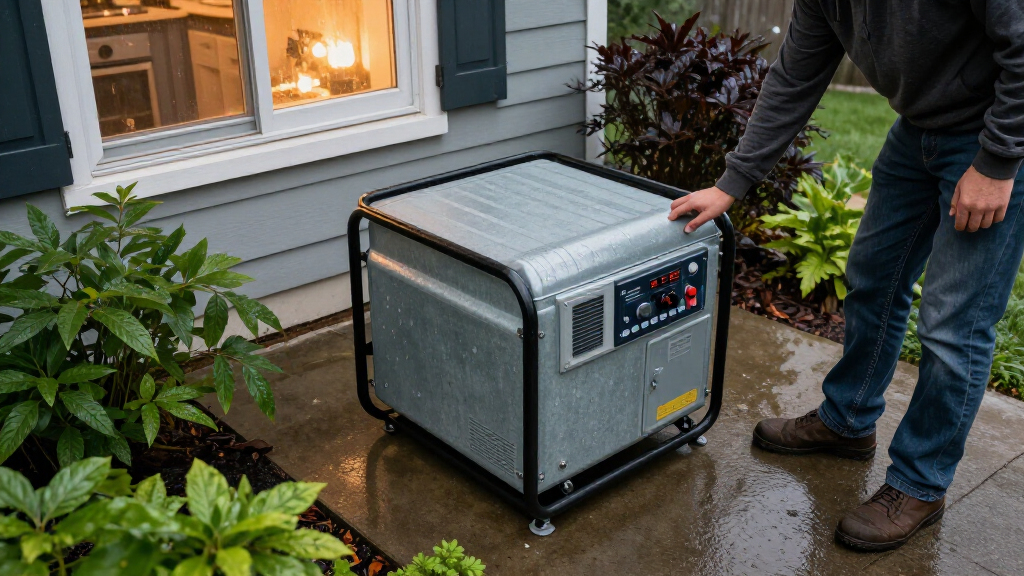
I compared these generators by how well they address whole-home backup needs: usable power capacity, fuel choices, starting convenience, transfer-switch support, monitoring, and the work required during an outage. Standby models rank highest for buyers who want a fixed system that can start automatically, especially when the package includes a transfer switch and cellular connectivity. Capacity still matters: the 26 kW Generac sits above the 22 kW and 14 kW models for homes with heavier loads, but more output is not automatically a better fit.
Portable generators rank by flexibility and practicality rather than by peak wattage alone. Tri-fuel and dual-fuel capability can help owners adapt to available fuel, while remote or electric start reduces setup effort; those advantages do not replace a transfer switch, safe placement, or load planning. I gave each product a distinct role based on these differences, and ranked the models with clear home-backup advantages ahead of options that require more homeowner involvement.
| whole house generator | Fuel Types |
|---|---|
| DuroStar DS13000MX 13,000-Watt | — |
| Westinghouse WGen14500TFc 1800 | Gasoline / Propane / Natural Gas |
| Generac 22 kW Whole Home Stand | — |
| Generac 26kW Whole-Home Standb | — |
| Westinghouse WGen9500DF Dual-F | Gasoline and Propane |
| Westinghouse 13,500-Peak-Watt | Gasoline, propane, natural gas |
| Generac 14 kW Whole-Home Stand | — |
| DuroMax XP13000EH 13,000-Watt | Gasoline or propane |
| Westinghouse 14,500-Watt Tri-F | Gasoline, propane, natural gas |
| DuroMax XP15000HX 15,000-Watt | Gasoline or propane |
Factors to Consider When Choosing Whole House Generators
Choosing a whole house generator starts with the kind of backup you expect to use. These broader decisions can prevent overspending on capacity or discovering that a generator cannot support the way your home is wired.Decide Which Circuits Need Backup
“Whole house” can mean keeping a few essential circuits running or powering most of a home, and the difference changes the generator size you need. List the loads you expect to use together, including heating or cooling equipment, refrigeration, well pumps, and cooking appliances. Ask an electrician to account for startup surges, since motors can briefly draw much more power than their normal running load. A smaller system paired with a clearly planned set of circuits may serve you better than a larger generator with no load plan. Avoid sizing from the total wattage printed on appliances without checking which loads operate at the same time.
Compare Standby and Portable Operation
A standby generator is installed in a fixed location and can start automatically when paired with its transfer equipment, which reduces the tasks you face during an outage. A portable unit costs you more effort at the moment it is needed: it must be moved or uncovered, started, connected correctly, and refueled. Portability can suit renters, occasional backup, or buyers who also want power away from home, but it does not make a unit safe to run indoors or near openings. Think about who will operate the generator if you are away or weather conditions are poor. Your preferred outage routine may matter as much as the output rating.
Plan Fuel Access Before Choosing Fuel Flexibility
Dual-fuel and tri-fuel capability gives you alternatives, but each fuel source comes with its own storage, delivery, and runtime questions. Check which fuels are available at your property and what connections or compatible equipment the generator requires. Stored gasoline can be less convenient during a long outage because it needs proper storage and regular attention. Propane can be stored on site, while natural gas availability depends on a suitable connection and service continuity. Compare realistic runtime at the loads you plan to run, rather than assuming a generator’s listed fuel options make every outage equally easy to manage.
Budget for Transfer Equipment and Installation
The generator itself is only one part of a working home backup setup. Standby systems need proper site preparation, electrical work, and fuel arrangements; portable units also need a safe, code-compliant way to connect power to selected circuits. A transfer switch helps prevent dangerous backfeed into utility lines, so do not treat connection equipment as an optional accessory. Ask for an installation quote that identifies the equipment, labor, permits, and any fuel-line or electrical upgrades. Comparing complete setups gives you a clearer sense of the tradeoff between a professionally installed automatic system and a portable unit that needs more manual work.
Check Noise, Placement, and Local Requirements
Both standby and portable generators need scheduled care, even if outages are rare. Review the maintenance schedule for oil, filters, battery checks, exercise cycles, and fuel system upkeep, then decide who will handle each task. Standby models with monitoring can make operating status easier to check, but connectivity does not remove routine service needs. Portable models may need more preparation before storage and a reliable plan for fuel freshness. If you prefer a system that requires little attention during an outage, include the service plan and automatic features in your decision instead of focusing only on generator output.
Frequently Asked Questions
Can a portable generator power my whole house?
It can support many household loads, but whether it powers the entire home depends on the generator’s running and starting capacity, your electrical setup, and which appliances operate together. Most buyers should first decide whether they need essential circuits or near-whole-home coverage. Large air conditioners, electric ranges, and pumps can add substantial demand, especially at startup. Have an electrician assess the loads and connection method before relying on a portable unit as whole-home backup. A transfer switch or other approved connection equipment is part of that plan.
Do I need a transfer switch for a portable generator?
A transfer switch is a safe, practical way to connect a generator to selected home circuits and prevent power from feeding back into utility lines. Do not connect a portable generator to a wall outlet or improvise a connection to household wiring. An electrician can help select equipment that matches your panel and the circuits you want to power. The right setup also makes it easier to manage loads without running extension cords throughout the home. Include installation and connection equipment when comparing portable and standby systems.
Is a tri-fuel generator worth choosing over a dual-fuel model?
Tri-fuel is useful when all listed fuel sources are accessible and you want more ways to keep the generator supplied during a disruption. It brings less benefit if one or more fuel types are unavailable at your property or require equipment you do not plan to install. Compare the generator’s output and runtime on the fuel you expect to use most, since performance can vary by fuel. Dual-fuel may be simpler if two practical sources already cover your needs. Fuel flexibility should support a realistic supply plan, not just add options on paper.
How do I know whether 14, 22, or 26 kW is enough for my home?
Start with a list of the circuits and appliances you want to run at the same time, then account for startup surges from motors and compressors. A 14 kW system may fit a more limited backup plan, while 22 or 26 kW can support heavier combined loads when properly configured. Home size by itself is not a reliable way to choose capacity because heating, cooling, fuel type, and appliance mix vary. Ask a qualified installer to calculate your load and explain any load management equipment in the proposal. That process can keep you from paying for capacity your home will not use.
Should I choose a standby generator if outages are infrequent?
A standby system can still make sense when an outage would disrupt essential medical equipment, water supply, heating, or work, since automatic operation reduces the need for someone to be home. If outages are rare and you can manage setup when they occur, a portable model may offer enough backup with more flexibility. Compare the full installed system requirements against the amount of manual work you are willing to take on. Also consider whether fuel and service support are readily available where you live. The best fit depends on the consequences of an outage as much as how often one happens.
Conclusion
For most buyers seeking a fixed home backup system, I recommend the Generac 22 kW as the best overall balance of capacity, transfer-switch support, and cellular connectivity. Choose the Westinghouse WGen9500DF as a value-oriented portable option if a smaller, manually operated setup matches your circuit plan; choose the Generac 26 kW as the premium pick when a load assessment supports its higher capacity. The Generac 14 kW is the clearest beginner choice among standby systems because the included transfer switch and connectivity simplify the ownership setup. For buyers who prioritize fuel flexibility in a portable unit, the Westinghouse WGen14500TFc is a strong specific-needs pick. Match any final choice to your actual loads, fuel access, safe placement, and electrical connection plan.
Halloween Picks
halloween
As an affiliate, we earn on qualifying purchases.