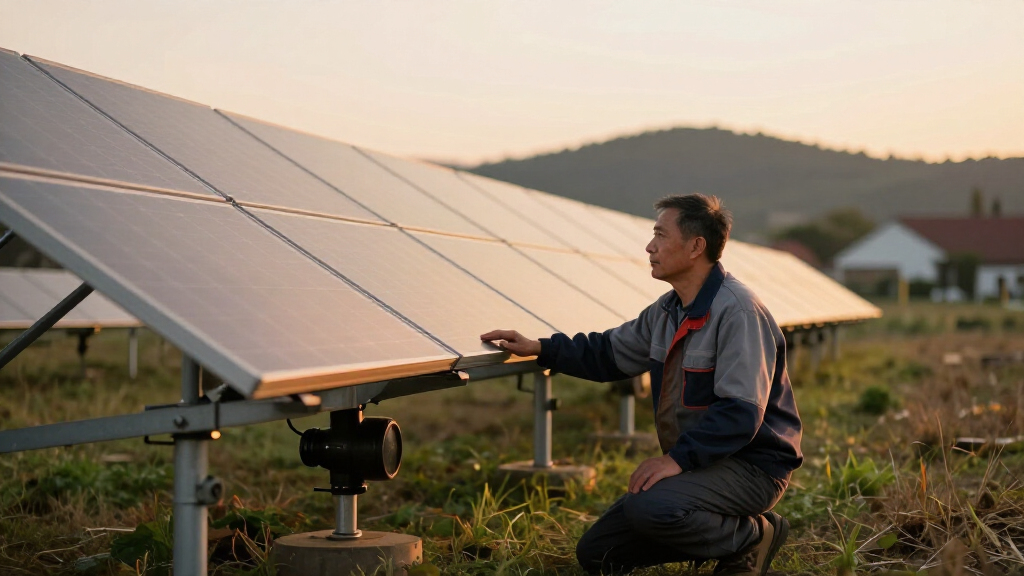

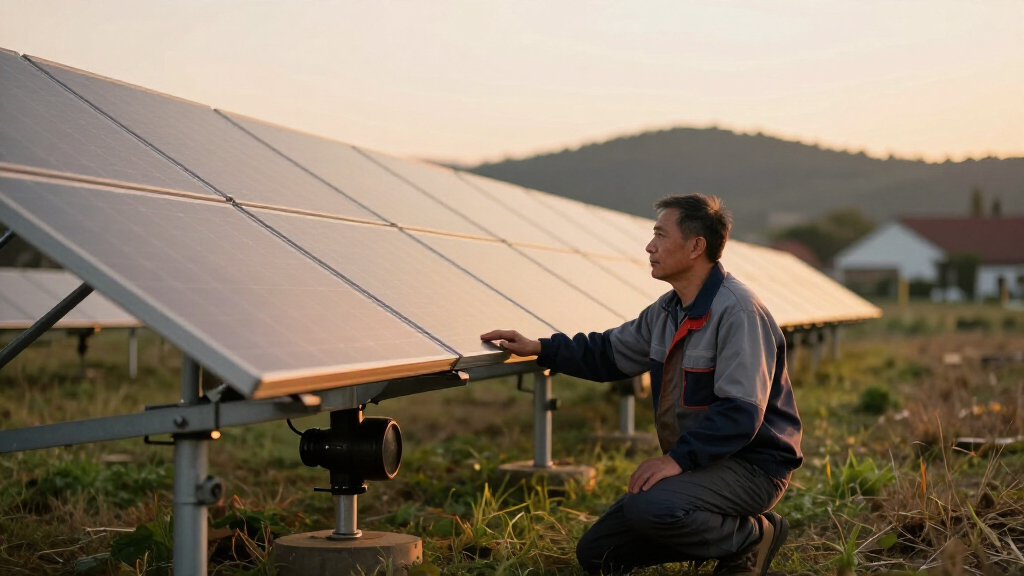
If you’re searching for the best solar panel trackers, the biggest decision you’ll face is whether you need a complete tracking platform or just a controller for a system you build yourself. My top pick overall is the BINGOX Dual-Axis Solar Tracker Controller Kit, because it bundles the LCD interface, wind sensor, and remote control that most competitors sell separately or omit entirely. For a ready-to-mount solution rather than a DIY build, the GridX-Maverick Dual-Axis Solar Tracker 2kW stands out as the most capable option for full-size 60-72 cell panels, while the SBE Solar Tech 12V Analog Controller makes sense for anyone who wants simple, no-programming tracking on a budget. The main tradeoff in this category is flexibility versus convenience: controller kits are affordable but demand motors, frames, and wiring from you, while complete platforms cost far more but work almost out of the box. Keep reading for the full breakdown of all twelve options.

Get backup power and energy gear delivered free with Prime
- Fast, free delivery on millions of items
- Prime Video, Amazon Music and more included
- Member-only deals all year
Key Takeaways
- Nine of the twelve products are controllers only, not complete trackers — buyers who don’t want to source their own motors and frames should focus on the GridX-Maverick, the DIY pan-tilt kits, or the GHRERTX system.
- Wind protection was the clearest differentiator: only the BINGOX and WQV kits include wind speed sensors that park panels flat in storms, a feature that protects expensive glass in bad weather.
- Analog controllers like the SBE Solar Tech trade precision for simplicity and price, while digital kits with LCDs and remote controls offer manual override — useful when tracking logic drifts or needs maintenance.
- Worm gear motors in the DIY pan-tilt kits provide self-locking hold under wind load, which standard stepper or brushed motors cannot do — a key reason to prefer those kits for heavier panels.
- The GHRERTX app-controlled system is the only mid-range option supporting 300-500W panels with remote monitoring, filling the gap between small DIY kits and the commercial-grade GridX-Maverick.


| solar panel tracker | Brand |
|---|---|
| SBE Solar Tech 12V High Power | SBE Solar Technologies |
| BINGOX Dual-Axis Solar Tracker | BINGOX |
| LeTkingok TK26-0701 Sun Automa | LeTkingok |
| DIY DC Dual Axis Solar Trackin | — |
| Single Axis Sun Tracking Contr | top-tool |
| DIY DC Dual Axis Pan Tilt Sola | — |
| Dual Axis Solar Tracker Contro | Jkjhbhged |
| GridX-Maverick Dual-Axis Solar | GridXsolar |
| iDili Solar Tracker Controller | — |
| 2-Axis Solar Tracker Controlle | — |
| WQV Dual Axis Solar Tracker Co | WQV |
| GHRERTX Solar Panel Dual Axis | GHRERTX |
More Details on Our Top Picks
SBE Solar Tech 12V High Power Analog Solar Tracker Controller
The SBE Solar Tech ST1210-R2 stands out for raw current handling: 10A continuous, which is double the capacity of most analog boards in this category. If you’re running a larger single-axis array on a 12V system, this headroom matters — the top-tool single-axis controller (B0CJJK9SZ8) is far more polished out of the box, but it doesn’t advertise this kind of continuous load tolerance. The solid-state design means no relays clicking themselves to death over years of daily cycling, and the differential light sensing ignores cloud edges rather than twitching back and forth.
The honest tradeoff: this is a component, not a system. There’s no automatic morning return, and limit switches plus weatherproofing are your job. Compared with the BINGOX dual-axis kit, which arrives with sensors and a remote, this demands real DIY effort — but rewards it with simplicity and durability.
Pros:- Handles 10A continuous current — double the standard analog model
- Solid-state construction with no relays to wear out
- Tracks within 5 degrees and ignores cloud movement
- User-replaceable fuse and optional remote sensor support
Cons:- Requires proper airflow when running near the power limit
- No automatic morning repositioning electronics
- Limit switches and weatherproofing are left entirely to the installer
Best for: Experienced DIYers running larger 12V single-axis arrays who want a no-nonsense, high-current analog board they can integrate into their own enclosure and switch design.
Not ideal for: Beginners or anyone wanting plug-and-play convenience — you’ll need to supply limit switches, weatherproof housing, and morning repositioning logic yourself.
- Brand:SBE Solar Technologies
- Model Number:ST1210-R2
- Amperage Capacity:10 A continuous
- Maximum Voltage:12 VDC
- Maximum Power:3 watts
- Tracking Accuracy:Within 5 degrees
- Configuration:Single-axis
- Fuse:User replaceable
Our verdict“A rugged, high-current analog board for builders who already know what they’re doing and don’t need hand-holding.”
BINGOX Dual-Axis Solar Tracker Controller Kit with LCD, Wind Sensor & Remote
Among the dual-axis controllers here, the BINGOX RIV287 earns its spot by including what others leave out. Where the LeTkingok TK26-0701 ships a capable control unit, BINGOX bundles the sunlight sensor, wind sensor, wireless remote, and LCD interface in one package — so you’re not hunting for compatible components mid-build. The built-in wind protection is the standout safety feature: it locks the panel position during gusts, which is exactly what you want on an RV roof or an exposed farm install where a flat panel in a storm becomes a sail.
Hemisphere flexibility comes standard, so the southern-hemisphere wiring workarounds that plague some competitors aren’t an issue here. The obvious limitation is that panels and actuators are not included — this is a controller kit, not a turnkey tracker, so budget for the mechanical side separately.
Pros:- Complete kit includes sunlight sensor, wind sensor, LCD, and wireless remote
- Built-in wind protection locks panel position in high winds
- Supports both Northern and Southern Hemisphere operation
- Waterproof housing suited to outdoor installation
Cons:- Controller only — panels and actuators not included
- 24V system requirement may not suit smaller 12V setups
Best for: Off-grid, RV, and farm installers who want a well-rounded dual-axis control package with sensors and remote included, and who already have or will source their own panels and actuators.
Not ideal for: Anyone expecting a complete tracking system in the box — solar panels, linear actuators, and mounting hardware must be purchased separately.
- Brand:BINGOX
- Part Number:RIV287
- Voltage:24 volts
- Display Type:LCD
- Dimensions:9″L x 8.2″W x 5.3″H
- Weight:2.2 pounds
- Included Components:Controller, wireless remote, sunlight sensor, wind sensor, manual
- Material:Waterproof shell
Our verdict“The most complete dual-axis control package on this list for off-grid builders who can handle the mechanical side themselves.”
LeTkingok TK26-0701 Sun Automatic Tracking Controller for Dual-Axis Solar Tracking Systems
The LeTkingok TK26-0701 differentiates itself with intelligent idle behavior: it auto-levels the platform during high winds and centers the array on cloudy days and at night, rather than leaving it parked at an awkward angle. That’s smarter default behavior than the SBE analog board, which has no night logic at all, and it protects both the mechanical structure and the panels themselves. The infrared remote with adjustable parameters plus LCD readout lets you fine-tune tracking behavior without opening a control box in the weather.
Its strict requirement is the platform: it needs two brushed DC motors with a limit function. Pair it with something like the D DIY worm-gear pan tilt kit and you have a full system; pair it with the wrong actuator type and you’re stuck. Southern-hemisphere users also face a wiring reversal the manual doesn’t emphasize.
Pros:- Real-time dual-axis sun tracking with adjustable parameters
- Automatic wind leveling and cloudy/night centering
- Infrared wireless remote and LCD parameter display
- Works in both northern and southern hemispheres
Cons:- Strictly requires two brushed DC motors with a limit function
- Instructions default to northern hemisphere; southern use requires wiring reversal
Best for: DIY builders assembling a dual-axis system from a compatible motorized platform who want automatic storm leveling and night centering built into the controller.
Not ideal for: Buyers without a compatible two-motor limit-function platform, and southern-hemisphere users uncomfortable rewiring — the default configuration assumes northern operation.
- Brand:LeTkingok
- Model Number:TK26-0701
- Maximum Voltage:24 volts
- Output Voltage:24 volts DC
- Special Features:Real-time sun tracking, IR wireless remote, LCD display
- Motor Requirement:Two brushed DC motors with limit function
- Warranty:30-day voluntary return guarantee
Our verdict“A thinking controller for dual-axis builds — just make sure your platform’s motors match its requirements before buying.”
DIY DC Dual Axis Solar Tracking Pan Tilt Kit with High Torque Worm Gear Motors
Every controller on this list needs something to move, and the D DIY pan tilt kit is the muscle of the lineup. With 60KG horizontal and 25KG vertical load ratings, all-metal worm gear motors, and self-locking gears that hold position without power, it’s built to carry real panel weight — a claim the lighter-duty brackets elsewhere in this roundup can’t make. The 340° pan and 120° tilt range covers a full tracking day, and limit switches stop wire winding before it becomes a repair job.
Paired with the LeTkingok TK26-0701, it forms a genuinely capable dual-axis rig; on its own, it’s only half a system since no tracking electronics are included. The worm gear tradeoff is speed — movement is deliberate — but for solar tracking, slow and steady is exactly what you want. Assembly skill and patience are prerequisites.
Pros:- All-metal construction with self-locking worm gear motors
- High load capacity: 60KG horizontal, 25KG vertical
- Limit switches prevent cable winding during rotation
- Flexible 5V/12V/24V motor voltage compatibility
Cons:- Requires assembly and genuine technical expertise
- Worm gear design means slow rotation speeds
Best for: Hands-on builders assembling a dual-axis tracker from parts who need a heavy-duty, self-locking mechanical platform for substantial panel weight.
Not ideal for: Buyers wanting a controller-included solution — this is mechanics only, with no sun-tracking electronics, and assembly requires technical comfort.
- Motor Type:Worm gear motor (5V/12V/24V)
- Motor Power:30W
- Max Torque:35KG
- Horizontal Rotation:340°
- Vertical Rotation:120°
- Load Capacity:60KG horizontal / 25KG vertical
- Bracket Material:Aluminum alloy + 3MM steel plate
- Product Weight:2.8 lbs (1.02KG)
Our verdict“The strongest mechanical backbone in this roundup — pair it with a dual-axis controller and you have a serious tracker.”
Single Axis Sun Tracking Controller Solar Tracker with Automatic/Manual Switch
If the SBE analog board is for tinkerers, the top-tool ST23092101 is the opposite: it arrives factory calibrated, so you wire it up and it works. The patented pyramid four-quadrant light sensor feeds an MCU that samples every 1 minute 20 seconds — a deliberate pace that keeps power draw low and stops the jittery hunting you get from simpler differential sensors. The automatic night return solves the morning-reset problem SBE leaves to the builder, and manual mode gives you override when needed.
Build quality punches above its size: an IP65 waterproof enclosure with aviation plug connections means it survives outdoors without a homemade jar enclosure. The weak point is documentation — the manual is poorly translated, which can turn a simple install into guesswork. It’s also single-axis only, so dual-axis ambitions need a different pick like the BINGOX kit.
Pros:- Factory pre-calibrated for plug-and-play installation
- Pyramid four-quadrant light sensor rated for 20 years with rain/dust-proof glass cover
- IP65 waterproof enclosure with aviation plug connections
- Automatic night return plus manual override mode
Cons:- Instruction manual is poorly translated, complicating setup
- Single-axis design only — no dual-axis support
Best for: First-time tracker builders and anyone who wants a weatherproof, pre-calibrated single-axis controller that works out of the box without parameter tuning.
Not ideal for: Dual-axis projects, and anyone who relies heavily on clear documentation — the translated manual may slow installation.
- Brand:top-tool
- Model Number:ST23092101
- Tracking Type:Single-axis
- Power Supply:12-24V
- Tracking Frequency:Every 1 minute 20 seconds
- Enclosure:IP65 waterproof box with aviation plug
- Light Sensor Cable:2 meters (default)
- Product Weight:1 lb
Our verdict“The easiest path to a working single-axis tracker — just set aside patience for the manual.”
DIY DC Dual Axis Pan Tilt Solar Tracking Platform with X/Y Axis Worm Gear Motors
This all-metal pan-tilt platform is the mechanical starting point for builders who want to assemble a tracking system themselves rather than buy a turnkey controller. The 35KG torque worm gear motors with self-locking capability mean the platform holds its position even when power drops — a genuine advantage over lighter kits that drift under panel weight or wind gusts. Compared with the iDili controller, which ships brains without brawn, this option supplies the muscles and joints but none of the tracking intelligence, so you’ll need to pair it with a separate control system. The four limit switches are a thoughtful touch, preventing the wire-winding damage that plagues cheap rotating rigs. The tradeoff is real: this is a kit, not an appliance, and it expects soldering, wiring, and mechanical confidence from day one.
Pros:- All-metal construction with ultra-thick aluminum brackets resists flexing under panel weight
- 35KG worm gear motors with self-locking hold position without continuous power draw
- Limit switches on both axes prevent cable winding and damage
- Dual-axis movement supports both solar tracking and camera/monitoring applications
Cons:- Requires assembly, wiring, and a separate tracking controller to actually follow the sun
- Small 2.75-pound platform limits the panel size it can realistically carry
Best for: Makers and engineering hobbyists who want to build a custom dual-axis tracker from quality mechanical components
Not ideal for: Anyone wanting plug-and-play tracking out of the box — this platform has no controller, sensors, or software included
- Manufacturer:LeTkingok
- Model Number:T-5V-12V-24V
- Material:Metal (ultra-thick aluminum alloy)
- Torque:35KG per motor
- Motor Type:Low-speed worm gear, self-locking
- Limit Switches:2 horizontal, 2 vertical
- Item Weight:2.75 pounds
Our verdict“A mechanically solid chassis for DIY builders who already have or plan to buy a controller like the iDili unit separately.”
Dual Axis Solar Tracker Controller – Automatic Sun Tracking Control System, White
This controller targets the small-scale renewable energy tinkerer — patio, lawn, and garden solar setups where a fixed controller would waste morning and afternoon light. Its main appeal is simple: automatic dual-axis tracking at a low entry cost, with an LCD or LED display for status at a glance. Compared with the iDili controller, it covers similar ground but gives up the pre-calibrated pyramid sensor and IP65 weatherproofing, and its plastic housing raises questions about longevity outdoors. Documentation from this manufacturer is thin, so expect some trial and error during setup. Where the BINGOX kit bundles wind sensing and a remote, this unit ships alone, meaning motors, sensors, and mounting hardware all come out of your own pocket. It’s a reasonable bet for experimentation — just don’t build a critical off-grid system around it without a backup plan.
Pros:- Automatic dual-axis tracking boosts capture on small solar platforms
- Lightweight at 837 g, easy to mount and reposition
- LCD or LED display for at-a-glance status
- Low-cost entry point for experimenting with sun tracking
Cons:- Plastic construction may degrade under prolonged outdoor UV and weather exposure
- Sparse documentation and little marketplace feedback make performance hard to verify beforehand
- Controller only — no motors, sensors, or hardware included
Best for: Hobbyists running small garden or patio solar rigs who want automatic tracking without spending much
Not ideal for: Off-grid or weather-exposed installations where plastic construction and vague documentation create reliability risk
- Brand:Jkjhbhged
- Color:White
- Material:Plastic
- Display Type:LCD or LED
- Operating Temperature:15 °C
- Item Weight:837 g
- Included:1 controller unit only
Our verdict“A cheap way to experiment with automatic tracking on garden-scale setups, but not a foundation for serious installations.”
GridX-Maverick Dual-Axis Solar Tracker 2kW for 60-72 Cell Panels
The GridX-Maverick is the only product in this lineup built to carry a real residential array — four 335W panels, upgradeable to eight, on a steel-and-aluminum frame rated for 90 mph wind loads. That puts it in a different category from the LeTkingok pan-tilt platform or any of the hobbyist controllers here: those move small panels, while this moves kilowatts. The up to 40% power gain over fixed mounts is the whole point of tracking at this scale, and the modular design lets you expand without rebuilding. The honest catch: the base configuration is manual, with automated actuators and a tracking computer sold separately, so full hands-off tracking costs more than the sticker suggests. You’ll also need to set your own post and handle 150 pounds of hardware. The 10-year all-parts warranty from an American manufacturer softens those demands considerably.
Pros:- Handles a full 2kW array — up to 4x 335W panels, expandable to 8
- Captures up to 40% more power than fixed-tilt mounting
- Steel and aluminum build rated for 90 mph wind loads
- 10-year all-parts warranty from an American manufacturer
Cons:- Automated tracking (actuators and tracking computer) costs extra — base unit is manually adjusted
- At 150 lbs and requiring your own post, installation is a genuine project
Best for: Homeowners with serious off-grid or supplemental solar arrays who want maximum harvest and can handle a ground-mount installation
Not ideal for: Casual hobbyists or renters — it’s a 150-pound system requiring a concrete post and additional purchases for automation
- Brand:GridXsolar
- Model Number:MAVUS0619
- Maximum Power:2 kW
- Panel Compatibility:60-72 cell panels; up to 4x 335W (upgradeable to 8)
- Material:Steel and aluminum
- Efficiency Gain:Up to 40% vs. fixed systems
- Warranty:10-year all parts
- Item Weight:150 lbs
Our verdict“The pick for whole-home solar harvesting, provided you budget for the automation add-ons and a proper installation.”
iDili Solar Tracker Controller – Single/Double Axis Sun Tracking System with Automatic/Manual Switch
For buyers who already own a mount and motors, the iDili is the most complete controller package in this batch. Its patented pyramid four-quadrant sensor feeds an onboard MCU that decides panel direction, and it arrives factory pre-calibrated — a real edge over the white Jkjhbhged controller, which offers little setup guidance at all. The feature set shows genuine engineering: night return repositions panels for sunrise, anti-jitter logic stops motor churn in passing clouds, and manual mode lets you override when needed. The IP65 housing and glass-covered sensor rated for 20 years make it the durability leader among the controllers here. The frustrations are familiar for this category: the translated manual will test your patience, and you’re only getting the brain — motors, actuators, and frame are your responsibility, which pairs naturally with the LeTkingok platform above.
Pros:- Factory pre-calibrated pyramid four-quadrant sensor — no parameter tuning required
- IP65 waterproof housing with a glass sensor rated for 20 years outdoors
- Automatic and manual modes, night return, and anti-jitter cloud logic
- Supports both single-axis and dual-axis configurations on 12-24V power
Cons:- Poorly translated instruction manual complicates wiring and setup
- Controller only — motors, actuators, and mounting hardware sold separately
Best for: DIY builders with existing mounts and motors who want a pre-calibrated, weatherproof tracking brain
Not ideal for: First-time solar buyers expecting a complete kit — nothing but the controller and sensor ship in the box
- Manufacturer:iDili
- Model:22-99 (A: Single axis)
- Power Supply:12-24V (220V customizable)
- Tracking Frequency:Every 1 minute 20 seconds
- Sensor Cable Length:2 meters
- Sensor Life Expectancy:20 years
- Installation Hole Size:135mm x 52mm, 7mm aperture
Our verdict“The strongest controller-only choice here, best paired with your own mechanical platform for a durable custom tracker.”
2-Axis Solar Tracker Controller – Automatic Solar Tracking System (Bundle 2)
At 1.76 ounces, this OOWEKXLIF unit is the featherweight of the roundup — small enough to tuck into tight enclosures where the iDili controller or the white Jkjhbhged box simply won’t fit. Its dual role as a tracker controller and motor speed controller is a genuine space-saver for compact builds, folding two functions into one board. That compactness, though, comes with the thinnest documentation in this batch: listed package dimensions of well under an inch suggest minimal packaging with no published electrical specs, and there’s essentially no track record to verify against. Compared with the BINGOX kit, which bundles an LCD, wind sensor, and remote, this is a bare-board gamble best suited to tinkerers who can reverse-engineer connections themselves. If your project fails, diagnosing whether the board or your wiring is at fault will be on you.
Pros:- Extremely compact and lightweight — fits in tight project enclosures
- Combines tracking control and motor speed control in one unit
- Automatic 2-axis tracking for improved panel efficiency
- Simple board-level design suits custom integrations
Cons:- Vague product description with almost no published technical specifications
- No marketplace track record to verify reliability or support quality
- Minimal packaging suggests no accessories or documentation included
Best for: Experienced tinkerers building compact tracker prototypes who can work without documentation
Not ideal for: Anyone who needs verified specs, manuals, or reliability history before wiring electronics into a solar system
- Manufacturer:OOWEKXLIF
- Item Model Number:TKJBHGPK
- Function:Automatic 2-axis solar tracking / motor speed controller
- Package Dimensions:0.39 x 0.39 x 0.39 inches
- Item Weight:1.76 ounces
Our verdict“A size-obsessed experimenter’s board — only worth the risk if you can troubleshoot electronics without a manual.”
WQV Dual Axis Solar Tracker Controller Kit with Sunlight Sensor, Wind Speed Sensor, Limit Sensors, and Remote Control
Most controller kits in this roundup make you piece together sensors separately, but the WQV 7107STC-SS/WS arrives with everything in one box: sunlight sensor, wind speed sensor, two limit sensors, LCD controller, and a remote. Compared with the BINGOX kit, which bundles similar components, WQV pulls ahead on safety logic — wind leveling automatically flattens the panel in gusts, and the system returns to a resting position on cloudy days or at night instead of blindly hunting for light. That translates into less motor wear and less worry during storms. The tradeoff is installation effort: limit switches must be installed in all four directions before the system will run safely, and the manual only covers northern hemisphere setup — southern hemisphere buyers will need to reverse the directions themselves. Still, for a DIYer building a dual-axis rig from scratch, this kit makes the most sense for those who want protection features baked in rather than added later.
Pros:- Complete kit with sunlight sensor, wind speed sensor, limit sensors, controller, and remote included
- Wind leveling and automatic return on cloudy days or at night protect both motor and panel
- Real-time high-precision sun tracking improves panel efficiency over fixed mounts
- Works in both northern and southern hemispheres
- Supports both 12V and 24V DC brushed motors up to 15A
Cons:- Requires limit switches installed in all four directions before safe operation
- Manual only covers northern hemisphere setup — southern hemisphere requires reversing directions
- Remote control AAA batteries not included
Best for: DIY builders assembling a custom dual-axis tracker who want wind protection and auto-return safety features included from day one
Not ideal for: Southern hemisphere users or beginners who need plug-and-play simplicity — the hemisphere-specific manual and four-direction limit switch wiring demand patience
- Brand:WQV
- Model:7107STC-SS/WS
- Input Voltage:DC 10-28V
- Motor Compatibility:12V/24V DC brushed motors
- Single Motor Current:<15A
- Display:LCD
- Included:Controller, sunlight sensor, wind speed sensor, 2 limit sensors, remote control
- Installation Hole Spacing:174mm horizontal / 60mm vertical
Our verdict“This kit makes the most sense for hands-on builders who want a fully sensor-equipped controller with genuine safety logic, provided they’re willing to handle detailed wiring and hemisphere setup themselves.”
GHRERTX Solar Panel Dual Axis Tracking System with App Control for 300-500W Solar Panels
Where nearly every other product here — the WQV kit, the SBE analog controller, the LeTkingok TK26-0701 — is just the brains of a tracker, the GHRERTX delivers the entire mechanical platform plus electronics in one package. That distinction matters: you mount a 300-500W rigid panel, pair the app, and it tracks automatically across a 345° range with 10-direction light sensing, claiming up to 30% more energy than a fixed mount. The app control sets it apart from remote-based kits like the BINGOX, giving you position adjustments from your phone instead of a handheld remote. Tradeoffs are real, though. It only accepts rigid, non-foldable panels up to 1.1m wide and 25kg, and at 55.1 lbs the mount itself is a two-person repositioning job. Compared with buying a controller and building your own frame, you pay for convenience with less flexibility — but for anyone who wants tracking without a fabrication project, this is the turnkey route.
Pros:- Complete tracking system — frame, sensors, and control included, no separate build required
- App control with 10-direction light sensing and fully automatic tracking across 345°
- Up to 30% higher energy conversion versus fixed or single-axis mounts
- Foldable two-piece design eases transport and initial installation
Cons:- Only compatible with rigid, non-foldable panels
- Heavy at 55.1 lbs, complicating placement and relocation
- Panel size capped at 1.1m wide and 25kg, excluding larger arrays
Best for: Owners of 300-500W rigid panels who want a complete, ready-to-run dual-axis tracking mount with smartphone control instead of a DIY build
Not ideal for: Anyone with foldable or oversized panels, or renters who need to frequently relocate a light mount — the 25kg panel cap and 55 lb base rule both out
- Brand:GHRERTX
- Tracking Type:Dual-axis (pitch & pan)
- Rotation Range:345°
- Recommended Panel Power:300-500W
- Max Panel Size:1.1m wide / 25kg
- Control:App control
- Efficiency Gain:Up to 30%
- Unit Weight:55.1 lbs
Our verdict“Buy this if you want a full dual-axis tracking solution straight out of the box with app convenience; skip it if you run foldable panels or want the flexibility of a custom-built platform.”
How We Picked
I evaluated each tracker against four buyer-relevant criteria. Completeness came first: a controller that leaves you sourcing linear actuators, sensors, and a frame is a very different purchase than a platform that arrives ready to mount, so I separated true turnkey systems from DIY components. Tracking performance was next — dual-axis models that follow the sun both horizontally and vertically capture more energy than single-axis ones, but only if their sensor logic and motors hold up, so I weighed sensor quality, axis count, and motor torque together.
Protection features mattered heavily in the ranking. Wind sensing, limit switches, and manual override separate trackers that survive storms and maintenance sessions from those that grind their motors against mechanical stops. Finally, I judged ease of setup and scalability: what panel wattage each unit supports, how much wiring and programming it demands, and whether a beginner could realistically get it running. Products ranking highest either did more things well at once (BINGOX) or did one thing exceptionally (GridX-Maverick’s capacity, SBE’s simplicity).
Factors to Consider When Choosing Best Solar Panel Trackers
Before choosing a tracker, it helps to understand what actually drives value in this category — and where buyers most often go wrong. These are the factors I weighed, and the ones that should shape your decision more than any single product listing.Controller, Kit, or Complete Platform?
The most common mistake in this category is buying the wrong product type entirely. A controller like the LeTkingok or iDili unit is just a brain — you still need actuators or motors, a sensor, a frame, and a power supply, which can triple your true cost. Pan-tilt kits close part of that gap by including motors and a mounting platform, but you’ll still handle the controller wiring and panel mounting. Complete systems like the GridX-Maverick remove nearly all of that work but cost several times more. My advice: honestly assess your electrical and mechanical comfort before choosing, because a half-finished DIY tracker captures no energy at all.
Single-Axis vs. Dual-Axis Tracking
Dual-axis trackers follow the sun’s daily east-west path and its seasonal elevation, typically gaining 25-40% more energy over a fixed mount, while single-axis designs capture most of the daily arc but miss seasonal adjustment and usually land in the 15-25% range. That difference matters most at higher latitudes where the sun’s angle swings dramatically across seasons. If your panels are small or your winters are mild and overcast, the extra complexity of dual-axis tracking may never pay back its cost in added motors and failure points. Single-axis controllers also tend to be simpler to calibrate, which matters if you’d rather not fine-tune sensors twice a year.
Motor Type and Wind Survival
This is where cheap trackers quietly fail. Standard motors can’t hold position against wind gusts, so panels sway or the drivetrain back-drives, while worm gear motors — like those in the DIY pan-tilt kits — are self-locking and stay put without power. Equally important is a wind protection mode: trackers with anemometers (BINGOX, WQV) can detect storms and flatten panels to a safe position, which is the difference between a scary night and a shattered panel. If you live anywhere with serious weather and your chosen controller lacks wind sensing, that’s a genuine reason to pay more or pick a different unit. Check the weight rating of the platform against your panel’s actual mass, too — panels are heavier than they look.
Sensor Logic and Calibration
Tracking accuracy depends almost entirely on the sunlight sensor and how the controller interprets it. Analog controllers use simple voltage-difference logic — robust and cheap, but they drift and need periodic recalibration. Digital systems with dedicated sensor heads and LCD feedback are easier to diagnose when something goes wrong, and remote controls let you park or override the system without climbing a ladder. Buyers frequently underestimate how often sensors need cleaning; a dusty or shadowed sensor can point panels the wrong way for days. If your tracker will be mounted somewhere hard to reach, prioritize remote control and app monitoring (as on the GHRERTX) over slightly better raw tracking specs.
Panel Compatibility and Voltage
Most controller kits in this roundup run on 12V or 24V DC systems, which suits small and medium panels but not the high-voltage output of grid-tie arrays. Check two numbers before buying: the controller’s rated actuator voltage and current, and the platform’s maximum panel weight and size. The GridX-Maverick is the standout here, handling 60-72 cell panels up to roughly 2kW, while most pan-tilt kits top out at 100-200W panels. Mismatching either number leads to burnt controllers or sagging frames, and neither failure is covered by warranty. When in doubt, oversize the mechanical components — motors and frames fail long before electronics do.
Total Cost of Ownership, Not Sticker Price
A cheap controller plus actuators, sensors, frame steel, and fasteners frequently costs more than a mid-range complete kit. Add the value of your build time — DIY systems typically take a full weekend or more to assemble and debug — and the economics shift further toward prebuilt options. On the other side, trackers add moving parts to a system that otherwise lasts 25 years, so budget for occasional motor or sensor replacement regardless of what you buy. The honest question isn’t which product is cheapest, but which delivers the most added kilowatt-hours per dollar over five years in your climate. In cloudy regions, that answer is often a fixed mount with one extra panel instead of any tracker at all.
Frequently Asked Questions
Do I need a dual-axis tracker or is single-axis enough?
For most residential users, single-axis tracking captures the majority of the available gain because the sun’s daily east-west arc is the bigger energy factor. Dual-axis systems add seasonal elevation tracking, which pays off most at higher latitudes or in off-grid setups where every winter watt-hour counts. Dual-axis also means twice the motors, sensors, and failure points, so you take on more maintenance for maybe an extra 10-15% energy over single-axis. If your energy shortfall happens in summer, single-axis is the smarter buy; if winter production is your bottleneck, dual-axis earns its complexity.
Can I use one of these controllers with my existing solar panels and mount?
Usually yes, but only if your mount can actually move. Controllers like the SBE, iDili, and LeTkingok units drive actuators or motors — they don’t lift fixed racks by themselves, so you’ll need a pivot mechanism and linear actuators rated for your panel’s weight. Check that the controller’s output voltage and current match your actuator specifications, since mismatched pairs are the leading cause of dead controllers. If your current setup is a fixed roof mount, converting it to tracking is rarely practical; a ground-based pan-tilt platform or complete tracker is the realistic path.
How much extra energy does a solar tracker actually produce?
Expect roughly 15-25% more energy from single-axis tracking and 25-40% from dual-axis compared with a fixed mount at a good angle, though real-world numbers depend heavily on climate. Clear-sky regions with direct sun benefit most, while frequently overcast areas see far less gain because diffuse light doesn’t have a useful direction to track. That’s why trackers are popular in the American Southwest and less common in the Pacific Northwest or Northern Europe. Before buying, compare the tracker’s cost against simply adding another panel — sometimes more silicon beats better aiming.
Are DIY tracker kits difficult to build for a beginner?
Honest answer: they’re achievable but not trivial. The pan-tilt kits with worm gear motors simplify the mechanical side considerably, since the platform and drivetrain arrive assembled, but you still handle sensor mounting, controller wiring, and calibration. Plan on a full weekend, a multimeter, and patience for the initial tuning — panels that track 10 degrees off lose real energy. If soldering and reading wiring diagrams intimidate you, step up to a complete system like the GHRERTX or GridX-Maverick, where the assembly work is largely done and supported by documentation.
What happens to a tracker during storms or high winds?
It depends on the protection features your unit has, and this is a real safety issue. Trackers with wind sensors — like the BINGOX and WQV kits — detect high gusts and automatically park panels in a flat, low-profile position that dramatically reduces wind load. Systems without that feature keep tracking normally, leaving a large panel surface angled like a sail, which is when most tracker damage occurs. Self-locking worm gear motors also matter here because they resist back-driving even when powered down. If your area sees storms and your controller lacks wind protection, plan to manually park the panels before bad weather arrives.
Conclusion
After comparing all twelve options, the right choice comes down to what kind of buyer you are. For best overall, the BINGOX Dual-Axis Controller Kit wins on balance — it’s complete enough to build around, with wind sensing, remote control, and LCD feedback that pricier controllers omit. The SBE Solar Tech Analog Controller takes best value for anyone who wants functional dual-axis or single-axis tracking logic without paying for digital extras. For best premium, the GridX-Maverick 2kW Dual-Axis Tracker is the only option here that handles full-size 60-72 cell panels as a turnkey platform.
Best for beginners goes to the DIY DC Dual Axis Pan Tilt Kit with worm gear motors, since the preassembled drivetrain removes the hardest part of a DIY build while keeping the project affordable. For app-based convenience at mid-range wattages, the GHRERTX system with app control fits 300-500W panels that other kits can’t handle, and the WQV kit is the pick for storm-prone areas thanks to its full sensor suite. Whatever you choose, match the platform to your panel’s weight, your climate’s wind, and your own patience for wiring — that combination, more than any spec sheet, determines whether your tracker pays off.
Fall Picks
fall essentials
As an affiliate, we earn on qualifying purchases.