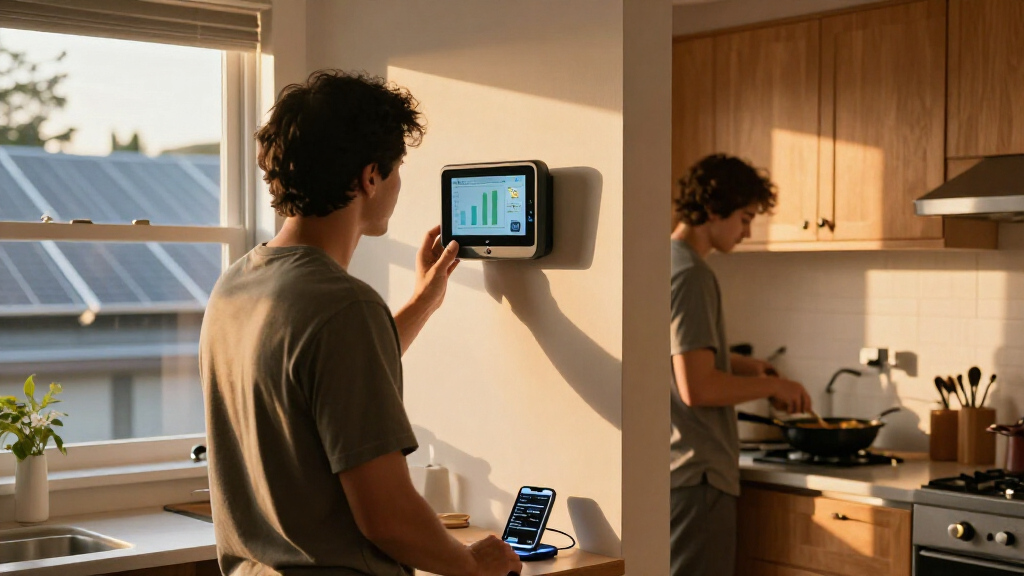

Home energy monitors show how much electricity your household uses, and circuit-level models can help identify which appliances or areas drive that use. I’d choose the Emporia Vue 3 Home Energy Monitor with 16 Circuit Sensors as the best overall pick for buyers who want broad circuit coverage from a familiar monitor line. The Refoss Smart Home Energy Monitor with 16 Circuit Sensors is a strong alternative for tracking many circuits, while the Eyedro Smart Home Energy Monitor stands out for buyers who value Wi-Fi and Ethernet connectivity. The main tradeoffs are how many circuits you can track, how involved installation will be, and whether you prefer a simple whole-home view or more detailed monitoring. Read on for the full breakdown and advice on matching a monitor to your panel and goals.

Get backup power and energy gear delivered free with Prime
- Fast, free delivery on millions of items
- Prime Video, Amazon Music and more included
- Member-only deals all year
Key Takeaways
- Sixteen-circuit coverage is a recurring strength: several picks, including Emporia, Refoss, and SEM-Meter models, target households that want to break whole-home use into more circuit-level readings.
- Sensor count matters more than the product name: the standard Emporia Vue 3 differs from the Vue 3 bundle with eight sensors, so buyers should check the included hardware rather than assume circuit coverage.
- Whole-home monitoring and circuit tracking serve different needs: models with main service sensors can show total household use, while extra circuit sensors help narrow down where that use originates.
- Connectivity separates otherwise similar choices: Eyedro’s Wi-Fi and Ethernet options give it a distinct role for buyers weighing network flexibility against simpler Wi-Fi-focused setups.
- Bundles change the buying decision: the Emporia Vue package with 16 sensors and four smart plugs adds a way to monitor selected plug-in devices, while other listed bundles focus on panel circuits.
| Refoss EM16P Smart Home Energy Monitor |  | Best for Local Control and Deep Circuit Coverage | Main circuit sensors: 2; 2–200A each | Branch circuit sensors: 16; 1–60A each | Accuracy: ±1%; ±2% at low current | VIEW LATEST PRICE | See Our Full Breakdown |
| Emporia Vue 3 Home Energy Monitor |  | Best for App-First Whole-Home and Solar Tracking | Model: EMV3A-2P-WH | Connectivity: 2.4 GHz Wi-Fi and internet connection | Sensor accuracy: ±2% | VIEW LATEST PRICE | See Our Full Breakdown |
| Smart Home Energy Monitor with 8 50A Circuit Sensors |  | Best for Local MQTT with Included Circuit Sensors | Included sensors: 8 × 50A clamp-on sensors | Expandable sensor capacity: Up to 16 total | Voltage support: Up to 240VAC line-neutral, 120/240VAC split-phase, and 415Y/240VAC three-phase; no Delta | VIEW LATEST PRICE | See Our Full Breakdown |
| WiFi Home Energy Monitor with 2 × 120A CTs |  | Best for Single-Phase Solar Export Monitoring | Model: SDM02T-TW-120A/IEC-ZM | Electrical configuration: Single-phase, 3-wire | Current transformers: 2 × 120A split-core CTs | VIEW LATEST PRICE | See Our Full Breakdown |
| Emporia Vue 3 Home Energy Monitor with 8 Circuit Sensors |  | Best for an App-Based Circuit-Monitoring Starter Kit | Model: EMV3A-2P-8 | Included sensors: 8 circuit sensors | Connectivity: 2.4 GHz Wi-Fi with internet connection required | VIEW LATEST PRICE | See Our Full Breakdown |
| Refoss Smart Home Energy Monitor with 16 Circuit Sensors |  | Best for Local Data and Home Assistant | Model: EM16P | Main sensors: 2, up to 200A | Branch sensors: 16, up to 60A each | VIEW LATEST PRICE | See Our Full Breakdown |
| Meross Smart Home Energy Monitor with Circuit-Level Tracking |  | Best for Home Assistant with Straightforward Circuit Coverage | Model: EM16 | Main circuits: 2, 200A | Branch circuits: Up to 16, 60A each | VIEW LATEST PRICE | See Our Full Breakdown |
| Eyedro Smart Home Energy Monitor with 200A Sensors, WiFi and Ethernet |  | Best for Whole-Home or Solar Monitoring | Model: EYEDRO-HOME | Current sensor capacity: 200A | Connectivity: 2.4 GHz Wi-Fi or Ethernet | VIEW LATEST PRICE | See Our Full Breakdown |
| Siemens Inhab Smart Home Energy Monitor with Circuit-Level Sensors |  | Best for Advanced Energy Management | Model: INHEM1216 | Main sensors: 2 × 200A CTs | Circuit sensors: 16 × 50A CTs | VIEW LATEST PRICE | See Our Full Breakdown |
| Emporia Vue 3 Home Energy Monitor with 16 Circuit Sensors |  | Best for Emporia App-Based Energy Tracking | Model: EMV3A-2P-16 | Branch sensors: 16 × 50A | Supported systems: Single phase, single-split phase, 2-wire, and specified 3-wire and 3-phase systems | VIEW LATEST PRICE | See Our Full Breakdown |
| Meross Smart Home Energy Monitor with 18-Circuit Monitoring | | Best for Broad Circuit Coverage | Circuit monitoring: 2 main circuits (200A) and up to 16 branch circuits (60A) | Measurement accuracy: ±2% | Data storage: Up to 5 years | VIEW LATEST PRICE | See Our Full Breakdown |
| Emporia Vue Home Energy Monitor with 16 Sensors and 4 Smart Plugs |  | Best for Outlet-Level Tracking | Circuit sensors: 16 | Included smart plugs: 4 Wi-Fi smart plugs | Monitoring: Whole-home and individual-circuit electricity tracking | VIEW LATEST PRICE | See Our Full Breakdown |
| SEM-Meter Smart Home Energy Monitor with 16 Circuit Sensors |  | Best for Local Home Assistant Control | Circuit sensors: 16 × 50A | Voltage support: Single-phase up to 240VAC line-neutral, split-phase 120/240VAC, and three-phase up to 415Y/240VAC; no Delta | Connectivity: 2.4 GHz Wi-Fi | VIEW LATEST PRICE | See Our Full Breakdown |
| home energy monitor | Connectivity | Warranty | Model |
|---|---|---|---|
| Refoss EM16P Smart Home Energy | — | 2 years | — |
| Emporia Vue 3 Home Energy Moni | 2.4 GHz Wi-Fi and internet connection | 1 year | EMV3A-2P-WH |
| Smart Home Energy Monitor with | 2.4 GHz Wi-Fi; local MQTT option | 1 year | — |
| WiFi Home Energy Monitor with | 2.4 GHz Wi-Fi | — | SDM02T-TW-120A/IEC-ZM |
| Emporia Vue 3 Home Energy Moni | 2.4 GHz Wi-Fi with internet connection required | 1 year | EMV3A-2P-8 |
| Refoss Smart Home Energy Monit | Wi-Fi with external high-gain antenna | 2 years | EM16P |
| Meross Smart Home Energy Monit | — | 2 years | EM16 |
| Eyedro Smart Home Energy Monit | 2.4 GHz Wi-Fi or Ethernet | — | EYEDRO-HOME |
| Siemens Inhab Smart Home Energ | Wi-Fi and mobile app | — | INHEM1216 |
| Emporia Vue 3 Home Energy Moni | 2.4 GHz Wi-Fi with internet connection | 1 year | EMV3A-2P-16 |
| Meross Smart Home Energy Monit | Open API and web control | 2 years | — |
| Emporia Vue Home Energy Monito | — | — | — |
| SEM-Meter Smart Home Energy Mo | 2.4 GHz Wi-Fi | 1 year | — |
More Details on Our Top Picks
Refoss EM16P Smart Home Energy Monitor
The Refoss EM16P is the strongest fit here for homeowners who want detailed circuit data without making cloud access the center of the system. It tracks two main circuits and up to 16 branch circuits, and its local web interface, Open API, MQTT, and native Home Assistant integration give technically minded users several ways to manage data and automations. That makes it more flexible for custom setups than the Emporia Vue 3, which relies on an internet-connected app. Its solar automations and up to five years of data retention also suit long-term analysis. The tradeoff is installation: like the other panel-mounted monitors, it requires a compatible electrical panel and careful setup. Low-current accuracy is stated at ±2%, and its broad sensor coverage may be more than a buyer needs if they only want whole-home totals.
Pros:- Tracks two main circuits and up to 16 branch circuits
- Local web access, Open API, MQTT, and native Home Assistant integration
- Supports solar automations, alerts, and data export
- ETL certified and includes a two-year warranty
Cons:- Panel access and compatible wiring are required for installation
- Stated accuracy drops to ±2% at low current
- Its extensive circuit coverage may be unnecessary for basic whole-home monitoring
Best for: Homeowners with a compatible panel who want local data, Home Assistant automations, and monitoring across many branch circuits.
Not ideal for: Renters or homeowners who cannot safely access their electrical panel, and buyers who only need a simple whole-home usage view.
- Main circuit sensors:2; 2–200A each
- Branch circuit sensors:16; 1–60A each
- Accuracy:±1%; ±2% at low current
- Connectivity and integrations:Built-in web UI, Open API, MQTT, Home Assistant
- Data retention:Up to 5 years
- Certification:ETL certified; compliant with UL 61010
- Warranty:2 years
- Dimensions:4.5 × 3.5 × 1.1 inches
Our verdict“Choose the Refoss EM16P if local integrations and broad circuit-level tracking matter more than a simple app-first setup.”
Emporia Vue 3 Home Energy Monitor
The Emporia Vue 3 suits buyers who want to follow household use, solar production, and net metering through one familiar app rather than build a local monitoring setup. Its real-time app data and support for several wiring configurations make it a practical starting point for energy tracking. Compared with the Refoss EM16P, it is less focused on local integrations and long-term data control, but its app-centered approach may feel more straightforward for households that already use Wi-Fi-connected devices. The main limitation is that the base monitor does not include branch sensors for circuit-by-circuit analysis; up to 16 can be added separately. It also requires 2.4 GHz Wi-Fi and internet access, and the one-year warranty is shorter than Refoss’s two-year coverage.
Pros:- Tracks electricity use, solar production, and net metering
- App provides real-time data and energy-management features
- Supports up to 16 additional branch sensors
- UL and CE certified
Cons:- Requires 2.4 GHz Wi-Fi and an internet connection
- Branch sensors are sold separately
- Some supported wiring configurations require an additional 200A sensor
Best for: Households that want app-based tracking of whole-home electricity and solar or net-metering activity, with the option to add circuit sensors later.
Not ideal for: Buyers who need local-only monitoring, want branch-circuit tracking included from the start, or lack dependable 2.4 GHz Wi-Fi.
- Model:EMV3A-2P-WH
- Connectivity:2.4 GHz Wi-Fi and internet connection
- Sensor accuracy:±2%
- Branch sensor capacity:Up to 16 additional 50A sensors, sold separately
- Supported systems:Single phase, single-split phase, 2-wire; specified 3-wire and 3-phase 4-wire Wye systems with an additional 200A sensor
- Certifications:UL, CE
- Warranty:1 year
- Weight:1.92 pounds
Our verdict“Pick the Emporia Vue 3 if you want app-led whole-home and solar monitoring with the option to expand into circuit tracking.”
Smart Home Energy Monitor with 8 50A Circuit Sensors
This SEM-Meter is a good middle ground for buyers who want circuit-level data right away but also value a local-data option. It includes eight 50A clamp-on sensors, expandable to 16, so it offers more out-of-box branch coverage than the standard Emporia Vue 3, where extra branch sensors are sold separately. Its local MQTT option can keep monitoring available without cloud access, while app notifications and history exports serve buyers who prefer a conventional interface. The stated 1% accuracy is tighter than the ±2% figures listed for the Emporia models, although the products’ measurement conditions may differ. The drawbacks are a one-year warranty, panel-installation requirements, and no support for Delta three-phase systems. Flexible sensors may also be needed for panels with busbar-only access.
Pros:- Includes eight 50A sensors and supports expansion to 16
- Local MQTT option works without cloud access
- Supports solar and net-metering monitoring
- Provides notifications and historical data exports
Cons:- Does not support Delta three-phase systems
- Requires access to the electrical panel for installation
- Panels with busbar-only access may need separately available flexible sensors
Best for: Homeowners who want several circuits monitored immediately, local MQTT access, and solar or net-metering visibility.
Not ideal for: Households with Delta three-phase electrical systems or panels that require flexible sensors not included with the monitor.
- Included sensors:8 × 50A clamp-on sensors
- Expandable sensor capacity:Up to 16 total
- Voltage support:Up to 240VAC line-neutral, 120/240VAC split-phase, and 415Y/240VAC three-phase; no Delta
- Connectivity:2.4 GHz Wi-Fi; local MQTT option
- Accuracy:1% stated accuracy
- Data history:Hourly exports available for 90 days; day, month, and year exports are permanent
- Warranty:1 year
- Dimensions:3.1 × 1.2 × 4.2 inches
Our verdict“Choose this SEM-Meter over the base Emporia Vue 3 if included circuit sensors and local MQTT matter more than a longer warranty.”
WiFi Home Energy Monitor with 2 × 120A CTs
Blindsmart’s monitor is the lineup’s more focused choice for a single-phase home where the priority is seeing both electricity use and solar export. Its bidirectional readings and two 120A split-core CTs can help owners follow power moving into and out of the home, while Smart Life alerts and automation support add basic control. Unlike the Emporia Vue 3 with eight sensors, this unit is not designed for broad branch-circuit tracking; it is better suited to monitoring the main service and export behavior. That narrower scope can be a plus for a compatible solar setup, but it limits usefulness for buyers trying to identify which individual appliances or circuits drive consumption. It also only supports single-phase, three-wire systems and requires 2.4 GHz Wi-Fi.
Pros:- Bidirectional monitoring tracks consumption and power export
- Includes two 120A split-core current transformers
- Smart Life app supports live data, alerts, and automation
- Designed to work with solar and battery-storage systems
Cons:- Limited to single-phase, three-wire systems
- Does not provide the included multi-circuit coverage of the Emporia Vue 3 with eight sensors
- Requires a 2.4 GHz Wi-Fi network
Best for: Owners of single-phase, three-wire homes with solar or battery storage who want bidirectional main-line monitoring and Smart Life alerts.
Not ideal for: Homeowners needing branch-circuit breakdowns, support for other electrical configurations, or monitoring that does not depend on Wi-Fi.
- Model:SDM02T-TW-120A/IEC-ZM
- Electrical configuration:Single-phase, 3-wire
- Current transformers:2 × 120A split-core CTs
- Monitoring:Voltage, current, power, and energy; bidirectional
- Connectivity:2.4 GHz Wi-Fi
- App compatibility:Smart Life
- Power source:Battery powered
- Included components:Energy module, 2 × 120A CTs, user manual
Our verdict“Choose Blindsmart for a compatible single-phase solar setup when export tracking matters more than circuit-by-circuit insight.”
Emporia Vue 3 Home Energy Monitor with 8 Circuit Sensors
This Emporia bundle makes more sense than the standard Vue 3 for buyers who already know they want circuit-level data: eight sensors are included, so monitoring can start across selected circuits without a separate sensor purchase. It still tracks household electricity, solar production, and net metering through Emporia’s app, and supports multiple electrical system types. Compared with the Refoss EM16P, this model is more dependent on an internet-connected app and offers less emphasis on local integrations; compared with the SEM-Meter, it does not list a local MQTT option. Its stated ±2% accuracy and UL and CE listings suit buyers prioritizing a familiar app setup. The tradeoffs include required 2.4 GHz Wi-Fi, a one-year warranty, and limited retention for one-second data.
Pros:- Includes eight circuit sensors for circuit-level monitoring
- Tracks household use, solar production, and net metering
- Supports several electrical system types
- UL and CE listed
Cons:- Requires 2.4 GHz Wi-Fi and an internet connection
- One-second data is retained for only 3 hours
- Certain supported systems require an additional 200A sensor
Best for: Households that want an app-based energy monitor with eight circuit sensors included and visibility into solar or net-metering activity.
Not ideal for: Buyers who need cloud-independent integrations, long-term retention of fine-grained one-second readings, or a longer warranty.
- Model:EMV3A-2P-8
- Included sensors:8 circuit sensors
- Connectivity:2.4 GHz Wi-Fi with internet connection required
- Accuracy:±2%
- Compatibility:iPhone, Android, and web app
- Certifications:UL and CE listed
- Warranty:1 year
- Dimensions:10 × 5 × 5 inches
Our verdict“Choose this Emporia bundle if you want eight circuits covered from the outset and prefer app-based monitoring over local control.”
Refoss Smart Home Energy Monitor with 16 Circuit Sensors
The Refoss EM16P is the strongest fit here for buyers who want circuit-level detail without depending on cloud services. It tracks two main feeds and up to 16 branch circuits, matching the broad coverage of the Meross EM16, while adding local options such as MQTT, WebSocket, and an open API alongside Home Assistant support. Its five-year daily history and CSV export make it easier to keep records or analyze patterns outside the app. The stated ±1% accuracy and support for several electrical system types add flexibility, but the monitor still requires work inside the breaker panel, so installation is not a casual plug-in setup. Unlike the Eyedro, it is built around tracking multiple household circuits rather than choosing one grid, solar, or net-metering configuration. Buyers should confirm panel compatibility before installation.
Pros:- Tracks two main circuits and up to 16 branch circuits
- Local API, MQTT, WebSocket, and Home Assistant integration
- Stores daily usage data for five years and supports CSV export
- Supports solar monitoring and energy-use alerts
Cons:- Installation requires placing sensors in the breaker panel
- Local integrations may take more setup than a basic app-based monitor
Best for: Home Assistant users and technically minded homeowners who want local access, long-term circuit data, and exports for their own analysis.
Not ideal for: Renters or homeowners who cannot access or modify the breaker panel, and buyers who want a simple cloud-based whole-home monitor.
- Model:EM16P
- Main sensors:2, up to 200A
- Branch sensors:16, up to 60A each
- Accuracy:±1%
- Supported systems:Single-phase, split-phase, and 3-phase 4-wire Wye
- Data retention:Daily data stored for 5 years
- Connectivity:Wi-Fi with external high-gain antenna
- Warranty:2 years
Our verdict“Choose the Refoss EM16P if local integrations and exportable, circuit-level records matter more than a simple installation.”
Meross Smart Home Energy Monitor with Circuit-Level Tracking
The Meross EM16 offers a clear alternative to the Refoss EM16P for households seeking local monitoring and broad circuit coverage. It measures two main circuits and up to 16 branch circuits, with live readings for power, voltage, current, and power factor. Home Assistant, Open API, and web control support local access without a subscription, while reports and stored data can help reveal recurring usage patterns. The stated ±1% accuracy matches the Refoss, but Meross explicitly excludes Delta electrical systems; buyers need to verify their wiring rather than assume compatibility. Its included 200A and 60A transformers cover the listed circuits, though installing them involves the electrical panel. Compared with the Eyedro, the Meross is better suited to tracing individual circuit consumption, but it is more involved to install and configure.
Pros:- Monitors two 200A main circuits and up to 16 branch circuits
- Supports Home Assistant, Open API, and web control without a subscription
- Provides real-time power, voltage, current, and power-factor readings
- Includes sensors for the supported main and branch circuits
Cons:- Does not support Delta electrical systems
- Panel installation and wiring compatibility require advance checks
Best for: Homeowners with compatible wiring who want local Home Assistant access and readings for multiple individual circuits.
Not ideal for: Homes with Delta electrical systems or buyers who want a monitor that avoids breaker-panel sensor installation.
- Model:EM16
- Main circuits:2, 200A
- Branch circuits:Up to 16, 60A each
- Measurement accuracy:±1%
- Supported systems:Single-phase 2-wire, split-phase 3-wire, and 3-phase 4-wire Wye with earthed neutral; no Delta
- Integrations:Home Assistant, Open API, and Web Control
- Data storage:Up to 5 years
- Warranty:2 years
Our verdict“Pick the Meross EM16 if your electrical system is supported and you want local controls with detailed circuit readings.”
Eyedro Smart Home Energy Monitor with 200A Sensors, WiFi and Ethernet
The Eyedro is the simpler choice for buyers who want to track a whole-home feed, solar generation, or net metering rather than identify usage across many branch circuits. Its two directional 200A sensors send readings to the MyEyedro cloud, where users can view watts, amps, volts, and dollar-based usage; cloud access has no subscription. A choice of 2.4 GHz Wi-Fi or Ethernet also gives it a wired option that the circuit-focused Refoss EM16P does not list. The limitation is that one unit monitors only one of the grid, solar, or net-metering configurations at a time. That makes it less comprehensive for homes seeking simultaneous grid and solar readings, and it does not offer the Refoss’s 16-circuit breakdown. The included setup is also less suited to buyers who want local-first data control.
Pros:- Tracks whole-home electricity use or solar generation in real time
- Offers both 2.4 GHz Wi-Fi and Ethernet connectivity
- Includes two directional 200A current sensors
- MyEyedro cloud access is available without a subscription
Cons:- A single unit supports only one grid, solar, or net-metering configuration at a time
- Separate grid-use and solar-generation monitoring requires two meters
- Does not provide the listed 16-branch-circuit coverage of the Refoss and Meross monitors
Best for: Homeowners who want a straightforward view of one whole-home feed, solar generation, or net metering with a wired-network option.
Not ideal for: Solar households that need one unit to track grid consumption and generation simultaneously, or buyers who need circuit-by-circuit readings.
- Model:EYEDRO-HOME
- Current sensor capacity:200A
- Connectivity:2.4 GHz Wi-Fi or Ethernet
- Power source:AC
- Metering modes:Grid, solar, or net metering; one configuration per unit
- Cloud access:MyEyedro cloud, no subscription
- Included sensors:Two 200A directional current sensors
Our verdict“Choose the Eyedro for one-feed whole-home or solar tracking, but look to the Refoss or Meross for individual circuit data.”
Siemens Inhab Smart Home Energy Monitor with Circuit-Level Sensors
The Siemens Inhab is aimed at buyers who want monitoring to feed into active household energy management, not just charts of past use. It measures the main panel and up to 16 individual circuits, while custom alerts can flag unusual usage and compatible devices can support features such as load shedding. That makes it a different proposition from the Eyedro, which focuses on one grid, solar, or net-metering configuration, and a more control-oriented option than the Emporia Vue 3. Siemens supplies two 200A main sensors and sixteen 50A circuit sensors, but the product description does not specify local data access or long-term retention details like those listed for the Refoss EM16P. Its mobile app is limited to the US and Canada, and advanced controls depend on compatible devices. Buyers outside those regions or without compatible equipment may not get the full benefit.
Pros:- Tracks whole-home use and production plus up to 16 branch circuits
- Custom alerts can flag unusual energy patterns
- Compatible devices can support advanced features such as load shedding
- Includes two 200A main sensors and sixteen 50A circuit sensors
Cons:- Mobile app availability is limited to the US and Canada
- Advanced energy controls depend on compatible devices
- The listed product data does not specify local integrations or a data-retention period
Best for: Homeowners in the US or Canada who want circuit-level monitoring, custom alerts, and the option to connect compatible load-management devices.
Not ideal for: Buyers outside the app’s stated regions, or households without compatible devices for advanced energy controls.
- Model:INHEM1216
- Main sensors:2 × 200A CTs
- Circuit sensors:16 × 50A CTs
- Monitoring:Whole-home and up to 16 branch circuits
- Connectivity:Wi-Fi and mobile app
- Certifications:CE marked and UL Listed in the US and Canada
- Dimensions:1.1 × 5.71 × 2.76 inches
Our verdict“Choose the Siemens Inhab if you want panel-level tracking that can support compatible load management, and its app is available in your region.”
Emporia Vue 3 Home Energy Monitor with 16 Circuit Sensors
The Emporia Vue 3 suits homeowners who want whole-home and individual-circuit readings in one app, including support for solar and net metering. Its sixteen 50A branch sensors give it a similar circuit count to the Siemens Inhab, but the Emporia is presented around app-based reports and automation rather than load shedding through compatible devices. It can work with several listed electrical configurations, though some systems may need an additional sensor. The tradeoff is a more cloud-dependent setup: it requires 2.4 GHz Wi-Fi and an internet connection, unlike the local-access options from Refoss and Meross. The stated accuracy is ±2%, compared with ±1% for those two monitors. One-second data is available only while the app is open and lasts three hours, so buyers wanting persistent fine-grained records should look elsewhere. Its one-year warranty is also shorter than the two-year coverage listed for Refoss and Meross.
Pros:- Tracks whole-home and individual circuit electricity use
- Supports solar and net metering
- Includes sixteen 50A branch sensors
- Emporia app provides real-time data, reports, and automation options
Cons:- Requires 2.4 GHz Wi-Fi and an internet connection
- Stated sensor accuracy is ±2%, compared with ±1% for the Refoss and Meross
- One-second data is available only while the app is open and is retained for three hours
Best for: Households already comfortable with app-based energy tracking that want whole-home, circuit-level, solar, and net-metering data in one system.
Not ideal for: Buyers seeking local-first monitoring, stated ±1% accuracy, or persistent one-second data outside an open app session.
- Model:EMV3A-2P-16
- Branch sensors:16 × 50A
- Supported systems:Single phase, single-split phase, 2-wire, and specified 3-wire and 3-phase systems
- Connectivity:2.4 GHz Wi-Fi with internet connection
- Sensor accuracy:±2%
- Certifications:UL and CE Listed
- Warranty:1 year
Our verdict“Choose the Emporia Vue 3 if you prefer its app-based reports and need solar or net-metering support, but not if local access is a priority.”
Meross Smart Home Energy Monitor with 18-Circuit Monitoring
The Meross EM16 is the strongest fit here for buyers who want to track more circuits than a typical 16-sensor monitor can cover: it measures two main circuits and up to 16 branch circuits. That broader panel view can help pinpoint which loads are driving household use, while local storage for up to five years keeps historical data available without a subscription. Compared with the SEM-Meter, Meross adds two main-circuit inputs and longer stated data retention; the SEM-Meter, by contrast, specifies higher 1% accuracy and local MQTT operation. Meross also brings Home Assistant support, an open API, and solar-surplus detection. The tradeoff is electrical-system fit: it does not support Delta systems, and its installation depends on compatible wiring with an earthed neutral.
Pros:- Tracks two main circuits plus up to 16 branch circuits.
- Stores data locally for up to five years with no subscription required.
- Supports Home Assistant, an open API, and web control.
- Includes solar-surplus detection, usage alerts, and a two-year warranty.
Cons:- Does not support Delta electrical systems.
- Requires compatible wiring and an earthed neutral.
- Its stated measurement accuracy is ±2%, less precise than the SEM-Meter’s 1% specification.
Best for: Homeowners with many branch circuits who want long-term local energy records and Home Assistant integration.
Not ideal for: Owners of Delta electrical systems or panels without the specified compatible wiring and earthed neutral.
- Circuit monitoring:2 main circuits (200A) and up to 16 branch circuits (60A)
- Measurement accuracy:±2%
- Data storage:Up to 5 years
- Supported systems:Single-phase 2-wire, split-phase 3-wire, and 3-phase 4-wire Wye with earthed neutral; no Delta
- Integration:Home Assistant
- Connectivity:Open API and web control
- Installation:Clamp-on
- Warranty:2 years
Our verdict“Choose the Meross EM16 if broad circuit coverage and long-term local records matter more than Delta compatibility or the SEM-Meter’s stated accuracy.”
Emporia Vue Home Energy Monitor with 16 Sensors and 4 Smart Plugs
This Emporia bundle stands apart by extending monitoring beyond the electrical panel: alongside whole-home and up to 16-circuit tracking, it includes four Wi-Fi smart plugs for measuring and controlling plugged-in devices. That makes it useful for linking a circuit’s consumption to specific appliances and setting schedules from the app. Compared with the Meross EM16, Emporia gives buyers outlet-level monitoring and remote device control, while Meross offers specified local storage for up to five years and Home Assistant support. Emporia also supports solar and time-of-use automations, with app access on iOS and Android and compatibility with Alexa-enabled devices. The tradeoff is that energy data is stored in the cloud, and the supplied information does not spell out installation requirements—details panel owners should verify before choosing it.
Pros:- Tracks whole-home electricity use and up to 16 individual circuits.
- Includes four smart plugs for outlet-level measurement and remote control.
- Supports schedules and automations through the Emporia app.
- Works with solar systems and supports Alexa-enabled devices.
Cons:- Energy data is stored in the cloud.
- The supplied product details do not specify installation requirements.
- Smart-plug monitoring covers only four outlets, not every plug-in device in the home.
Best for: Households that want to monitor panel circuits and measure, schedule, or remotely control several plug-in appliances.
Not ideal for: Buyers who require local-only energy storage or want clearly specified panel installation requirements before purchase.
- Circuit sensors:16
- Included smart plugs:4 Wi-Fi smart plugs
- Monitoring:Whole-home and individual-circuit electricity tracking
- App compatibility:iOS and Android
- Smart-home compatibility:Alexa-enabled devices
- Solar support:Supports solar net metering
- Control features:Remote control, schedules, and automations
- Data storage:Cloud-stored energy data
Our verdict“Pick this Emporia bundle if outlet-level monitoring and device control are priorities and cloud-stored data is acceptable.”
SEM-Meter Smart Home Energy Monitor with 16 Circuit Sensors
The SEM-Meter is the most appealing choice in this group for buyers who want local Home Assistant operation rather than relying on a cloud connection. Its MQTT support can keep monitoring available without cloud access or the app, and the monitor tracks up to 16 circuits with stated 1% accuracy. It also handles solar and time-of-use rates, which helps users relate consumption to changing electricity costs. Compared with the Meross EM16, the SEM-Meter specifies finer accuracy and local MQTT operation, while Meross covers two main circuits in addition to its branch circuits and lists up to five years of storage. SEM-Meter’s history exports are more limited for hourly data, and its one-year warranty is shorter than Meross’s two years. Installation also requires panel access; some busbar-only panels need separate flexible sensors.
Pros:- Supports local MQTT operation with Home Assistant and no cloud or app requirement.
- Monitors up to 16 circuits with 1% stated accuracy.
- Tracks electricity costs with time-of-use rates and supports solar and net metering.
- Provides permanent day, month, and year exports.
Cons:- Does not support Delta three-phase systems.
- Hourly exports are available for only 90 days.
- Installation requires panel access, and some busbar-only panels need separate flexible sensors.
Best for: Home Assistant users who want local MQTT monitoring, detailed circuit readings, and support for time-of-use rates.
Not ideal for: Buyers who need Delta three-phase compatibility, long hourly export history, or a monitor that avoids electrical-panel access.
- Circuit sensors:16 × 50A
- Voltage support:Single-phase up to 240VAC line-neutral, split-phase 120/240VAC, and three-phase up to 415Y/240VAC; no Delta
- Connectivity:2.4 GHz Wi-Fi
- Accuracy:1%
- Data history:Hourly exports for 90 days; day, month, and year exports are permanent
- Home Assistant support:MQTT with local operation without cloud or app
- Warranty:1 year
- Dimensions and weight:3.1 × 1.2 × 4.18 inches; 4.05 pounds
Our verdict“Choose the SEM-Meter if local MQTT control and its stated 1% accuracy outweigh its shorter hourly history and panel-installation constraints.”
How We Picked
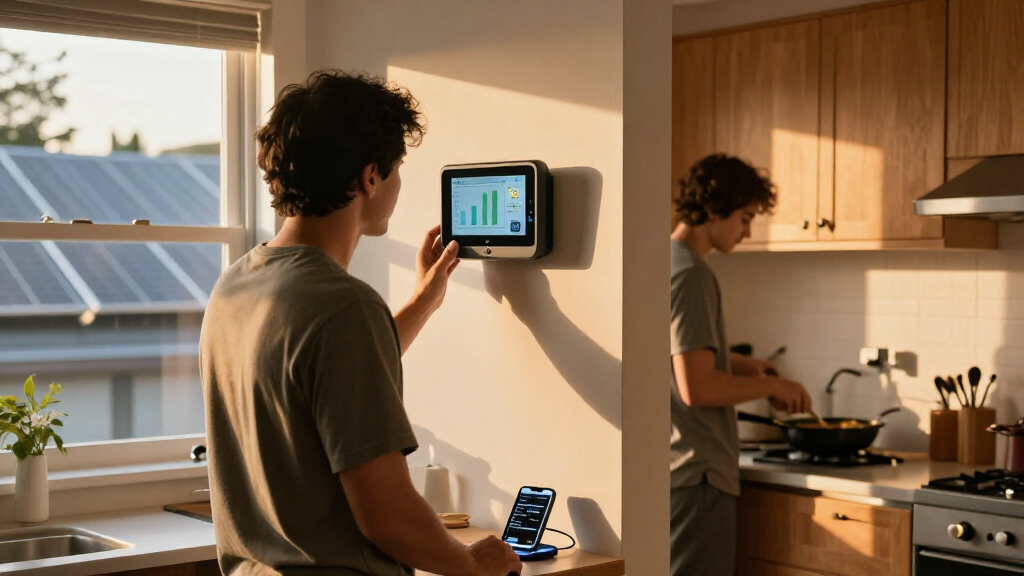
I ranked these home energy monitors around the questions that shape a purchase: how much of the home each system can track, whether the listed sensor bundle fits common monitoring goals, and how clearly each product’s intended role comes across. I gave more weight to options that pair whole-home readings with meaningful circuit-level coverage, since that combination can help buyers move from seeing a high bill to identifying likely sources of use. Connectivity and included extras also mattered, but they did not outweigh a mismatch between the monitor’s coverage and the buyer’s panel.
The ranking favors versatile systems and clearly differentiated bundles, not simply the largest sensor count. I placed products with specialized connectivity or smart-plug additions where those features offer a clear benefit to a particular buyer, and treated basic or less differentiated listings more cautiously. Product names alone do not confirm panel compatibility, supported circuit types, app functions, or installation requirements, so buyers should verify those details with the manufacturer before purchase. I did not use price, ratings, or review counts to decide the order.
Factors to Consider When Choosing Home Energy Monitors
Choosing a monitor is less about collecting the most readings and more about choosing readings you can act on. I’d start with your panel and the questions you want the system to answer, then compare sensor coverage, installation demands, and how you’ll use the data.
Match Sensor Coverage to Your Panel
Count the circuits you actually want to follow before choosing an eight-, sixteen-, or eighteen-circuit bundle. A monitor can still show whole-home consumption without a sensor on every branch, but you will have less detail about where that power goes. Panel layouts vary, and a sensor count does not always map neatly to the number of breakers you see. Some loads may share circuits, while certain appliances or electrical configurations may call for specific sensing arrangements. Check the product’s compatibility guidance and ask an electrician if your panel layout is unclear. Buying extra sensors without a plan can add setup work without producing more useful insight.
Decide Whether Whole-Home Data Is Enough
Whole-home monitoring answers questions about total household use, changes over time, and broad consumption patterns. Circuit-level tracking adds clues about which parts of the home contribute to those totals, but it requires more sensors and careful installation. If your main goal is spotting unusually high overall use, a simpler setup may be easier to maintain. If you want to compare a heat pump, water heater, or kitchen circuit, prioritize coverage for those loads. Do not assume every monitor identifies individual appliances automatically; a circuit reading may include several devices at once. Pick the level of detail that will change a decision, rather than treating more data as a goal by itself.
Check Installation Requirements Before Buying
Panel monitors often require sensors to be fitted inside the electrical panel, so installation can involve working near hazardous electrical equipment. Read the manufacturer’s instructions and local requirements before opening the panel or attempting a setup. If you are not qualified or comfortable doing this work, plan for an electrician rather than relying on a product listing to settle the question. Panel space, wiring layout, service type, and breaker arrangement can affect compatibility. A larger sensor bundle can make installation more involved, even when it offers better circuit visibility. Confirm the required sensor arrangement before purchasing so the monitor does not arrive with a coverage plan your panel cannot support.
Choose Connectivity That Fits Your Network
Wi-Fi is convenient when the electrical panel has reliable network coverage, but a signal that fades in a basement or utility room can make setup and data access frustrating. Ethernet can be useful when a wired connection is available near the panel, which gives the Eyedro option a distinct appeal for some homes. Check whether the monitor requires a particular network band, app account, or cloud connection, and whether its core functions remain available if internet access drops. These details affect day-to-day use more than a short feature list suggests. If you already rely on a smart-home platform, confirm compatibility directly rather than assuming a monitor will integrate with it. Choose the connection you can reliably maintain, not the one with the most appealing label.
Treat Smart Plugs as a Separate Monitoring Tool
Panel sensors are suited to hardwired circuits, while smart plugs can report use from compatible plug-in devices. The Emporia package that includes four smart plugs illustrates how a bundle can cover both types of loads. Plugs can be helpful for a refrigerator, office equipment, or another accessible device, but they do not replace circuit monitoring for hardwired equipment. Check appliance power needs, plug compatibility, and whether the plug can be used safely with the intended device. A smart plug also measures only what passes through that outlet, which may not tell you how an entire room or shared circuit behaves. Buy a plug bundle when you have specific devices in mind, not just because the package contains more hardware.
Compare Bundles by Useful Coverage, Not Headline Counts
Product names in this category can be similar even when the included sensors differ, as the Vue 3 listings with no sensor bundle, eight sensors, and sixteen sensors show. Verify exactly what is in the box, whether main service sensors are included, and what additional hardware costs or setup steps may apply. A larger bundle can be a better fit for a panel with many priority circuits, but it can also mean more installation and configuration. Think through the first few questions you want the system to answer and map them to specific circuits. If a smaller setup can answer those questions, it may be the more practical choice. Compare the complete kit and its compatible expansion options rather than relying on a model name alone.
Frequently Asked Questions
Do I need circuit-level sensors, or is whole-home monitoring enough?
Whole-home monitoring is a sensible starting point if you mainly want to see total consumption and notice broad changes. Circuit-level sensors are useful when you want to narrow those changes to particular areas or hardwired loads. They do not always identify each individual appliance, especially when several devices share a circuit. I’d choose circuit tracking if you have a concrete question, such as how much a major heating or cooling system contributes. If you only need an overall view, a larger sensor bundle may add setup effort without changing what you do with the information.
How many circuit sensors should I buy?
Start with the circuits you want to monitor, not the total number of breakers in your panel. Prioritize large or interesting loads, such as heating and cooling equipment, water heating, or an electric vehicle circuit, then check how the manufacturer’s sensors map to your panel. A sensor count may not equal the number of circuits you can measure in every configuration. The listed Emporia options show why checking the exact bundle matters: Vue 3 packages are offered with different sensor counts. If you are uncertain about panel layout or compatibility, ask an electrician before selecting a bundle.
Can I install a home energy monitor myself?
Installation depends on the monitor, your electrical panel, local rules, and your experience with electrical work. Many panel-based systems require access inside the panel, where unsafe handling can cause serious injury. Do not treat a product’s sensor count or installation guide as proof that a do-it-yourself setup is suitable for you. Check the manufacturer’s instructions and consult a qualified electrician if you have any uncertainty. Including installation help in your plans can also prevent choosing a model or sensor arrangement that does not fit your panel.
Will a monitor tell me which appliance is using electricity?
It depends on how the appliance is connected and what the monitor measures. A sensor on a dedicated circuit can show the use of that circuit, but it may not separate individual devices if the circuit serves several loads. Smart plugs can isolate compatible plug-in devices, while panel sensors are better suited to hardwired circuits and whole-home totals. The Emporia bundle with four smart plugs offers both types of monitoring, but the plugs cover only the devices connected through them. Before buying, decide whether you need a total, a circuit-level estimate, or a reading for one specific appliance.
Should I choose Wi-Fi or Ethernet connectivity?
Choose based on the network connection available where your electrical panel is located. Wi-Fi avoids running a cable, but a weak signal near a panel can make a Wi-Fi-only setup less dependable. Eyedro’s Wi-Fi and Ethernet listing is a useful option to compare if a wired connection is practical in your home. Check the product documentation for network requirements, app access, and how readings behave during an internet outage. If the panel is in a detached garage or a difficult basement location, plan for connectivity before choosing the monitor.
Conclusion
For the broadest all-around fit in this lineup, I’d start with the Emporia Vue 3 Home Energy Monitor with 16 Circuit Sensors, especially if you want substantial circuit coverage from a familiar product family. For a value-focused decision, compare the Emporia Vue 3 with eight sensors against the circuits you actually need to track; fewer sensors can be a better fit when your monitoring goals are limited. Beginners should favor a bundle with clear compatibility information and only the coverage they can use, rather than starting with the most complex sensor setup. For a premium-style feature preference, the Eyedro stands out for its Wi-Fi and Ethernet options, while the Emporia package with four smart plugs suits buyers who want to add selected plug-in devices to panel monitoring. If your main need is tracking many circuits, compare the Refoss 16-sensor, Meross 18-circuit, Emporia 16-sensor, and SEM-Meter 16-sensor listings against your panel and verify their exact included hardware before deciding.
Fall Picks
fall essentials
As an affiliate, we earn on qualifying purchases.