
Heat pumps need smarter thermostat control than a standard furnace or air conditioner because they manage compressor staging, auxiliary heat lockout, and balance-point behavior — and a thermostat that mishandles any of these can quietly inflate your energy bill. The Google Nest Learning Thermostat (4th Gen) earns my top spot for heat pump owners because it learns recovery timing and works with its remote temperature sensor to even out rooms. The ecobee Smart Thermostat Essential and Sensi Touch 2 stand out as strong alternatives, with remote sensor support and clear heat pump configuration respectively. The main tradeoffs in this category are between learning automation, remote sensor zoning, and simple DIY setup — advanced models demand more wiring homework, while basic Wi-Fi models cost less but give you fewer ways to manage aux heat. Read on for the full breakdown of all 13 models.

Get backup power and energy gear delivered free with Prime
- Fast, free delivery on millions of items
- Prime Video, Amazon Music and more included
- Member-only deals all year
Key Takeaways
- Only three models in this lineup — the Nest Learning Thermostat (4th Gen), ecobee Smart Thermostat Essential, and Honeywell Home RTH9585WF — support remote temperature sensors, which is the single biggest comfort upgrade for heat pump homes with uneven rooms.
- Auxiliary heat control is the deciding factor for heat pumps: models like the White-Rodgers 1F95-1277 and Sensi Touch 2 let you set precise compressor lockout thresholds, while budget Wi-Fi models like the Sensi Lite treat aux heat more bluntly.
- The two Honeywell X2S listings in this roundup are essentially the same thermostat in different finishes — compare wiring and bundle details rather than assuming they differ in features.
- The non-Wi-Fi programmable White-Rodgers models (80 Series and Easy Reader) beat several smart models on raw heat pump configurability, proving connectivity and heat pump competence are separate things you pay for independently.
- Sensi‘s lineup (Lite, ST55, Touch 2) offers the clearest upgrade ladder in the group — stepping up mainly buys you a touchscreen and room sensor support, not better heat pump logic.
- The Nest Thermostat (the non-learning model, available in Fog and Charcoal) is easier on the budget than the 4th Gen but omits the remote sensor ecosystem, which matters most in exactly the homes that need a heat pump thermostat most.
| Sensi Smart Thermostat ST55 |  | Best for C-Wire-Free Installation | Model: ST55 | Connectivity: Wi-Fi | Installation: DIY | VIEW LATEST PRICE | See Our Full Breakdown |
| Google Nest Thermostat (Fog) |  | Best for Automatic Away Features | Color: Fog | Connectivity: Wi-Fi | Certification: ENERGY STAR | VIEW LATEST PRICE | See Our Full Breakdown |
| White-Rodgers 80 Series Programmable Universal Thermostat (1F85U-22PR) |  | Best for Simple Scheduled Control | Model: 1F85U-22PR | Series: 80 | Programming: 7-day, 5-1-1, or off | VIEW LATEST PRICE | See Our Full Breakdown |
| Sensi Touch 2 Wi-Fi Smart Thermostat ST76 |  | Best for Room-Sensor Zoning | Model: ST76 | Connectivity: Wi-Fi and Bluetooth | Voice assistant: Alexa | VIEW LATEST PRICE | See Our Full Breakdown |
| White-Rodgers 1F95-1277 Blue Series Programmable Thermostat |  | Best for Day-by-Day Heat Pump Schedules | Model: 1F95-1277 | Display: 12-inch LCD touchscreen | Programming: Separate 7-day heating and cooling schedules | VIEW LATEST PRICE | See Our Full Breakdown |
| White-Rodgers 1F95EZ-0671 Easy Reader 7-Day Programmable Thermostat |  | Best for Visibility and Simplicity | Model: 1F95EZ-0671 | Display: 6-inch backlit LCD | Programming: 7-day programmable or non-programmable | VIEW LATEST PRICE | See Our Full Breakdown |
| Honeywell Home X2S Smart Wi-Fi Thermostat, White |  | Best Smart Home Compatibility | Connectivity: Wi-Fi 2.4 or 5GHz (802.11 b/g/n) | Power: C-wire required, 24 VAC | Smart home compatibility: Matter, Amazon Alexa, Google Assistant, Apple HomeKit | VIEW LATEST PRICE | See Our Full Breakdown |
| Google Nest Learning Thermostat (4th Gen, 2024) with Nest Temperature Sensor, Polished Gold |  | Best Premium Learning Thermostat | Generation: 4th Gen (2024) | Finish: Polished Gold | Included accessory: Nest Temperature Sensor (2nd gen) | VIEW LATEST PRICE | See Our Full Breakdown |
| Google Nest Thermostat – Smart Programmable Wi-Fi Thermostat (Charcoal) |  | Best Value Smart Pick | Color: Charcoal | Connectivity: Wi-Fi 802.11 b/g/n 2.4GHz, 802.11 a/n 5GHz; Bluetooth LE | C-wire: Not required in most homes; required for heat pump, heating-only, cooling-only, and zone systems | VIEW LATEST PRICE | See Our Full Breakdown |
| Honeywell Home X2S Smart Wi-Fi Thermostat |  | Best for Humidity-Aware Comfort | Model: RTH2CWF | Color: Gray | Connectivity: Wi-Fi | VIEW LATEST PRICE | See Our Full Breakdown |
| Sensi Lite Wi-Fi Smart Thermostat (ST25) | 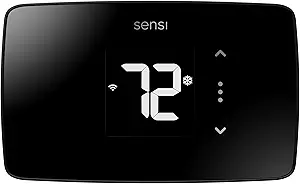 | Best Budget Smart Pick | Model: ST25 | Connectivity: Wi-Fi (2.4 GHz) | Control methods: App, touch, voice | VIEW LATEST PRICE | See Our Full Breakdown |
| Honeywell Home RTH9585WF Wi-Fi Smart Color Thermostat |  | Best Touchscreen Interface | Model: RTH9585WF | Connectivity: Wi-Fi | Display: Customizable color touchscreen | VIEW LATEST PRICE | See Our Full Breakdown |
| ecobee Smart Thermostat Essential – WiFi Smart Thermostat, Energy Star Certified |  | Best Energy-Saving Features | Connectivity: WiFi | Display: Color touchscreen | System compatibility: 85% of systems; 24 VAC HVAC equipment including heat pumps and dual fuel | VIEW LATEST PRICE | See Our Full Breakdown |
| smart thermostats for heat pump | Connectivity | Model | Certification | System compatibility |
|---|---|---|---|---|
| Sensi Smart Thermostat ST55 | Wi-Fi | ST55 | ENERGY STAR | — |
| Google Nest Thermostat | Wi-Fi | — | ENERGY STAR | 85% of heating and cooling systems |
| White-Rodgers 80 Series Progra | — | 1F85U-22PR | — | — |
| Sensi Touch 2 Wi-Fi Smart Ther | Wi-Fi and Bluetooth | ST76 | ENERGY STAR | — |
| White-Rodgers 1F95-1277 Blue S | — | 1F95-1277 | — | Most heating, cooling, and heat pump systems, including dual fuel |
| White-Rodgers 1F95EZ-0671 Easy | — | 1F95EZ-0671 | — | Most furnaces, air conditioners, and heat pumps, including dual-fuel |
| Honeywell Home X2S Smart Wi-Fi | Wi-Fi 2.4 or 5GHz (802.11 b/g/n) | — | ENERGY STAR certified | Up to 2H/2C conventional; up to 2H/1C heat pump with electric backup |
| Google Nest Learning Thermosta | — | — | — | Most 24V systems: gas, electric, oil, forced air, heat pump, radiant |
| Google Nest Thermostat | Wi-Fi 802.11 b/g/n 2.4GHz, 802.11 a/n 5GHz; Bluetooth LE | — | ENERGY STAR certified | — |
| Honeywell Home X2S Smart Wi-Fi | Wi-Fi | RTH2CWF | — | Up to 2H/2C conventional or 2H/1C heat pump |
| Sensi Lite Wi-Fi Smart Thermos | Wi-Fi (2.4 GHz) | ST25 | ENERGY STAR | — |
| Honeywell Home RTH9585WF Wi-Fi | Wi-Fi | RTH9585WF | — | — |
| ecobee Smart Thermostat Essent | WiFi | — | Energy Star Certified | 85% of systems; 24 VAC HVAC equipment including heat pumps and dual fuel |
More Details on Our Top Picks
Sensi Smart Thermostat ST55
The Sensi ST55 is a practical pick for heat pump owners who want app control without a complicated setup: its guided DIY installation often works without a C-wire, a useful distinction from the Sensi Touch 2 ST76, which requires one. Scheduling, remote access, and usage reports add everyday control, while ENERGY STAR certification supports its energy-saving focus. It also fits a standard thermostat footprint, so replacing an older unit is less likely to leave visible wall marks. The tradeoff is a plain interface; the Google Nest Thermostat offers more automatic away features and broader voice-assistant support. Check system compatibility before buying, since heat pump wiring and equipment vary, and some smart maintenance features depend on compatible HVAC equipment.
Pros:- DIY setup includes a built-in level and app guidance
- Often works without a C-wire
- ENERGY STAR certified with scheduling, remote access, and usage reports
- Fits a standard thermostat footprint
Cons:- Basic appearance and controls lack a premium smart display
- Smart maintenance functions depend on compatible HVAC equipment
Best for: Heat pump owners replacing a standard thermostat who want app scheduling and may not have a C-wire
Not ideal for: Buyers who want a premium touchscreen or automatic away control, or whose HVAC equipment needs smart maintenance features the thermostat cannot support
- Model:ST55
- Connectivity:Wi-Fi
- Installation:DIY
- C-wire:Not required in most applications
- Certification:ENERGY STAR
- Voice assistant:Alexa
Our verdict“Choose the ST55 for straightforward app control and a setup that often avoids running a C-wire, provided its wiring is compatible with your heat pump.”
Google Nest Thermostat (Fog)
The Google Nest Thermostat suits heat pump households that want everyday control to happen with little scheduling effort. Its auto-away feature turns the temperature down when the home is empty, while the Google Home app and voice control provide remote adjustments. HVAC alerts and maintenance reminders add useful oversight. Compared with the Sensi ST55, Nest offers more automatic occupancy-based behavior and support for Google Assistant, Alexa, and Matter-certified assistants. Its key heat pump caveat is power: the product data says a C-wire is required for heat pump systems, even though it is unnecessary in many other homes. It also has limited functionality without internet access. Buyers should confirm wiring and system compatibility before choosing it.
Pros:- Auto-away adjusts temperature when the home is empty
- Works with Google Assistant, Alexa, and Matter-certified voice assistants
- Google Home app supports remote temperature control
- HVAC monitoring includes alerts and maintenance reminders
Cons:- Heat pump systems require a C-wire according to the product data
- Manual control is the only stated functionality without internet
Best for: Heat pump households already using Google Home or voice assistants that want automatic away temperature control
Not ideal for: Owners without a C-wire who want to avoid a power accessory, or households that need full control during internet outages
- Color:Fog
- Connectivity:Wi-Fi
- Certification:ENERGY STAR
- System compatibility:85% of heating and cooling systems
- C-wire:Required for heat pump systems
- Installation time:Typically 30 minutes or less
- App:Google Home for Android and iPhone
- Voice assistants:Google Assistant, Alexa, and Matter-certified assistants
Our verdict“Pick Nest for automatic away control and a connected Google Home setup if your heat pump wiring can supply the required power.”
White-Rodgers 80 Series Programmable Universal Thermostat (1F85U-22PR)
For heat pump owners who value a readable display and predictable schedules over phone control, the White-Rodgers 1F85U-22PR keeps the setup focused. Its 7-day or 5-1-1 programming lets buyers match temperature changes to recurring routines, while keypad lock and temperature limits help prevent unwanted adjustments. The backlight button and large display favor direct, at-the-wall use. That makes it a more basic alternative to the Wi-Fi-connected Sensi ST55, which adds remote access and usage reports. The 1F85U-22PR supports standard dual-fuel setups without sensors, but the product data does not specify smart-app or remote features. Choose it for straightforward programming and check compatibility with the exact heat pump system before installation.
Pros:- Offers 7-day, 5-1-1, or no-programming modes
- Large display has a backlight button for low-light use
- Keypad lock and temperature limits help manage household settings
- Standard dual-fuel operation needs no sensors
Cons:- Product data lists no Wi-Fi, app control, or remote access
- Less suited to buyers who want connected energy reports or voice control
Best for: Heat pump owners who want a clear, programmable wall thermostat with lockout and temperature limits
Not ideal for: Buyers who expect Wi-Fi, remote app access, usage reports, or voice control
- Model:1F85U-22PR
- Series:80
- Programming:7-day, 5-1-1, or off
- Display:Large display with backlight button
- Installation features:Built-in level indicator and pluggable terminals
- Security:Keypad lock
- Temperature control:Temperature limits
- Dual fuel:Standard operation; no sensors needed
Our verdict“Choose this White-Rodgers model for readable, scheduled heat pump control at the wall, rather than connected features like those on the Sensi ST55.”
Sensi Touch 2 Wi-Fi Smart Thermostat ST76
The Sensi Touch 2 ST76 stands out for households that want to respond to uneven temperatures around the home: it works with compatible Sensi Room Sensors, sold separately, so control can account for more than the thermostat’s immediate location. Wi-Fi, flexible schedules, remote access, usage reports, HVAC alerts, and maintenance reminders give it a broader connected feature set than the non-Wi-Fi White-Rodgers 1F85U-22PR. Bluetooth setup and app guidance help with installation, and Sensi says it does not sell personal information to third parties. The main constraint for heat pump buyers is power: a C-wire is required. Sensor costs and compatibility also need checking, so this is a better fit for owners prepared to plan the system than for those seeking the simplest swap.
Pros:- Compatible with Sensi Room Sensors for temperature balancing
- Wi-Fi features include scheduling, remote access, and usage reports
- App-guided setup includes Bluetooth
- HVAC alerts and maintenance reminders add system oversight
Cons:- Requires a C-wire
- Room sensors are sold separately
- Sensor and HVAC compatibility should be confirmed before purchase
Best for: Heat pump households with rooms that run at different temperatures and a compatible C-wire installation
Not ideal for: Owners without a C-wire or buyers who do not want to purchase compatible room sensors separately
- Model:ST76
- Connectivity:Wi-Fi and Bluetooth
- Voice assistant:Alexa
- Certification:ENERGY STAR
- Room sensor compatibility:Sensi Room Sensors, sold separately
- Installation:DIY with app guidance
- C-wire:Required
- Included components:Thermostat, mounting hardware, installation guide, warranty booklet, and owner’s manual
Our verdict“Choose the ST76 if room-to-room temperature differences matter and your heat pump has a C-wire; otherwise, the Sensi ST55 may be easier to install.”
White-Rodgers 1F95-1277 Blue Series Programmable Thermostat
The White-Rodgers 1F95-1277 is aimed at heat pump owners whose weekly routines change from day to day. Separate 7-day heating and cooling schedules allow more tailored programming than the 1F85U-22PR’s listed 7-day or 5-1-1 modes, while the touchscreen gives direct access to settings without an app. Product data includes compatibility with many heat pump systems, including dual fuel, plus keypad lockout and a filter indicator. Compared with the connected Sensi Touch 2 ST76, this model trades remote access and usage reports for a hardwired, schedule-focused setup. It is not a fit for electric baseboard heat and some other systems, and buyers should verify their specific equipment before purchase.
Pros:- Separate heating and cooling schedules for each day
- Touchscreen provides direct control at the thermostat
- Works with many heat pump systems, including dual fuel
- Keypad lockout and filter indicator are included
Cons:- Not compatible with electric baseboard heat and some other systems
- Product data lists no Wi-Fi or app-based remote control
- Hardwired power and required batteries add installation considerations
Best for: Heat pump owners with a different routine each day who prefer touchscreen programming over app control
Not ideal for: Electric baseboard users or buyers who want Wi-Fi, remote adjustments, or smart room sensors
- Model:1F95-1277
- Display:12-inch LCD touchscreen
- Programming:Separate 7-day heating and cooling schedules
- System compatibility:Most heating, cooling, and heat pump systems, including dual fuel
- Power source:Hardwired
- Batteries:2 AA batteries required
- Voltage:120 volts
- Dimensions:1.18 x 5.81 x 4.56 inches
- Controls:Touch controls with keypad lockout
Our verdict“Pick the 1F95-1277 for detailed daily heat pump schedules and direct touchscreen operation if you do not need the connected features of the Sensi Touch 2.”
White-Rodgers 1F95EZ-0671 Easy Reader 7-Day Programmable Thermostat
Not every heat pump owner wants an app, a C-wire conversation, or a touchscreen. This option stands out for its 6-inch backlit display with oversized characters — a genuine advantage if squinting at a small smart thermostat screen is a daily frustration. Where the Google Nest Thermostat (Charcoal) leans on the Google Home app for scheduling, the 1F95EZ-0671 keeps everything on the wall with simple push-button controls and step-by-step setup. It handles dual-fuel heat pump systems, which many entry-level smart models can’t manage without accessories. The tradeoff is real, though: there’s no Wi-Fi, no remote control, and no energy reports — this is a programmable thermostat, not a smart one. Compared with the White-Rodgers 1F95-1277 Blue Series, you give up finer programming depth in exchange for readability and simplicity.
Pros:- Extra-large 6-inch backlit display that’s easy to read across a room or in low light
- Push-button controls with guided setup — no app account or pairing required
- Supports dual-fuel heat pump systems that trip up many basic thermostats
- Flexible operation: full 7-day programming or simple non-programmable mode
Cons:- No Wi-Fi, remote access, or smart home integration of any kind
- Not compatible with electric baseboard heat and some other systems
Best for: Homeowners who want clear, button-based control of a dual-fuel heat pump without any app or Wi-Fi dependency — especially anyone with vision challenges
Not ideal for: Buyers who want remote control, geofencing, or voice assistants — this model has zero connectivity
- Model:1F95EZ-0671
- Display:6-inch backlit LCD
- Programming:7-day programmable or non-programmable
- System compatibility:Most furnaces, air conditioners, and heat pumps, including dual-fuel
- Control:Push-button
- Power:Hardwired, 24 volts (3 AAA backup batteries included)
- Extras:Filter-change reminder, low-battery indicator, audio prompts, DST-ready
Our verdict“This pick makes the most sense for anyone who values a big, readable screen and straightforward buttons over connectivity — as long as remote control isn’t on the wish list.”
Honeywell Home X2S Smart Wi-Fi Thermostat, White
If your household mixes Alexa speakers, Apple devices, and Google gear, this model is better suited to that chaos than most. Matter certification means the X2S plays nicely with Amazon Alexa, Google Assistant, and Apple HomeKit without picking favorites — a flexibility the Google Nest Learning Thermostat can’t fully match, since its deepest features live inside the Google Home app. For heat pump homes specifically, it covers up to 2 heat/1 cool heat pump configurations with electric backup, plus flexible scheduling (7-day, 5-1-1, 5-2, or 1-week) and auto-away to trim energy use. The 32°F extended low-heat setpoint is a thoughtful touch for vacation homes. The main friction is power: unlike the Nest Learning model, which usually skips the C-wire, this unit requires a 24 VAC C-wire, so older wiring may need an adapter or an electrician.
Pros:- Matter certified with native support for Alexa, Google Assistant, and Apple HomeKit
- Four scheduling styles plus auto-away for real energy savings on a heat pump
- Extended 32°F low-heat setpoint suits vacation and secondary homes
- Interchangeable white and gray accent pieces to match your decor
Cons:- C-wire (24 VAC) is required, and some homes will need an adapter
- Not compatible with 120-240V electric baseboard heating
Best for: Multi-platform smart homes that want one thermostat controllable from Alexa, Google, and Apple HomeKit alike
Not ideal for: Homes without a C-wire and no easy way to add one — installation becomes a bigger project than the thermostat itself
- Connectivity:Wi-Fi 2.4 or 5GHz (802.11 b/g/n)
- Power:C-wire required, 24 VAC
- Smart home compatibility:Matter, Amazon Alexa, Google Assistant, Apple HomeKit
- System compatibility:Up to 2H/2C conventional; up to 2H/1C heat pump with electric backup
- Scheduling:7-day, 5-1-1, 5-2, 1 week, or non-programmable
- Key features:Auto-away, humidity display, filter reminders, demand response, 32°F low-heat setpoint
- Certification:ENERGY STAR certified
- Warranty:2 years
Our verdict“This is the pick for heat pump owners who want broad smart-home flexibility and already have (or can add) a C-wire.”
Google Nest Learning Thermostat (4th Gen, 2024) with Nest Temperature Sensor, Polished Gold
This is the option that does the thinking for you. Instead of manual schedules, the 4th-gen Nest learns your household’s patterns and outdoor conditions, then adjusts the heat pump to balance comfort and savings — a hands-off approach the Honeywell Home X2S can’t replicate, since it relies on schedules you build yourself. The bundled Nest Temperature Sensor is what elevates it for heat pump homes: place it in the room you actually occupy and the thermostat heats to that room, not the hallway where it’s mounted. The 60% larger display with Dynamic Farsight lights up as you approach, and it usually skips the C-wire requirement entirely — a real advantage over the C-wire-hungry X2S. The tradeoffs: it’s an investment, and its best features are tethered to the Google Home app, so households committed to Alexa-first or Apple-first setups will get less from it than the Matter-certified Honeywell.
Pros:- Self-learning schedule adapts to routines and outdoor temperature without manual programming
- Included remote temperature sensor targets comfort in the room you actually use
- Typically installs without a C-wire, unlike many smart competitors
- Matter support plus Alexa, Siri, and Google Assistant voice control
Cons:- Premium price compared with capable mid-range smart thermostats
- C-wire needs vary by home, so some installations still require power work
- Deepest features depend on the Google Home app and a connected household
Best for: Homeowners who want a set-it-and-forget-it thermostat that self-programs and fixes hot and cold spots with a remote sensor
Not ideal for: Buyers outside the Google ecosystem or on a tight budget — much of the value depends on Google Home and smart-home integration
- Generation:4th Gen (2024)
- Finish:Polished Gold
- Included accessory:Nest Temperature Sensor (2nd gen)
- System compatibility:Most 24V systems: gas, electric, oil, forced air, heat pump, radiant
- C-wire:Not required in most homes
- Smart home compatibility:Matter, Alexa, Apple HomeKit, Google Home
- Display:60% larger display with Dynamic Farsight
Our verdict“If you want a thermostat that learns your life instead of asking you to program it, and whole-room comfort matters, this is the one to stretch the budget for.”
Google Nest Thermostat – Smart Programmable Wi-Fi Thermostat (Charcoal)
Think of this as the practical sibling of the Nest Learning Thermostat: same app, same ecosystem, far lower cost — but you build the schedule yourself instead of the thermostat learning it. For heat pump households on a budget, it still delivers the features that matter most: auto-away turns the system down when you leave, the Savings Finder suggests energy tweaks, and HVAC monitoring sends alerts before small problems become expensive ones. It also skips the bundled remote sensor of its pricier sibling, so multi-room comfort isn’t its strength. One heat-pump-specific catch worth knowing: while most homes won’t need a C-wire, heat pump systems generally do (or require a power accessory) — a detail that narrows its plug-and-play appeal compared with the 4th-gen Nest. And unlike the Honeywell Home X2S, there’s no display lock, which matters if curious kids live in the house.
Pros:- ENERGY STAR certified with automatic eco features like Savings Finder suggestions
- HVAC monitoring sends system alerts and maintenance reminders
- Remote control and scheduling from any phone, tablet, or laptop via Google Home
- Works without a C-wire in most conventional installations
Cons:- C-wire or power accessory typically required for heat pump, heating-only, and zone-controlled systems
- No temperature display lock feature to prevent unauthorized adjustments
- No self-learning — schedules must be created manually in the app
Best for: Budget-minded smart home buyers who want app control and energy coaching on a heat pump without paying for self-learning features
Not ideal for: Heat pump owners hoping for a no-C-wire install — this model typically needs a C-wire or power accessory on heat pump systems
- Color:Charcoal
- Connectivity:Wi-Fi 802.11 b/g/n 2.4GHz, 802.11 a/n 5GHz; Bluetooth LE
- C-wire:Not required in most homes; required for heat pump, heating-only, cooling-only, and zone systems
- App:Google Home (Android/iOS)
- Voice assistants:Google Assistant and Matter-certified assistants
- Key features:Auto-away, Savings Finder, HVAC monitoring alerts, remote scheduling
- Certification:ENERGY STAR certified
Our verdict“This model makes the most sense for cost-conscious buyers who want core smart features and don’t mind programming their own schedule — provided their heat pump wiring cooperates.”
Honeywell Home X2S Smart Wi-Fi Thermostat
Functionally, this gray-accented X2S is the same platform as its white sibling (B0DSGGCGG4) — same Matter certification, same scheduling options, same 2 heat/1 cool heat pump support — so the choice between them comes down to color and price, not capability. What earns this model its own slot is its role for comfort-focused buyers: the on-screen humidity display matters more than it sounds for heat pump homes, because dry winter air changes how warm a room feels, and tracking it helps you fine-tune setpoints instead of overshooting. Like the white version, it offers auto-away and four scheduling styles, and it works across Alexa, Google, and Apple HomeKit. Compared with the Nest Thermostat (Charcoal), you get multi-platform freedom but lose the Nest’s HVAC monitoring alerts. The same C-wire requirement applies here too — budget for a possible adapter before checkout.
Pros:- Live humidity display helps heat pump users balance comfort and efficient setpoints
- Matter support works across Alexa, Google Assistant, and Apple HomeKit
- Four flexible scheduling modes plus auto-away for energy savings
- Handles up to 2 heat/1 cool heat pump systems with electric backup
Cons:- C-wire required, and some homes will need an adapter or professional help
- Lacks HVAC monitoring and system-health alerts found on competing smart models
Best for: Comfort-focused heat pump owners who want humidity visibility and don’t want to commit to a single smart home platform
Not ideal for: Buyers wanting advanced diagnostics — unlike the Nest Thermostat, it doesn’t send HVAC health alerts, and it also demands a C-wire
- Model:RTH2CWF
- Color:Gray
- Connectivity:Wi-Fi
- Power:C-wire required; adapter may be needed
- Smart home platforms:Matter, Amazon Alexa, Google Assistant, Apple HomeKit
- System compatibility:Up to 2H/2C conventional or 2H/1C heat pump
- Scheduling:7-day, 5-1-1, 5-2, 1 week, or non-programmable
- Key features:Auto-away, humidity display, filter reminders, demand response, customizable display
- Warranty:2 years
Our verdict“A sensible pick if you want the X2S’s multi-platform smarts with humidity insight — just confirm your wiring can supply the C-wire before buying.”
Sensi Lite Wi-Fi Smart Thermostat (ST25)
For heat pump owners who want app control and geofencing without paying a premium, the Sensi Lite ST25 covers the fundamentals well. It delivers remote scheduling, geofencing, and usage reports through a straightforward app, plus Alexa, Google Assistant, and SmartThings integration — a broader voice-assistant lineup than the Honeywell RTH9585WF offers, since that model skips SmartThings.
The tradeoff is hardware: an LCD display rather than a color touchscreen, and none of the polish of the ecobee Essential. The bigger catch for this roundup is the C-wire requirement on heat pump systems specifically — battery power alone won’t cut it here. It also needs a 2.4 GHz network, so households running mesh systems on 5 GHz only will hit setup friction. Compared with its sibling, the Sensi Smart ST55, the Lite gives up remote sensor support, making it best as a simple, single-zone upgrade.
Pros:- DIY installation with built-in level and step-by-step guidance
- Geofencing and scheduling in a no-cost app
- Works with Alexa, Google Assistant, and SmartThings
- ENERGY STAR certified with usage reports to track energy habits
Cons:- C-wire required for heat pump and heat/cool-only systems
- Basic LCD display lacks the color touchscreen of rivals
- 2.4 GHz Wi-Fi only, which can complicate mesh-network setups
Best for: Budget-conscious heat pump owners with an existing C-wire who want app and voice control without subscription costs
Not ideal for: Homes without a C-wire on a heat pump system, since Sensi states it is required and offers no power-extender workaround
- Model:ST25
- Connectivity:Wi-Fi (2.4 GHz)
- Control methods:App, touch, voice
- Voice assistants:Amazon Alexa, Google Assistant, SmartThings
- Display:LCD
- Power:Battery or C-wire (C-wire required for heat pumps)
- Compatible systems:Air conditioner, boiler, furnace, heat pump
- Certification:ENERGY STAR
Our verdict“A sensible, low-friction entry point for heat pump owners who already have a C-wire and prioritize savings over screen quality.”
Honeywell Home RTH9585WF Wi-Fi Smart Color Thermostat
The RTH9585WF is the pick for buyers who interact with the wall unit itself rather than living entirely in an app. Its customizable color touchscreen is sharper and more configurable than the Sensi Lite’s plain LCD, and the interface makes on-device schedule edits far less tedious. It handles heat pumps with electric backup heat, plus forced air, hot water, and steam — wider coverage than many rivals in this roundup.
Practical extras like maintenance alerts and indoor temperature alerts give it an edge for owners who want early warning before a heat pump problem becomes a repair bill. The Honeywell Home X2S pushes further into premium territory with smarter features, but the RTH9585WF remains the stronger value for touchscreen-first buyers. Note the hard limits: a C-wire is required across the board, and it won’t work with 120–240V electric baseboard heat, so verify your wiring before ordering.
Pros:- Customizable color touchscreen that’s easy to read and adjust on the wall
- Supports heat pumps with electric backup plus forced air, hot water, and steam
- Maintenance and indoor temperature alerts catch issues early
- ENERGY STAR certified with energy reports in the app
Cons:- C-wire required with no power-extender option included
- Not compatible with 120–240V electric baseboard heat
- Heating-only oil systems also require a C-wire
Best for: Homeowners who want a polished on-wall touchscreen with alerts and flexible 7-day scheduling for a heat pump with electric backup
Not ideal for: Buyers without a C-wire or with high-voltage baseboard heating, since neither is supported
- Model:RTH9585WF
- Connectivity:Wi-Fi
- Display:Customizable color touchscreen
- Programming:Flexible scheduling
- Smart home compatibility:Amazon Alexa and Google Home
- Compatible systems:Forced air (gas, oil, electric), hot water, steam, heat pumps with electric backup
- Power requirement:C-wire required
- Fan modes:On, Automatic, Circulate
Our verdict“The best choice if you want a thermostat that’s genuinely pleasant to use at the wall, provided your wiring cooperates.”
ecobee Smart Thermostat Essential – WiFi Smart Thermostat, Energy Star Certified
Where the ecobee Essential separates itself is eco+: built-in humidity detection, schedule assistant, and time-of-use optimization that actively shave heating and cooling costs rather than just reporting on them. ecobee claims up to 23% annual savings, and while real-world results vary with your heat pump’s duty cycle, the time-of-use logic is genuinely useful for anyone on variable-rate electricity. The Apple HomeKit support is a differentiator too — neither the Sensi Lite nor the Honeywell RTH9585WF covers all three major ecosystems.
Compatibility is broad at roughly 85% of HVAC systems, including dual-fuel and heat pump setups. The sting is in the add-ons: the Power Extender Kit and trim kit are sold separately, and room-level SmartSensors cost extra — so the C-wire-less households the ecobee otherwise serves best may pay more than expected to get there.
Pros:- eco+ suite with time-of-use optimization and schedule assistant actively reduces costs
- Broad compatibility with 85% of HVAC systems, including dual fuel and heat pumps
- Works with Apple HomeKit, Google Assistant, and Alexa
- Free software upgrades keep features current over time
Cons:- Power Extender Kit for C-wire-free homes is sold separately
- SmartSensor room-monitoring add-ons cost extra
- Savings claims depend heavily on utility rates and usage patterns
Best for: Heat pump owners on time-of-use electricity rates who want automated energy optimization and full Apple, Google, and Alexa support
Not ideal for: Buyers on a tight budget without a C-wire, since the Power Extender Kit and any room sensors are separate purchases
- Connectivity:WiFi
- Display:Color touchscreen
- System compatibility:85% of systems; 24 VAC HVAC equipment including heat pumps and dual fuel
- Smart home ecosystems:Apple HomeKit, Google Assistant, Alexa
- eco+ features:Indoor humidity detection, schedule assistant, time of use
- Installation:DIY; Power Extender Kit sold separately for homes without a C-wire
- Certification:Energy Star Certified
- Estimated energy savings:Up to 23% per year on heating and cooling
Our verdict“The strongest pick for automated energy savings across all three smart home ecosystems, as long as you budget for the optional kits.”

How We Picked
I judged every model against the three things that make or break a heat pump thermostat: native heat pump mode with staging support, auxiliary/electric heat lockout control, and recovery logic that doesn’t trigger expensive backup heat. A thermostat that can’t set an outdoor or indoor threshold for aux heat will burn through resistance strips every cold morning, so models with explicit lockout settings ranked higher than ones with generic “heat/cool” menus. I also weighed remote sensor compatibility, because heat pumps run long slow cycles and single-thermostat homes develop cold back bedrooms.
Beyond heat pump logic, I scored each model on installation difficulty (C-wire requirements and DIY guidance), app quality, usability of the interface — touchscreen versus buttons versus the Easy Reader’s oversized display — and value relative to what you give up. Models ranked near the top offer the best combination of heat pump competence and everyday usability; models ranked lower either lack Wi-Fi convenience, lock you into a narrower ecosystem, or duplicate another pick at a worse position in the lineup. The ranking is deliberately ordered so readers can stop reading once they match their buyer type.
| smart thermostats for heat pump | Connectivity | Certification |
|---|---|---|
| Sensi Smart Thermostat ST55 | Wi-Fi | ENERGY STAR |
| Google Nest Thermostat | Wi-Fi | ENERGY STAR |
| White-Rodgers 80 Series Progra | — | — |
| Sensi Touch 2 Wi-Fi Smart Ther | Wi-Fi and Bluetooth | ENERGY STAR |
| White-Rodgers 1F95-1277 Blue S | — | — |
| White-Rodgers 1F95EZ-0671 Easy | — | — |
| Honeywell Home X2S Smart Wi-Fi | Wi-Fi 2.4 or 5GHz (802.11 b/g/n) | ENERGY STAR certified |
| Google Nest Learning Thermosta | — | — |
| Google Nest Thermostat | Wi-Fi 802.11 b/g/n 2.4GHz, 802.11 a/n 5GHz; Bluetooth LE | ENERGY STAR certified |
| Honeywell Home X2S Smart Wi-Fi | Wi-Fi | — |
| Sensi Lite Wi-Fi Smart Thermos | Wi-Fi (2.4 GHz) | ENERGY STAR |
| Honeywell Home RTH9585WF Wi-Fi | Wi-Fi | — |
| ecobee Smart Thermostat Essent | WiFi | Energy Star Certified |
Factors to Consider When Choosing Smart Thermostats For Heat Pumps
Before settling on a model, it helps to understand the heat pump-specific factors that separate a thermostat that saves you money from one that quietly costs you money. These are the issues that came up repeatedly while comparing this lineup.Auxiliary Heat Control: The Feature That Decides Your Bill
Auxiliary electric resistance heat can cost two to four times more per BTU than your heat pump’s compressor, so how a thermostat manages it matters more than any smart feature. The mistake most buyers make is assuming every “heat pump compatible” thermostat handles aux heat the same way — it doesn’t. Look for an aux heat lockout temperature, which prevents backup strips from firing above a set outdoor temperature, and a compressor lockout that stops the heat pump from running when it’s too cold to be useful. The White-Rodgers programmable models in this lineup expose these settings most directly, while some entry-level Wi-Fi models bury or simplify them. If your current winter bills seem high despite mild weather, poor aux heat management is the first suspect, and it’s worth paying more for a thermostat that gives you explicit control over it.
C-Wire Requirements and Compatibility
Most smart thermostats need a C-wire (common wire) to power their Wi-Fi radios continuously, and heat pump wiring adds a complication: the O/B reversing valve wire. Before buying anything, photograph your current thermostat’s wiring and check the manufacturer’s compatibility checker — Sensi and Honeywell both offer good online tools for this. Some models run without a C-wire on battery or power-stealing circuits, but this often causes Wi-Fi dropout or short-cycling on heat pumps specifically, because heat pump calls are longer than furnace calls. If your home lacks a C-wire, budget for a fast-stat kit or an electrician visit, and factor that into whether a “value” pick is still a value. Getting this wrong is the number one reason smart thermostat installations get returned.
Remote Sensors Versus Learning Algorithms
Two different “smart” philosophies dominate this category, and they solve different problems. Learning thermostats like the Nest 4th Gen figure out your schedule and how long your heat pump takes to recover, which reduces wasted runtime without any programming. Remote sensor systems like the ecobee’s average readings across rooms, which fixes the cold-bedroom problem common in heat pump homes with long duct runs. A learning thermostat without sensors optimizes the room it’s mounted in; a sensor system without learning requires you to build a schedule yourself. If your house has a room that never reaches temperature, sensors will do more for you than learning. If your schedule is erratic, learning will do more. Only the priciest options do both well.
Smart Home Ecosystem Lock-In
Buying a thermostat is partly buying into an ecosystem, and the tradeoffs are real. Alexa compatibility is nearly universal in this lineup, but deeper integrations — Siri, Google Home routines, Apple Home — vary by model, and Matter support is still uneven across thermostats. Honeywell Home and Sensi play nicely across platforms but offer less polished first-party automation; Google Nest offers the most polished experience within its own ecosystem and the least flexibility outside it. Before choosing, check whether voice control actually matters to you day to day, because many owners end up controlling everything from the app anyway. Also verify the platform’s multizone support if you have two heat pumps — not all apps handle multiple thermostats gracefully.
When a Non-Connected Programmable Model Is the Smarter Buy
Not every heat pump owner needs Wi-Fi. If the thermostat sits in a home with reliable occupants, a stable daily schedule, and no interest in app control, a 7-day programmable model like the White-Rodgers Easy Reader or 80 Series delivers excellent heat pump control for less money, with no cloud service to depend on. The honest tradeoff: you lose remote monitoring, geofencing, and energy reports, and you’ll reprogram at the wall instead of from your phone. Non-connected models also avoid the occasional firmware-update quirks that smart thermostats suffer. The mistake to avoid is buying “smart” for its own sake — pay for the features you’ll actually use, and put the savings toward a professional commissioning of your heat pump, which often improves efficiency more than any thermostat upgrade.
Frequently Asked Questions
Will any smart thermostat work with my heat pump, or do I need a specific model?
Not every smart thermostat supports heat pumps properly, so compatibility checking comes first. Heat pumps require the thermostat to control a reversing valve (O/B wire) and usually an auxiliary heat stage, and entry-level models sometimes support only single-stage systems. Multi-stage heat pumps add another requirement — the thermostat must manage two compressor stages or a variable-speed interface. Always photograph your existing wiring and run the manufacturer’s compatibility tool before ordering, because the wire colors alone don’t tell the whole story. In this lineup, the Sensi models, White-Rodgers models, and Nest Learning 4th Gen all handle multi-stage heat pumps, while the base Nest Thermostat is limited to simpler systems.
Do I need a C-wire for a heat pump smart thermostat?
Most Wi-Fi thermostats in this roundup work best with a C-wire, and heat pumps make this more likely to matter because their heating cycles run much longer than a furnace’s. Without steady power, some thermostats steal power through the heating circuit, which can cause the system to short-cycle or the Wi-Fi to drop mid-winter — exactly when you need remote monitoring. If your heat pump wiring bundle has an unused conductor, an HVAC tech can usually convert it to a C-wire in a short visit. Alternatives like fast-stat relays exist, but they add a failure point. The Sensi models are among the more forgiving options here, while models with always-on displays and touchscreens are the hungriest for power.
Which thermostat in this lineup is best at keeping auxiliary heat off?
Programmable White-Rodgers models like the 1F95-1277 expose the most explicit aux heat settings, letting you set both indoor and outdoor lockout temperatures so backup strips only run when they’re genuinely needed. Among smart models, the Nest Learning Thermostat (4th Gen) takes a different approach — it learns how quickly your heat pump recovers and pre-heats gradually, which reduces the aux-triggering that happens when a thermostat demands a large temperature jump all at once. The practical takeaway for any model: avoid setting big schedule setbacks (more than 2–3 degrees) in winter, because recovery from a deep setback is what pulls aux heat in. Whichever thermostat you choose, find the aux lockout setting and configure it rather than accepting the default.
Are remote temperature sensors worth it for a heat pump home?
For most heat pump homes, yes — sensors solve the problem thermostats create by sitting in the warmest room of the house. Because heat pumps deliver gentle, continuous heat, temperature stratification between floors or between rooms over and under supply ducts tends to be more noticeable than with a blast-of-hot-air furnace. A sensor-based system like the ecobee Smart Thermostat Essential or Nest Learning 4th Gen with its bundled sensor averages readings or prioritizes the occupied room, which evens out comfort without overheating the main floor. The tradeoff is cost and occasional overcorrection — averaging readings can leave the thermostat’s own room slightly warm. If your home is small and open-plan, sensors are a nice-to-have; in a two-story home, they’re often the whole point of upgrading.
What’s the real difference between the Google Nest Thermostat and the Nest Learning Thermostat for a heat pump?
The gap is bigger than the naming suggests. The standard Nest Thermostat (Fog or Charcoal) uses a mirror display and phone-based scheduling — it’s designed for simpler systems and relies on you to set the program, though it offers basic learning suggestions. The Nest Learning Thermostat (4th Gen) supports multi-stage heat pumps, learns your schedule and heat pump’s recovery behavior automatically, works with remote temperature sensors, and tracks aux heat usage in its energy history. For a heat pump specifically, the Learning model’s smarter recovery means fewer aux heat events, which often pays the price difference back over a couple of winters. If you have a single-stage heat pump, a predictable schedule, and no cold rooms, the standard Nest covers the basics well enough.
Conclusion
Matching the right model to your situation is easier than it looks once you know your buyer type. For best overall, the Google Nest Learning Thermostat (4th Gen) combines heat pump-aware recovery, remote sensor support, and the most refined app in the group — the right pick for most homes with a multi-stage heat pump. For best value, the Sensi Smart Thermostat ST55 delivers reliable heat pump configuration, solid energy reporting, and forgiving installation without the premium price. The ecobee Smart Thermostat Essential is my pick for sensor-based comfort on a mid-range budget, especially in two-story homes.
For beginners, the Sensi Lite and the standard Nest Thermostat keep setup and daily use genuinely simple — just verify C-wire and staging compatibility first. For best premium, the Learning Nest with its bundled sensor justifies the spend in colder climates where aux heat costs add up. And for a specific need — maximum heat pump configurability without Wi-Fi — the White-Rodgers 1F95-1277 is the standout, with the Easy Reader suiting anyone who wants oversized, readable controls. Whatever you choose, configure the aux heat lockout on day one; that single setting matters more than any smart feature on this list.
Halloween Picks
halloween
As an affiliate, we earn on qualifying purchases.