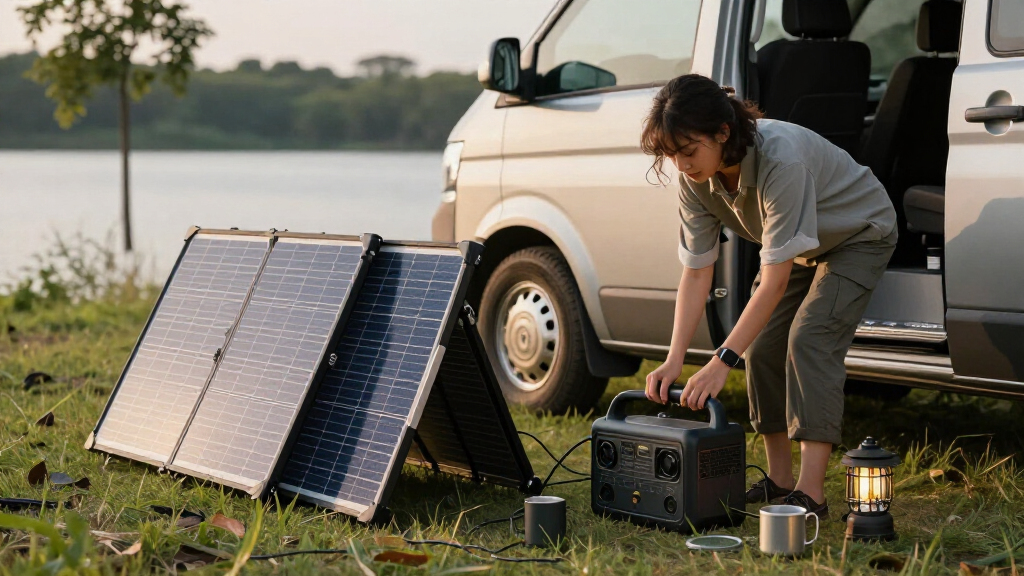
Portable solar generators pair a battery power station with solar panels so you can produce and store electricity anywhere, and the right choice depends almost entirely on how much power you need and how fast you need to refill it. For most buyers, the Jackery Solar Generator 1000 v2 with 200W Solar Panel stands out as the best overall pick, balancing 1070Wh of capacity, fast solar recharge, and a trusted ecosystem. If your budget or gear list is smaller, the MARBERO M823 bundle covers weekend basics, while the BLUETTI Elite 200 V2 suits extended off-grid trips and home backup with over 2kWh of storage. The core tradeoffs in this category are weight versus capacity, bundled panel wattage versus recharge speed, and cheap inverters versus clean power for sensitive electronics. Read on for the full breakdown of all 15 models.

Get backup power and energy gear delivered free — and shop member deals
- Fast, free delivery on millions of items
- Access to Prime Big Deal Days deals on October 6–7
- Prime Video, Amazon Music and more included
Complete the kit


Key Takeaways
- Bundled solar panel wattage varied more than battery capacity in this lineup — several cheap bundles pair large batteries with 30-40W panels that need days of sun to recharge, which quietly undermines their value.
- Jackery dominated the middle and top of the ranking because its v2 models pair higher inverter output (1500W+) with fast solar input, while its 292Wh entry bundles lag smaller-brand rivals on panel wattage per dollar.
- Built-in solar panel designs (BROWEY, BLAVOR) are genuinely convenient for casual outdoor use but cannot match the recharge speed of detachable 200W panel kits.
- The sub-$150 class (MARBERO 155Wh, Apowking 100W) makes sense only for phone, tablet, and LED-light duty; anything with a compressor or a laptop charger pushes these units to their limits.
- Whole-home backup capability only appears twice in this lineup — the BLUETTI Elite 200 V2 and Jackery HomePower 3600 Plus — and the gap between them is about portability, not raw power.
| Jackery Solar Generator 300 and 40W Solar Panel, 292Wh, 300W AC |  | Best Compact Solar Kit | Battery capacity: 292Wh | Peak output: 600W | USB-C output: 100W PD | VIEW LATEST PRICE | See Our Full Breakdown |
| Apowking 100W Portable Power Station with 40W Solar Panel |  | Best Lightweight Starter Kit | Battery capacity: 146Wh / 39,600mAh | Running output: 100W | Peak output: 200W | VIEW LATEST PRICE | See Our Full Breakdown |
| MARBERO 155Wh Portable Solar Generator with 30W Solar Panel |  | Best for Emergency Lighting | Battery capacity: 155Wh / 42,000mAh | Solar panel output: 30W | Solar panel conversion efficiency: 23% | VIEW LATEST PRICE | See Our Full Breakdown |
| Jackery Explorer 1000 v2 Portable Power Station, 1070Wh, 1500W |  | Best High-Capacity Station | Battery capacity: 1,070Wh | AC output: 1,500W | Surge peak: 3,000W | VIEW LATEST PRICE | See Our Full Breakdown |
| Jackery Solar Generator 1000 v2 with 200W Solar Panel |  | Best Complete High-Capacity Kit | Battery capacity: 1,070Wh | Battery type: LFP | AC output: 1,500W | VIEW LATEST PRICE | See Our Full Breakdown |
| Jackery Explorer 300 Portable Power Station, 292Wh |  | Best Ultralight Pick | Capacity: 292Wh | AC Output: 300W rated, 600W peak surge | Battery Chemistry: LiFePO4, 4,000+ cycles to 70% capacity | VIEW LATEST PRICE | See Our Full Breakdown |
| BROWEY 1600W Portable Power Station with Built-In Solar Panel |  | Best Mid-Size All-in-One | Capacity: 1024Wh | Output: 1600W rated, 3200W peak, pure sine wave | Battery: LiFePO4, 3000+ cycles to 80% | VIEW LATEST PRICE | See Our Full Breakdown |
| MARBERO M823 237Wh Portable Power Station with 60W Solar Panel |  | Best Complete Starter Kit | Battery Capacity: 237Wh / 64,000mAh lithium-ion | AC Output: 300W rated, 375W peak, pure sine wave | Solar Panel: 60W foldable, 21.5–23.5% conversion rate | VIEW LATEST PRICE | See Our Full Breakdown |
| ZeroKor 300W Portable Power Station with 60W Solar Panel | 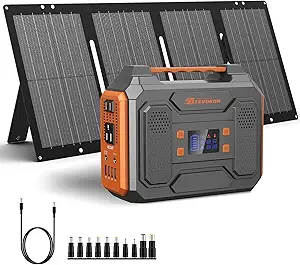 | Best Budget Solar Bundle | Station Output: 300W max, 2 AC outlets | Solar Panel: 60W monocrystalline, 20.5% conversion efficiency | Panel Outputs: USB-A, USB-C, and 18V/3.3A DC (60W max) | VIEW LATEST PRICE | See Our Full Breakdown |
| BLAVOR 1600W Solar Generator with Built-In 40W Panel, 1024Wh |  | Best for Longevity-Minded Campers | Capacity: 1024Wh LiFePO4 | Output: 1600W rated, 3200W peak | Built-In Solar Panel: 40W | VIEW LATEST PRICE | See Our Full Breakdown |
| Apowking 300W Portable Power Station with 40W Solar Panel |  | Best Ultra-Light Solar Kit | Battery capacity: 220Wh (60000mAh) | Battery type: Lithium-ion | AC output: 300W continuous, 600W peak; 2 × 110V pure sine wave outlets | VIEW LATEST PRICE | See Our Full Breakdown |
| BLUETTI Elite 200 V2 Solar Generator Kit with 2x200W Solar Panels |  | Best High-Performance Whole-Kit Value | Battery capacity: 2073.6Wh LiFePO4 (CNAS-certified automotive-grade) | AC output: 2600W continuous; 3900W power lifting mode | Cycle life: 6,000+ cycles, ~17-year rated lifespan | VIEW LATEST PRICE | See Our Full Breakdown |
| EnginStar 300W Portable Power Station with 60W Foldable Solar Panel |  | Best Budget Weekend-Camping Kit | Battery capacity: 296Wh (80000mAh) | AC output: 300W; 2 pure sine wave 110V outlets | Output ports: 8 total, including 2 regulated 12V/24V DC outputs | VIEW LATEST PRICE | See Our Full Breakdown |
| GRECELL 500W Portable Power Station, 519Wh |  | Best Mid-Size Station for Accessory Buyers | Battery capacity: 519Wh (140,400mAh) | AC output: 500W pure sine wave; 2 × 110V outlets | USB-C output: PD up to 60W | VIEW LATEST PRICE | See Our Full Breakdown |
| Jackery HomePower 3600 Plus & 2x200W Solar Panels, 3584Wh |  | Best Whole-Home Backup Beast | Battery capacity: 3584Wh, expandable to 21kWh per unit or 43kWh total | AC output: 3600W; 7200W in parallel; 120V/240V dual voltage | Battery type: LiFePO4 with ceramic membrane cells, tested to 302°F | VIEW LATEST PRICE | See Our Full Breakdown |
| portable solar generator | Battery capacity | AC output | Weight |
|---|---|---|---|
| Jackery Solar Generator 300 an | 292Wh | — | 7.5 lb |
| Apowking 100W Portable Power S | 146Wh / 39,600mAh | — | 3.3 lb |
| MARBERO 155Wh Portable Solar G | 155Wh / 42,000mAh | — | 3.7 lb |
| Jackery Explorer 1000 v2 Porta | 1,070Wh | 1,500W | 23.8 lb |
| Jackery Solar Generator 1000 v | 1,070Wh | 1,500W | 23.8 lb |
| Jackery Explorer 300 Portable | — | 300W rated, 600W peak surge | Approximately 7.5 lbs |
| BROWEY 1600W Portable Power St | — | — | — |
| MARBERO M823 237Wh Portable Po | 237Wh / 64,000mAh lithium-ion | 300W rated, 375W peak, pure sine wave | — |
| ZeroKor 300W Portable Power St | — | — | — |
| BLAVOR 1600W Solar Generator w | — | — | — |
| Apowking 300W Portable Power S | 220Wh (60000mAh) | 300W continuous, 600W peak; 2 × 110V pure sine wave outlets | 5 lbs |
| BLUETTI Elite 200 V2 Solar Gen | 2073.6Wh LiFePO4 (CNAS-certified automotive-grade) | 2600W continuous; 3900W power lifting mode | — |
| EnginStar 300W Portable Power | 296Wh (80000mAh) | 300W; 2 pure sine wave 110V outlets | 6.5 lbs station + 4 lbs panel |
| GRECELL 500W Portable Power St | 519Wh (140,400mAh) | 500W pure sine wave; 2 × 110V outlets | — |
| Jackery HomePower 3600 Plus & | 3584Wh, expandable to 21kWh per unit or 43kWh total | 3600W; 7200W in parallel; 120V/240V dual voltage | — |
More Details on Our Top Picks
Jackery Solar Generator 300 and 40W Solar Panel, 292Wh, 300W AC
The Jackery Explorer 300 kit pairs a 292Wh station with a 40W panel, giving campers a ready-to-use solar setup in a relatively light package. Its 300W rated output and mix of AC, USB-C, USB-A, and car ports suit phones, cameras, and laptops; the 100W USB-C port is especially handy for charging compatible devices directly. Compared with the Apowking 100W kit, this Jackery offers more output headroom and a larger battery, though it weighs more and takes longer to replenish from its included panel. The LiFePO4 battery is rated for over 4,000 cycles to 70% capacity, a durability advantage for frequent use. Its main limitation is the modest 40W panel: the supplied data estimates about 7.5 hours to reach 80% under suitable conditions.
Pros:- 292Wh capacity and 300W rated output provide more headroom than entry-level 100W stations
- Includes a 40W solar panel, AC adapter, and car charging cable
- 100W USB-C port plus AC, USB-A, and car outputs support varied small electronics
- LiFePO4 battery is rated for over 4,000 cycles before reaching 70% capacity
Cons:- Included 40W panel is slow for refilling the 292Wh battery; the stated 80% solar charge time is about 7.5 hours
- 300W rated output rules out many high-draw appliances
- At 7.5 lb, it is heavier than the Apowking 100W station
Best for: Campers and photographers who want a compact, bundled solar kit for phones, cameras, and occasional laptop charging
Not ideal for: Buyers who need to run appliances above 300W or restore battery capacity quickly from the included 40W panel
- Battery capacity:292Wh
- Peak output:600W
- USB-C output:100W PD
- Solar panel included:40W
- Weight:7.5 lb
- Estimated solar charge time:About 7.5 hours to 80% with the included 40W panel
Our verdict“Choose this kit for a durable, compact camping setup with more output headroom than basic 100W stations, provided slow solar replenishment is acceptable.”
Apowking 100W Portable Power Station with 40W Solar Panel
At 3.3 lb, the Apowking kit is easy to tuck into a daypack, and its 40W panel means buyers can try solar charging without sourcing a panel separately. The 146Wh battery and 100W running output are aimed at phones, lights, and other modest loads; they leave little room for appliances that draw more power. Compared with the Jackery Explorer 300 kit, this is the lighter, smaller choice, but it gives up nearly half the capacity and much of the output headroom. Seven outputs and built-in flashlight, strobe, and SOS modes make it practical for simple campsite charging and emergency signaling. I would choose it for portability and basic device charging, while buyers planning longer trips should look toward the 292Wh Jackery or another larger station.
Pros:- 3.3 lb weight is easy to carry in a daypack
- Includes a 40W monocrystalline solar panel
- Seven outputs cover AC, USB, USB-C, and 12V DC connections
- Integrated lights include flashlight, strobe, and SOS modes
Cons:- 146Wh capacity limits runtime and is substantially smaller than the Jackery Explorer 300
- 100W running output excludes many common appliances
- 12-month warranty support is limited compared with longer coverage offerings
Best for: Solo campers and day hikers who need a very light station for phones, lights, and small electronics
Not ideal for: Travelers charging laptops alongside several devices or anyone needing to power appliances over 100W
- Battery capacity:146Wh / 39,600mAh
- Running output:100W
- Peak output:200W
- Solar panel:40W monocrystalline
- Solar cell efficiency:20.5%
- AC outputs:2 × 110V
- Weight:3.3 lb
- Dimensions:7.5 × 3.7 × 6.1 in
- Warranty support:12 months
Our verdict“Pick this lightweight kit for basic campsite charging and emergency lighting when low carry weight matters more than runtime or appliance support.”
MARBERO 155Wh Portable Solar Generator with 30W Solar Panel
The MARBERO kit combines a 155Wh station, 30W solar panel, and power converter, so it can handle modest device charging without a separate panel purchase. Its broad mix of USB, USB-C, DC, car, and two 100W AC outputs offers connection flexibility, while the three-mode flashlight adds a useful campsite or outage feature. Compared with the Apowking 100W kit, MARBERO provides slightly more battery capacity and lists a 30W panel with 23% conversion efficiency; Apowking counters with a 40W panel and lower weight. The MARBERO’s 3.7 lb weight remains portable, but its small battery and 30W solar input make it better for short trips and essential electronics than sustained backup. The panel’s stated 6–7 hour charging time assumes suitable sunlight.
Pros:- Includes the station, 30W solar panel, and power converter
- Several USB, USB-C, DC, car, and AC connections support different small devices
- Flashlight offers steady, SOS, and strobe modes
- Panel is rated IP65 and includes a 6.5-foot cable
Cons:- 155Wh capacity is suited to short-duration use and small electronics
- 30W solar panel can take 6–7 hours to charge under suitable conditions
- Two AC outlets are each rated at only 100W
Best for: Campers and emergency-kit owners who value multiple device connections and a built-in signaling light
Not ideal for: People who need extended power for appliances or faster solar recovery than a 30W panel can provide
- Battery capacity:155Wh / 42,000mAh
- Solar panel output:30W
- Solar panel conversion efficiency:23%
- Solar charging time:6–7 hours
- AC outlets:2 × 100W
- Ports:QC3.0 USB-A, 2 USB-A, USB-C, 3 DC outputs, and car port
- Weight:3.7 lb
- Dimensions:8.14 × 3.77 × 7.08 in
Our verdict“Choose MARBERO for a lightweight small-device kit with useful emergency lighting, but look to the Jackery Explorer 300 for more output and capacity.”
Jackery Explorer 1000 v2 Portable Power Station, 1070Wh, 1500W
The Explorer 1000 v2 moves into a different class from the compact bundled kits: its 1,070Wh battery and 1,500W AC output can support larger loads such as a fridge or electric pot, subject to their draw and runtime needs. At 23.8 lb, it remains portable for car camping and road trips, though it is far heavier than the 7.5 lb Jackery 300. The LFP battery is rated to retain over 70% capacity after 4,000 cycles, making repeated use more plausible than with a tiny emergency-only station. Fast AC charging can reach a full charge in one hour, but only after enabling emergency charging in the app; the default mode takes 1.7 hours. It ships without a solar panel, and the listing says solar charging is compatible only with Jackery panels.
Pros:- 1,070Wh capacity and 1,500W AC output support substantially larger loads than compact kits
- Three pure sine wave AC ports plus USB-C, USB-A, and car outputs allow multiple devices at once
- LFP battery is rated for over 4,000 cycles to 70% capacity
- App offers charging modes, including quiet overnight and energy-efficiency settings
Cons:- Solar panel is not included, and the listing specifies Jackery panel compatibility
- 23.8 lb weight is much less convenient for hiking than the compact Jackery 300
- One-hour full AC charging requires enabling emergency charging in the app
Best for: Car campers and road trippers who need to run higher-draw equipment and already own or plan to buy a compatible Jackery panel
Not ideal for: Hikers seeking a light kit or buyers who want a complete solar generator package in one purchase
- Battery capacity:1,070Wh
- AC output:1,500W
- Surge peak:3,000W
- Battery chemistry:LFP
- Weight:23.8 lb
- AC outlets:3 pure sine wave
- USB ports:2 USB-C and 1 USB-A
- Full AC recharge time:1 hour with emergency charging enabled; 1.7 hours by default
- Solar panel:Not included; listing specifies Jackery panel compatibility
Our verdict“Choose the Explorer 1000 v2 when high output and long-term battery cycling matter more than low weight or an included solar panel.”
Jackery Solar Generator 1000 v2 with 200W Solar Panel
This bundle adds a 200W solar panel to the Explorer 1000 v2 platform, making it the more ready-to-charge choice beside the station-only 1000 v2. Its 1,070Wh LFP battery and 1,500W AC output suit road trips, campsites, and backup for selected household devices, while 23.8 lb is manageable for vehicle-based travel rather than backpacking. The panel gives buyers a starting point for off-grid recharging; by comparison, the station-only Jackery requires a separate panel purchase, though the bundle’s 200W panel still cannot match the speed of a wall outlet. App controls include a one-hour emergency charging mode, but that setting must be enabled and the default full charge takes 1.7 hours. The station and panel may ship separately, so the complete setup may not arrive together.
Pros:- Includes a 200W solar panel alongside the 1,070Wh station
- 1,500W AC output and 3,000W surge peak support a broad range of appliances
- LFP battery is rated for over 70% capacity after 4,000 cycles
- App controls provide charging modes and device management
Cons:- 23.8 lb station is intended for vehicle transport more than carrying on foot
- One-hour full AC recharge requires enabling emergency charging in the app
- Station and solar panel may ship separately
Best for: Road-trippers and campers who want a high-capacity station with a solar panel included for daytime replenishment
Not ideal for: Backpackers who prioritize low weight or buyers expecting the included panel to quickly refill the full battery in limited sunlight
- Battery capacity:1,070Wh
- Battery type:LFP
- AC output:1,500W
- Surge peak:3,000W
- Solar panel:200W
- Weight:23.8 lb
- AC ports:3 pure sine wave
- Full AC recharge time:1 hour with emergency charging enabled; 1.7 hours by default
Our verdict“Pick this bundle for a vehicle-based trip or backup setup when you want substantial capacity and a panel included from the start.”
Jackery Explorer 300 Portable Power Station, 292Wh
At roughly 7.5 pounds, the Explorer 300 is the lightest serious power station in this roundup, and that alone justifies its place here. The 292Wh capacity is modest next to the 1024Wh units like the BROWEY 1600W, but the tradeoff is a pack you can actually carry on a long hike without noticing it. The upgraded LiFePO4 chemistry with 4,000+ rated cycles means this unit should outlast cheaper lithium-ion options such as the MARBERO M823 by years. Pair it with a 100W Jackery panel and you’ll reach 80% in under three hours off-grid. The catch: 300W of output rules out anything with a heating element or power tools, and the panel is sold separately — a real cost to factor in compared to bundled kits like the MARBERO or ZeroKor.
Pros:- Exceptionally light at around 7.5 lbs with an integrated handle for hiking and travel
- LiFePO4 battery rated for 4,000+ cycles, promising roughly a decade of service
- Versatile port selection including 100W USB-C PD for fast laptop charging
- Fast solar recharge — 80% in about 2.8 hours with a 100W panel
Cons:- Solar panel sold separately, unlike bundled kits from MARBERO and ZeroKor
- 300W rated output limits it to small electronics and excludes most appliances
Best for: Backpackers, hunters, and CPAP users who need genuinely portable power for phones, laptops, cameras, and small devices on multi-day trips
Not ideal for: Anyone planning to run appliances, blenders, or heaters — the 300W ceiling and 292Wh capacity fall well short of home-backup duty
- Capacity:292Wh
- AC Output:300W rated, 600W peak surge
- Battery Chemistry:LiFePO4, 4,000+ cycles to 70% capacity
- Ports:2 AC outlets, 100W USB-C PD, 2 USB-A, 120W car port
- Weight:Approximately 7.5 lbs
- Solar Recharge:80% in ~2.8 hours with 100W panel (panel not included)
- AC Recharge Time:About 4 hours
Our verdict“Buy this if ounces matter more than watt-hours; skip it if you need whole-device or emergency household power.”
BROWEY 1600W Portable Power Station with Built-In Solar Panel
The BROWEY 1600W hits a sweet spot in this lineup: 1024Wh of LiFePO4 capacity and enough output to run real appliances, without the bulk of the BLUETTI Elite 200 V2. Its party trick is the built-in 40W solar panel with an MPPT controller — set it in the sun and it trickle-charges itself with zero extra gear, something the Jackery Explorer 1000 v2 can’t do without a separate panel. The 3200W peak surge handles motor-driven devices like refrigerators and power tools that would trip a 300W unit instantly. Be realistic about the built-in panel, though: 40W is a maintenance trickle, not a meaningful recharge strategy, and the headline 3-hour recharge only happens when you combine AC and USB-C PD simultaneously. For serious solar input you’ll still want an external panel.
Pros:- 1600W pure sine wave output with 3200W peak handles appliances and power tools
- Built-in solar panel with MPPT controller keeps the battery topped up with no extra gear
- LiFePO4 battery rated for 3,000+ cycles to 80% capacity
- Eight ports plus multiple recharge paths (AC, USB-C PD, car, solar)
Cons:- Built-in solar charging is limited to 40W — a trickle, not a real recharge
- The 3-hour recharge claim requires simultaneous AC and USB-C PD charging
Best for: Campers and van-lifers who want appliance-grade power and a self-trickle-charging backup without hauling a giant unit
Not ideal for: Buyers expecting the built-in panel to recharge a 1024Wh battery at useful speed — 40W is far too slow for that job
- Capacity:1024Wh
- Output:1600W rated, 3200W peak, pure sine wave
- Battery:LiFePO4, 3000+ cycles to 80%
- Built-In Solar Panel:40W with MPPT controller
- Ports:8 total including AC, DC, and 100W USB-C PD
- Recharge Time:80% in 3 hours via AC + 100W USB-C PD simultaneously
- Charging Options:AC adapter, USB-C PD, car outlet, solar panels
Our verdict“A sensible middle ground between ultralight units and home-backup monsters, best for buyers who value having some solar built in rather than none.”
MARBERO M823 237Wh Portable Power Station with 60W Solar Panel
Unlike the Jackery Explorer 300, which charges extra for its panel, the MARBERO M823 arrives as a true solar generator: a 237Wh station plus a foldable 60W panel in one box. For a first foray into off-grid power, that completeness matters more than raw specs. The pure sine wave 300W AC output is clean enough for sensitive electronics, and the array of USB-A, QC 3.0, USB-C, and DC ports covers phones, tablets, cameras, drones, and a CPAP for a night or two. Compared with the ZeroKor 300W kit, MARBERO’s panel edges ahead with a slightly higher conversion rate (up to 23.5%), and the station’s battery capacity is actually specified. The tradeoff is capacity and chemistry: 237Wh of lithium-ion won’t run anything substantial, and it will degrade faster than the LiFePO4 cells in the BROWEY or Jackery Explorer 300.
Pros:- Bundled foldable 60W solar panel with up to 23.5% conversion efficiency
- Pure sine wave AC output safe for sensitive electronics
- Broad port variety including QC 3.0 fast charging
- Three-mode LED flashlight (steady, strobe, SOS) adds emergency utility
Cons:- AC output capped at 300W rated — exceeding it can damage the unit
- Lithium-ion chemistry degrades faster than the LiFePO4 batteries in pricier rivals
Best for: First-time buyers and weekend campers who want everything needed for solar charging in one purchase
Not ideal for: Extended off-grid trips or emergency home backup — 237Wh runs out quickly and 300W won’t support larger devices
- Battery Capacity:237Wh / 64,000mAh lithium-ion
- AC Output:300W rated, 375W peak, pure sine wave
- Solar Panel:60W foldable, 21.5–23.5% conversion rate
- AC Outlets:2
- USB Ports:2 QC3.0 (18W), 2 standard (15W), 1 USB-C PD (18W)
- DC Output:12–16.8V, 10A (14A max)
- Flashlight:3 modes: flashlight, strobe, SOS
Our verdict“The easiest one-box entry point into solar generators, as long as your needs stay in the phone-to-laptop range.”
ZeroKor 300W Portable Power Station with 60W Solar Panel
The ZeroKor 300W kit competes directly with the MARBERO M823: same 300W station class, same bundled 60W monocrystalline panel approach. Where it differentiates itself is the panel’s output flexibility — its own USB-A, USB-C, and 18V DC outputs let you charge devices straight from the panel, bypassing the station entirely on sunny days. That’s genuinely useful and something MARBERO’s kit doesn’t emphasize. The compromises are harder to ignore, though. ZeroKor doesn’t clearly publish the battery capacity, which makes runtime planning a guessing game, and the junction box isn’t waterproof — a real limitation for a product whose whole purpose is sitting outside. Compared with stepping up to the Jackery Explorer 300, you get the panel included here but give up battery chemistry, capacity transparency, and brand track record.
Pros:- 60W monocrystalline panel included with its own USB-A, USB-C, and DC outputs for direct device charging
- Three recharge paths: wall outlet, 12V car outlet, or compatible solar panel
- Full protection suite covering short circuit, over-current, over-voltage, overload, and overheating
- Flashlight with reading and SOS modes
Cons:- Battery capacity is not clearly specified, making runtime hard to predict
- Solar panel junction box is not waterproof, limiting outdoor durability
- 300W ceiling means anything hungrier risks damaging the unit
Best for: Cost-conscious buyers who want a full station-plus-panel setup for light camping duty and small-device charging
Not ideal for: Anyone who needs predictable runtime or plans to leave the panel out in unpredictable weather
- Station Output:300W max, 2 AC outlets
- Solar Panel:60W monocrystalline, 20.5% conversion efficiency
- Panel Outputs:USB-A, USB-C, and 18V/3.3A DC (60W max)
- Station Ports:2 AC, DC 9–12.6V/10A, 3 USB-A, quick-charge USB
- Recharge Methods:AC outlet, 12V car outlet, 13V–23V solar panel
- Safety Features:Short-circuit, over-current, over-voltage, overload, overheating protection
Our verdict“A workable low-cost bundle if you accept the unknowns — buyers wanting certainty should spend up for the MARBERO or Jackery alternatives.”
BLAVOR 1600W Solar Generator with Built-In 40W Panel, 1024Wh
On paper, the BLAVOR 1600W mirrors the BROWEY 1600W almost exactly — 1024Wh LiFePO4, 1600W output, 3200W peak, built-in 40W panel, eight ports. What separates it is the 4,000+ cycle battery rating versus BROWEY’s 3,000, plus a 100W bidirectional USB-C port that charges the unit itself from a laptop-style charger — a convenience for van dwellers and frequent travelers. The 200W external solar input ceiling also means it can recharge meaningfully faster than its built-in panel alone, if you add a panel later. Same honest caveat applies to both built-in-panel units, though: 40W is for topping off, not refilling, and the external panel costs extra. Choose BLAVOR over BROWEY if cycle life and USB-C charging matter most; choose BROWEY if its accessory bundle suits your kit better, since the core power experience is nearly identical.
Pros:- LiFePO4 battery rated beyond 4,000 charge cycles for years of heavy use
- 100W bidirectional USB-C port both charges devices and recharges the station
- Accepts up to 200W of external solar input for faster off-grid recharging
- Eight output ports plus wall, car, and solar recharge options
Cons:- Built-in panel is rated at just 40W — inadequate as a primary charging source
- External solar panel sold separately
Best for: Campers and home-backup preppers who plan to keep and use one unit for many years and value USB-C recharging flexibility
Not ideal for: Buyers who want full solar recharging out of the box — the built-in 40W panel is a trickle and anything faster requires a separate purchase
- Capacity:1024Wh LiFePO4
- Output:1600W rated, 3200W peak
- Built-In Solar Panel:40W
- Max External Solar Input:200W (panel sold separately)
- Battery Cycle Life:4,000+ charge cycles
- Ports:8 output ports including 100W bidirectional USB-C
- Recharge Methods:Wall outlet, car socket, built-in panel, external panel
Our verdict“Essentially a durability-focused twin of the BROWEY — pick it when cycle life and bidirectional USB-C outrank everything else.”
Apowking 300W Portable Power Station with 40W Solar Panel
At just 5 lbs total, this Apowking kit is the lightest complete solar generator package in this roundup, and that alone shapes who it is for. Compared with the EnginStar 296Wh kit, which weighs 6.5 lbs before you add its 4 lb panel, this option trades a little capacity and panel wattage for a setup you can genuinely carry in a daypack. The 220Wh battery runs phones, tablets, cameras, and a small fan or light for a weekend, and the built-in 300-lumen LED floodlight can last over 30 hours — a thoughtful touch the EnginStar lacks. The tradeoffs are real: 40W of solar means slow full recharges measured in days of good sun rather than hours, and the 300W inverter ceiling rules out kettles, microwaves, or power tools. It also uses standard lithium-ion chemistry rather than the longer-lived LiFePO4 found in the GRECELL-tier competitors here.
Pros:- Complete kit includes a 40W panel and every charging cable you need out of the box
- Genuinely portable at 5 lbs with a compact 8.5-inch footprint
- Built-in LED floodlight runs 30+ hours, useful for campsite or emergency lighting
- Two pure sine wave AC outlets plus four USB ports and a DC carport cover most small-device needs
Cons:- 40W solar panel takes multiple sunny days to fully recharge the 220Wh battery
- 300W output ceiling excludes most kitchen appliances and power tools
- Standard lithium-ion chemistry offers fewer charge cycles than LiFePO4 rivals
Best for: Day hikers, tent campers, and minimalist travelers who want a genuinely light all-in-one solar kit for phones, cameras, lights, and small devices
Not ideal for: Anyone planning to run kitchen appliances or expecting fast solar recharges — 40W of panel and a 300W ceiling are too limited
- Battery capacity:220Wh (60000mAh)
- Battery type:Lithium-ion
- AC output:300W continuous, 600W peak; 2 × 110V pure sine wave outlets
- Solar panel:40W monocrystalline, 24% cell efficiency
- USB ports:4 total, including 2 USB-C PD
- Weight:5 lbs
- LED light:~300 lumens, 5000K, up to 30+ hours
- Dimensions:8.5 × 6.7 × 4.1 in
Our verdict“Buy this if ounces matter more than watt-hours — it is the lightest way to get station-plus-panel solar power, as long as your devices stay small.”
BLUETTI Elite 200 V2 Solar Generator Kit with 2x200W Solar Panels
This BLUETTI kit sits in a sweet spot the Jackery Explorer 1000 v2 crowd cannot reach: 2073.6Wh of capacity paired with 400W of included panels, delivering a 2.4-hour full solar recharge — faster than most competitors charge from a wall. With 2600W of continuous AC output and a 3900W power-lifting mode, it handles refrigerators, hair dryers, and coffee makers that instantly disqualify every 300W–500W option in this roundup. The 6000-cycle LiFePO4 battery and a claimed 10W standby draw mean it wastes far less energy idling, translating to measurably longer runtimes under the same load. Compared with the Jackery HomePower 3600 Plus, it gives up raw output and expandability but costs and weighs considerably less, and its 0–80% recharge in 50 minutes via TurboBoost is genuinely quick. The main compromises are weight — 400W of glass panels is a two-person carry — and 2600W still falls short of running a well pump or 240V appliances without upgrades.
Pros:- 2073.6Wh LiFePO4 battery rated for 6,000+ cycles and roughly 17 years of use
- 400W of included solar panels fully recharge the station in about 2.4 hours
- 2600W continuous output with 3900W power-lifting mode runs kitchen appliances
- TurboBoost recharging hits 80% in roughly 50 minutes from AC and DC combined
Cons:- Station plus 400W of panels is heavy and bulky to transport as a set
- Still 120V-only at this capacity tier, so no 240V or heavy well-pump support
- Full feature set (fast alternator charging) requires buying additional BLUETTI accessories
Best for: RV owners, off-grid cabins, and households that want real appliance-grade backup power with fast solar recharging in one purchase
Not ideal for: Backpackers and car campers focused on phones and lights — this much capacity is wasted weight and money for small-device needs
- Battery capacity:2073.6Wh LiFePO4 (CNAS-certified automotive-grade)
- AC output:2600W continuous; 3900W power lifting mode
- Cycle life:6,000+ cycles, ~17-year rated lifespan
- Solar input:2 × 200W panels included; up to 1000W input supported
- Solar recharge time:~2.4 hours with 1000W of panels; ~5.5 hours with included 400W
- Fast charging:0–80% in ~50 minutes via dual AC+DC TurboBoost
- Standby draw:~10W
- Simultaneous devices:Up to 9
Our verdict“The strongest all-around kit here for buyers who want big capacity, fast recharging, and included solar in one box without stepping up to whole-home systems.”
EnginStar 300W Portable Power Station with 60W Foldable Solar Panel
The EnginStar earns its spot by bundling more solar than its closest rivals: a 60W foldable panel versus the 40W panels shipped with the Apowking 300W and Jackery Solar Generator 300 kits. That extra wattage matters at this scale — it roughly halves solar recharge time compared with 40W kits, making multi-day trips practical without a wall outlet. The 296Wh battery and eight output ports let a family keep phones, headlamps, a drone, and a small fan running at once, and the foldable panel packs down to the size of a slim book. Against the MARBERO M823, you get more capacity and panel wattage, but the tradeoffs are clear: USB-C tops out at 18W (slow for modern laptops), the 300W inverter ceiling is rigid, and the 1,000-cycle lithium-ion chemistry ages faster than the LiFePO4 in the BLUETTI Elite 200 V2. Buyers should also verify the panel inclusion with the seller before purchasing, since the listing information conflicts.
Pros:- 60W foldable panel recharges the station noticeably faster than rival 40W kits
- Eight output ports let the whole group charge devices at once
- Three charging inputs: solar, wall outlet, and 12V car socket
- Battery management system guards against short circuits, overcharge, and overload
Cons:- USB-C limited to 18W, too slow for most modern laptops
- Only ~1,000 charge cycles on standard lithium-ion chemistry
- Listing information is inconsistent about whether the solar panel is included
Best for: Weekend campers and budget-conscious buyers who want the fastest solar recharging available in an affordable sub-300Wh kit
Not ideal for: Laptop-heavy users and anyone needing appliance power — 18W USB-C and a 300W inverter are hard limits
- Battery capacity:296Wh (80000mAh)
- AC output:300W; 2 pure sine wave 110V outlets
- Output ports:8 total, including 2 regulated 12V/24V DC outputs
- USB-C output:18W
- Solar panel:60W monocrystalline, 23% conversion efficiency, foldable
- Recharge time:~3 hours by wall/car (65W max)
- Weight:6.5 lbs station + 4 lbs panel
- Cycle life:1,000+ cycles
Our verdict“A sensible budget pick if solar recharge speed matters more than raw power — just confirm panel inclusion and accept modest USB-C speeds.”
GRECELL 500W Portable Power Station, 519Wh
The GRECELL occupies the middle ground between the 300W budget kits and the Jackery Explorer 1000 v2 class: 519Wh of capacity and a 500W pure sine inverter are enough for a CPAP machine through the night, a mini-fridge for hours, or a laptop-heavy workday off-grid. Its party trick is output variety — with QC 3.0 USB-A, 60W USB-C PD, dual DC, a car port, and even 10W wireless charging on top, it can feed up to ten devices at once, more than any other sub-500Wh option here. But note the catch that defines this pick: no solar panel is included. You buy or reuse your own 100W–200W panel, which is actually a plus if you already own one — the EnginStar and Apowking kits force you to pay for panels you may not need. On the downside, wall recharging takes a leisurely 6–7 hours, and the AC inverter can slowly drain the battery if left switched on with nothing plugged in.
Pros:- 519Wh capacity with a 500W pure sine wave inverter handles CPAP machines and mini-fridges
- Ten simultaneous outputs including 60W USB-C PD, QC 3.0, and wireless charging
- Panel-agnostic design accepts any 100W–200W solar input, so you can reuse gear you own
- Competitive weight-to-capacity ratio versus smaller 300W rivals
Cons:- Solar panel is not included — this is a station, not a complete kit
- Slow wall recharge at 6–7 hours
- AC inverter draws standby power when left on with no load attached
Best for: Buyers who already own a solar panel (or plan to buy a bigger one) and want maximum device capacity in a sub-500Wh station
Not ideal for: Anyone expecting a complete solar generator out of the box, or who needs fast recharging — no panel is included and wall charging is slow
- Battery capacity:519Wh (140,400mAh)
- AC output:500W pure sine wave; 2 × 110V outlets
- USB-C output:PD up to 60W
- USB-A outputs:3 × QC 3.0, up to 18W each
- Wireless charging:10W
- Solar compatibility:100W or 200W panels (not included)
- Recharge time:6–7 hrs wall; 7–8 hrs car; 6–9 hrs with 100W solar
- Simultaneous devices:Up to 10
Our verdict“The smart middle pick if you already have panels or want to choose your own — just budget for a panel and patience when recharging.”
Jackery HomePower 3600 Plus & 2x200W Solar Panels, 3584Wh
This is the ceiling of the roundup: 3600W of continuous output (7200W in parallel), 3584Wh expandable to 43kWh, and dual 120V/240V support mean it runs pumps, heaters, and dryers — appliances no other product here can touch, including the BLUETTI Elite 200 V2 with its 2600W ceiling. Jackery positions it as plug-and-play home backup rather than camping gear, and the luggage-style wheels and telescopic handle back that up; it rolls to the kitchen rather than being carried to a tent site. The ceramic-membrane LFP cells tested to 302°F, 6,000-cycle rating, and cold-weather operation down to -4°F make a genuine case for reliability-minded buyers, and 0–100% recharging in 2 hours via hybrid AC+DC is outstanding for this capacity class. The honest tradeoffs: 400W of included solar is undersized for a 3584Wh battery (roughly a full sunny day per charge), the panels ship separately, and realizing the 240V/7200W potential requires buying a second unit and accessories.
Pros:- 3600W output (7200W parallel) with 120V/240V support runs pumps, heaters, and dryers
- 3584Wh expandable to 43kWh for multi-week household backup
- High-temp-resistant ceramic membrane LFP cells rated for 6,000 cycles and 10-year lifespan
- Wheels and telescopic handle make it the most movable station in its weight class
Cons:- Included 400W of solar takes roughly a full sunny day to recharge the large battery
- Full 240V and 7200W capability requires a second unit and additional accessories
- Overkill in size and expense for camping or small-device use
Best for: Homeowners who want serious outage insurance — well pumps, furnaces, refrigerators, and medical equipment — with room to expand later
Not ideal for: Campers and casual users — the size, weight, and cost are wasted on phones, lights, and weekend trips
- Battery capacity:3584Wh, expandable to 21kWh per unit or 43kWh total
- AC output:3600W; 7200W in parallel; 120V/240V dual voltage
- Battery type:LiFePO4 with ceramic membrane cells, tested to 302°F
- Cycle life:6,000 cycles, ~10-year rated lifespan
- Included solar:2 × 200W panels (shipped separately)
- Recharge time:~2 hrs hybrid AC+DC; ~2.5 hrs AC; ~4 hrs solar; ~2.5 hrs via gas generator
- Operating range:Down to -4°F
- Design:Luggage-style wheels with telescopic handle
Our verdict“If the goal is keeping a household running through a multi-day outage rather than charging devices at a campsite, this is the pick — budget for extra panels or a second unit to unlock its full potential.”
How We Picked
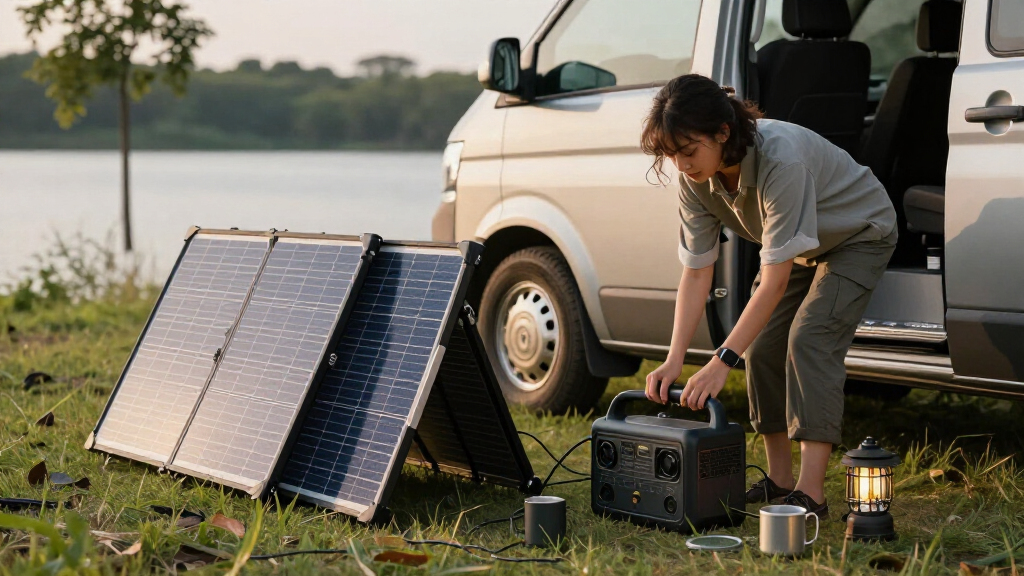
I evaluated each portable solar generator against four buyer-facing criteria rather than spec-sheet bragging rights. Capacity and inverter output came first, because watt-hours determine how long a unit runs your gear and inverter wattage determines whether it can run it at all — a 300W station is useless for a 600W appliance no matter how big the battery looks. Solar recharge speed came second: I compared bundled panel wattage against battery size, since a 1000Wh battery charged by a 40W panel is a multi-day project, not a solar generator. Third, I weighed portability and build, including weight, handle design, and whether the panels fold down sensibly for transport. Finally, I judged overall value — what each bundle realistically delivers for the money relative to rivals in the same class.
The ranking reflects practical usefulness, not brand names. Units that solve a specific problem well (emergency backup, ultralight camping, whole-home resilience) rank higher than generalists with weak recharge systems. Where two models tie on specs, the one with the better solar input or inverter quality won, because those two factors are the hardest to work around after purchase.
Factors to Consider When Choosing Portable Solar Generators
Before settling on a specific model, step back and match the generator to how you actually plan to use it. These are the factors that most often make or break a portable solar generator purchase.Match Watt-Hours to Your Real Runtime
Battery capacity is the headline spec, but most buyers overestimate what a watt-hour means. A 300Wh unit runs a typical laptop for roughly four to six charges, a CPAP machine for one to two nights, and a mini fridge for a few hours — not the full weekend many people imagine. Write down the devices you genuinely need during an outage or trip, add up their watt-hours per day, and buy roughly 25% more capacity than that total, because batteries lose usable energy at low charge and inverter conversion is never 100% efficient. The most common mistake in this category is buying a large battery with a weak inverter or tiny panel, which gives you storage you cannot fill or use. Capacity, inverter wattage, and solar input need to scale together.
Panel Wattage Determines Your Recharge Reality
The solar panel is what makes these products generators rather than oversized power banks, and it is where cheap bundles cut corners. As a rule of thumb, divide battery capacity by panel wattage and multiply by 1.5 to estimate realistic full-sun recharge hours — a 1000Wh battery with a 200W panel recharges in roughly a day of good sun, while the same battery with a 40W panel takes most of a week. If you plan multi-day trips without wall outlets, prioritize bundles with at least 150W of panel input or buy extra panels separately. Built-in panels are convenient for topping up but should be treated as a trickle charger, not a primary recharge method. Also check the solar input limit on the station itself, because some units cannot accept more panels even if you buy them.
Inverter Quality and Sine Wave Output
The inverter converts battery DC power into the AC your appliances expect, and its quality affects more than maximum wattage. Pure sine wave output matters if you plan to run sensitive electronics, medical devices like CPAP machines, or anything with a motor, because modified square wave power can cause overheating, buzzing, or long-term damage. Surge capacity also deserves attention: refrigerators and power tools draw two to three times their rated wattage at startup, so a unit with a strong surge rating handles appliances its continuous rating suggests it cannot. Budget units in this class sometimes advertise optimistic inverter numbers that sag under sustained load. Check whether the rated output is continuous or peak, and assume anything unlabeled is peak.
Weight, Size, and Where You Will Actually Carry It
Portable is relative in this category — the gap between a 4-pound compact unit and a 60-plus-pound whole-home station changes what you can realistically do with it. If the generator lives in a car trunk for camping, weight matters less than if you carry it to a campsite by hand. Smaller units in the 150-300Wh range are genuinely one-hand carryable, while 1kWh-and-up models demand two hands, good handles, and often a wheeled design you should look for if mobility is a concern. Panels add their own bulk: a 200W folding panel is the size of a small suitcase. Be honest about your carrying situation before buying big, because an unused generator at home helps nobody during a campsite emergency.
Battery Chemistry and Lifespan
Nearly every model in this class now uses LiFePO4 (LFP) chemistry, but older and cheaper units may still ship with lithium-ion NMC cells, and the difference shapes long-term value. LFP batteries typically last 3,000-plus charge cycles versus 500-800 for NMC, meaning the battery will outlive several years of weekly use instead of fading within two. LFP is also more thermally stable, which matters for a device that sits in a hot car or tent. The tradeoff is weight — LFP stores less energy per pound, which is why ultralight compact units sometimes still use NMC. If you use the generator occasionally, chemistry matters less; if it is part of your weekly routine or emergency plan, favor LFP and check the rated cycle life before committing.
Expansion and Ecosystem Costs
Think about where your power needs might be in three years, not just this season. Some platforms allow battery expansion with add-on modules or extra panels, which lets you start small and grow — a meaningful advantage if your budget is tight now but you expect bigger needs later. Proprietary connectors and ecosystems lock you in, so a cheap entry unit from a brand with expensive accessories can cost more over time than a pricier starter from a brand with affordable panel expansion. Also verify pass-through charging (using the station while it charges from solar) and check the outlet mix against your devices, because adapters and dongles add friction every single use. The cheapest generator is rarely the cheapest system.
Frequently Asked Questions
Can a portable solar generator run a refrigerator during a power outage?
It depends on both the inverter wattage and the battery capacity, and most people underestimate one or the other. A typical fridge draws 100-200W running but spikes to 400-800W at compressor startup, so you need an inverter with at least a 500W continuous rating and healthy surge capacity. On the capacity side, an efficient fridge consumes roughly 1-1.5kWh per day, which means a 1000Wh unit covers one day at best and a 2000Wh-class unit like the BLUETTI Elite 200 V2 covers two to three days. Keep in mind the solar panel matters here too: with 200W of panel input and decent sun, you can stretch that runtime indefinitely. If refrigerator backup is your main goal, treat 1000Wh and 200W of panels as the realistic floor, and skip the sub-300Wh class entirely.
Is a built-in solar panel better than a detachable one?
Built-in panels, like those on the BROWEY and BLAVOR units, win on convenience — there is nothing to unpack, connect, or forget at home — but they lose decisively on recharge speed. A built-in 40W panel produces a fraction of what a separate 200W folding kit delivers, turning a full recharge from a same-day task into a multi-day one. Built-ins also fix your panel orientation to wherever the unit sits, while detachable panels can angle toward the sun all day. The right answer depends on your use case: casual campers topping up phones and lights will love the simplicity, while anyone relying on the generator for real power needs should treat built-ins as a backup trickle source. For most buyers in this roundup, a detachable panel bundle is the smarter long-term choice.
How much solar panel wattage do I actually need with my generator?
A useful rule is to have at least 100W of panel for every 500Wh of battery if you want to recharge within a single good solar day. That means a 300Wh unit is well matched to a 60-100W panel, a 1000Wh station wants 200W, and a 2000Wh-plus system needs 400W or more to refill daily. Real-world conditions rarely match lab conditions — clouds, panel angle, and heat can cut output by 30-50% — so it pays to over-panel relative to that baseline. Also check the station’s maximum solar input rating, because adding panels beyond it wastes money. In this lineup, the biggest hidden weakness of the budget bundles is exactly this mismatch: large batteries shipped with panels too small to refill them in reasonable time.
Are cheap sub-300Wh solar generators worth buying, or should I save for a bigger unit?
They are worth it for a specific, honest job: keeping phones, tablets, cameras, drones, LED lights, and maybe a small fan running during short trips or brief outages. Units like the MARBERO 155Wh and Apowking 100W bundles do that job well at a low entry cost, and their light weight makes them genuinely backpack-friendly. Where they fall short is anything with a heating element, a compressor, or power tools — those loads either trip the inverter or drain the battery in minutes. If your needs might grow, or if you want real emergency backup, saving toward a 1000Wh-class unit is the better investment, because you cannot expand a small unit into a big one. Buy small only if small is genuinely all you need.
What is the difference between the 1000Wh and 2000Wh-plus classes, and which should I choose?
The 1000Wh class, represented here by the Jackery Explorer 1000 v2 bundle, covers a full weekend of moderate use — laptops, lights, a portable cooler, camera gear — at a weight most people can still move by hand. The 2000Wh-plus class, like the BLUETTI Elite 200 V2, crosses into multi-day independence and real home-backup territory, running a fridge, a microwave for short bursts, or a CPAP machine for nearly a week. The tradeoffs are weight, cost, and recharge demands: bigger batteries need proportionally more panel wattage to refill daily, or you are just carrying around an empty tank. Choose the 1000Wh class if portability and versatility matter most, and step up to 2000Wh-plus only if outage resilience or long off-grid stays are the actual mission. Going halfway usually disappoints both use cases.
Conclusion
After comparing all 15 bundles, the right pick comes down to your power mission rather than any single spec. For best overall, the Jackery Solar Generator 1000 v2 with 200W panel hits the sweet spot of capacity, fast solar recharge, and a 1500W inverter that handles real appliances. The MARBERO M823 takes best value, pairing 237Wh of usable capacity with a 60W panel at a price that respects its limits. For beginners, the Apowking 100W bundle is the gentlest entry point — simple, light, and low-risk for learning what you actually need. On the premium end, the BLUETTI Elite 200 V2 delivers serious off-grid and home-backup capability, while the Jackery HomePower 3600 Plus is the pick for specific needs: true whole-home resilience during extended outages. Whatever you choose, resist the temptation to buy capacity without matching panel wattage — the bundles in this roundup that pair big batteries with small panels are the ones buyers regret most.
Fall Picks
fall essentials
As an affiliate, we earn on qualifying purchases.