TL;DR

Get backup power and energy gear delivered free with Prime
- Fast, free delivery on millions of items
- Prime Video, Amazon Music and more included
- Member-only deals all year
A September 29 report by Green Building Advisor examined remote monitoring systems that let heat-pump makers and HVAC contractors review equipment performance data. The tools may help identify problems sooner and reduce some service calls, while raising unanswered questions about who controls the data and how it may be used.
Remote monitoring systems are giving some heat-pump manufacturers and HVAC contractors access to detailed equipment data, a development that may help diagnose faults sooner but leaves questions about control and use of homeowners’ data, according to a September 29 report by Green Building Advisor.
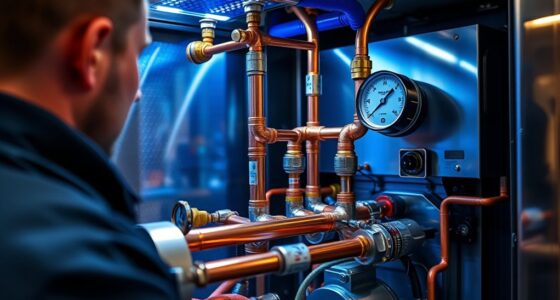
The report describes systems that can provide remote access to information such as temperature and humidity, airflow, refrigerant pressure and defrost-cycle behavior. Unlike basic remote controls that let residents adjust a thermostat through a connected device, monitoring tools are designed to track system operation and flag signs of trouble.
Green Building Advisor says the technology may reduce unnecessary service calls and shorten diagnosis by allowing a contractor to review operating information before visiting. In some cases, a system could detect a problem before the homeowner notices it. The report characterizes automated notification or service coordination as a potential function; it does not establish that every system independently contacts or dispatches a technician.
The report names Daikin and Carrier as major HVAC companies offering remote monitoring. It gives Daikin’s SkyportCare as an example, describing it as a system that uses a smart thermostat and a proprietary cloud service to share heat-pump performance data with contractors. The available source excerpt does not provide details about data retention, customer consent terms, or whether the information is shared beyond the parties involved in service.
Monitoring Changes Service Access
Remote diagnostics could change how homeowners learn about equipment problems and how contractors prepare for repairs. If technicians can review system readings before arriving, they may be better able to identify a fault or bring the right parts. That could make service more efficient, though the report does not provide measured savings, repair-time comparisons or evidence that the systems consistently prevent breakdowns.
The same access creates a practical data-governance issue. Heat-pump readings can include information about equipment performance and conditions inside a home, including temperature and humidity patterns. Who can view those readings, how long they remain available, and what other uses are permitted matter to customers weighing convenience against privacy and control.
From Remote Controls to Diagnostics
Connected heat pumps already can be integrated with smart-home systems for remote control, according to Green Building Advisor. Monitoring adds another layer: rather than simply allowing a user to change a setting, it can transmit operating measurements to a manufacturer’s cloud service or an HVAC contractor.
The report places this change within a wider growth in connected household devices, which collect information about energy use, equipment operation and indoor conditions. Its focus is narrower than smart-home technology generally: the service relationship among a heat-pump owner, equipment maker and contractor, and the data generated while the system runs.
Data Terms Remain Unspecified
The source excerpt does not say who legally owns the monitoring data or what rights homeowners have to access, download, correct or delete it. It also does not specify how long manufacturers retain readings, how customer permission is obtained, or whether data may be used for purposes beyond troubleshooting and service.
The report’s available material also does not establish how common these systems are across heat-pump installations, how well they detect failures, or what cost or performance benefits homeowners actually experience. Those details would be needed to compare systems or assess the trade-off between remote service and data collection.
Review Terms Before Connecting
Homeowners considering a remotely monitored heat pump can ask the installer and manufacturer what information the system collects, which parties can access it, and whether monitoring is optional. They can also request the applicable privacy policy and service terms, including information on retention and data sharing.
The source report does not identify a regulatory decision, company deadline or industry-wide standard as the next milestone. More specific answers will depend on the terms offered by individual manufacturers and contractors, as well as any future disclosures about how the collected data is handled.
Key Questions
What does heat-pump remote monitoring collect?
Systems described in the report can transmit operating readings such as temperature, humidity, airflow, refrigerant pressure and defrost-cycle behavior. The precise information varies by system and is not detailed for every product.
Can remote monitoring identify a problem before a homeowner notices?
That is a stated purpose of the technology: it can register signs of distress for review. The report does not provide performance data showing how often problems are detected early or prevented.
Which companies are mentioned?
The report identifies Daikin and Carrier as large HVAC companies involved in remote monitoring. It describes Daikin’s SkyportCare as one example.
Who owns the data from a monitored heat pump?
The report raises this question but the available source material does not answer it. Homeowners should check the relevant manufacturer and service terms for ownership, access, retention and sharing provisions.
Source: rss
Halloween Picks
halloween
As an affiliate, we earn on qualifying purchases.