
The best urban wind turbines balance a workable rated output, a suitable controller, and a design that can cope with turbulent wind around buildings. My best overall pick is the VEVOR 1500W 24V Three-Blade Kit, which pairs a moderate stated capacity with a wind-solar hybrid controller. The VEVOR 500W MPPT kit is a more modest alternative for buyers prioritizing a lower-output system, while the 400W five-blade kit is aimed at RV, marine, and hybrid setups. The main tradeoffs are rated power versus real wind at your site, vertical-axis design versus mounting and noise constraints, and advertised versatility versus the details of the controller and installation. Read on for the full comparison and the practical checks I would make before choosing.

Get backup power and energy gear delivered free with Prime
- Fast, free delivery on millions of items
- Prime Video, Amazon Music and more included
- Member-only deals all year
Complete the kit


Key Takeaways
- The VEVOR 1500W 24V kit ranks first because its stated capacity is paired with a wind-solar hybrid controller, a useful match for buyers planning a mixed-generation system.
- The VEVOR 500W MPPT kit is the more restrained option for shoppers who want a smaller stated output and a named MPPT controller rather than a very high headline wattage.
- Many entries are vertical-axis kits, but their headline ratings vary widely; a larger wattage label alone does not show how much energy a turbine will produce at a building’s actual wind speed.
- Voltage and system compatibility separate practical choices: 12V, 24V, and 48V kits are not interchangeable without matching the controller, battery bank, and inverter plan.
- Use-case flexibility varies across the lineup: the 400W five-blade kit explicitly targets marine, RV, and home hybrid use, while several higher-rated listings make broader claims that still need verification before purchase.


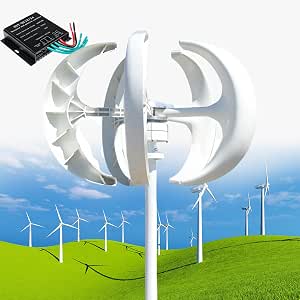


| urban wind turbine | Blade count | Voltage | Generator | Blade material |
|---|---|---|---|---|
| Ofyphth Three-Blade Vertical A | 3 | 48V | Three-phase permanent-magnet motor | — |
| Xozkehoe 12V/24V Vertical Axis | 5 | 12V/24V | Three-phase AC permanent-magnet | Nylon fiber |
| 20000W Vertical Axis Wind Turb | — | — | — | — |
| VEVOR 500W 12V Wind Turbine Ge | 5 | 12V | — | — |
| Wind Turbine Generator Kit 400 | 5 | 12V | Three-phase permanent-magnet synchronous motor | Nylon carbon fiber |
| Vertical Axis Wind Turbine Gen | 3 | — | Three-phase permanent-magnet synchronous generator | Fiberglass-reinforced plastic |
| ZWJABYY 2000W Three-Blade Vert | 3 | — | — | Galvanized aluminum alloy |
| 12000W Wind Turbine Generator | 5 | — | Three-phase AC permanent-magnet synchronous generator | Nylon fiber |
| 600W 12V DC 5-Blade Lantern-St | 5 | 12V DC | Permanent-magnet generator | Nylon fiber |
| 500W Vertical Axis Wind Turbin | — | 12V | Iron-core permanent-magnet generator | — |
| 20,000W Vertical Axis Wind Tur | 3 | 24V in title; description also lists 12V, 48V, and 220V | — | — |
| DPQYJPP 5000W Vertical Wind Tu | 3 | — | — | Fiberglass |
| VEVOR 1500W 24V Three-Blade Wi | 3 | 24V | — | Nylon composite |
| 5-Blade Vertical Wind Turbine | 5 | — | Three-phase AC permanent magnet synchronous | Reinforced nylon fiber |
| 3000W 24V Quiet Vertical Wind | — | 24V | Permanent-magnet AC rotor | — |
More Details on Our Top Picks
Ofyphth Three-Blade Vertical Axis Wind Turbine Generator Kit, 48V
The Ofyphth is the clearest fit here for buyers building around a 48V system who want a compact vertical-axis design. Its stated 2 m/s startup speed and three-phase permanent-magnet generator are appealing on paper for variable breezes, while the vertical rotor avoids the need to yaw toward changing wind. Unlike the VEVOR 500W, which supplies an MPPT controller and gives a defined running-wattage figure, this kit lists a controller but no reliable rated output beyond a striking 20,000W maximum claim. I would treat that headline cautiously and verify expected output with the seller before planning a system around it. The mounting hardware is included, but the mounting rod is not, and the blade material is described inconsistently as nylon fiber and fiberglass.
Pros:- 48V configuration suits buyers already designing around that system voltage.
- Vertical-axis, three-blade layout does not need to turn toward changing wind.
- Stated startup wind speed is 2 m/s.
- Wind controller and installation hardware are included.
Cons:- The 20,000W maximum-power claim is not supported by a rated-output figure in the supplied specifications.
- Mounting rod is not included.
- Blade material is identified inconsistently as nylon fiber and fiberglass.
Best for: DIY builders with an existing 48V battery setup who want a vertical-axis turbine and are prepared to confirm output claims and source a mounting rod.
Not ideal for: Buyers seeking a clearly specified, ready-to-size power source or a complete pole-and-turbine package; output details are sparse and the mounting rod is excluded.
- Voltage:48V
- Blade count:3
- Turbine diameter:530 mm (20.9 in)
- Blade height:750 mm (30 in)
- Stated maximum power:20,000 W
- Initial wind speed:2 m/s
- Generator:Three-phase permanent-magnet motor
- Included controller:Wind controller
- Mounting rod:Not included
Our verdict“Choose the Ofyphth for a 48V vertical-axis project only if you can verify its output claims and arrange a suitable mounting rod.”
Xozkehoe 12V/24V Vertical Axis Wind Turbine Generator Kit, 800W Rated, 1000W Maximum
The Xozkehoe stands out for buyers who need to match an existing 12V or 24V battery system without choosing between two separate turbine versions. Its five-blade vertical rotor has a stated 2 m/s cut-in speed, and the listed 800W rated output gives a more useful planning reference than the Ofyphth’s prominent but unqualified 20,000W maximum claim. That said, the Xozkehoe does not include a controller, so the buyer must budget for a compatible control setup and check that it suits the battery bank. Its 0.9m rotor also needs room for mounting, making it less discreet than a compact unit. The short three-month warranty is another reason I would favor it for a small, carefully planned off-grid project rather than a long-term urban installation with little maintenance access.
Pros:- Supports both 12V and 24V battery-system configurations.
- Lists 800W rated output and 1000W maximum output.
- Five-blade vertical rotor has a stated 2 m/s cut-in speed.
- Installation tool bag and English manual are included.
Cons:- Controller is not included, adding a separate compatibility and installation task.
- Three-month warranty is short for equipment exposed to outdoor conditions.
- The 0.9m rotor requires a substantial mounting footprint.
Best for: Owners of 12V or 24V battery systems who want a five-blade vertical turbine with a stated rated output and can source a compatible controller.
Not ideal for: Buyers who need a complete kit with controller, a longer warranty, or a small rotor suited to a tight roof or balcony installation.
- Voltage:12V/24V
- Maximum output:1000W
- Blade count:5
- Blade material:Nylon fiber
- Cut-in wind speed:2 m/s
- Rotor diameter:0.9 m (35.4 in)
- Generator:Three-phase AC permanent-magnet
- Controller:Not included
Our verdict“Pick the Xozkehoe when 12V/24V flexibility and a stated rated output matter more than an included controller or a compact installation.”
20000W Vertical Axis Wind Turbine Generator Kit with Controller for Home Use – High Efficiency Renewable Energy Solution
For an urban buyer particularly focused on operating noise, this listing gives the most useful acoustic detail in the group: a stated 30–40 dB. It pairs that claim with a 2 m/s startup speed, IP54 protection, and a galvanized aluminum-alloy H-shaped frame, making it more informative about weather and sound than the Ofyphth listing. I would still read the 20,000W title cautiously: the supplied specifications do not establish a rated output, voltage, or controller details, so the headline alone is not enough to size a home system. Compared with the VEVOR 500W, it offers a quieter stated noise range but lacks the VEVOR’s explicit MPPT controller and 12V configuration. The mounting rod is also excluded, and buyers must source a compatible 60mm rod.
Pros:- Lists a 30–40 dB noise level, useful for comparing sound claims.
- Stated startup wind speed is 2 m/s.
- IP54 protection and galvanized aluminum-alloy frame are specified.
- Operating temperature range is listed as -25°C to 45°C.
Cons:- The 20,000W title is not matched by a rated-output or voltage specification.
- Mounting rod is not supplied; a compatible 60mm rod is required.
- The supplied package dimensions and 2.2-pound weight provide limited clarity about the installed assembly.
Best for: Homeowners prioritizing a low stated noise level who can verify electrical specifications and arrange a compatible 60mm mounting rod.
Not ideal for: Buyers who need a well-documented output and voltage, or a complete installation package with the mounting pole supplied.
- Stated power in title:20,000W
- Rotor diameter:530 mm
- Blade height:750 mm
- Startup wind speed:2 m/s
- Nominal wind speed:10 m/s
- Noise level:30–40 dB
- Operating temperature:-25°C to 45°C
- Mounting rod:Not supplied; compatible 60mm rod required
Our verdict“Consider this option for a noise-conscious home project only after confirming its output, voltage, and controller details with the seller.”
VEVOR 500W 12V Wind Turbine Generator Kit with MPPT Controller
The VEVOR is the most straightforward choice here for a buyer who wants a defined, 500W 12V setup with its control hardware in the box. Its MPPT microprocessor controller gives the kit a practical advantage over the Xozkehoe, which supports 12V and 24V but leaves the controller to the buyer. The tradeoff is a higher stated start wind speed of 2.5 m/s, compared with the 2 m/s claims on the Ofyphth and Xozkehoe, and its 55 dB noise specification is less attractive for close neighbors than the 30–40 dB claim on the Generic 20,000W listing. VEVOR lists a 47-inch rotor and reinforced fiberglass-nylon blades, so this is not a tiny rooftop accessory; it needs a suitable mounting position and a location with useful, consistent wind.
Pros:- Includes an MPPT microprocessor controller.
- Lists 500W running wattage and 550W starting wattage.
- Five reinforced fiberglass-nylon blades are specified as waterproof and corrosion-resistant.
- Adjustable tail helps align the turbine with wind direction.
Cons:- Designed for 12V systems only.
- Stated start wind speed is 2.5 m/s, higher than the 2 m/s claims on several alternatives.
- Listed noise level is 55 dB, a potential concern near homes and neighbors.
Best for: 12V system owners who want a 500W-class turbine with an included MPPT controller for a wind-exposed cabin, RV, farm, or home installation.
Not ideal for: Urban buyers with close neighbors, low-wind sites, or battery systems above 12V who need quieter operation or broader voltage compatibility.
- Voltage:12V
- Running wattage:500W
- Starting wattage:550W
- Start wind speed:2.5 m/s
- Operating wind speed:3–25 m/s
- Blade count:5
- Rotor diameter:47 in
- Controller:MPPT microprocessor
- Noise level:55 dB
Our verdict“Choose the VEVOR for a defined 12V, 500W-class kit with an included MPPT controller if your site has enough wind and distance from neighbors.”
Wind Turbine Generator Kit 400W 12V with 5 Blade, Charge Controller, for Marine, RV, Home, Hybrid Solar Wind System
This 400W kit makes the most sense for buyers who want a modest wind contribution to a 12V RV, boat, or cabin system, rather than a primary source for a household. At 6.2kg, it is lighter than the listed Xozkehoe at 17.1 pounds, and it includes a charge controller, avoiding the extra component hunt required by that model. Its five 23.8-inch nylon carbon-fiber blades, aluminum-alloy body, and automatic yaw adjustment are practical for a turbine that must follow changing wind direction. The tradeoff is limited headroom: its 410W maximum is far below the headline claims on the Ofyphth and Generic 20,000W listings, though those claims lack comparable rated-output detail. It also has a 2.5 m/s startup claim and requires careful mounting, so compact does not mean plug-and-play.
Pros:- Includes a charge controller for the 12V system.
- Listed item weight is 6.2kg, lighter than the Xozkehoe’s 17.1 pounds.
- Automatic yaw adjustment helps the turbine face changing wind direction.
- Five nylon carbon-fiber blades and an aluminum-alloy body are specified.
Cons:- 410W maximum output limits its role to supplemental power for modest loads.
- Designed for 12V systems only.
- Installation requires suitable mounting and alignment rather than simple plug-in setup.
Best for: RV, boat, and cabin owners adding a small wind source to a 12V system who value low listed weight and an included charge controller.
Not ideal for: Homeowners expecting substantial household generation, or buyers seeking a vertical-axis design that avoids yawing toward the wind.
- Voltage:12V
- Starting wattage:400W
- Maximum power output:410W
- Blade count:5
- Blade length:23.8 in
- Blade material:Nylon carbon fiber
- Generator:Three-phase permanent-magnet synchronous motor
- Charge controller:Included
- Item weight:6.2kg
Our verdict“Pick this kit for a lightweight, controller-included 12V addition to an RV or boat, not as a substitute for a larger home power system.”
Vertical Axis Wind Turbine Generator with MPPT Controller, 12V/24V/48V
For an urban buyer combining wind with rooftop or balcony solar, this model’s clearest advantage is its included MPPT controller and support for 12V, 24V, or 48V systems. Its vertical rotor accepts wind from changing directions without a yaw mechanism, a useful fit where buildings make airflow unpredictable. Compared with the ZWJABYY 2000W model, it offers more voltage flexibility and explicitly supports hybrid wind-solar use, though neither listing supplies a detailed power curve for judging real-world output. The electromagnetic brake adds a layer of overspeed protection, but installation needs planning: the required 60 mm mounting rod is not included and must be welded to the supplied flange. I’d shortlist it for a carefully engineered urban off-grid setup, not a quick rooftop add-on.
Pros:- MPPT controller is included for wind or hybrid wind-solar use
- Three voltage options suit a range of compatible battery systems
- Vertical-axis rotor accepts wind from multiple directions
- Electromagnetic brake provides overspeed protection
Cons:- Required 60 mm mounting rod is not included and needs welding
- No output curve is provided to show generation across urban wind speeds
- Conflicting listed weights make the actual item weight unclear
Best for: Urban off-grid owners pairing a wind turbine with solar and a 12V, 24V, or 48V battery system
Not ideal for: Renters or buyers seeking a simple installation, since the 60 mm mounting rod is excluded and requires welding
- Blade count:3
- Wind wheel diameter:520 mm
- Blade height:750 mm
- Blade material:Fiberglass-reinforced plastic
- Generator:Three-phase permanent-magnet synchronous generator
- Initial wind speed:2 m/s
- Cut-in wind speed:3 m/s
- Overspeed protection:Electromagnetic brake
- Mounting rod:60 mm; not included
Our verdict“Choose this model for a planned hybrid wind-solar installation with compatible batteries and the tools to fabricate its mount.”
ZWJABYY 2000W Three-Blade Vertical Axis Wind Turbine Generator, 48V
The ZWJABYY is a straightforward choice for buyers who already have a 48V battery setup and want a vertical turbine for a garden, shed, or other outdoor installation. Its three galvanized aluminum-alloy blades and IP54 generator protection give it a practical outdoor orientation, while the vertical design avoids the need to point the rotor into the wind. Compared with the MPPT-equipped 12V/24V/48V turbine in this roundup, this model is less flexible for hybrid systems: the supplied controller is described for battery charging, but MPPT capability is not specified. The 2000W rating also needs context; the listing gives a rated wind speed of 10 m/s, so it does not establish comparable output in sheltered urban breezes. The 60 mm mounting rod is not included, adding a separate installation task.
Pros:- Three galvanized aluminum-alloy blades
- Vertical-axis design takes wind from different directions
- Includes a wind controller and installation manual
- IP54 generator protection rating is specified
Cons:- Designed around a 48V system rather than multiple listed voltage options
- Mounting rod is not included
- Rated power is tied to a stated 10 m/s wind speed, with no output curve provided
Best for: Owners of 48V battery systems installing a turbine in an open garden or beside an outbuilding
Not ideal for: Buyers who need a multi-voltage or clearly specified MPPT setup, or who cannot source a separate 60 mm mounting rod
- System voltage:48V
- Blade count:3
- Blade material:Galvanized aluminum alloy
- Rotor diameter:530 mm
- Blade height:750 mm
- Initial wind speed:2 m/s
- Generator protection:IP54
- Mounting rod size:60 mm; rod not included
Our verdict“Pick this for a 48V outdoor battery installation with a suitable mount and wind exposure, rather than for a tightly sheltered roof.”
12000W Wind Turbine Generator, 3-Phase AC Permanent Magnet, 12V/24V/48V/110V/220V, 5-Blade Vertical Kit with Controller for Home, Boat, Motorhome – White
Among these five, this kit lists the broadest choice of system voltages: 12V, 24V, 48V, 110V, and 220V. That makes it the most adaptable on paper for a buyer matching a turbine to an existing setup, while its five nylon-fiber blades and vertical form are intended to capture shifting airflow without a conventional yaw system. The advertised 2 m/s startup speed may sound appealing in an urban setting, but the listing does not provide an output curve to show how much useful power is available in light, turbulent wind. Compared with the smaller 600W lantern-style turbine, this model claims a much higher maximum output and has a wider stated safe wind speed, but its larger package and unprovided tower tube make placement and mounting more involved. Treat the 12000W figure as a claimed maximum, not a promise of rooftop production.
Pros:- Five listed voltage options offer broad system compatibility
- Five nylon-fiber blades and a vertical layout suit changing wind direction
- Electromagnetic braking is specified
- Stated startup wind speed is 2 m/s
Cons:- Tower tube is not included
- Large claimed maximum output is not supported by a supplied power curve
- Multiple voltage choices may require careful wiring and configuration
Best for: Experienced off-grid, boat, or motorhome owners who need to match a turbine to one of several system voltages
Not ideal for: Apartment dwellers or small-roof owners without space for a tower and room to verify the system’s wiring and voltage configuration
- Maximum power:12000W
- Voltage options:12V, 24V, 48V, 110V, 220V
- Blade count:5
- Blade material:Nylon fiber
- Startup wind speed:2 m/s
- Safe wind speed:45 m/s
- Generator:Three-phase AC permanent-magnet synchronous generator
- Braking method:Electromagnetic
- Item weight:28.6 lb
Our verdict“Consider this kit only if you need its voltage range, can provide a tower, and can verify output and electrical compatibility for your site.”
600W 12V DC 5-Blade Lantern-Style Vertical-Axis Wind Turbine
This 12V lantern-style turbine is aimed at buyers who want a modest, standalone wind component for an RV, boat, or farm, rather than a large multi-voltage home system. Its five nylon-fiber blades wrap the rotor in a lantern-like shape, creating a larger windward area than the two-blade 500W helical kit, while the permanent-magnet generator’s stator is described as reducing resisting torque. Those design claims may help with startup, but the stated startup speed is 6.56 ft/s, and the listed rated wind speed is much higher at 42.65 ft/s; buyers should not assume substantial output from gentle urban airflow. Unlike the ZWJABYY model, the voltage is limited to 12V, which keeps the target system clear but rules out direct use with higher-voltage banks. Missing dimensions and installation details make fit and mounting hard to judge before purchase.
Pros:- Five-blade lantern-style rotor provides a larger windward area
- 12V DC specification suits compatible small battery systems
- Permanent-magnet generator and stator are designed to reduce resisting torque
- Nylon-fiber blades are described as corrosion-resistant
Cons:- Rated wind speed is 42.65 ft/s, limiting confidence in output at gentler winds
- No dimensions or installation details are provided
- Single 12V configuration offers less flexibility than the multi-voltage 12000W kit
Best for: RV and boat owners with a 12V electrical system who can confirm mounting dimensions and site wind conditions
Not ideal for: Urban rooftop buyers seeking predictable low-wind output, detailed installation guidance, or compatibility with 24V and 48V systems
- Power:600W
- Voltage:12V DC
- Blade count:5
- Blade material:Nylon fiber
- Turbine type:Vertical-axis, lantern-style
- Generator:Permanent-magnet generator
- Startup wind speed:6.56 ft/s
- Survival wind speed:147.64 ft/s
Our verdict“Choose it for a compatible 12V RV or boat setup only after confirming the mounting requirements and local wind conditions.”
500W Vertical Axis Wind Turbine Generator Kit with Controller, 12V, 2 Blades
The 500W helical kit is the most restrained option here for a buyer who wants a 12V turbine with a controller included and does not need a large rotor or several voltage choices. Its two aluminum-alloy blades and double-bearing rotor keep the design simpler than the five-blade lantern turbine, and the listing gives useful physical dimensions and a noise figure—details missing from that 600W option. The tradeoff is a meaningful gap between the 100W listed starting output and 500W maximum; the headline maximum should not be read as routine generation, particularly in variable urban wind. Its stated noise level is below 62 dB, which is not a guarantee of inaudibility near living spaces. Compared with the MPPT-equipped three-blade model, this kit offers less voltage flexibility and no specified MPPT feature, but may be easier to size for a basic 12V installation.
Pros:- Controller is included to regulate current and voltage
- Stated dimensions help with space planning
- Double-bearing rotor is designed for quieter operation
- Aluminum-alloy blades and an iron-core permanent-magnet generator are specified
Cons:- Listed starting wattage is 100W, well below the 500W maximum
- Only a 12V configuration is specified
- Noise is listed as below 62 dB, which may still be noticeable near homes
Best for: DIY users building a modest 12V battery setup who value stated dimensions and an included controller
Not ideal for: Buyers needing higher-voltage compatibility, documented MPPT charging, or reliably high output in sheltered urban conditions
- Maximum power:500W
- Starting wattage:100W
- Voltage:12V
- Blade count and material:2 aluminum-alloy blades
- Generator:Iron-core permanent-magnet generator
- Noise level:Less than 62 dB
- Dimensions:15.75 × 15.75 × 27.95 in
- Maximum wind speed:42.65 ft/s
- Included components:Wind turbine, controller, English manual
Our verdict“This is the clearest starter pick for a modest 12V installation, provided you plan around its 100W starting output rather than the maximum rating.”
20,000W Vertical Axis Wind Turbine Generator Kit with Controller, 24V
The selling point here is the vertical-axis design: it is intended to catch wind from changing directions without a yaw mechanism, which can suit exposed residential or remote sites where wind shifts around structures. Its stated 2 m/s start speed is lower than the VEVOR 1500W kit’s 2.5 m/s startup figure, though neither number alone tells you how much energy a site will produce. The kit also lists electromagnetic braking and overspeed and overload protection, giving buyers more safety features to check against their installation needs. I would treat the headline 20,000W rating cautiously: the listing does not clarify the conditions behind it. Conflicting blade materials and voltage options also make this a less straightforward purchase than the VEVOR.
Pros:- Vertical-axis design accepts wind from varying directions without a yaw mechanism
- Stated start speed of 2 m/s
- Electromagnetic brakes and listed overspeed and overload protection
- Suggested mounting height spans 2–12 m
Cons:- Blade material is described as both nylon fiber and galvanized aluminum alloy
- Title specifies 24V while the description also lists 12V, 48V, and 220V
- The 20,000W headline lacks stated output conditions
Best for: Off-grid or remote-site buyers who need a vertical turbine designed to accept wind from multiple directions and can verify the electrical configuration before buying
Not ideal for: Urban homeowners who need clear, consistent specifications or a documented output profile; the blade material and voltage details conflict
- Voltage:24V in title; description also lists 12V, 48V, and 220V
- Blade count:3
- Wind wheel diameter:530 mm
- Blade height:750 mm
- Start wind speed:2 m/s
- Maximum safe wind speed:40 m/s
- Motor:Three-phase permanent magnet levitation motor
- Suggested mounting height:2–12 m
Our verdict“Choose this for direction-shifting wind at a remote or residential site only if the seller confirms the blade material, voltage, and realistic output conditions first.”
DPQYJPP 5000W Vertical Wind Turbine Generator with Controller, 12V/24V/48V
The DPQYJPP is aimed at buyers who want one turbine for a small home energy project, boat, monitoring system, or wind-powered lighting. Its controller and installation tool are included, and the alloy body and fiberglass blades are described as corrosion-resistant—useful traits for equipment exposed to weather. Compared with the 20,000W vertical kit, its stated 5000W rating is more restrained, but the listing still ties rated output to 12 m/s wind, so the headline should not be read as typical urban generation. The stated initial wind speed is 2 m/s, while cut-in is 3 m/s; that distinction matters when estimating when useful power begins. At 26.4 pounds, it is also a substantial installation, and its 2–12 m mounting range may be awkward on a typical urban property.
Pros:- Controller and installation tool are listed as included
- Fiberglass blades and alloy body are described as corrosion-resistant
- Electromagnetic brake and relief device provide overload protection
- Wide stated working-temperature range of -40°C to 80°C
Cons:- Rated output depends on a stated wind speed of 12 m/s
- Cut-in speed is 3 m/s, above the listed 2 m/s initial wind speed
- The 2–12 m mounting range calls for a suitable elevated installation
Best for: Boat, cabin, or remote-monitoring owners who want a controller and installation tool in the package and can mount the turbine in a suitable elevated location
Not ideal for: Apartment residents or buyers expecting strong output from turbulent rooftop breezes; rated output is stated at 12 m/s and mounting needs may be difficult to meet
- Voltage options:12V, 24V, and 48V
- Initial wind speed:2 m/s
- Cut-in wind speed:3 m/s
- Blade count:3
- Blade material:Fiberglass
- Item weight:26.4 lb
- Working temperature:-40°C to 80°C
Our verdict“This is a practical package for off-grid and marine users who can provide an elevated mount, but urban buyers should not expect its 5000W headline in ordinary variable winds.”
VEVOR 1500W 24V Three-Blade Wind Turbine Generator Kit with Wind-Solar Hybrid Controller
For buyers who want wind to complement solar, this VEVOR’s strongest differentiator is its hybrid controller, which supports compatible external panels up to 500W and adds an LCD plus timer and lighting controls. That makes it more adaptable than the DPQYJPP, which is presented as a wind turbine package rather than a wind-solar system. The VEVOR’s 1500W rating and 2.5 m/s startup speed are more modest than the large-output claims on the 20,000W kits, but those figures still do not predict production at a particular home. Buyers must provide both the tower pole and solar panels, and the panels have specific electrical limits. At 56.7 pounds with dimensions over 80 inches in two directions, this is a substantial install—not a discreet rooftop accessory for a crowded urban building.
Pros:- Hybrid controller supports compatible solar panels up to 500W
- Controller includes an LCD, timer, and light controls
- Listed electrical protections include overcurrent, short-circuit, over-temperature, and overspeed protection
- Nylon composite blades are described as weather-resistant
Cons:- Tower pole and solar panels are not included
- Solar input is limited to stated electrical ranges and 500W maximum
- 56.7 lb weight and large listed dimensions call for a substantial mounting setup
Best for: Home or cabin owners already planning a small wind-solar system who can supply a compatible panel array and a suitable tower
Not ideal for: Urban buyers seeking a compact, ready-to-mount turbine or anyone who wants solar panels and a tower included
- Model:FD2000W
- Voltage:24V
- Startup wind speed:2.5 m/s
- Blade count:3
- Blade material:Nylon composite
- Maximum solar panel power:500W
- Weight:56.7 lb
- Tower and panels:Not included
Our verdict“Pick the VEVOR if solar integration and controller features matter more than compactness, and skip it if you need a complete or small-footprint urban installation.”
5-Blade Vertical Wind Turbine Generator Kit, 12V/24V/48V, White
This five-blade model is the clearest fit here for buyers prioritizing low stated start speed and wind from changing directions. It lists startup at 2 m/s and automatic wind-direction adjustment, avoiding the need for a yaw system. Its reinforced nylon blades and double bearings are presented as a way to support stable, lower-vibration operation; that may matter more near living spaces than the much larger power claims on the 20,000W kits. The listing gives a 16,000W maximum, but does not provide output conditions, so I would compare it by installation details rather than headline wattage. Unlike the VEVOR hybrid kit, this one does not list solar integration or a controller in the supplied specifications. A tower is not included, and the battery must be connected to the controller before wiring, adding setup steps.
Pros:- Five-blade vertical design is specified to start at 2 m/s
- Automatic direction adjustment accepts wind from different directions
- Reinforced nylon fiber blades and flange mounting are intended to support blade retention
- Double bearings and low-vibration design are intended to limit operating noise
Cons:- Tower is not included and must match the recommended pipe diameter
- Installation requires a controller and battery, with a specified connection order
- The 16,000W maximum is not accompanied by output conditions
Best for: Home, marine, or surveillance-system owners who want a five-blade vertical turbine with a low stated startup speed and can source the tower, controller, and battery
Not ideal for: Buyers seeking an all-in-one kit or a documented urban energy yield; the tower is absent and the maximum-power conditions are not specified
- Maximum power:16000W
- Voltage options:12V, 24V, and 48V
- Blade count:5
- Blade material:Reinforced nylon fiber
- Start-up wind speed:2 m/s
- Safe wind speed:45 m/s
- Generator:Three-phase AC permanent magnet synchronous
- Operating temperature:-40°C to 80°C
- Tower:Not included; recommended pipe diameter 50 ± 2 mm
Our verdict“Choose this for a direction-flexible five-blade setup when you can source the missing electrical and tower components, not for a plug-in urban system.”
3000W 24V Quiet Vertical Wind Turbine Kit for Home, Boat, and Cabin
This model’s urban appeal rests less on its 3000W headline than on its stated quiet-operation design: a double-bearing swivel, auto-locking system, and 360° wind capture. Those details target buyers concerned about noise and shifting wind around a home, terrace, or cabin. Compared with the VEVOR 1500W kit, it claims greater power and avoids the added solar-panel compatibility decisions, but the listing gives no startup wind speed, mounting dimensions, or output conditions. That leaves more uncertainty when judging performance in the turbulent, often weak winds found around buildings. The die-cast aluminum housing is described as weather-resistant and low-maintenance, yet the product data does not spell out the controller, battery, or mounting components supplied. I would confirm the full installation package before treating this as a home-ready kit.
Pros:- Stated 360° wind capture works with changing wind direction
- Double-bearing swivel and auto-locking system are presented as quiet-operation features
- Die-cast aluminum housing is described as weather-resistant
- Designed for residential, boat, and cabin applications
Cons:- No startup wind speed or output conditions are provided
- Controller, battery, and mounting-inclusion details are not specified
- Low-wind output may be limited where urban buildings disrupt airflow
Best for: Home, boat, or cabin owners who put quiet operation and all-direction wind capture ahead of detailed output documentation
Not ideal for: Urban buyers who need verified low-wind performance, clear mounting specifications, or confirmation that electrical and tower components are included
- Power output:3000W
- Voltage:24V
- Generator:Permanent-magnet AC rotor
- Wind capture:360°
- Swivel:Double-bearing
- Housing:Die-cast aluminum
- Recommended uses:Residential, boat, and cabin
Our verdict“Consider this for a quiet-focused home, boat, or cabin installation only after confirming its low-wind performance and which mounting and electrical parts are included.”

How We Picked
I ranked these kits around the problems urban and small-property buyers are most likely to face: uncertain wind, nearby structures, limited mounting options, and the need to connect generation safely to an existing electrical system. I gave more weight to clear system details, useful controller information, stated voltage options, and a plausible fit for a small or hybrid installation than to a large wattage claim by itself. A turbine advertised for a home is not automatically a good city choice; rooftop turbulence, access for maintenance, noise, and local restrictions can outweigh its nominal output.
The VEVOR 1500W 24V kit leads because its hybrid controller gives it a clear role for mixed wind-and-solar systems without relying on an extreme headline rating. The VEVOR 500W MPPT kit follows as a more conservative, controller-specific pick, while the 400W five-blade kit earns a distinct place for RV and marine applications. Other models rank lower where the supplied product name offers limited detail, presents unusually high ratings without enough context, or leaves key fit questions unresolved. These rankings compare the listed specifications and intended uses; they are not claims of measured output or independent performance testing.
Factors to Consider When Choosing Best Urban Wind Turbines
For an urban installation, the turbine is only one part of the decision. I would first check the site and electrical plan, then compare turbine designs and stated outputs against those constraints. These checks can prevent a high-wattage kit from becoming an expensive mismatch.
Check the Wind Where the Turbine Will Sit
Wind at roof height can differ sharply from wind measured at street level, and nearby walls, trees, and roof edges can create choppy flow. A turbine may spin in turbulent gusts without producing a useful amount of energy over time, so average conditions matter more than a dramatic peak wind reading. If possible, use local wind data at a comparable height and ask an installer whether the proposed mounting point has clear airflow. A mast placed above obstructions may help, but it can add structural loads, visual impact, and installation work. Avoid treating a rooftop location as automatically windy just because it is elevated. If the site has poor or highly disturbed wind, spending more on a larger-rated model may not solve the underlying problem.
Read Wattage Claims as Ratings, Not Energy Promises
Rated and maximum wattage describe power under specified conditions, not the amount of electricity generated each day or month. Actual energy depends on the wind-speed distribution at your site, turbine operating limits, controller behavior, and system losses. Ask for the power curve, rated wind speed, cut-in speed, and the conditions behind any maximum-output figure; without those details, comparisons between a 500W and a 20,000W listing are weak. Oversizing based only on a headline number can also create mismatches with the battery bank, inverter, wiring, and protection equipment. For a small property, a lower-rated turbine with clear technical documentation may be a safer planning basis than a much larger claim with missing data. Treat output estimates as a system question, not a feature of the rotor alone.
Match Voltage, Controller, Battery, and Inverter
Choose a turbine voltage that fits the battery bank or power system you already have, and confirm that the supplied controller supports that exact arrangement. A 12V, 24V, or 48V label does not by itself tell you whether the turbine can connect directly to a household electrical circuit. Check whether the controller includes braking or diversion functions, what battery chemistry it supports, and whether a grid connection requires separate certified equipment. Hybrid controllers can be useful when combining wind and solar, but buyers should verify that the solar input specifications suit their panels. Budget for appropriate wiring, disconnects, overcurrent protection, grounding, and an inverter where needed. If those components are unspecified, get the complete system design reviewed before ordering.
Compare Vertical-Axis Designs for Your Site, Not Their Appearance
Vertical-axis models can accept wind from changing directions without a yaw system, a feature that may suit sites where the wind shifts. That does not mean every vertical turbine performs well in turbulence or close to buildings; airflow quality and mounting remain major limits. Blade count, rotor shape, and generator design can affect starting behavior, noise, vibration, and maintenance, but a product name alone does not establish those outcomes. Ask for sound data, operating limits, and recommended clearances rather than assuming a lantern-style or multi-blade rotor will be quiet. A compact unit may be easier to place, yet it still needs a secure structure able to handle repeated wind loads. If sound or vibration could affect neighbors, check local rules and arrange a suitable mounting review before installation.
Plan for Permits, Structure, and Maintenance Access
Urban wind projects can involve zoning rules, building permits, homeowner or lease restrictions, height limits, and noise requirements. The structure supporting the turbine must handle both the turbine’s weight and the forces created by gusts, so a roof or railing should not be treated as a ready-made mount. Ask who will inspect fasteners, electrical connections, blades, and the tower, and how safely those checks can be done. A hard-to-reach turbine may cost more to maintain even if the kit itself appears straightforward. Before buying, confirm warranty terms, replacement-part availability, and whether the seller provides installation or service documentation. Getting approval and a mounting plan first can prevent buying a system that cannot be installed at the intended location.
Decide When Paying More Makes Sense
Paying more is most defensible when it buys verifiable specifications, a controller suited to your system, durable materials, clear warranty coverage, or support for installation and service. A higher advertised wattage is not enough by itself, especially when the product listing does not provide a power curve or operating conditions. Buyers building a wind-solar setup may value a compatible hybrid controller more than extra nominal output. RV and marine users should prioritize the intended voltage, mounting method, and suitability for a moving or exposed installation rather than choosing a home-labeled kit by its number alone. Beginners may be better served by a lower-output package with clear wiring and controller documentation than a complicated multi-voltage system. Compare the full installed system and the information supplied, not just the turbine’s headline specification.
Frequently Asked Questions
Can a vertical-axis wind turbine work on a city roof?
It can be installed on some urban properties, but a roof does not guarantee useful wind. Nearby buildings and roof features may create turbulence, while the structure must safely carry the turbine and its wind loads. Check local rules, building approval, sound limits, and the proposed mounting method before purchase. A site assessment at the intended height is more useful than relying on general wind maps alone. If the roof cannot provide clear airflow or safe access, another location or a non-wind energy option may make more sense.
How should I compare a 500W turbine with a listing claiming 12,000W or 20,000W?
Do not compare those figures as if they predict everyday energy production. Look for each model’s power curve, rated wind speed, maximum wind limit, and the conditions used for its rating. Then compare expected wind at your site and confirm that the controller, battery bank, wiring, and inverter can handle the system. If a listing gives a very large number but no supporting performance data, the rating is difficult to use for planning. A smaller model with clearer documentation may be the more responsible choice.
Can I connect one of these kits to my home electrical system?
Usually not by connecting the turbine directly to household wiring. A complete setup may require a compatible controller, storage, an inverter, disconnects, grounding, and approved grid-interconnection equipment. The required parts depend on whether the system is off-grid, battery-based, or intended to connect to utility power. Confirm the turbine’s voltage and controller specifications, and have a qualified electrician review any grid-connected plan. Do not assume that a kit’s “home use” wording means it is ready for a household circuit.
Is a wind-solar hybrid controller useful if I already have solar panels?
It can be useful if the controller supports both the wind turbine and the specific solar array and battery system you plan to use. Hybrid equipment may simplify coordination between energy sources, but the label alone does not confirm compatible voltage ranges, panel input limits, battery chemistry, or wind braking functions. Check each input specification and ask whether the wind and solar channels operate independently. The VEVOR 1500W listing is a relevant candidate for this kind of setup, but its documentation still needs to match your equipment. If compatibility is unclear, get the full wiring design checked before connecting anything.
What should I prioritize if I need a turbine for an RV or boat rather than a building?
Start with the installation environment: vibration, exposure, available mounting space, and the ability to secure the unit while moving or at anchor. Confirm that the voltage matches your battery system and that the controller handles the battery type and expected charging conditions. The 400W five-blade kit explicitly names marine and RV use, giving it a clearer stated role than several broad home-use listings. Still, verify mounting instructions, corrosion protection, operating limits, and safe stowage or shutdown procedures. A home-oriented rating is less useful than documentation that addresses the demands of a mobile installation.
Conclusion
For a mixed wind-and-solar project, I would start with the VEVOR 1500W 24V kit as the best overall pick, provided its controller specifications suit the rest of the system. The VEVOR 500W MPPT kit is my best value-style choice for buyers who want a more modest stated capacity and a named controller, while the 400W five-blade kit is the clearest fit for shoppers comparing RV and marine applications. For beginners, I would favor whichever of these options comes with the clearest wiring, controller, and installation documentation rather than choosing by wattage alone. I would reserve the higher-rated listings for buyers who can verify their performance data, electrical compatibility, and mounting requirements. Before selecting any model, confirm that your site has workable wind, that installation is permitted, and that the complete system—not just the turbine—fits your needs.
Fall Picks

eufy Security Essential 7-Piece Alarm System
As an affiliate, we earn on qualifying purchases.