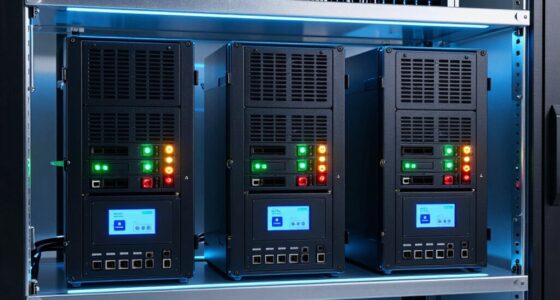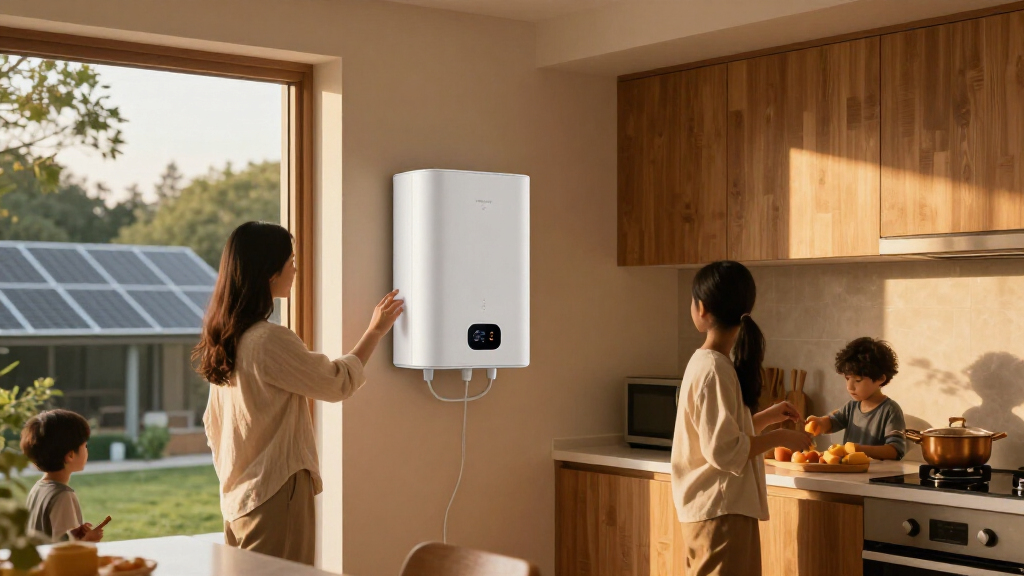
Choosing a home battery starts with matching its design to your system. I would put the EF ECOFLOW DELTA Pro 3 4096Wh Extra Battery first for buyers expanding a compatible whole-home backup setup: it offers 4,096Wh, 120V/240V system support, and a path to as much as 48kWh. The HumsiENK 3-Pack 12V 100Ah LiFePO4 is a different kind of pick, better suited to RV, marine, and off-grid builds that need three low-voltage batteries with Bluetooth monitoring.

Get backup power and energy gear delivered free with Prime
- Fast, free delivery on millions of items
- Prime Video, Amazon Music and more included
- Member-only deals all year
These options are not direct substitutes. EcoFlow is an expansion battery for a specific power station ecosystem, while HumsiENK supplies three 12V batteries for compatible low-voltage systems. I rank EcoFlow higher for home-backup intent because its voltage support and scalable capacity align more closely with larger household loads. HumsiENK offers flexibility for DIY and mobile setups, but it does not provide a standalone 120V/240V home power system. The key tradeoff is straightforward: choose system-level integration or a modular battery pack, and verify compatibility before buying either.
Key Takeaways
- The EcoFlow is an add-on battery, not a standalone power station; it requires compatible DELTA Pro 3 equipment.
- EcoFlow has 4,096Wh of stated capacity and supports expansion up to 48kWh within a compatible system.
- HumsiENK includes three 12V 100Ah LiFePO4 batteries, aimed at low-voltage RV, marine, solar, and off-grid installations.
- Bluetooth BMS monitoring and a low-temperature cutoff make HumsiENK more appealing for hands-on system monitoring.
- Neither listing alone confirms a complete home installation; check inverter, wiring, load, charging, and system compatibility.
| EF ECOFLOW DELTA Pro 3 4096Wh LFP Extra Battery |  | Best Overall for Expanding a Compatible Home Backup System | Capacity: 4,096Wh | Battery chemistry: LFP | Expandable capacity: Up to 48kWh with additional batteries or units | VIEW ON AMAZON | See Our Full Breakdown |
| HumsiENK 3-Pack 12V 100Ah LiFePO4 Battery with Bluetooth |  | Best Modular Pick for RV, Marine, and Off-Grid Builds | Pack quantity: 3 batteries | Voltage and capacity: 12V, 100Ah | Battery chemistry: LiFePO4 | VIEW ON AMAZON | See Our Full Breakdown |
| home batterie | Battery chemistry | Capacity | Expandable capacity | System voltage |
|---|---|---|---|---|
| EF ECOFLOW DELTA Pro 3 4096Wh | LFP | 4,096Wh | Up to 48kWh with additional batteries or units | 120V/240V |
| HumsiENK 3-Pack 12V 100Ah LiFe | LiFePO4 | — | — | — |
More Details on Our Top Picks
EF ECOFLOW DELTA Pro 3 4096Wh LFP Extra Battery
I rank the EcoFlow DELTA Pro 3 Extra Battery first because it has the clearest route in this pair to a substantial household backup setup. Its 4,096Wh capacity is designed to expand a compatible DELTA Pro 3 system, and the stated scale-up limit of up to 48kWh gives buyers room to add storage as needs change. Support for 120V/240V systems and a listed 4,000W output also makes it a better fit for larger loads than a group of 12V batteries alone, although the complete system’s capabilities depend on the compatible equipment it is attached to.
That ecosystem requirement is the dividing line between this pick and HumsiENK. EcoFlow is simpler to place in an existing compatible setup; HumsiENK gives buyers three separate low-voltage batteries, but they must build or already own a suitable system around them. If I already had DELTA Pro 3 equipment and wanted more stored energy, EcoFlow would be the more direct choice. If I were assembling an RV or off-grid battery bank from the ground up, HumsiENK’s form of modularity could make more sense.
The LFP chemistry, stated rating of 4,000 cycles to 80% capacity, and five-year warranty provide useful longevity and ownership context. The IP65 rating applies to the battery pack, but I would still follow installation guidance and avoid assuming it can be exposed to any conditions. Its 72-pound weight is a practical drawback: it is not a casual carry-in battery, and system expansion may require planning for a fixed or semi-fixed location.
I would skip it if I need a standalone battery with no existing compatible power station, or if I want a lightweight unit to move often. Its headline 4,000W and X-Boost 6,000W figures should be read as system-related specifications, not a reason to connect loads without checking the full system’s limits. For buyers who have compatible hardware and want a scalable home-backup path, this is the strongest match in the lineup.
Pros:- 4,096Wh capacity adds substantial storage to a compatible DELTA Pro 3 system.
- Expansion support up to 48kWh can accommodate growing backup needs.
- LFP chemistry is rated for 4,000 cycles to 80% capacity.
- IP65-rated pack and stated 120V/240V system support suit a planned backup installation.
Cons:- Requires compatible DELTA Pro 3 equipment; it is not a complete standalone home battery system.
- At 72 lb, it is heavy to move or reposition.
- Its output claims depend on the connected system and should not be treated as independent battery output.
Best for: Owners of compatible EcoFlow DELTA Pro 3 equipment who want additional storage for home backup and value a stated expansion path toward 48kWh.
Not ideal for: Buyers who need a standalone battery, do not own compatible DELTA Pro 3 equipment, or need a lightweight battery they can move frequently.
- Capacity:4,096Wh
- Battery chemistry:LFP
- Expandable capacity:Up to 48kWh with additional batteries or units
- System voltage:120V/240V
- Listed output:4,000W; X-Boost output listed at 6,000W
- Weight:72 lb
- Warranty:5 years
Our verdict“For buyers already using compatible DELTA Pro 3 equipment, I recommend this as the clearest expandable home-backup choice in the pair.”
HumsiENK 3-Pack 12V 100Ah LiFePO4 Battery with Bluetooth
The HumsiENK three-pack is my pick for buyers who need low-voltage batteries to build around, rather than an add-on for a packaged home power station. Each battery is specified at 12V and 100Ah, and the bundle’s intended appeal is its fit for RV, marine, solar, and off-grid applications. That makes it more adaptable to projects already designed around 12V components than the EcoFlow, whose advantage rests on integration with DELTA Pro 3 equipment.
Monitoring is one of its practical differentiators. The built-in 100A smart BMS includes Bluetooth app monitoring, which can help owners check battery information without relying only on external indicators. A low-temperature cutoff is also relevant in cold-weather use because it is a protective function, while the stated operating range is -20°C to 70°C. I would still check the manufacturer’s charging limits and instructions for the exact conditions in which charging is allowed; an operating range by itself does not answer every cold-weather question.
The listing states a cycle life of 15,000+ cycles, but I would treat that as a manufacturer claim, not a promise that the pack will retain a particular capacity for a fixed period. Installation, charge settings, temperature, and load profile matter. Its IP65 rating may be useful where dust or water exposure is a concern, but it does not remove the need for suitable mounting, connections, and system-level protection.
Compared with EcoFlow, HumsiENK is less straightforward for household backup. The provided information does not identify a built-in inverter or 120V/240V output, so buyers must pair the batteries with compatible equipment and verify permitted wiring configurations. The 59.2-pound pack weight may also be awkward during installation, and full BMS functionality calls for a smartphone app. I would choose it for a capable DIY builder with a low-voltage system—not for someone seeking a ready-to-connect home backup product.
Pros:- Three 12V 100Ah LiFePO4 batteries suit compatible low-voltage builds.
- Bluetooth-enabled smart BMS offers app-based monitoring.
- IP65 rating and low-temperature cutoff add useful protection features.
- Manufacturer states a cycle life of 15,000+ cycles.
Cons:- The listing does not specify a built-in inverter or direct 120V/240V home output.
- The 59.2 lb pack weight may make handling and installation difficult.
- Full BMS functionality relies on a smartphone app, and system compatibility must be checked.
Best for: RV, marine, solar, or off-grid owners building a compatible 12V system who want app-based BMS monitoring and three LiFePO4 batteries in one bundle.
Not ideal for: Buyers looking for a complete 120V/240V home backup system, those without a compatible inverter or charge setup, or anyone who does not want app-based monitoring.
- Pack quantity:3 batteries
- Voltage and capacity:12V, 100Ah
- Battery chemistry:LiFePO4
- Cycle-life claim:15,000+ cycles
- BMS:Built-in 100A smart BMS
- Monitoring:Bluetooth app monitoring
- Protection and temperature:IP65; operating range -20°C to 70°C; low-temperature cutoff
- Pack weight:59.2 lb
Our verdict“I recommend HumsiENK for buyers assembling a compatible 12V mobile or off-grid system, but not as a standalone whole-home backup solution.”

How We Picked
I ranked these two products by how well they answer the search for a home battery, rather than by treating every lithium battery as interchangeable. My main criteria were useful capacity, home-system compatibility, expansion options, protection features, and the clarity of the role each product can play. A battery can have strong cycle-life claims and still be the wrong choice if it cannot connect to the buyer’s inverter or power station.
The EcoFlow takes the lead because its stated 4,096Wh capacity, 120V/240V system support, 4,000W output, and expansion path are aimed at backup systems that can serve household circuits. That ranking comes with an important limit: the listing identifies it as an extra battery, so it must be paired with compatible DELTA Pro 3 equipment. I did not treat its listed output as proof that this battery works independently.
HumsiENK earns the second spot as a three-battery low-voltage bundle, not as a ready-made whole-home backup unit. Its stated 12V, 100Ah configuration, Bluetooth-equipped BMS, IP65 rating, and low-temperature cutoff make it relevant to appropriately designed off-grid and mobile systems. The supplied details do not specify a 120V/240V inverter or a complete home-backup interface, so I would not rank it above EcoFlow for household backup. I also distinguish manufacturer-stated cycle-life figures from a guarantee of real-world lifespan: installation, charging, temperatures, and use all affect results.
Both picks use lithium iron phosphate chemistry, but their roles, voltages, and integration needs differ. I excluded assumptions about runtime because actual runtime depends on the loads being powered and the rest of the system. Before purchasing, I would match battery voltage and communications requirements to the inverter, confirm the allowed battery configuration, and have a qualified installer review any fixed home wiring.
| home batterie | Battery chemistry |
|---|---|
| EF ECOFLOW DELTA Pro 3 4096Wh | LFP |
| HumsiENK 3-Pack 12V 100Ah LiFe | LiFePO4 |
Factors to Consider When Choosing 3 Best Home Batteries
I would choose a home battery only after defining the system it needs to join. These products differ in voltage, integration, and intended use, so capacity figures alone do not tell you which one fits.Start with the system, not the battery chemistry
Both picks use lithium iron phosphate chemistry, but that shared chemistry does not make them interchangeable. EcoFlow is an expansion battery for compatible DELTA Pro 3 equipment. HumsiENK is a three-pack of 12V batteries for a suitable low-voltage system. Before comparing capacity, identify your inverter or power station, battery input requirements, allowed battery configuration, and communication needs. If a battery cannot connect safely to the equipment you own, an attractive cycle-life claim will not solve the mismatch.
For a home installation, I would also distinguish stored energy from power delivery. Capacity, usually stated in watt-hours, describes stored energy. Output and inverter limits affect which loads can run at once. A listed output figure should be confirmed against the full system’s instructions, not assumed to describe the battery by itself.
Estimate the capacity your backup plan needs
List the appliances or circuits you want to support, their wattage, and how long you expect to run them. Add up estimated energy use in watt-hours, then allow for conversion losses and practical reserve. A refrigerator, lights, and communications equipment make a different backup plan from electric heating, cooking, or a well pump. I would not choose either product based on a label such as “home backup” without checking the loads and the runtime the complete system can deliver.
EcoFlow starts at 4,096Wh per extra battery and supports stated expansion up to 48kWh when paired with additional compatible equipment. HumsiENK’s 12V, 100Ah specifications describe the individual batteries in its three-pack; they do not by themselves confirm a ready-to-use household capacity at 120V or 240V. Check the battery configuration and system limits with the manufacturer before planning runtime.
Check voltage, inverter, and installation requirements
A 12V battery pack usually needs compatible power-conversion equipment to run ordinary household AC appliances. HumsiENK’s listing does not specify a built-in inverter or direct 120V/240V output, so buyers should budget attention for the inverter, charger, wiring, fusing, and mounting requirements of their particular installation. Never assume three batteries can be connected in any arrangement; confirm the approved series or parallel configuration and any limits set by the BMS.
EcoFlow is the more direct option for a buyer with DELTA Pro 3 equipment, but it still depends on that compatible system. Its stated 120V/240V support describes the system context, not a license to wire an expansion battery directly into a home panel. For fixed wiring or transfer equipment, I would use a qualified installer and follow local electrical rules.
Compare protection, monitoring, and service life claims
HumsiENK specifies Bluetooth monitoring through its smart BMS and a low-temperature cutoff. Those features may help a hands-on owner review battery status and guard against certain operating conditions, but app data cannot replace correct system design. EcoFlow lists an IP65-rated pack and a cycle-life rating of 4,000 cycles to 80% capacity. HumsiENK states 15,000+ cycles. I would not compare those figures as if they were measured under identical conditions: the available product information does not provide matching test conditions or a shared definition of end-of-life.
Read the warranty and operating guidance alongside cycle-life claims. Temperature, charge settings, depth of discharge, storage, and usage pattern all affect service life. Ask whether the warranty covers the intended installation and verify environmental limits, especially if the battery will sit in a garage, shed, boat, or vehicle.
Account for weight and the cost of a complete system
Both options call for installation planning. EcoFlow weighs 72 pounds, while the HumsiENK listing gives a 59.2-pound pack weight. Either can be difficult to reposition after wiring or mounting, so measure the route to the installation location and allow room for safe access, ventilation where required, and service. The battery itself is only part of the project: compatible power equipment, controls, wiring, protection, and labor can affect the total outlay.
I would choose EcoFlow when compatibility and scalable household backup are the priorities, and HumsiENK when a 12V modular build is the actual goal. If neither matches the system you own, pause and compare complete systems rather than buying a battery that needs more adapters or equipment than expected.
Frequently Asked Questions
Which of these batteries is better for whole-home backup?
I would favor the EcoFlow for a compatible DELTA Pro 3 backup system because it is designed to expand that system and lists 120V/240V support and a path up to 48kWh. It is still an extra battery, not a standalone whole-home unit. HumsiENK is a set of 12V batteries and needs compatible power-conversion equipment; its listing does not specify a complete household AC system. In both cases, confirm the equipment, loads, and installation plan before purchase.
Can I use the EcoFlow DELTA Pro 3 extra battery by itself?
The product is described as an extra battery for compatible DELTA Pro 3 systems, so I would not plan to use it as a standalone power station. Its listed voltage and output figures should be understood in the context of the compatible system. Check the manufacturer’s compatibility instructions and confirm which power station or equipment is required to charge the battery and deliver power to your loads.
Does the HumsiENK 3-pack directly power household appliances?
The supplied details identify three 12V 100Ah LiFePO4 batteries, Bluetooth monitoring, and a BMS, but they do not specify a built-in inverter or direct 120V/240V output. I would expect buyers to need compatible system equipment for AC household appliances and to verify approved battery wiring arrangements. Ask the manufacturer or installer to confirm the inverter, charger, cabling, and protection requirements for your intended loads.
Which product is easier to expand?
EcoFlow has the clearer stated expansion route for its own ecosystem: the DELTA Pro 3 system can scale up to 48kWh with additional batteries or units. HumsiENK supplies three batteries, but the provided details do not state a system-wide expansion limit or which series and parallel configurations are permitted. I would follow each manufacturer’s compatibility rules rather than assuming either battery can be expanded in any arrangement.
Should I choose based on the stated cycle-life numbers?
No. EcoFlow lists 4,000 cycles to 80% capacity, while HumsiENK claims 15,000+ cycles, but the supplied information does not establish matching test conditions. Charging practices, temperature, discharge depth, and installation all affect battery life. I would compare the stated test definitions, warranty terms, and system fit before treating one figure as a direct prediction of years of service.
Conclusion
For a buyer who already owns compatible DELTA Pro 3 equipment and wants to add meaningful backup storage, I recommend the EcoFlow: its capacity and stated expansion path make it the stronger home-backup fit here. For an RV owner, boat owner, or off-grid builder who needs three 12V LiFePO4 batteries with app monitoring, HumsiENK is the more relevant choice, provided the rest of the system is compatible. I would skip both if you need a complete, ready-to-wire home battery and have not confirmed the inverter, transfer equipment, and installation requirements. The best choice is the one that fits your existing or planned system—not the one with the biggest isolated specification.
Halloween Picks
halloween
As an affiliate, we earn on qualifying purchases.