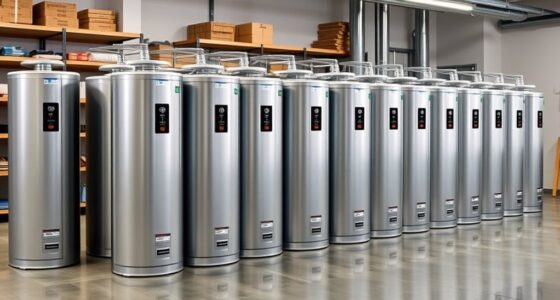
For most households, the Jackery HomePower 3600 Plus with two 200W panels is the best overall fit in this lineup: its 3,584Wh battery and 3,600W output give it more room for essential appliances than the smaller units. The EcoFlow DELTA Pro is a stronger premium candidate for buyers who prioritize a high-output, large-capacity station, while the EcoFlow DELTA 3 is a more manageable choice for lighter backup loads. The main tradeoff is between capacity and power for longer outages and the lower weight, simpler handling, or lower solar input of smaller kits. Panel bundles also vary, so the included solar hardware can affect how quickly a station recharges off-grid. Read on for the full comparison and help matching a system to your backup plan.

Get backup power and energy gear delivered free with Prime
- Fast, free delivery on millions of items
- Prime Video, Amazon Music and more included
- Member-only deals all year
Complete the kit


Key Takeaways
- The 3,584Wh Jackery HomePower 3600 Plus with panels stands out as the best balanced full-kit option here, pairing substantial capacity and output with included solar charging.
- The 3,600Wh EcoFlow DELTA Pro has similar headline capacity and output to the HomePower 3600 Plus, but its listing does not include solar panels; buyers should compare the full system they need, not just the power station.
- The EcoFlow DELTA 3 and DELTA 3 Classic share a 1,024Wh capacity class, so the Classic bundle’s included 220W panel is a meaningful difference for buyers who want solar charging in the package.
- Panel quantity changes the backup equation: the ABOK Ark3600 bundle with three 200W panels includes more solar collection than its 400W-panel version, while both list the same station model.
- Small stations serve narrower jobs: the 292Wh Jackery Explorer 300 is suited to modest device loads, not sustained household backup, while the 2,042Wh Jackery Explorer 2000 v2 offers a more substantial middle ground.




| solar generators for home backup | Battery capacity | Weight | Battery type |
|---|---|---|---|
| Jackery HomePower 3600 Plus Po | 3,584Wh | 77.2 lb | LFP |
| EcoFlow DELTA 3 Portable Power | 1,024Wh | 12.5kg | — |
| Jackery Solar Generator 1000 V | 1,070Wh | 23.8 lb | LFP |
| EcoFlow DELTA 3 Classic Solar | 1,024Wh | — | — |
| SolarPlay Q3600 3600W Portable | 3,840Wh | 97 lb | — |
| Jackery Explorer 2000 v2 Solar | 2042Wh | 39.5 lbs (power station) | LiFePO4 |
| Jackery HomePower 3000 Portabl | 3072Wh | 59.5 lbs | LiFePO4 |
| Jackery Explorer 300 Portable | 292Wh | 12.9 lbs | — |
| EF ECOFLOW DELTA 3 Max Portabl | 2048Wh | — | LiFePO4 |
| ABOK Ark3600 Portable Power St | 3840Wh; expandable to 11520Wh | 92 lbs | LiFePO4 |
| Jackery Solar Generator 1000 v | 1,024Wh | 23.4 lbs | Lithium iron phosphate (LFP) |
| EF ECOFLOW DELTA Pro Portable | 3,600Wh | 99 lbs | LFP |
| Jackery HomePower 3600 Plus Po | 3,584Wh | 77.2 lbs | — |
| ABOK Ark3600 Portable Power St | 3,840Wh | — | LiFePO4 |
More Details on Our Top Picks
Jackery HomePower 3600 Plus Portable Power Station with 2 200W Solar Panels, 3584Wh, 3600W
For backup that needs to cover more than phones and a few small appliances, I’d put the Jackery HomePower 3600 Plus ahead of compact options like the EcoFlow DELTA 3: its 3,584Wh capacity and 3,600W output give it more room to handle demanding loads and longer outages. It can also expand to 21kWh per unit, making it a better fit for building a larger reserve than the Jackery Solar Generator 1000 V2. Multiple charging paths—including solar, AC, gas generator, and hybrid charging—add flexibility when sunlight is limited. The tradeoff is its 77.2-pound weight; wheels and a telescopic handle help with rolling, not lifting. Also, 240V requires parallel operation, so this is not a one-unit solution for 240V appliances.
Pros:- 3,584Wh capacity and 3,600W output suit heavier home-backup loads than 1kWh-class models.
- Expansion support up to 21kWh per unit can extend backup runtime.
- AC, solar, gas-generator, and hybrid charging provide several ways to replenish the battery.
- Wheels and a telescopic handle make rolling the heavy unit easier.
Cons:- At 77.2 lb, it is difficult to lift or carry between floors.
- 240V output requires parallel operation with another unit.
- The power station and included solar panels may arrive in separate packages.
Best for: Households seeking a high-capacity station for extended outages, substantial appliance loads, and possible future expansion.
Not ideal for: Buyers who need lightweight portability, standalone 240V output, or a small, simple backup for just electronics.
- Battery capacity:3,584Wh
- Output:3,600W
- Battery type:LFP
- Expansion capacity:Up to 21kWh per unit
- Charging time:Hybrid AC+DC: 2 hours; AC: 2.5 hours; solar: 4 hours; gas generator: 2.5 hours
- Solar panels included:Two 200W panels
- Weight:77.2 lb
- Parallel output:Up to 7,200W; 240V in parallel
Our verdict“Choose the HomePower 3600 Plus if you want substantial home-backup capacity and expansion options, and can accommodate its weight and 120V-only standalone output.”
EcoFlow DELTA 3 Portable Power Station, 1024Wh, 1800W
The EcoFlow DELTA 3 is a practical starting point for backup power when the goal is keeping essential devices and selected appliances running, rather than powering a whole home. Its 1,024Wh battery and 1,800W output give it more appliance capability than the Jackery Solar Generator 1000 V2’s 1,500W output, while support for compatible batteries lets capacity grow to 5kWh. That makes it a more adaptable choice than a fixed-capacity compact station, though expansion adds equipment and depends on EcoFlow-compatible packs. Fast AC charging can restore the station quickly between outages, and its 13 outlets help manage several devices at once. The main limit is runtime: even with expansion available, the base unit is far below the Jackery HomePower 3600 Plus in stored energy.
Pros:- Expandable capacity up to 5kWh provides a growth path beyond the base battery.
- 1,800W AC output exceeds the Jackery Solar Generator 1000 V2’s 1,500W output.
- 13 outlets allow several devices to connect at once.
- LFP battery is rated for 4,000 cycles to 80% capacity.
Cons:- The 1,024Wh base capacity limits runtime during longer outages.
- Capacity expansion requires compatible EcoFlow battery packs.
- The stated IP65 protection applies to the battery pack, not necessarily the entire station.
Best for: First-time backup buyers who want a manageable base station for essential loads and a path to higher capacity using compatible EcoFlow batteries.
Not ideal for: Households seeking long runtimes for multiple large appliances without buying expansion batteries.
- Battery capacity:1,024Wh
- AC output:1,800W
- Surge output:3,600W
- Battery chemistry:LiFePO4 (LFP)
- Solar input:500W
- Expandable capacity:Up to 5kWh with compatible EcoFlow batteries
- Outlets:13
- Weight:12.5kg
Our verdict“Pick the DELTA 3 for essential-load backup with room to expand, but choose a higher-capacity unit if extended appliance runtime is your priority.”
Jackery Solar Generator 1000 V2 with 200W Solar Panel
When home backup also needs to be easy to store and move, the Jackery Solar Generator 1000 V2 offers a useful balance of capacity and portability. At 23.8 pounds, it is much easier to reposition than the 77.2-pound Jackery HomePower 3600 Plus, and the included 200W panel gives buyers a straightforward solar-recharging setup. Its 1,070Wh battery and 1,500W AC output can support selected essentials, but they are not a substitute for the longer runtimes or higher loads available from the HomePower 3600 Plus. The 3,000W surge rating adds headroom for startup demands, while the app’s charging modes let buyers adjust how the battery is replenished. The fast one-hour charge depends on enabling emergency charging in the app, so it is not the default charging experience.
Pros:- At 23.8 lb, it is substantially easier to move than large home-backup stations.
- The included 200W panel supports solar recharging without a separate panel selection.
- 1,500W AC output and 3,000W surge capacity cover a range of essential devices and appliances.
- LFP battery is rated to retain over 70% capacity after 4,000 charge cycles.
Cons:- The 1,070Wh capacity offers much less outage runtime than the Jackery HomePower 3600 Plus.
- One-hour charging requires emergency charging to be enabled in the app.
- The power station and solar panel may ship separately.
Best for: Apartment dwellers and households who want a portable, solar-ready station for phones, networking gear, lights, and selected smaller appliances.
Not ideal for: Families aiming to run multiple high-demand appliances or maintain backup power through a lengthy outage without recharging.
- Battery capacity:1,070Wh
- AC output:1,500W
- Surge peak:3,000W
- Battery type:LFP
- Included solar panel:200W
- Weight:23.8 lb
- Ports:3 AC, 2 USB-C, 1 USB-A, 1 DC car port
- Charging time:1 hour with emergency charging enabled; 1.7 hours by default
Our verdict“Choose the Solar Generator 1000 V2 if portability and a bundled solar panel matter more than the runtime and output of a full-size home-backup unit.”
EcoFlow DELTA 3 Classic Solar Generator with 220W Solar Panel, 1024Wh
The EcoFlow DELTA 3 Classic stands out for keeping connected electronics supplied through a brief power interruption: its under-10ms UPS switching is a more specific backup advantage than the EcoFlow DELTA 3’s general mix of outlets and expansion support. That makes it a compelling fit for a router, computer, or other sensitive equipment, while its 1,024Wh capacity and 1,800W output can also handle selected household essentials. The included 220W bifacial panel adds a solar option, but the stated recharge time is about 5.8 hours, so it is not a quick way to refill the battery in weak sunlight. Compared with the Jackery HomePower 3600 Plus, this model is easier to place near electronics but stores far less energy for sustained outage coverage.
Pros:- Under-10ms UPS switching helps keep connected electronics powered through brief interruptions.
- 1,800W output and 3,600W surge capacity support a range of selected appliances.
- Includes a 220W bifacial solar panel with stated conversion efficiency up to 25%.
- LiFePO4 battery chemistry is specified for over 10 years of daily use.
Cons:- The 1,024Wh capacity is much smaller than the Jackery HomePower 3600 Plus for extended backup.
- Solar recharging takes about 5.8 hours with the included 220W panel.
- The station and panel may arrive in separate packages.
Best for: Remote workers and households prioritizing short-interruption protection for connected computers, routers, and other electronics.
Not ideal for: Buyers who need long runtimes for high-demand home appliances or want fast solar recovery from the included panel.
- Battery capacity:1,024Wh
- AC output:1,800W
- Surge output:3,600W
- X-Boost output:Up to 2,600W
- Battery chemistry:LiFePO4
- Included solar panel:220W bifacial
- Solar recharging time:About 5.8 hours with the included 220W panel
- UPS switching time:Under 10ms
Our verdict“Choose the DELTA 3 Classic if UPS-style continuity for electronics is your main backup need, not long-duration power for a household’s larger loads.”
SolarPlay Q3600 3600W Portable Power Station with 3840Wh Battery and 400W Solar Panel
The SolarPlay Q3600 pairs a large 3,840Wh battery with 3,600W rated output, putting it in the same broad home-backup class as the Jackery HomePower 3600 Plus. Its 15 ports give it an advantage for households that need to connect a variety of devices directly, while its 97-pound weight makes it harder to reposition than the Jackery, which weighs 77.2 pounds. The listed charging times—2.5 hours on AC or 1.3 hours with AC and solar—may suit buyers who need a quicker refill, but the product information conflicts on whether the 400W panel is included. That uncertainty matters for a solar-focused backup plan. I’d favor it for port selection and capacity, but buyers should verify the package contents before relying on bundled solar charging.
Pros:- 3,840Wh capacity and 3,600W rated output suit substantial backup loads.
- 15 ports include five AC outlets and a 100W USB-C output.
- LiFePO4 battery is rated for more than 4,000 cycles.
- Wheels and a telescopic handle help with rolling the 97-pound unit.
Cons:- At 97 lb, it is heavier than the Jackery HomePower 3600 Plus and difficult to lift.
- Product details conflict on whether the listed 400W solar panel is included.
- No expansion capacity is specified in the supplied product data.
Best for: Households wanting a high-capacity station with many direct-connect ports and wheels for moving it around a single level.
Not ideal for: Buyers who need to lift the unit regularly, need confirmed solar-panel contents, or want documented expansion capacity.
- Battery capacity:3,840Wh
- Peak output:5,500W
- Battery chemistry:LiFePO4
- Battery cycle life:4,000+ cycles
- Solar input:Up to five 400W panels
- Output ports:15 total
- Weight:97 lb
Our verdict“Choose the Q3600 for high capacity and broad port selection if you can manage its weight and confirm the solar-panel package contents before purchase.”
Jackery Explorer 2000 v2 Solar Generator with 2 × 200W Solar Panels, 2042Wh, 2200W AC Output
I’d pick the Explorer 2000 v2 for households that want a practical middle ground between portable size and useful outage capacity. Its 2042Wh LiFePO4 battery and 2200W AC output can support several essential devices, while the 20ms UPS switchover helps keep connected equipment running through a brief power interruption. The included pair of 200W panels gives it a solar option, though the listed six-hour solar charge time means replenishing the battery takes planning. Compared with the larger Jackery HomePower 3000, this unit is lighter and easier to place, but has less stored energy and output for running multiple high-demand appliances. I’d skip it if extended whole-home coverage is the goal; its advantage is a more manageable size for focused backup.
Pros:- 2042Wh capacity and 2200W AC output suit a focused set of home essentials.
- 20ms UPS switchover supports connected equipment during brief outages.
- LiFePO4 battery is rated for up to 10 years of performance.
- Includes two 200W solar panels and supports fast AC charging.
Cons:- Less capacity and output than the Jackery HomePower 3000.
- The included 400W of solar input is listed as taking about six hours to charge the unit.
- Panels and power station may ship separately, and panel connection uses a straight DC8020 plug.
Best for: Households backing up a refrigerator, router, lights, and other essential devices that want a portable unit with UPS support.
Not ideal for: Buyers who need to run several high-wattage appliances for long periods or want more than roughly 2kWh of battery capacity.
- Battery capacity:2042Wh
- Battery type:LiFePO4
- AC output:2200W
- AC outlets:3
- Solar panels:2 × 200W
- UPS switchover:20ms
- Weight:39.5 lbs (power station)
- Solar charging:About 6 hours with 400W panels
Our verdict“Choose the Explorer 2000 v2 if you want a portable, UPS-equipped backup for essential circuits rather than extended high-load coverage.”
Jackery HomePower 3000 Portable Power Station with Two 200W Solar Panels
When I rank options for home backup, the HomePower 3000 earns its place through the combination of 3072Wh capacity and 3600W AC output. That gives a household more room to run demanding essentials than the Explorer 2000 v2, and its 7200W surge rating can accommodate brief startup demands from compatible appliances. The 20ms-or-less UPS and varied charging methods also make it more adaptable during an outage, including when AC power is unavailable. The tradeoff is its 59.5-pound weight: it is portable in principle, but not a unit I’d want to move frequently. Its included 400W of solar panels are listed as taking up to nine hours to reach 80%, so it is less appealing for rapid solar recovery than the EcoFlow DELTA 3 Max. I’d choose it for greater reserve, not easy lifting.
Pros:- 3072Wh battery and 3600W AC output offer more headroom than the Explorer 2000 v2.
- 7200W surge rating supports compatible appliances with brief startup spikes.
- UPS switching of 20ms or less helps protect connected devices during an outage.
- Supports AC, hybrid, solar, car, and gas-generator charging.
Cons:- At 59.5 lbs, the power station is cumbersome to move regularly.
- Included 400W panels are listed as taking up to nine hours to reach 80%.
- The power station and solar panels may ship separately.
Best for: Households that need higher output and more stored energy for several essential appliances, with occasional rather than frequent repositioning.
Not ideal for: Buyers who need a lightweight backup they can carry between floors or expect fast recharging from the included solar panels.
- Battery capacity:3072Wh
- Battery type:LiFePO4
- Battery life:4,000 cycles to 70% capacity
- AC output:3600W
- Surge output:7200W
- Solar panels:2 × 200W
- UPS switching time:≤20ms
- Weight:59.5 lbs
- Charging time:2.2 hours via AC; 1.7 hours via hybrid AC and DC
Our verdict“Choose the HomePower 3000 if you need more backup capacity and output than a mid-size station offers and can accept its weight.”
Jackery Explorer 300 Portable Power Station with 40W Solar Panel, 292Wh, 300W
The Explorer 300 is the compact choice here, but its 292Wh battery makes it a backup for communications and small electronics—not a substitute for the larger home-focused stations. At 12.9 pounds, it is much easier to carry or store than the Explorer 2000 v2, and the included 40W panel can provide a modest way to recharge away from the grid. Its 300W rated output and two AC outlets limit which appliances it can run; a refrigerator or other high-load device is outside the intended role. The battery’s rating of over 4,000 cycles to 70% capacity is a strength for frequent use, but the panel is listed as taking about 7.5 hours to bring the unit to 80%. I’d treat this as a small outage kit or companion to a larger backup, not the household’s main reserve.
Pros:- At 12.9 lbs, it is far easier to carry and store than the larger backup units in this lineup.
- Includes a 40W solar panel for off-grid recharging.
- LiFePO4 battery is rated for over 4,000 cycles to 70% capacity.
- Ports include two AC outlets and a 100W USB-C PD output.
Cons:- 292Wh capacity provides limited runtime for home backup.
- 300W rated output rules out many high-demand household appliances.
- The included 40W panel takes about 7.5 hours to reach 80% capacity.
Best for: Apartment residents, remote workers, and campers who want a lightweight reserve for phones, laptops, lights, and networking gear.
Not ideal for: Households seeking refrigerator backup, extended runtime, or enough output to power typical high-wattage appliances.
- Battery capacity:292Wh
- Battery chemistry:LiFePO4
- Peak output:600W
- Ports:2 AC, 1 USB-C PD, 2 USB-A, 1 car port
- Solar panel:40W
- Charge cycles:Over 4,000 cycles to 70% capacity
- Weight:12.9 lbs
Our verdict“Pick the Explorer 300 for portable power for small electronics, but choose a larger station such as the Explorer 2000 v2 for household essentials.”
EF ECOFLOW DELTA 3 Max Portable Power Station with 220W Solar Panel, 2048Wh
I’d favor the EcoFlow DELTA 3 Max when rapid charging and quick backup response matter more than having the most outlets or battery capacity. Its less-than-10ms transfer time is faster than the 20ms switching listed for the Jackery Explorer 2000 v2 and HomePower 3000, making it a strong fit for connected equipment that should ride through brief interruptions. The 2048Wh battery and 2400W continuous output put it in the same general capacity class as the Explorer 2000 v2, while the stated 0–80% AC charge time of about 1.13 hours can shorten recovery between outages. App monitoring and schedules add useful control. There are only three outlets, however, and the 220W panel is less solar input than the Jackery models’ two 200W panels. It suits a prioritized set of loads, not a crowded multi-appliance setup.
Pros:- Less-than-10ms transfer time is faster than the 20ms UPS figures listed for the Jackery options.
- Reaches 0–80% charge in about 1.13 hours via AC.
- App-based monitoring and charging schedules offer remote visibility and control.
- Includes a 220W bifacial solar panel and a 2048Wh LiFePO4 battery.
Cons:- Three outlets limit how many AC devices can be connected directly.
- Its 220W panel provides less listed solar capacity than the two 200W panels bundled with the Jackery options.
- At 2048Wh, runtime still depends heavily on the appliances connected.
Best for: Homeowners who prioritize fast AC recharge, quick transfer for sensitive connected devices, and app-based monitoring.
Not ideal for: Buyers who need many AC outlets or want the greater included solar-panel wattage supplied with the Jackery Explorer 2000 v2.
- Battery capacity:2048Wh
- Battery type:LiFePO4
- Continuous output:2400W
- X-Boost output:Up to 3400W
- Solar panel:220W bifacial
- AC charging:0–80% in about 1.13 hours
- Transfer time:Less than 10ms
- Outlets:3
- Warranty:5 years
Our verdict“Choose the DELTA 3 Max if fast recharge and sub-10ms transfer matter more to your backup plan than extra outlets or maximum solar input.”
ABOK Ark3600 Portable Power Station with 400W Solar Panel
For buyers planning beyond a short outage, the ABOK Ark3600 stands out for its 3840Wh starting capacity and expansion potential to 11520Wh. That gives it a much larger reserve than the 3072Wh Jackery HomePower 3000 and the roughly 2kWh stations in this group, with 3600W rated output for a broader set of household loads. Fifteen output ports also make it easier to connect several device types without relying on adapters. Its AC-plus-solar full-charge time is listed as 1.29 hours, although that depends on access to the stated input conditions. The main compromise is substantial: at 92 pounds, this is the least convenient option to reposition, and the bundle description calls for a separate solar panel even though this listing includes a 400W panel. I’d choose it for reserve capacity, not portability.
Pros:- 3840Wh capacity expands to 11520Wh for longer backup needs.
- 3600W rated output and 4500W peak output support substantial household loads.
- Fifteen output ports cover a broad range of AC, USB, and DC devices.
- LiFePO4 battery is rated for 4,000-plus cycles and a 10-year lifespan.
Cons:- At 92 lbs, it is difficult to move without planning.
- The listed solar setup depends on a panel; confirm included components and shipping before planning installation.
- Its size makes it less suited to buyers who need a portable, frequently repositioned power station.
Best for: Homeowners seeking a large expandable battery reserve for longer outages and able to keep the station in a fixed location.
Not ideal for: Buyers who need a station they can carry or move often, or who want a simple compact backup setup.
- Battery capacity:3840Wh; expandable to 11520Wh
- Battery type:LiFePO4
- Peak output:4500W
- Output ports:15
- Solar charging input:Up to 2000W PV
- AC charging input:1500W
- Weight:92 lbs
- Charging time:1.29 hours with AC and PV; 3 hours via AC only
Our verdict“Choose the Ark3600 if expandable capacity for longer outages outweighs the inconvenience of a 92-pound station.”
Jackery Solar Generator 1000 v2 with 100W Solar Panel, 1024Wh
For backup that needs to move easily between rooms, this Jackery pairs a 1,024Wh LFP battery with a 100W solar panel in a package weighing 23.4 pounds. Its 1,500W AC output can support smaller essentials and electronics, while the 10ms UPS switchover is useful for keeping compatible equipment running through an outage. Compared with the much larger EcoFlow DELTA Pro, it is far easier to carry, but its capacity and output are better suited to selective backup than running several major household loads. Emergency charging can reach full capacity in 50 minutes, though it must be enabled in the app each time. The panel and generator also ship separately, which can complicate delivery timing.
Pros:- Compact 23.4-pound design is easier to move than the high-capacity systems in this list.
- LFP battery is rated to retain over 70% capacity after 4,000 charge cycles.
- 10ms UPS switchover can help compatible essential devices stay powered during an outage.
- Includes a foldable 100W solar panel and offers multiple AC, USB, and car-port connections.
Cons:- 1,024Wh capacity limits how long it can run household essentials.
- The 100W panel is a modest solar input for replenishing the battery during an extended outage.
- Emergency full charging requires enabling the feature in the app each time, and the two components ship separately.
Best for: People in apartments or smaller homes who want portable backup for electronics, communications, and a few essential devices.
Not ideal for: Households aiming to run several high-draw appliances or maintain power for a long outage; its 1,024Wh capacity and 1,500W output are modest beside the 3,600W systems in this roundup.
- Battery capacity:1,024Wh
- Battery type:Lithium iron phosphate (LFP)
- AC output:1,500W
- Surge output:3,000W
- UPS switchover:10ms
- Ports:2 AC, 2 USB-C, 1 USB-A, 1 DC car port
- Weight:23.4 lbs
- Included solar panel:100W
- Charging time:50 minutes with emergency charging enabled; 1.25 hours default
Our verdict“Choose this Jackery for portable, selective home backup, not for powering multiple large appliances or covering a long outage.”
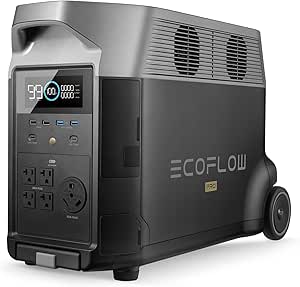
EF ECOFLOW DELTA Pro Portable Power Station, 3600Wh, 3600W AC Output
The DELTA Pro is the strongest fit here for buyers who want a substantial backup base they can expand: it starts at 3,600Wh and 3,600W, with listed expansion up to 25kWh using extra batteries or smart generators. That gives it a much wider role than the Jackery Solar Generator 1000 v2, which is easier to carry but has far less stored energy and output. The EcoFlow’s 15 output ports and app monitoring support multiple devices and remote checks, while charging options include solar, wall power, and EV stations. The tradeoff is physical: at 99 pounds, this is a stationary backup unit for most people, not a grab-and-go station. Its quickest stated recharge also depends on access to a 240V, 3,000W source.
Pros:- 3,600Wh starting capacity and expansion up to 25kWh support longer backup runtimes.
- 3,600W running output provides more headroom for household loads than the 1,024Wh Jackery 1000 v2.
- Fifteen output ports allow several devices to connect at once.
- Supports solar, EV station, wall outlet, car outlet, and smart outdoor generator charging.
Cons:- At 99 pounds, it is difficult to move without planning or assistance.
- Fastest listed recharge requires a 240V, 3,000W source.
- A solar recharge time of 2.8 hours is specified with four 400W panels, a substantial panel setup not included in the provided product details.
Best for: Homeowners who want a high-capacity starting system with a path to longer backup through additional batteries or compatible generators.
Not ideal for: Buyers who need a lightweight station to move frequently, or who cannot access the high-power charging setup required for the fastest recharge.
- Battery capacity:3,600Wh
- Battery type:LFP
- Running output:3,600W
- Maximum output:4,500W with X-Boost
- Expandable capacity:Up to 25kWh
- Output ports:15
- Weight:99 lbs
- Charging methods:EV station, solar, wall outlet, smart outdoor generator, car outlet
- Recharge time:1.8 hours at 240V/3,000W; 2.7 hours at 1,800W wall outlet; 2.8 hours with four 400W solar panels
Our verdict“Pick the DELTA Pro if expandable capacity and high output matter more than portability and you can accommodate its weight and charging requirements.”
Jackery HomePower 3600 Plus Portable Power Station, 3584Wh, 3600W
The HomePower 3600 Plus delivers 3,584Wh and 3,600W in a form designed to be moved more readily than the 99-pound EcoFlow DELTA Pro: its wheels and telescopic handle help with rolling, though its 77.2-pound weight still makes lifting a two-person job for many buyers. It can expand to 21kWh per unit, and its listed AC, solar, gas-generator, and hybrid charging options give households more ways to replenish it during an extended outage. Jackery states a 6,000-cycle battery life and operation down to -4°F, useful details for buyers thinking about long service and cold-weather placement. Unlike the ABOK Ark3600 package, this listing does not specify included solar panels, and 240V output requires parallel operation.
Pros:- 3,584Wh capacity and 3,600W output provide substantial backup capability.
- Capacity can expand up to 21kWh per unit, with larger multi-unit expansion also listed.
- Wheels and telescopic handle make repositioning easier than carrying the 99-pound DELTA Pro.
- Supports hybrid AC+DC, AC, solar, and gas-generator charging.
Cons:- At 77.2 pounds, it remains heavy to lift despite its wheeled design.
- Solar panels are optional rather than included in the listed product.
- 240V output requires parallel operation, so one unit alone does not provide that option.
Best for: Homeowners seeking high-capacity backup with wheels for repositioning and flexible charging options, including a gas generator.
Not ideal for: Buyers who need 240V output from a single unit, want panels included, or need a station light enough to carry easily.
- Battery capacity:3,584Wh
- Output wattage:3,600W
- Parallel output:7,200W
- Expandable capacity:Up to 21kWh per unit; up to 43kWh with multiple units
- Charging options:Hybrid AC+DC, AC, solar, gas generator
- Recharge time:Hybrid AC+DC: 2 hours; AC: 2.5 hours; solar: 4 hours; gas generator: 2.5 hours
- Battery cycle life:Manufacturer-stated 6,000 cycles
- Weight:77.2 lbs
- Operating temperature:As low as -4°F
Our verdict“Choose the HomePower 3600 Plus for substantial backup capacity that is easier to roll and recharge in several ways, provided you do not need single-unit 240V output.”
ABOK Ark3600 Portable Power Station with Three 200W Solar Panels
The Ark3600 is the clearest choice here for buyers who want panels in the same package: it pairs a 3,840Wh LiFePO4 station with three 200W foldable panels, rather than leaving solar equipment as a separate purchase as the Jackery HomePower 3600 Plus does. Its 3,600W rated output, 15 ports, and expansion to 11,520Wh make it suited to backing up multiple devices and extending runtime. The panels are listed with 23% conversion efficiency and IP68 protection, while app control supports monitoring and scheduled charging. The main caveat is timing: the panels may arrive one to two months after the power station. Also, the 4,000-cycle battery rating is below Jackery’s stated 6,000 cycles for the HomePower, and fast charging depends on favorable input conditions.
Pros:- Includes three 200W solar panels, unlike the HomePower 3600 Plus listing, which makes panels optional.
- 3,840Wh capacity can expand to 11,520Wh for longer backup needs.
- 3,600W rated output and 15 ports support multiple connected devices.
- LiFePO4 battery management system and app control support monitoring and scheduled charging.
Cons:- Solar panels may ship one to two months after the power station.
- Fast charging depends on suitable conditions and enough available input power.
- The listed 4,000-cycle battery life is shorter than the HomePower 3600 Plus manufacturer-stated 6,000 cycles.
Best for: Households that want a high-capacity backup station bundled with solar panels and plan to use solar to recharge during outages.
Not ideal for: Buyers who need panels immediately on arrival or want the longer manufacturer-stated cycle life listed for the Jackery HomePower 3600 Plus.
- Battery capacity:3,840Wh
- Expandable capacity:Up to 11,520Wh
- Battery type:LiFePO4
- Peak output:7,200W
- Output ports:15
- Combined AC and solar charging input:Up to 3,500W
- Included solar panels:3 × 200W; 23% conversion efficiency; IP68
- Battery cycle life:4,000 cycles
Our verdict“Choose the Ark3600 if an included solar bundle matters most, but confirm panel delivery timing before relying on it for outage recharging.”

How We Picked
I ranked these solar generators for home backup by how well their listed capacity, AC output, and included solar panels support realistic outage needs. Capacity matters for how long a battery can run loads; output matters for whether it can handle them at all. I also gave weight to the usefulness of the bundle: a station sold with panels is a more complete solar-backup starting point than a power station alone, though included panel wattage and quantity still differ.
The ranking favors usable household backup potential and clear kit value over a high wattage or capacity number on its own. Larger systems rank ahead when their specs support broader backup use, while smaller models earn a place for buyers with lighter loads or tighter space needs. Several entries are closely related or differ mainly by included panels, so those distinctions are called out rather than treated as entirely different performance classes. Product listings do not establish runtime for a specific home, transfer-switch compatibility, or every expansion option; buyers should verify those details for their intended setup.
| solar generators for home backup | Battery type |
|---|---|
| Jackery HomePower 3600 Plus Po | LFP |
| EcoFlow DELTA 3 Portable Power | — |
| Jackery Solar Generator 1000 V | LFP |
| EcoFlow DELTA 3 Classic Solar | — |
| SolarPlay Q3600 3600W Portable | — |
| Jackery Explorer 2000 v2 Solar | LiFePO4 |
| Jackery HomePower 3000 Portabl | LiFePO4 |
| Jackery Explorer 300 Portable | — |
| EF ECOFLOW DELTA 3 Max Portabl | LiFePO4 |
| ABOK Ark3600 Portable Power St | LiFePO4 |
| Jackery Solar Generator 1000 v | Lithium iron phosphate (LFP) |
| EF ECOFLOW DELTA Pro Portable | LFP |
| Jackery HomePower 3600 Plus Po | — |
| ABOK Ark3600 Portable Power St | LiFePO4 |
Factors to Consider When Choosing Solar Generators For Home Backup
Choosing a backup system starts with the loads you need to keep running, not the biggest number on a product page. I would plan around outage duration, appliance startup demands, solar recharge conditions, and the way the unit connects to the home. These checks help prevent paying for capacity that cannot power a key appliance—or buying a compact station that runs out before the outage ends.
Separate running watts from startup surges
Make a list of the devices you want to run at the same time and check both their running draw and startup demand. Refrigerators, pumps, and some power tools can briefly ask for more power when their motors start, so a station’s continuous output alone may not tell the whole story. Compare the station’s AC output with the highest likely combined load, then check surge specifications in the manufacturer’s documentation. Avoid assuming that a high battery capacity means the unit can start every appliance; capacity measures stored energy, not instantaneous power. If your plan includes a well pump or central equipment, confirm its exact electrical requirements before choosing a portable unit.
Estimate runtime from your actual essential loads
Battery capacity is only a starting point for estimating how long backup will last. Write down the wattage and expected daily use of each essential device, then allow for conversion losses and changing usage rather than dividing the battery figure by one appliance’s draw and treating that result as guaranteed. A refrigerator cycles on and off, while a heater or cooking appliance can consume stored energy quickly if used for long stretches. Decide whether you need to cover a short interruption, overnight essentials, or several days of limited power; those plans call for very different capacity. When a product listing does not provide a runtime for your load, treat runtime as something to calculate conservatively, not a promise.
Check whether solar input matches your recharge plan
Included panel wattage and panel count are useful clues, but they do not guarantee a particular daily recharge. Sun angle, shade, weather, season, and placement all affect solar harvest, and a panel’s rated output is not a steady all-day figure. Compare the station’s accepted solar input and connector requirements with the panels in the bundle or the panels you already own. A bundle with more panel capacity can reduce recharge time in favorable conditions, but it also needs more space and good exposure. For multi-day outages, plan for cloudy periods and consider whether grid or vehicle charging offers a fallback.
Decide how the system will connect to your home
A portable power station that can run individual appliances is not automatically a whole-home backup system. Plugging selected devices directly into the unit may be practical, but powering household circuits can call for a transfer switch, compatible inlet, and work by a qualified electrician. Never connect a generator to home wiring through an improvised cord, since that can create a serious backfeed hazard. Before buying, verify the unit’s supported connection methods and ask an electrician whether your panel and intended loads can be served safely. This step can change the total project cost and may matter more than a small difference in battery size.
Balance capacity against placement and handling
Larger batteries can support more devices or longer runtimes, but they also take up more room and may be harder to move, store, and position near a useful outlet. Think about where the station will sit during normal storage and how you will move it during an outage, including stairs, doorways, and ventilation around the equipment. A compact unit can be easier to deploy for communications and lights, but it is a poor substitute for a large system if you expect to run major appliances. Do not buy capacity you cannot conveniently access or recharge. The right size is the one that fits both your electrical plan and your home’s practical layout.
Look beyond the initial panel bundle
Bundled panels simplify getting started, but buyers should check what the station can accept before adding more solar equipment later. Confirm maximum solar input, supported voltage range, connector type, and whether third-party panels are allowed; mismatches can limit charging or prevent a connection. Also check warranty terms, battery care guidance, storage recommendations, and whether the manufacturer offers service in your area. A larger system may justify added setup complexity for a household with substantial backup needs, while a simpler kit may suit occasional outages better. Compare the complete setup you will actually use, including any panels, cables, electrical work, or accessories not listed in the package.
Frequently Asked Questions
Can one of these solar generators power my whole house during an outage?
Not automatically. The listed stations can supply power through their available outlets, but whole-home use depends on the unit’s connection options, your electrical panel, and the loads you want to support. A transfer switch or other approved connection may be needed, and an electrician can confirm compatibility and safe installation. Even a large battery cannot run unlimited household loads; you may need to select essential circuits and manage what runs at once. Check the product documentation and your home’s electrical requirements before treating a portable station as whole-home backup.
How many hours will a 1,024Wh or 3,584Wh station run my appliances?
There is no single runtime for either capacity because appliances draw different amounts of power and may cycle on and off. A 1,024Wh station is a smaller reserve than a 3,584Wh model, but usable runtime also depends on conversion losses, AC versus DC use, and the load’s actual consumption. Add up the devices you plan to power and estimate their energy use over the outage period, then leave a margin rather than relying on the battery label alone. For motor-driven appliances, confirm both startup demand and running draw. Manufacturer runtime estimates, when available, should be checked against your specific load.
Is a solar-panel bundle worth choosing over the power station by itself?
A bundle makes sense if you want to begin recharging from sunlight without separately sourcing compatible panels. The included kits in this roundup vary: some pair a station with one panel, others include multiple panels, and the EcoFlow DELTA Pro listing is a power station without panels. A larger panel bundle can collect more energy in good conditions, but it still needs adequate sun and space. Buying the station alone may suit someone who already owns compatible panels or wants to choose a different array. Compare panel compatibility and the station’s solar-input limits before deciding.
Should I choose the ABOK Ark3600 bundle with 400W or three 200W panels?
The three-panel bundle lists 600W of panel capacity, compared with 400W for the other Ark3600 bundle, so it offers more rated solar collection when conditions and station input limits allow. That does not mean it will produce that output continuously or recharge at a fixed rate. The larger array also needs more setup space and may be less convenient to position. Check the Ark3600’s maximum solar input and the panels’ electrical specifications before assuming all listed panel capacity can be used at once. If portability and simpler placement matter more than faster potential solar collection, the smaller bundle may fit better.
What should I verify before connecting a power station to a refrigerator, pump, or home circuit?
Check the appliance’s running wattage, startup surge, voltage, and any special electrical requirements, then compare them with the station’s documented output limits. For a refrigerator or pump, a brief startup load can exceed the continuous draw and cause the station to shut down. Connecting a station to household circuits is different from plugging an appliance directly into it; use only an approved method and have an electrician assess transfer-switch or inlet needs. Never feed power into a home outlet with an improvised cord. Confirm the exact product model’s manual and connection guidance before relying on it during an outage.
Conclusion
For the broadest balance of capacity, output, and included solar hardware, I recommend the Jackery HomePower 3600 Plus with two 200W panels as the best overall choice. The best value depends on what you already own: the EcoFlow DELTA 3 is a more compact starting point for modest loads, while the DELTA 3 Classic bundle adds a 220W panel for buyers who want solar included. For a premium large-capacity station, consider the EcoFlow DELTA Pro, but account for the fact that its listed bundle has no panels. Beginners with lighter backup plans may find the Jackery Solar Generator 1000 V2 easier to size around than a 3,600Wh-class system; choose between its 100W and 200W panel bundles based on your charging needs. For specific needs, the Jackery Explorer 300 fits small device loads, while the ABOK Ark3600 with three 200W panels is the standout option for buyers prioritizing a larger included solar array. Match your final choice to verified appliance loads, solar-input limits, and the way you plan to connect it at home.