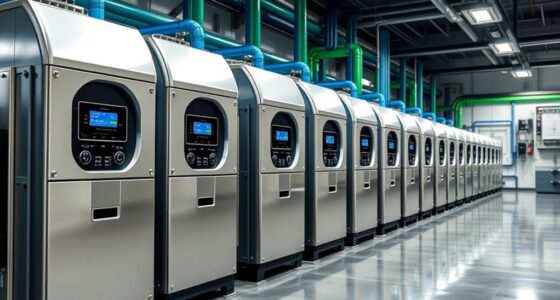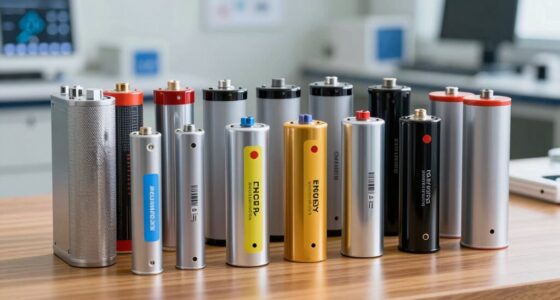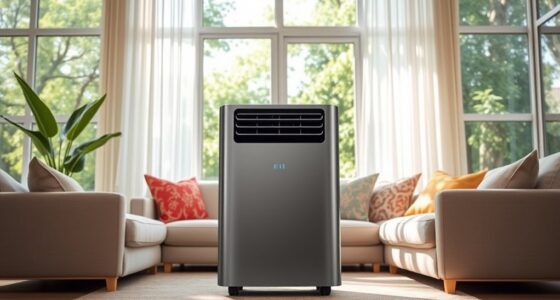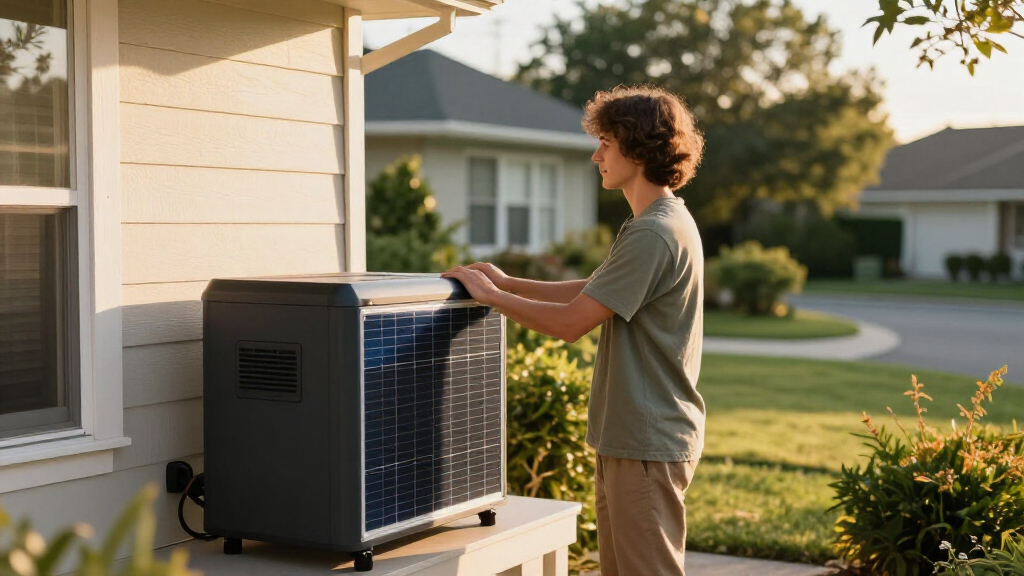
When searching for whole house solar generators, the goal is to find a system that can reliably power your entire home with renewable energy. The PowerMax 3600 SE stands out as the best overall choice for its balance of capacity and portability, while the ECO-WORTHY 10 kW Off-Grid Kit offers a robust, high-capacity solution for full-home off-grid living. Other options like the Jackery Solar Generator 5000 Plus provide excellent scalability and ease of use, but often come with tradeoffs in cost or complexity. The main challenges in this category include balancing system capacity, ease of installation, and long-term reliability. Continue reading for a detailed breakdown of these options and what to consider before making your purchase.

Get backup power and energy gear delivered free with Prime
- Fast, free delivery on millions of items
- Prime Video, Amazon Music and more included
- Member-only deals all year
Complete the kit


Key Takeaways
- The top picks balance high capacity with ease of use, making them suitable for different home sizes and energy needs.
- Portability varies widely; some systems are designed for mobile use, while others are fixed installations requiring professional setup.
- Price and complexity often correlate; more capable systems tend to be more expensive and require more planning.
- Expanding capacity is a key consideration; many models support additional batteries or panels for future scalability.
- High-capacity systems like ECO-WORTHY are best suited for complete off-grid homes, while portable options suit backup power or partial home use.
| PowerMax 3600 SE Portable Power Station with Two 200W Solar Panels |  | Best Overall for Large-Scale Whole House Backup | Battery capacity: 3600Wh | Battery type: LiFePO4 | Continuous output: 3600W | VIEW LATEST PRICE | See Our Full Breakdown |
| Jackery HomePower 3000 Portable Power Station with Two 200W Solar Panels |  | Best for Versatile Backup with Fast UPS Switching | Battery capacity: 3,072Wh | Battery type: LiFePO4 | AC output: 3,600W | VIEW LATEST PRICE | See Our Full Breakdown |
| Jackery Solar Generator 5000 Plus with Two 200W Solar Panels |  | Best for High Output and Expandability | Battery capacity: 5,040Wh | Expandable capacity: Up to 60kWh | Surge output: 14,400W | VIEW LATEST PRICE | See Our Full Breakdown |
| Jackery HomePower 3600 Plus Portable Power Station with Two 200W Solar Panels |  | Best for Portable Large Capacity with Multi-Method Charging | Battery capacity: 3,584Wh | Battery chemistry: LFP | Output wattage: 3,600W | VIEW LATEST PRICE | See Our Full Breakdown |
| ECO-WORTHY 10 kW Off-Grid Solar Panel Kit with 16.1 kWh Battery |  | Best for Whole-Home Off-Grid Builds | Maximum solar power: 2,950 W | Solar panels: 5 × 590 W monocrystalline panels | Inverter continuous output: 10,000 W | VIEW LATEST PRICE | See Our Full Breakdown |
| OSCAL PowerMax 6000 Solar Generator with Three 400W Solar Panels |  | Best Portable Dual-Voltage Backup | Battery capacity: 3,600 Wh | Battery type: LiFePO₄ | AC output: 6,000 W | VIEW LATEST PRICE | See Our Full Breakdown |
| whole house solar generator | Battery capacity | Dimensions | Weight | Battery type |
|---|---|---|---|---|
| PowerMax 3600 SE Portable Powe | 3600Wh | 11.7 × 14.4 × 17.5 in | — | LiFePO4 |
| Jackery HomePower 3000 Portabl | 3,072Wh | 16 × 13 × 20 in | 59.5 lbs | LiFePO4 |
| Jackery Solar Generator 5000 P | 5,040Wh | 16.5 × 15.5 × 25 in | 134.5 lbs | — |
| Jackery HomePower 3600 Plus Po | 3,584Wh | 19.3 x 15.2 x 12.2 in | 77.2 lb | — |
| ECO-WORTHY 10 kW Off-Grid Sola | 16.1 kWh | — | — | — |
| OSCAL PowerMax 6000 Solar Gene | 3,600 Wh | — | 45.5 kg | LiFePO₄ |
More Details on Our Top Picks
PowerMax 3600 SE Portable Power Station with Two 200W Solar Panels
This PowerMax 3600 SE stands out for its impressive 3600Wh capacity combined with a robust 3600W continuous output, making it well-suited for powering an entire home during outages. Compared to the Jackery Solar Generator 5000 Plus, it offers a slightly lower capacity but features a more compact form and app-based monitoring, which adds convenience. The LiFePO4 battery’s over 3,500 cycle life ensures longevity, but the quick 2.4-hour charging time hinges on optimal combined AC and solar input, which could be less effective in cloudy conditions. Its multiple port options support many devices simultaneously, and the EPS switchover is nearly instantaneous, enhancing reliability. However, the stated 25-year service life is a claim that depends heavily on usage patterns and environmental factors, and charging time may vary. This pick makes the most sense for those needing substantial backup power in a portable package, balancing capacity and features effectively.
Pros:- High 3600Wh capacity and 3600W continuous output support large appliances
- Multiple port types enable simultaneous charging of many devices
- LiFePO4 battery rated for over 3,500 cycles ensures longevity
- App monitoring and fast EPS backup switchover enhance usability
Cons:- Charging time depends heavily on combined AC and solar input, which may be slow in low sunlight
- The 25-year lifespan claim might not reflect real-world usage conditions
Best for: Homeowners seeking reliable, high-capacity backup power with flexible charging options for whole-house needs.
Not ideal for: Users with limited space or those preferring lightweight, ultra-portable solutions for camping or minimal backup loads.
- Battery capacity:3600Wh
- Battery type:LiFePO4
- Continuous output:3600W
- Surge output:7200W
- Output ports:14
- Maximum charging input:3000W
- Battery cycles:Over 3,500
- Dimensions:11.7 × 14.4 × 17.5 in
Our verdict“This model is ideal for those needing substantial, reliable whole-house backup with portable convenience and fast response times.”
Jackery HomePower 3000 Portable Power Station with Two 200W Solar Panels
The Jackery HomePower 3000 offers a solid 3,072Wh capacity and 3,600W AC output, making it suitable for supporting essential home appliances or RV systems. While it doesn’t match the massive capacity of the PowerMax 3600 SE, its UPS switching within 20 milliseconds ensures critical devices stay running seamlessly, a feature that surpasses many competitors. The LiFePO4 battery’s 4,000 cycle rating guarantees durability, though the solar panels arrive separately, adding to delivery complexity. Charging to 80% in about nine hours is reasonable but slower than some, like the Jackery Solar Generator 5000 Plus, which can recharge faster via high wattage input. The multiple ports support diverse device needs, but its weight of nearly 60 pounds limits portability for some users. This makes the most sense for those prioritizing quick, reliable backup with versatile charging options and a durable battery.
Pros:- UPS switching within 20ms supports critical device continuity
- High 3,072Wh capacity and 3,600W output support major appliances
- Multiple charging options including solar, AC, hybrid, and vehicle
- LiFePO4 batteries rated for 4,000 cycles ensure long-term use
Cons:- Power station and solar panels ship separately, delaying setup
- Charging to 80% takes about nine hours, which may be slow for urgent needs
Best for: RV owners or homeowners requiring dependable, fast-switching backup power for critical appliances.
Not ideal for: Individuals seeking a lightweight, portable solution for camping or minimal backup use, due to its weight and size.
- Battery capacity:3,072Wh
- Battery type:LiFePO4
- AC output:3,600W
- Surge output:7,200W
- UPS transfer time:≤20ms
- Charging time:1.7 hours via hybrid AC/DC
- Weight:59.5 lbs
- Dimensions:16 × 13 × 20 in
Our verdict“Best suited for users wanting a reliable, quick-transfer backup power system with versatile charging methods.”
Jackery Solar Generator 5000 Plus with Two 200W Solar Panels
The Jackery Solar Generator 5000 Plus delivers an impressive 5,040Wh capacity and supports up to 4,000W of solar input, making it suitable for powering large appliances or entire homes. Unlike the smaller models, it has the ability to expand capacity to 60kWh, perfect for long-term, off-grid living or emergency backup. The included two 200W panels can recharge the unit in about two hours under ideal conditions, a significant advantage over lower wattage panels. However, its weight of over 134 pounds makes it less portable, requiring a dedicated space for setup. Its support for both 120V and 240V circuits enhances versatility for different home configurations. Compared with the PowerMax 3600 SE, it prioritizes capacity and expandability over portability. This makes it ideal for those seeking the maximum power support in a semi-permanent or backup setup.
Pros:- High 5,040Wh capacity supports major appliances
- Supports expansion up to 60kWh for long-term off-grid use
- Includes two 200W solar panels with rapid 2-hour recharge time
- Supports both 120V and 240V circuits for versatile home use
Cons:- Power station and solar panels are shipped separately, adding delay
- Heavy weight of 134.5 lbs limits portability
Best for: Homesteaders or large households needing expansive, scalable power solutions for extended outages.
Not ideal for: Users requiring lightweight, mobile units for frequent transport or camping, due to its weight and size.
- Battery capacity:5,040Wh
- Expandable capacity:Up to 60kWh
- Surge output:14,400W
- Maximum solar input:4,000W
- Included panels:Two 200W
- Weight:134.5 lbs
- Dimensions:16.5 × 15.5 × 25 in
Our verdict“Ideal for large-scale, expandable power needs where capacity and versatility outweigh portability concerns.”
Jackery HomePower 3600 Plus Portable Power Station with Two 200W Solar Panels
This Jackery HomePower 3600 Plus offers a 3,584Wh capacity and a 3,600W AC output, making it suitable for powering essential appliances during outages or outdoor events. Its standout feature is support for multiple charging methods, including hybrid AC and DC, solar, and gas generator, with a quick 2-hour recharge time. The unit’s mobility is enhanced by wheels and a telescopic handle, though at 77.2 pounds, it remains somewhat heavy for frequent carrying. Compared to the PowerMax 3600 SE, it emphasizes portability and ease of transport, but its lower capacity limits its ability to power very large loads for extended periods. The battery’s 6,000-cycle life adds to its long-term value, but the separate shipment of solar panels can delay deployment. This product makes the most sense for users needing substantial backup with mobility and flexible charging options.
Pros:- High 3,600W output and 3,584Wh capacity support essential loads
- Supports multiple charging options including solar, gas, and hybrid
- Wheels and telescopic handle aid mobility
- Battery rated for 6,000 cycles ensures durability
Cons:- Weight of 77.2 lbs may be heavy for frequent lifting
- Solar panels and power station shipped separately, causing setup delays
Best for: Homeowners or outdoor enthusiasts needing portable, high-capacity backup with multiple charging methods.
Not ideal for: People seeking ultra-lightweight or compact solutions for minimal backup, due to its weight and size.
- Battery capacity:3,584Wh
- Battery chemistry:LFP
- Output wattage:3,600W
- Parallel output:7,200W
- Cycle life:6,000 cycles
- Weight:77.2 lb
- Dimensions:19.3 x 15.2 x 12.2 in
Our verdict“Best suited for users who need large capacity and mobility for home or outdoor backup with flexible charging options.”
ECO-WORTHY 10 kW Off-Grid Solar Panel Kit with 16.1 kWh Battery
For a buyer planning a permanent off-grid system, this kit is the lineup’s most installation-oriented choice: it bundles 2,950 W of panels, a 10,000 W split-phase inverter, and a 16.1 kWh battery. The 120/240 V output can serve compatible household circuits, while the battery’s monitoring display and wireless connectivity help track stored power. Compared with the portable OSCAL PowerMax 6000, ECO-WORTHY has far more battery capacity and a higher continuous inverter rating, but it is not a grab-and-go backup unit. Its five large panels and heavy system components call for space, delivery planning, and professional installation. The stated daily solar generation is up to 11.8 kWh under optimal conditions, so actual production will depend on site and weather; buyers should size their expectations around that, not treat the kit as unlimited household power.
Pros:- Complete package includes panels, inverter, battery, and cables
- 16.1 kWh LiFePO₄ battery provides substantially more stored energy than the OSCAL PowerMax 6000
- 10,000 W continuous output with 120/240 V split-phase support
- Battery monitoring and parallel expansion support
Cons:- Large, heavy components require truck delivery and suitable installation space
- Professional installation is recommended, adding planning and setup requirements
- Up to 11.8 kWh daily solar generation depends on optimal conditions and is not guaranteed
Best for: Homeowners building an off-grid or substantial backup system who have room for large panels and access to professional installation.
Not ideal for: Renters, apartment dwellers, or buyers seeking a portable, plug-in backup that can be moved between rooms or taken camping.
- Maximum solar power:2,950 W
- Solar panels:5 × 590 W monocrystalline panels
- Inverter continuous output:10,000 W
- Inverter peak output:20,000 W
- Output voltage:120 V or 120/240 V split-phase
- Battery:48 V, 314 Ah LiFePO₄
- Battery capacity:16.1 kWh
- Daily solar generation:Up to 11.8 kWh under optimal conditions
Our verdict“Choose this kit for a professionally installed off-grid system with substantial storage, not for portable or quick-start home backup.”
OSCAL PowerMax 6000 Solar Generator with Three 400W Solar Panels
The OSCAL PowerMax 6000 is the more portable path to 120/240 V backup in this lineup, pairing a 6,000 W output rating with a 3,600 Wh battery and three 400 W panels. That combination suits buyers who want to move a system between home backup and outdoor use, rather than install a fixed array like the ECO-WORTHY 10 kW kit. Its 5–8 ms EPS switchover and app control add useful backup features, but the battery holds far less energy than ECO-WORTHY’s 16.1 kWh bank. The 45.5 kg unit is portable only in the limited sense that it can be relocated; it is not light luggage. The listed charging-time claims are inconsistent, so I would not plan a backup routine around a specific recharge window without confirming it with the manufacturer.
Pros:- 6,000 W output with 120/240 V dual-voltage support
- Includes three 400 W solar panels
- LiFePO₄ battery rated for up to 3,500 charge cycles
- EPS switchover, app control, and multiple battery protections
Cons:- 3,600 Wh capacity limits how long it can support household loads compared with ECO-WORTHY’s 16.1 kWh battery
- At 45.5 kg, moving it regularly takes effort
- Inconsistent charging-time claims make recharge planning less clear
Best for: Households needing a relocatable dual-voltage backup for selected loads, with the option to use the system for camping or outdoor power.
Not ideal for: Buyers seeking multi-day whole-home energy storage or a fixed off-grid system; its 3,600 Wh battery is much smaller than ECO-WORTHY’s.
- Battery capacity:3,600 Wh
- Battery type:LiFePO₄
- AC output:6,000 W
- Peak output:9,000 W
- Voltage:120 V/240 V dual voltage
- Solar charging input:2,400 W
- Solar panels included:3 × 400 W
- EPS switchover time:5–8 ms
- Weight:45.5 kg
Our verdict“Pick the OSCAL for movable 120/240 V backup and outdoor flexibility, but choose ECO-WORTHY if household-scale storage is the priority.”
How We Picked
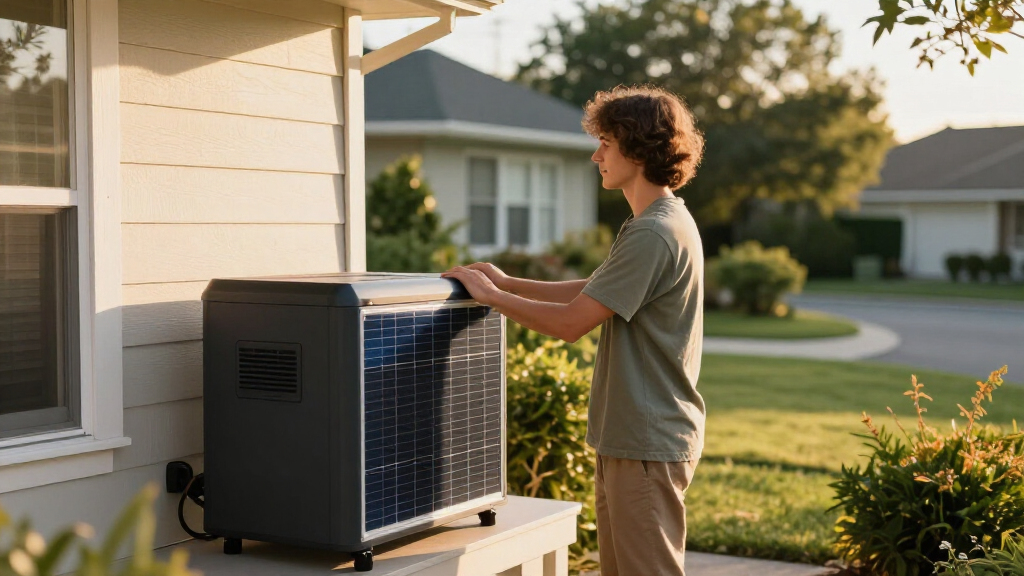
These products were evaluated based on their overall capacity, scalability, and suitability for whole house power needs. We prioritized systems that offer high energy output, reliable build quality, and flexible installation options. Ease of use, maintenance requirements, and value for the cost also influenced our rankings. Our goal was to identify options that balance performance with practical considerations, helping buyers find solutions for both temporary backups and permanent off-grid setups. Each product was compared against these criteria to determine which best serve different types of home energy needs.| whole house solar generator | Battery type |
|---|---|
| PowerMax 3600 SE Portable Powe | LiFePO4 |
| Jackery HomePower 3000 Portabl | LiFePO4 |
| Jackery Solar Generator 5000 P | — |
| Jackery HomePower 3600 Plus Po | — |
| ECO-WORTHY 10 kW Off-Grid Sola | — |
| OSCAL PowerMax 6000 Solar Gene | LiFePO₄ |
Factors to Consider When Choosing Whole House Solar Generators
Choosing the right whole house solar generator involves understanding several key factors. Beyond just capacity, considerations include system scalability, installation complexity, durability, and long-term maintenance. Awareness of common pitfalls, like underestimating energy needs or overestimating system expandability, can save money and frustration. This guide highlights critical factors to help you select a system that matches your home’s energy demands and future plans.System Capacity and Power Output
Ensure the generator’s capacity matches your home’s total energy needs. Larger homes require systems with higher wattage and battery storage to run essential appliances continuously. A mismatch here can lead to frequent outages or reliance on backup generators. Always estimate your daily energy consumption and add a buffer for peak loads when selecting capacity.
Scalability and Expandability
Many systems support adding extra batteries or solar panels to increase capacity over time. If you anticipate growing your energy needs or want to future-proof your setup, choose a model with modular expandability. Conversely, systems that lack this feature may require a complete overhaul if your needs change, which can be costly and disruptive.
Ease of Installation and Maintenance
Some systems are designed for DIY installation, while others require professional setup—often due to their size or complexity. Consider your technical comfort level and whether you have access to installers. Regular maintenance, like cleaning panels and monitoring system health, also impacts long-term reliability and costs.
Durability and Weather Resistance
Since these systems are often installed outdoors, weather resistance is vital. Look for products with sturdy enclosures and weatherproof components, especially if you live in a climate with high winds, snow, or humidity. Investing in durable equipment reduces the risk of damage and extends system lifespan.
Cost and Value Proposition
Higher-capacity, expandable systems tend to cost more upfront but may offer better long-term value. Cheaper options might seem attractive initially but could lack scalability or durability, leading to additional costs later. Consider your budget alongside your long-term energy goals to find the best balance.
Frequently Asked Questions
Can a whole house solar generator fully power my home during a blackout?
Many high-capacity systems can provide full or partial backup power during outages, but this depends on your home’s energy demands and the generator’s capacity. It’s essential to size the system correctly—covering your critical loads first—and ensure your setup is configured for backup operation. Some systems require manual switching, while others support automatic transfer switches for seamless power supply.
Is professional installation necessary for a whole house solar generator?
Installation complexity varies across models. Smaller, portable units may be set up DIY-style with basic electrical knowledge, but larger, integrated systems often require professional installation due to their size, connection to your home’s electrical system, and local regulations. Investing in professional help can ensure safety, compliance, and optimal system performance.
How long does a typical home solar generator last before needing replacement or major maintenance?
The lifespan of a whole house solar generator depends on component quality and usage. Most high-quality batteries and inverters are designed to last 10-15 years with proper maintenance. Regular inspections, cleaning, and monitoring can extend their life, but eventually, some components may need replacing. Choosing reputable brands with good warranties can reduce future costs and downtime.
Can I expand my solar generator system later if my energy needs increase?
Many systems support expansion through additional batteries or solar panels, allowing you to scale capacity over time. This flexibility is a key advantage, especially for growing households or evolving energy needs. However, not all models are designed for easy expansion, so it’s important to verify compatibility before purchasing. Planning for future growth can save money and hassle down the line.
What are the main tradeoffs when choosing a whole house solar generator?
The primary tradeoffs involve capacity, cost, installation complexity, and scalability. Larger, more powerful systems tend to be more expensive and may require professional setup, but they offer greater energy independence. Smaller, portable options are easier to install and move but may not meet full-house demands. Balancing these factors based on your budget, technical skills, and long-term goals is essential for a satisfying purchase.
Conclusion
For those seeking a reliable, ready-to-power entire home, the PowerMax 3600 SE offers a well-rounded solution with ample capacity and portability. Budget-conscious buyers aiming for a scalable system should consider the Jackery Solar Generator 5000 Plus for its ease of expansion. Homeowners looking for full off-grid independence might opt for the ECO-WORTHY 10 kW Off-Grid Kit, despite its higher upfront cost. Beginners or those with smaller energy needs will find portable options more suitable, while experienced users can benefit from modular, professional-grade setups. Your choice depends on your current needs, future plans, and budget—each option can deliver power, but matching the system to your home’s demands is key.
Halloween Picks

Halloween Inflatable Haunted House Maze – 20×20 ft with Removable Roof and Blower

8.5 Foot Halloween Inflatable Haunted House Castle with Skeleton, Ghost & Skulls

12.5-Foot Lighted Halloween Inflatable Archway
As an affiliate, we earn on qualifying purchases.