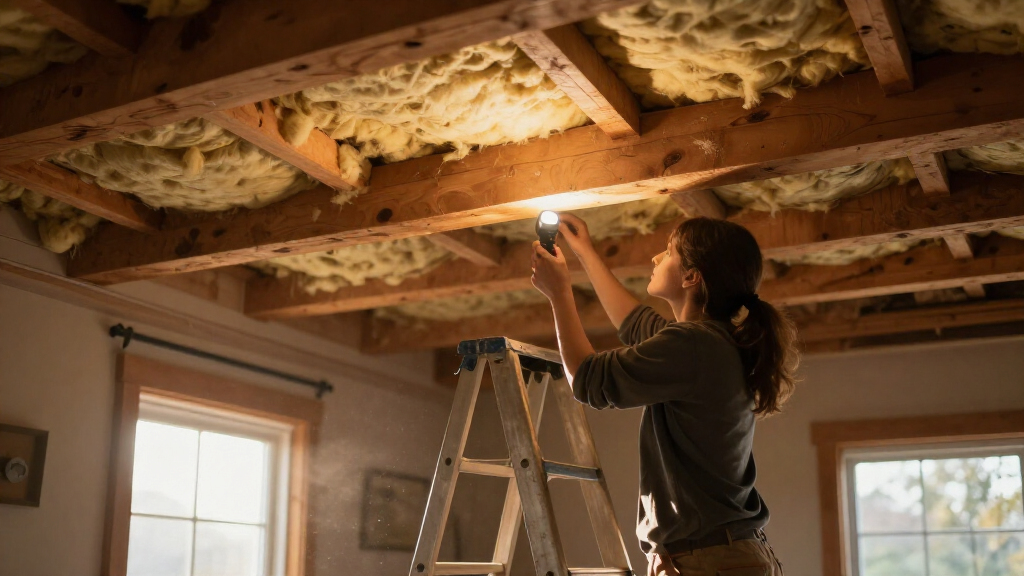

The best cathedral ceiling insulation in this roundup is Knauf R-30 Kraft Faced High Density for its cathedral-specific design and useful coverage. For a larger unfaced R-30 order, Owens Corning’s 427-square-foot package stands out, while Owens Corning R-38 is the higher-R option when the roof cavity can accommodate it. The main tradeoffs are R-value versus available cavity depth, faced versus unfaced batts, and package dimensions versus framing spacing. Product labels alone cannot confirm a safe fit: ventilation channels, moisture control, and local code requirements also shape the choice. Read on for the full comparison and practical guidance on selecting batts for your roof assembly.

Get backup power and energy gear delivered free with Prime
- Fast, free delivery on millions of items
- Prime Video, Amazon Music and more included
- Member-only deals all year
Key Takeaways
- Knauf R-30 High Density is the clearest cathedral-focused pick in this group; its stated use and 15-inch width may suit framing layouts that differ from the 16-inch-wide options.
- The two Owens Corning R-30 unfaced listings offer different package sizes, so the 427-square-foot set and 775-square-foot set suit different project scales rather than representing interchangeable buys.
- R-38 is not automatically the better fit: the Owens Corning option requires a cavity deep enough for its thicker batt without compression or loss of ventilation space.
- Faced and unfaced versions serve different assembly plans; kraft facing should not be chosen by habit, since the location and continuity of the vapor-control layer matter.
- The CertainTeed R-30 listing is specifically described as high-density cathedral insulation, while the Owens Corning R-19 batts are thinner options for shallower cavities or assemblies designed around that R-value.


| cathedral ceiling insulation | Brand | Material | R-value | Thickness |
|---|---|---|---|---|
| Owens Corning R-30 Unfaced Fib | Owens Corning | Fiberglass | R-30 | 10 inches |
| Owens Corning R-19 Unfaced Fib | Owens Corning | Fiberglass | R-19 | 6.5 inches |
| Certainteed R-30 Kraft Faced 2 | CertainTeed | Fiberglass | R-30 | 8 inches |
| Owens Corning R-19 Unfaced Fib | Owens Corning | Fiberglass | R-19 | 6.25 inches |
| Owens Corning R-38 Kraft Faced | Owens Corning | Fiberglass | R-38 | 12 inches |
| Knauf R-30 Kraft Faced Fibergl | Knauf | Fiberglass | R-30 | 8 inches |
| Owens Corning R-30 Kraft Faced | Owens Corning | Fiberglass | R-30 | 9.5 inches |
More Details on Our Top Picks
Owens Corning R-30 Unfaced Fiberglass Insulation – 427 SQFT, 8 Bags (16 x 48, 10″ Thick)
For a cathedral ceiling with framing deep enough for a 10-inch batt, this Owens Corning option pairs R-30 resistance with a flexible, unfaced format. Its 16-by-48-inch batts suit shorter framing bays, while the lack of facing lets the installer follow a separately planned vapor-control assembly. Compared with the R-30 CertainTeed kraft-faced batt, this one is thicker and unfaced, but covers less area and does not include a kraft layer. That makes it a better fit when the ceiling design calls for unfaced insulation, not a direct swap for a shallower 2×8 cavity. The eight-bag, 170-pound shipment also takes more planning to move and install. I would choose it for a compatible cavity and a specified moisture-control plan, and skip it if the framing depth or facing requirement is uncertain.
Pros:- R-30 thermal resistance in a 10-inch batt
- Unfaced construction suits assemblies that call for separately specified moisture control
- 16-by-48-inch format can suit shorter framing bays
- Fiberglass provides both thermal and acoustical control
Cons:- 10-inch thickness limits fit in shallower cathedral-ceiling framing
- No facing is included, so moisture-control details must be addressed separately
- 170-pound shipment may require help to move and handle
Best for: Homeowners insulating cathedral-ceiling bays with room for 10-inch batts who need unfaced material for a separately designed vapor-control assembly.
Not ideal for: DIYers with 2×8 cavities or those seeking an integrated facing layer; the 10-inch thickness may not fit, and this product has no vapor barrier.
- Brand:Owens Corning
- Material:Fiberglass
- R-value:R-30
- Facing:Unfaced
- Dimensions:16 x 48 inches
- Thickness:10 inches
- Coverage:426.64 sq ft
- Number of bags:8
- Weight:170 pounds
Our verdict“Choose this for a cathedral ceiling with verified 10-inch cavities and a planned vapor-control assembly; choose the thinner CertainTeed R-30 if your framing is 2×8.”
Owens Corning R-19 Unfaced Fiberglass Insulation, 77.5 sq ft, 6.5 inches thick, fits 2×6 walls
This R-19 batt is the most targeted fit in the group: its 6.5-inch thickness is specified for 2×6 framing, making it relevant to shallow cathedral-ceiling cavities where deeper R-30 or R-38 products cannot fit without compression. The unfaced fiberglass can also work in an assembly where a separate vapor-control approach is planned. Compared with Owens Corning’s 10-inch R-30 unfaced batt, this is easier to match to a 2×6 cavity but offers a lower R-value and only 77.5 square feet of coverage. Its 15-by-93-inch batts are longer than the 48-inch products, so handling and cutting around obstructions may take more care. I would use it where framing depth governs the choice, not as a substitute for a higher-R assembly that the ceiling can accommodate.
Pros:- 6.5-inch thickness is specified for 2×6 framing
- Unfaced design allows moisture-control details to be handled separately
- Fiberglass offers both thermal insulation and sound reduction
Cons:- R-19 provides less thermal resistance than the listed R-30 and R-38 options
- 77.5-square-foot coverage may mean sourcing multiple packages for a ceiling
- Long 93-inch batts can be awkward to position and cut around framing details
Best for: Renovators insulating 2×6 cathedral-ceiling bays who need a batt sized to that cavity and are planning moisture control separately.
Not ideal for: Buyers with deeper framing or large ceiling areas; the R-19 rating is lower than the R-30 and R-38 options, and coverage is limited to 77.5 square feet.
- Brand:Owens Corning
- Material:Fiberglass
- R-value:R-19
- Facing:Unfaced
- Dimensions:15 x 93 inches
- Thickness:6.5 inches
- Coverage:77.5 sq ft
- Number of batts:8
Our verdict“Pick this when 2×6 cavity depth rules out thicker batts; for deeper framing and more thermal resistance, compare the R-30 options instead.”
Certainteed R-30 Kraft Faced 23 x 48 Fiberglass Batt Insulation for 2×8 Floors or Attics (High Density, Cathedral)
The CertainTeed batt is the clearest match here for a 2×8 cathedral-ceiling cavity: it is 8 inches thick, rated R-30, and described as high density for cathedral applications. Its kraft facing adds a built-in moisture-control layer, unlike the unfaced Owens Corning R-30 options, though the full ceiling assembly still needs to follow appropriate moisture-control requirements. The 23-by-48-inch format is wider than the Owens Corning 16-by-48-inch batt, so confirm bay width before ordering. Its stated 613.36-square-foot coverage across eight bags is also substantially more than the 426.64-square-foot Owens Corning R-30 package, which may suit larger projects but makes delivery and storage more demanding. I would favor it when cavity depth, facing, and coverage align; skip it if the assembly calls for unfaced insulation or the bays are narrower.
Pros:- R-30 rating in an 8-inch batt suited to 2×8 construction
- High-density product description specifically identifies cathedral-ceiling use
- Kraft facing is included
- 613.36-square-foot listed coverage supports larger projects
Cons:- 23-inch width requires careful confirmation against framing-bay dimensions
- Kraft facing may not suit assemblies designed for unfaced insulation
- Large, heavy shipment can require delivery and storage planning
Best for: Homeowners with verified 2×8 cathedral-ceiling framing who want an R-30 high-density batt with kraft facing and substantial project coverage.
Not ideal for: Installers working with narrow bays or a ceiling assembly that specifies unfaced insulation; the 23-inch width and kraft facing may not fit the design.
- Brand:CertainTeed
- Material:Fiberglass
- R-value:R-30
- Facing:Kraft faced
- Dimensions:23 x 48 inches
- Thickness:8 inches
- Coverage:613.36 sq ft
- Number of bags:8
Our verdict“Choose this for a 2×8 cathedral ceiling where its 23-inch width fits and kraft facing suits the assembly; the Owens Corning unfaced R-30 is a better match when unfaced material is required.”
Owens Corning R-19 Unfaced Fiberglass Insulation 775 SQFT, 10 Bags (15 x 93, 6.25 inches thick)
Among the lower-R choices, this Owens Corning package stands out for 775 square feet of coverage, making it more practical for a broad ceiling or multiple interior areas than the 77.5-square-foot R-19 package. Its 15-by-93-inch, 6.25-inch-thick unfaced batts are intended for friction-fit installation and may suit shallower framing where R-30 or R-38 batts are too thick. That tradeoff matters in cathedral ceilings: R-19 is below the other listed R-values, so this is a fit-driven choice rather than the higher-resistance option. The unfaced design also leaves vapor control to the overall assembly. Compared with the smaller Owens Corning R-19 package, this one reduces package count for a large job, but the long batts still need accurate cutting and careful placement.
Pros:- 775-square-foot stated coverage suits larger insulation projects
- R-19 rating in a 6.25-inch batt for shallower spaces
- Unfaced format fits assemblies using separately planned moisture control
- Friction-fit design is intended to stay in place in suitable framing
Cons:- R-19 is lower than the listed R-30 and R-38 options
- No facing is included to serve as a vapor-control layer
- 93-inch batts can take more care to handle and trim
Best for: Contractors or homeowners covering a large area of shallow framing who need unfaced R-19 fiberglass in a higher-coverage package.
Not ideal for: Buyers seeking the highest thermal resistance for a cathedral ceiling or insulation with an included facing layer; this product is R-19 and unfaced.
- Brand:Owens Corning
- Material:Fiberglass
- R-value:R-19
- Facing:Unfaced
- Dimensions:15 x 93 inches
- Thickness:6.25 inches
- Coverage:775 sq ft
- Number of bags:10
Our verdict“Choose this for broad coverage in shallow bays when R-19 is appropriate; choose an R-30 or R-38 product when the ceiling assembly can accommodate more insulation.”
Owens Corning R-38 Kraft Faced Fiberglass Insulation, 341 SQFT, 8 Bags of 16×48 Batt Fits 2×12 Attic
When a cathedral ceiling has deep enough framing for 12-inch batts, this Owens Corning product offers the lineup’s highest stated R-value: R-38. That gives it a stronger thermal-resistance profile than the R-30 products, but its depth makes cavity fit the deciding factor; it is not a practical replacement for the 8-inch CertainTeed R-30 in a 2×8 bay. The kraft facing is another point of difference from the unfaced Owens Corning R-30, though facing should match the ceiling assembly’s moisture-control design. Coverage is 341 square feet across eight bags, less than the R-30 alternatives, so larger ceilings may require more packages. I would select it for a deep, compatible cavity where higher R-value is the priority, not for shallow framing or a project needing broad coverage per package.
Pros:- R-38 is the highest listed thermal-resistance value in this group
- 12-inch thickness is specified to fit 2×12 attic framing
- Kraft facing is included
- 16-by-48-inch batt format suits shorter framing bays
Cons:- 12-inch thickness rules it out for shallower framing
- 341-square-foot coverage is lower than the R-30 packages listed
- Kraft facing may not match assemblies designed for unfaced insulation
Best for: Homeowners with verified deep cathedral-ceiling framing who want the highest listed R-value and a kraft-faced batt.
Not ideal for: Owners with 2×8 or 2×6 cavities, or those covering a large area with fewer packages; the 12-inch thickness limits fit and coverage is 341 square feet.
- Brand:Owens Corning
- Material:Fiberglass
- R-value:R-38
- Facing:Kraft faced
- Batt dimensions:16 x 48 inches
- Thickness:12 inches
- Coverage:341 sq ft
- Number of bags:8
- Made in:USA
Our verdict“Choose this when deep framing can take 12-inch batts and R-38 is the priority; for 2×8 cathedral ceilings, the CertainTeed R-30 is the more suitable fit.”
Knauf R-30 Kraft Faced Fiberglass Batt Insulation, 15 x 48, High Density (Cathedral), 8 Bags, 440 sq ft
The Knauf batt pairs R-30 resistance with a 15-inch width, making it a closer fit for cathedral-ceiling framing on 15-inch centers than the 16-inch Owens Corning R-30 Kraft Faced Fiberglass Insulation. Its listed 8-inch thickness and high-density design suit 2×8 applications, where matching the cavity matters for fewer awkward gaps and cuts. The package covers 440 square feet, less area than Owens Corning’s 469-square-foot package, so it may require more material for a large ceiling. Product details conflict on the facing: the title and specs say kraft faced, while the description calls it unfaced with no moisture barrier. I’d verify the supplied facing before planning the vapor-control layer. This is a specialized fit-first pick, not the straightforward choice when coverage or confirmed facing matters most.
Pros:- R-30 rating is suited to higher-resistance insulation needs in 2×8 cathedral-ceiling cavities.
- 15 x 48-inch dimensions target narrower framing bays than the 16-inch Owens Corning option.
- Eight bags provide a substantial 440 square feet of stated coverage.
- Listed for cathedral ceilings as well as attic and floor applications.
Cons:- Product information conflicts on whether the batts are kraft faced or unfaced, so buyers should confirm before installation.
- Its 440-square-foot coverage is lower than the Owens Corning R-30 kraft-faced package’s 469 square feet.
- The 15-inch width is a poor match for 16-inch-on-center framing.
Best for: Homeowners insulating cathedral ceilings framed with 15-inch-on-center, 2×8 joists who want R-30 batts sized to those cavities.
Not ideal for: Buyers who need a confirmed kraft vapor retarder or are framing at 16-inch centers; the facing information conflicts, and the 15-inch width may not suit their bays.
- Brand:Knauf
- Material:Fiberglass
- R-value:R-30
- Dimensions:15 x 48 inches
- Thickness:8 inches
- Coverage:440 sq ft
- Package:8 bags
- Listed applications:2×8 construction, attics, and cathedral ceilings
Our verdict“Choose Knauf when your cathedral ceiling has 15-inch-wide bays and R-30 is the target, but confirm the facing before ordering.”
Owens Corning R-30 Kraft Faced Fiberglass Insulation, 469 sqft, 8 Bags, 16×48
For cathedral ceilings framed on 16-inch centers, this Owens Corning package offers a more direct dimensional match than the 15-inch Knauf R-30 batt. Both are R-30 kraft-faced fiberglass options, but Owens Corning lists 469 square feet of coverage, giving it more area per package than Knauf’s 440 square feet. Its listed 9.5-inch thickness is also greater than Knauf’s 8 inches, so check the ceiling cavity depth and the product’s fit before buying rather than assuming either batt suits every 2×8 assembly. Kraft facing can simplify the planned interior-side vapor-control layer where appropriate, but the facing is combustible and must be protected as required by installation guidance. Bulk packaging and careful handling make this better for a prepared project than a small repair.
Pros:- R-30 rating provides substantial thermal resistance for ceiling and attic applications.
- 16 x 48-inch dimensions align with common 16-inch framing layouts.
- 469 square feet of stated coverage exceeds the Knauf 15 x 48-inch package.
- Kraft facing is specified, unlike the conflicting facing details for the Knauf product.
Cons:- The listed 9.5-inch thickness may not fit every cathedral-ceiling cavity.
- Kraft facing is combustible and must be protected from open flames and installed according to applicable guidance.
- Eight bags and bulky batts can be inconvenient for small projects or limited storage.
Best for: Insulation crews and homeowners covering larger cathedral ceilings with 16-inch-on-center framing who want R-30 batts and stated kraft facing.
Not ideal for: Buyers with 15-inch-on-center framing, shallow cavities that cannot accommodate the listed 9.5-inch thickness, or small patch jobs where an eight-bag package is excessive.
- Brand:Owens Corning
- Material:Fiberglass
- R-value:R-30
- Facing:Kraft faced
- Dimensions:16 x 48 inches
- Thickness:9.5 inches
- Coverage:469 sq ft
- Package:8 bags, 10 batts per bag
Our verdict“Pick Owens Corning for a larger 16-inch-bay project when its listed thickness suits the cavity and kraft facing matches your assembly plan.”

How We Picked
I compared these seven products by the factors that affect a cathedral-ceiling installation: stated R-value, batt thickness and width, facing, intended application, and coverage per package. I gave more weight to clear cathedral or high-density positioning and to dimensions that buyers can match against their framing than to brand name alone. I also treated R-value as useful only when the batt can fit the cavity as designed, without compression or blocking required airflow.
The ranking favors products with a strong balance of cathedral suitability, practical specifications, and a clear role in the lineup. Knauf R-30 leads because it is explicitly labeled high density for cathedral use; the Owens Corning R-30 and R-38 options follow for buyers whose framing and project goals fit their dimensions. R-19 products rank lower for whole-roof thermal performance, but remain relevant for shallower cavities. Package coverage helps distinguish project scale, not insulation quality, and I would verify the exact product dimensions and installation requirements before ordering.
| cathedral ceiling insulation | Brand | R-value | Facing |
|---|---|---|---|
| Owens Corning R-30 Unfaced Fib | Owens Corning | R-30 | Unfaced |
| Owens Corning R-19 Unfaced Fib | Owens Corning | R-19 | Unfaced |
| Certainteed R-30 Kraft Faced 2 | CertainTeed | R-30 | Kraft faced |
| Owens Corning R-19 Unfaced Fib | Owens Corning | R-19 | Unfaced |
| Owens Corning R-38 Kraft Faced | Owens Corning | R-38 | Kraft faced |
| Knauf R-30 Kraft Faced Fibergl | Knauf | R-30 | — |
| Owens Corning R-30 Kraft Faced | Owens Corning | R-30 | Kraft faced |
Factors to Consider When Choosing Best Cathedral Ceiling Insulation
Choosing a batt for a sloped ceiling starts with the roof assembly, not the product label. I would confirm the cavity depth, rafter spacing, ventilation plan, and moisture-control details before comparing package coverage or brand. These factors help prevent common problems such as compressed batts, blocked airflow, and mismatched vapor control.
Match Batt Thickness to the Actual Cavity
Measure the usable depth between rafters, including any space reserved for ventilation, rather than relying on nominal lumber dimensions. A batt that is too thick can compress, which reduces its effective thermal performance and can push against the roof deck. A thinner batt may fit neatly but fall short of the insulation level required by local code or the project plan. If the cavity cannot hold the desired R-value, compare options such as changing the assembly design or adding a suitable continuous insulation layer. Do not fill a ventilation channel to gain more batt thickness. When cavity depth varies across the roof, plan around the shallowest areas instead of assuming one size fits everywhere.
Check Rafter Spacing and Batt Width
Measure the clear distance between rafters in several places because older framing and roof structures may not follow a consistent spacing pattern. The listings here include both 15-inch and 16-inch-wide batts, so width affects how well the insulation fits and how much trimming or gap-filling work may be needed. A batt that is too narrow can leave thermal gaps; one that is too wide may bunch or compress at the edges. Avoid forcing insulation into a cavity just to use the package already on hand. For irregular framing, calculate the extra cutting and offcuts before choosing bulk coverage. The easiest installation is not always the product with the largest stated area if its dimensions do not match the framing.
Plan the Ventilation Path Before Installing
Many cathedral roof assemblies need a clear air channel between the insulation and roof deck, but the exact design depends on the building and roofing system. Confirm the required ventilation approach before buying batts, and use appropriate baffles where the assembly calls for them. A batt that fills the full rafter depth may obstruct airflow if no channel has been designed into the cavity. Blocking that path can contribute to moisture problems and affect roof durability. Do not assume a product labeled for cathedral use replaces ventilation planning. If the roof is unvented or has a complex build-up, have the assembly reviewed by a qualified building professional.
Choose Facing as Part of the Moisture-Control Plan
Kraft facing is not a general-purpose upgrade; it forms part of the assembly’s vapor-control strategy and needs to be positioned correctly. The right choice depends on climate, indoor humidity, other layers in the roof, and applicable code requirements. Adding a faced batt where another low-permeance layer already exists can limit drying in some assemblies. Unfaced insulation gives more flexibility when the vapor-control layer is handled separately, but it does not solve air leakage on its own. Air sealing around penetrations and framing joints remains a separate task. If you are unsure which side needs vapor control, get assembly-specific guidance before selecting faced or unfaced batts.
Compare R-Value With the Whole Roof Assembly
A higher batt R-value can help, but it is only one part of the roof’s thermal performance. Gaps, compression, framing thermal bridges, and air leakage can reduce the benefit of a nominally higher-rated product. Compare the batt’s stated R-value with local code and the planned performance of the full assembly rather than choosing the largest number by default. The R-19 options in this roundup are better matched to shallower cavities or designs that call for that rating, while R-30 and R-38 choices need enough room to fit properly. In some projects, addressing air leakage or thermal bridges may produce a better result than forcing a thicker batt into an unsuitable cavity. Check current local requirements before settling on a target.
Estimate Coverage and Installation Waste
Package square footage is useful for planning, but it does not account for framing layout, roof angles, cutouts, or damaged material. Measure each roof plane and allow for cutting waste, especially around skylights, valleys, hips, and irregular framing. The R-30 listings range from smaller to larger package coverage, making the right choice partly a question of project size and handling. Buying more area than needed can leave awkward partial packages, while ordering too little can interrupt installation and create batch-matching questions. Review the number of bags and batt dimensions alongside total coverage before estimating how many packages the job needs. Keep packaging information available so you can confirm product identity if an additional order is needed.
Frequently Asked Questions
Can I use R-38 insulation in any cathedral ceiling?
No. R-38 is appropriate only when the roof cavity and ventilation plan allow the batt to fit without compression or blocking a required air channel. The Owens Corning R-38 listing is thicker than the R-30 and R-19 choices, so cavity depth is the first check. A higher rating does not help if the product is crushed into a shallow space. Compare the actual batt thickness with the available depth after accounting for baffles and other assembly layers. If the cavity is too shallow, ask a building professional about a different assembly rather than forcing the fit.
Should I choose kraft-faced or unfaced batts for a cathedral ceiling?
Choose based on the roof assembly’s vapor-control plan, not on a general preference for one type. Faced batts include kraft facing that must be installed in the correct orientation for the design, while unfaced batts leave vapor control to other layers. Existing roofing materials, climate, indoor humidity, and code all affect the answer. Using facing without checking those factors can limit drying in some assemblies. If the roof already has a vapor-control layer or the assembly is unusual, have the full layer sequence reviewed before buying.
How do I know whether a 15-inch or 16-inch batt will fit my rafters?
Measure the clear cavity width between framing members at several points; do not rely only on nominal rafter spacing. The product width should suit the actual opening while avoiding gaps and excessive compression. Older roofs and remodels may have inconsistent spacing, so one measurement may not represent the entire ceiling. If your framing varies, plan for careful cutting and consider whether the selected batt can be fitted securely across the different openings. Check the product’s stated dimensions, since the listing width and the framing measurement use different reference points.
Is R-19 enough for a cathedral ceiling?
It may fit a shallower cavity or an assembly designed for that rating, but whether it is enough depends on local code, climate, and the complete roof design. The two R-19 Owens Corning listings offer thinner alternatives to this roundup’s R-30 and R-38 products, not a universal substitute for them. A thinner batt can be preferable to compressing a higher-rated batt into an undersized cavity. Check the required insulation level and account for thermal bridges through the framing. If the target cannot be met within the cavity, ask about assembly changes rather than choosing by thickness alone.
What should I verify before ordering insulation for a cathedral roof?
Confirm the roof’s cavity depth, clear width, required ventilation channel, and vapor-control plan before calculating package quantities. Then compare each product’s batt dimensions, facing, R-value, and total coverage with those measurements. Cathedral ceilings often contain angled cuts and interruptions, so allow for waste around framing details and openings. Also verify that the selected product is suitable for the intended assembly and that the installation follows local code and manufacturer instructions. When those details are uncertain, resolve them before ordering rather than trying to adapt the roof cavity to the insulation afterward.
Conclusion
Best overall: I would start with Knauf R-30 Kraft Faced High Density for a cathedral ceiling where its facing and 15-inch width match the assembly. Best value for larger projects: the Owens Corning R-30 unfaced 775-square-foot package suits buyers who need broad coverage and have a separate vapor-control plan; choose the 427-square-foot package for a smaller order. Best premium thermal target: Owens Corning R-38 is the higher-R choice, but only when cavity depth and ventilation leave room for it. Best for beginners: CertainTeed R-30 High Density Cathedral is a straightforward option to evaluate because its listing clearly identifies the intended application, though fit still needs checking. For shallower cavities, consider the Owens Corning R-19 products; for a faced R-30 alternative, compare the Owens Corning and CertainTeed dimensions against your rafters. My final pick depends on fit first, then R-value, facing, and coverage.
Halloween Picks
halloween
As an affiliate, we earn on qualifying purchases.