When power outages strike, having a reliable automatic home backup generator becomes essential. For 2026, the market offers a variety of options, but three picks stand out: the Generac 18kW Whole Home Generator for its smart home integration, the Generac 26kW for its impressive power and warranty, and the Westinghouse WGen11500DFc for portability and dual fuel flexibility. Each offers unique benefits but comes with tradeoffs in cost, complexity, or features. Here’s what you need to consider to choose the best fit for your home and needs.
Complete the kit


Key Takeaways
- The Generac 18kW is ideal for smart home enthusiasts who want remote monitoring and energy system integration.
- The Generac 26kW offers the highest power output and warranty, suited for larger homes with critical power needs.
- The Westinghouse WGen11500DFc provides portability and dual fuel options, perfect for those who need a flexible, mobile backup solution.
- All models require professional installation and cellular subscriptions for full remote monitoring capabilities.
- Choosing between these depends on your home’s size, budget, and whether you prioritize smart features or portability.




| automatic home backup generator | Fuel Type | Power Output |
|---|---|---|
| Generac 18kW Whole Home Genera | Natural gas or LP | 18kW |
| Generac 26kW Whole Home Genera | LP or natural gas | 26kW |
| Westinghouse 14500 Peak Watt D | — | — |
| Westinghouse 12500 Watt Dual F | Gasoline, Propane | — |
| Generac 14kW Whole Home Genera | LP or natural gas | 14kW |
More Details on Our Top Picks
Generac 18kW Whole Home Generator with Cellular Capability
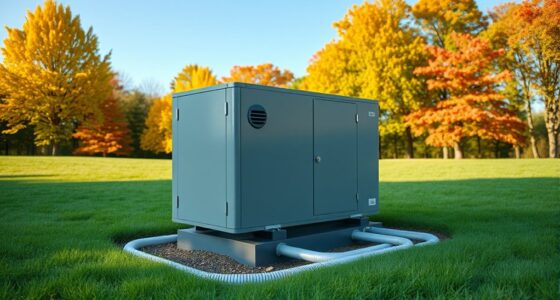
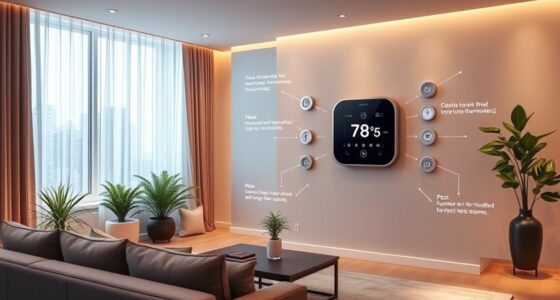
The Generac 18kW Whole Home Generator stands out for its seamless compatibility with smart home systems and remote monitoring via cellular connectivity. It provides reliable automatic backup power, ensuring your essential systems stay operational during outages. Compared with larger options, this generator offers a good balance of power and smart features, but its higher initial cost and cellular subscription requirements may be drawbacks for budget-conscious homeowners. It’s best suited for those who want to integrate backup power into their existing home automation setup and are comfortable with professional installation.
Pros:- Automatic backup power during outages
- Remote monitoring and control via cellular connectivity
- Supports smart home energy systems
- Fuel-efficient with low emissions
Cons:- Requires cellular subscription for monitoring
- Higher initial cost compared to smaller generators
- Installation may require professional setup
Best for: Homeowners seeking smart home compatibility and remote control
Not ideal for: Those on a tight budget or who prefer a simpler, manual backup system
- Power Output:18kW
- Connectivity:Cellular
- Fuel Type:Natural gas or LP
- Monitoring:Mobile Link app
- Cold Start Support:Yes
- Compatibility:ecobee thermostats, PWRcell battery systems
Our verdict“Ideal for tech-savvy homeowners who value smart home integration and remote control capabilities.”
Generac 26kW Whole Home Generator with Transfer Switch and Cellular Connectivity
The Generac 26kW Whole Home Generator is designed for larger homes or those with critical power needs. It delivers robust automatic backup, with a 5-year limited warranty and remote monitoring via cellular connectivity. Compared to other models, its higher wattage capacity makes it suitable for running multiple large appliances simultaneously. However, the premium price and the necessity for professional installation mean it’s best for homeowners who prioritize maximum power and long-term reliability. It’s an investment for those who need peace of mind during extended outages.
Pros:- Automatic backup ensures continuous power
- Remote monitoring with cellular connectivity
- Long warranty and reliable customer support
- Cost-efficient fuel control and low maintenance
Cons:- Requires cellular subscription for remote access
- Higher upfront cost
- Professional installation needed
Best for: Large households or critical systems requiring high power capacity
Not ideal for: Small homes or budget-conscious buyers seeking basic backup solutions
- Power Output:26kW
- Fuel Type:LP or natural gas
- Warranty:5 years
- Remote Monitoring:Yes
- Control:Transfer switch included
Our verdict“Best suited for large homes with critical power needs demanding maximum reliability and long-term support.”
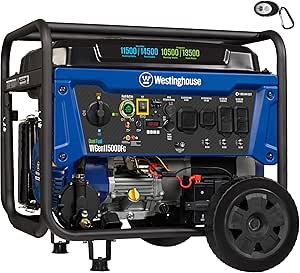
Westinghouse 14500 Peak Watt Dual Fuel Home Backup Portable Generator with Remote Electric Start
The Westinghouse WGen11500DFc offers flexibility for homeowners who value portability. It provides up to 14,500 peak watts and 11,500 running watts, with dual fuel capability on gasoline or propane. Its electric and remote start features make it convenient, and a runtime of up to 19 hours on a full tank supports extended outages. While it’s less suited for permanent home installation, its portability and dual fuel flexibility make it a strong choice for those who need backup power on the go or at multiple locations. Its weight and setup complexity, however, could be downsides for some users.
Pros:- High power output for large appliances
- Dual fuel flexibility on gasoline and propane
- Long runtime supports extended outages
- Remote electric start for convenience
Cons:- Heavy and potentially difficult to move
- Setup may require technical knowledge
- Price not specified, limiting value assessment
Best for: Homeowners needing portable backup power or temporary solutions
Not ideal for: Those seeking a permanent, built-in system
- Peak Watts:14,500
- Running Watts:11,500
- Fuel Types:Gasoline, Propane
- Tank Capacity:9.5 gallons
- Runtime:Up to 19 hours
- Engine:550cc 4-Stroke OHV
Our verdict“Great for mobile backup needs, especially when flexibility in fuel sources is a priority.”
Westinghouse 12500 Watt Dual Fuel Portable Generator with Remote Electric Start
The Westinghouse WGen9500DF offers a reliable dual fuel solution with up to 12,500 peak watts. Its remote start and multiple outlets, including transfer switch-ready options, make it versatile for both backup during outages and jobsite use. While it provides solid power and convenience, its weight and size can be a challenge for portability, and it commands a higher price point. This model suits homeowners who want a capable, portable generator without sacrificing fuel flexibility but are prepared for some setup effort.
Pros:- Dual fuel capability for flexibility
- Remote start with key fob
- Multiple outlets including transfer switch ready
- Long runtime of up to 12 hours
Cons:- Heavy and bulky for portability
- Higher price compared to simpler models
- Requires some assembly upon delivery
Best for: Those needing a portable, reliable backup with dual fuel options
Not ideal for: Homeowners seeking a permanent, installed generator
- Peak Watts:12,500
- Running Watts:9,500
- Fuel Type:Gasoline, Propane
- Tank Capacity:6.6 gallons
- Run Time:Up to 12 hours
- Engine:457cc 4-Stroke OHV
Our verdict“A strong choice for portable backup power, especially when fuel flexibility and remote start are priorities.”
Generac 14kW Whole Home Generator, Transfer Switch & Cellular Capability
The Generac 14kW Whole Home Generator offers a more affordable, compact solution for essential home backup needs. With cellular connectivity for remote monitoring, it provides automatic power during outages, and its smaller size makes it easier to install in limited spaces. While less powerful than larger models, it still covers essential circuits and supports smart home systems. It’s perfect for homeowners who want a reliable, automated backup without the need for the highest wattage, though its cellular monitoring requires a subscription and depends on cellular network coverage.
Pros:- Automatic backup for essential systems
- Remote monitoring via cellular
- Cost-efficient and compact
- Supports smart home integration
Cons:- Requires cellular subscription
- Lower power output limits coverage
- Dependent on cellular network quality
Best for: Small homes or apartments with limited space and essential backup needs
Not ideal for: Larger households or those with high power demand
- Power Output:14kW
- Fuel Type:LP or natural gas
- Connectivity:Cellular
- Monitoring:Mobile Link
- Reliability Features:Oil level sensors, cold start support
- Compatibility:ecobee thermostats, PWRcell
Our verdict“Best suited for small homes or apartments needing reliable, automated backup within limited space.”
How We Picked
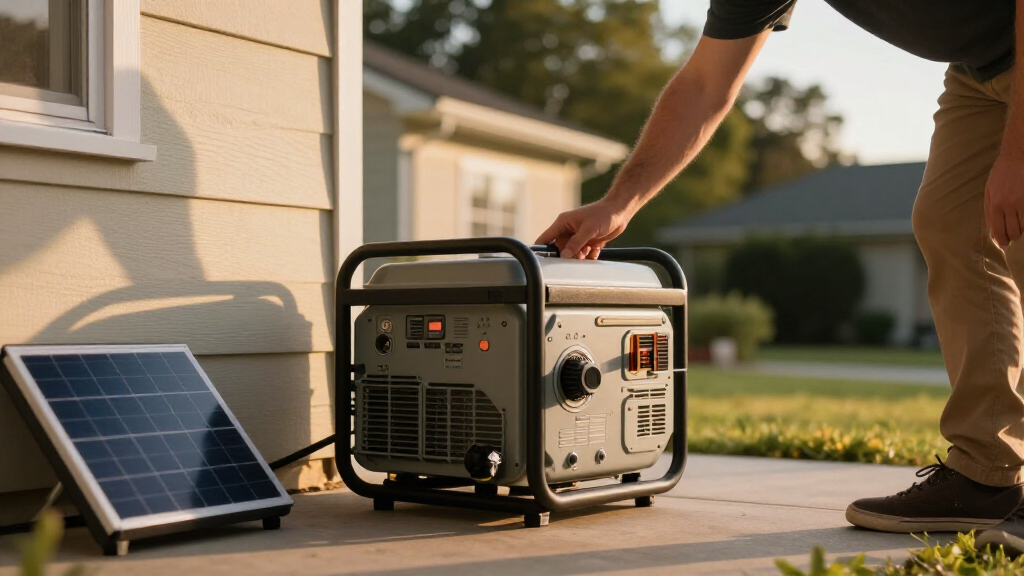
Our selection process focused on models that offer true automatic operation, reliable power output, and smart monitoring capabilities. We compared specs like wattage, fuel efficiency, and warranty, emphasizing models with remote monitoring via cellular connectivity for peace of mind. We also considered user convenience features such as electric start and transfer switch readiness, while balancing initial cost and installation complexity. This ensures each option serves different homeowner priorities—from smart home integration to maximum power or portability.
| automatic home backup generator | Fuel Type |
|---|---|
| Generac 18kW Whole Home Genera | Natural gas or LP |
| Generac 26kW Whole Home Genera | LP or natural gas |
| Westinghouse 14500 Peak Watt D | — |
| Westinghouse 12500 Watt Dual F | Gasoline, Propane |
| Generac 14kW Whole Home Genera | LP or natural gas |
Factors to Consider When Choosing Automatic Home Backup Generator
Choosing the right automatic home backup generator depends on your home’s size, your budget, and your desire for smart features or portability. The key factors include power capacity, remote monitoring capabilities, fuel type, and installation requirements. Understanding these will help you select a model that offers reliable, automatic backup power when you need it most.
Power Capacity and Home Size
Assess your home’s total power needs by listing critical appliances and systems. Larger homes with multiple large appliances require higher wattage generators, like the Generac 26kW. Smaller homes or apartments might find the Generac 14kW sufficient, especially if you only want backup for essentials. Remember, choosing a generator with more capacity than your immediate needs can provide extra peace of mind but at a higher cost and installation complexity.
Smart Features and Remote Monitoring
If staying connected to your generator remotely is a priority, look for models with cellular connectivity, like the Generac 18kW or 14kW. These allow monitoring and control via apps, reducing the need for manual checks. Keep in mind, these features often require a subscription, adding ongoing costs. For those who prefer simplicity, models without remote monitoring can still provide reliable backup but lack the convenience of instant updates or control.
Fuel Type and Runtime
Decide whether natural gas, propane, or dual fuel options best suit your setup. Dual fuel generators like the Westinghouse WGen11500DFc offer flexibility, especially useful if one fuel source becomes unavailable. Runtime varies depending on load and fuel capacity; larger tanks and efficient engines extend backup time. Balance your needs for longer runtimes with the size and weight of the generator, especially for portable models.
Installation and Cost
Professional installation is typically necessary for permanent, whole-home models, especially those with transfer switches and smart features. Budget accordingly, as larger generators and installation costs can add significantly to the upfront investment. Portable models are easier to set up but provide less seamless automation and may require manual operation during outages. Consider your long-term needs versus initial expenditure to make the best choice.
Frequently Asked Questions
Do automatic home backup generators require professional installation?
Yes, most automatic home backup generators, especially whole-home models with transfer switches and smart features, should be installed by licensed professionals. Proper installation ensures safety, compliance with local codes, and optimal operation, reducing the risk of damage or failure during outages.
How does cellular monitoring work with these generators?
Cellular monitoring allows you to track your generator’s status remotely through dedicated apps. It requires a cellular subscription, similar to a mobile phone plan, which facilitates alerts, performance updates, and control features. This setup provides peace of mind but does add some ongoing costs and depends on cellular network coverage in your area.
Are dual fuel generators worth it for home backup?
Dual fuel generators offer flexibility to switch between gasoline and propane, which can be advantageous during extended outages or fuel shortages. They also give you options based on fuel availability and cost. However, they tend to be more complex and heavier, so weigh the convenience against setup and portability considerations.
What size generator do I need for my home?
Estimate your essential power needs by listing critical appliances and systems. A small home or apartment might only need around 14kW, while larger homes with multiple appliances could require 26kW or more. Overestimating slightly can provide additional comfort, but larger units come with higher costs and installation complexity.
What are the ongoing costs associated with these generators?
Beyond the initial purchase and installation, expect to pay for cellular subscriptions if monitoring features are used. Fuel costs vary depending on usage, and regular maintenance is needed to keep the generator ready. Choosing a model with a good warranty and longer service intervals can reduce long-term expenses.
Conclusion
For homeowners prioritizing smart technology and remote control, the Generac 18kW offers a compelling mix of features but at a higher cost. Larger households or those with critical power demands should consider the Generac 26kW for maximum capacity and reliability. Budget-conscious or portable power seekers will find the Westinghouse WGen9500DF or 14500 watt model to be flexible, offering dual fuel options and long runtimes without a permanent installation. Ultimately, your choice will hinge on your home’s size, your power needs, and your preference for smart features versus mobility.