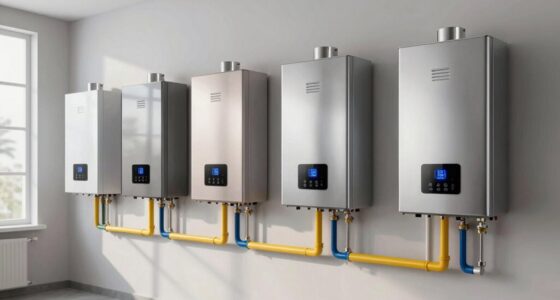
Choosing the right heat pump water heater in 2026 means balancing capacity, efficiency, and installation requirements. The Senville Hybrid stands out for its impressive energy savings, making it perfect for eco-conscious households. The Rinnai REHP80 offers high capacity and durability for large families, though at a higher upfront cost. Meanwhile, the ACiQ Hybrid combines smart features and quiet operation, ideal for indoor spaces with stable temperatures. Each product offers unique tradeoffs in size, cost, and energy savings, so your choice depends on your household’s specific needs and your budget.

Get backup power and energy gear delivered free — and shop member deals
- Fast, free delivery on millions of items
- Access to Prime Big Deal Days deals on October 6–7
- Prime Video, Amazon Music and more included
Key Takeaways
- Energy efficiency varies significantly, with the Senville and ACiQ models offering the best savings.
- Capacity choices are tailored to household size, with larger tanks like the Rinnai suited for big families.
- Installation complexity and space requirements differ; larger units may need more room and power.
- Initial costs can be high for advanced models, but savings on energy bills can offset this over time.
- Smart features and warranties add value but may not be essential for every buyer.
| Rheem PROE50 M2 RH95 50-Gallon Residential Electric Water Heater |  | Reliable standard for medium-sized households | Capacity: 50 gallons | Amperage: 18.75 Amps | Material: Enhanced-flow Brass | VIEW ON AMAZON | See Our Full Breakdown |
| Senville Hybrid Heat Pump Electric Water Heater, ENERGY STAR, 50 Gallon |  | Best for energy savings and durability | Capacity: 50 gallons | Efficiency Rating: ENERGY STAR | UEF: 3.75 | VIEW ON AMAZON | See Our Full Breakdown |
| ACiQ 50 Gallon Electric Hybrid Heat Pump Water Heater |  | Smart, quiet, and reliable for indoor use | Capacity: 50 gallons | Efficiency: 3.75 UEF | First Hour Rating: 69 gallons | VIEW ON AMAZON | See Our Full Breakdown |
| Rinnai REHP80 Electric Heat Pump Water Heater, 80 Gallon |  | Best for large households with high hot water demand | Capacity: 80 gallons | UEF: 3.90 | First-hour delivery: up to 91 gallons | VIEW ON AMAZON | See Our Full Breakdown |
| heat pump water heater | Capacity | UEF | First Hour Rating | Warranty |
|---|---|---|---|---|
| Rheem PROE50 M2 RH95 50-Gallon | 50 gallons | — | — | — |
| Senville Hybrid Heat Pump Elec | 50 gallons | 3.75 | 69 gallons | — |
| ACiQ 50 Gallon Electric Hybrid | 50 gallons | — | 69 gallons | 12 years on tank and parts |
| Rinnai REHP80 Electric Heat Pu | 80 gallons | 3.90 | — | 10 years on tank and parts |
More Details on Our Top Picks
Rheem PROE50 M2 RH95 50-Gallon Residential Electric Water Heater
The Rheem PROE50 M2 RH95 offers dependable performance for households with 3-5 people or homes with multiple bathrooms. Its 50-gallon capacity is ample, especially for replacing existing units where space is limited. The unit features a simple yet effective design with an automatic thermostat, a durable anode rod, and safety features like a pressure relief valve. Compared with larger models, this heater is more space-efficient, but it might be oversized for smaller households, leading to unnecessary energy use. Its lack of specified energy efficiency ratings means you should consider installation costs and ongoing energy bills carefully.
Pros:- Provides ample hot water for medium-sized households
- Compact design saves space
- Trusted brand with proven reliability
Cons:- May be oversized for small households
- Requires electrical connection and installation
- No specified energy efficiency rating
Best for: Medium-sized households needing reliable hot water with space constraints
Not ideal for: Small households or homes prioritizing maximum energy savings
- Capacity:50 gallons
- Amperage:18.75 Amps
- Material:Enhanced-flow Brass
- Includes:Temperature and pressure relief valve
- Features:Automatic thermostat, Anode rod, LED indicator
Our verdict“A dependable, space-efficient choice for medium households willing to trade some efficiency for reliability.”
Senville Hybrid Heat Pump Electric Water Heater, ENERGY STAR, 50 Gallon
The Senville SENWH-HP50US makes a strong case for eco-conscious households with its impressive 70% reduction in electricity use. Its 50-gallon capacity suits medium to large households, especially those looking to cut utility bills. This model stands out for its durability, backed by a 7-year parts and 10-year compressor warranty, and its ENERGY STAR certification confirms its efficiency. Its larger size and weight, however, require ample space and may increase initial installation costs. Despite the higher upfront price, the long-term savings on energy bills make this option appealing for those prioritizing efficiency.
Pros:- Highly energy-efficient, reducing costs by up to 70%
- Large capacity suitable for bigger families
- Durable with extensive warranty coverage
Cons:- Heavier and larger, requiring more installation space
- Higher initial cost due to advanced technology
Best for: Eco-minded households seeking maximum energy savings
Not ideal for: Homes with limited space or budget constraints on initial purchase
- Capacity:50 gallons
- Efficiency Rating:ENERGY STAR
- UEF:3.75
- First Hour Rating:69 gallons
- Dimensions:21.4″W x 66.5″H
Our verdict“An excellent choice for those prioritizing long-term savings and energy efficiency, despite higher upfront costs.”
ACiQ 50 Gallon Electric Hybrid Heat Pump Water Heater
The ACiQ 50-Gallon Hybrid combines heat pump and electric resistance heating, offering a flexible solution for indoor installation in stable temperature environments. Its high efficiency (3.75 UEF) and ENERGY STAR certification make it a smart pick for energy-conscious homes. The unit operates quietly at just under 50 dB, and its smart controls add a layer of convenience. However, it performs best in indoor spaces with consistent temperatures above 37°F, and installation requires sufficient ventilation and drainage. Its higher purchase price might deter budget buyers, but its smart features and efficiency make it attractive for tech-savvy homeowners.
Pros:- High energy efficiency with a 3.75 UEF
- Quiet operation at 49.5 dB
- Smart controls and safety features
Cons:- Needs stable indoor temperatures above 37°F
- Installation space must include proper ventilation
Best for: Indoor installations where quiet operation and smart controls are valued
Not ideal for: Unstable environments or outdoor settings
- Capacity:50 gallons
- Efficiency:3.75 UEF
- First Hour Rating:69 gallons
- Power:240V, 5500W
- Warranty:12 years on tank and parts
Our verdict“A smart, quiet, and efficient option for indoor use, best suited for homes with controlled indoor environments.”
Rinnai REHP80 Electric Heat Pump Water Heater, 80 Gallon
The Rinnai REHP80 stands out for its substantial 80-gallon capacity, making it ideal for large families or busy households. Its high first-hour hot water delivery of up to 91 gallons ensures plenty of hot water during peak times. The unit’s energy efficiency, with a UEF of 3.90, keeps operational costs manageable despite its size. Its durable glass-lined tank and 10-year warranty on tank and parts add to its appeal. The main tradeoff is the requirement for a 240V/30A electrical connection, which might involve additional electrical upgrades. Its larger size also demands sufficient space and proper installation conditions, which could be a hurdle for some homes.
Pros:- High capacity suitable for big households
- High first-hour delivery of 91 gallons
- Efficient and durable with long warranty
Cons:- Requires 240V/30A electrical connection
- Larger footprint demands more space
- Higher initial cost compared to smaller models
Best for: Large households needing high hot water capacity without sacrificing efficiency
Not ideal for: Small homes or those with limited electrical capacity
- Capacity:80 gallons
- UEF:3.90
- First-hour delivery:up to 91 gallons
- Voltage:240V
- Warranty:10 years on tank and parts
Our verdict“A top-tier choice for large households prioritizing capacity and efficiency, with some installation considerations.”

How We Picked
Our selection process focused on critical factors: energy efficiency, capacity, reliability, and ease of installation. We compared UEF ratings, warranty coverage, and user safety features, emphasizing models with a proven track record for durability and savings. We also looked at size and compatibility with typical household electrical setups to ensure practical choices for most homes. Tradeoffs like higher upfront costs versus long-term savings were carefully considered to provide balanced recommendations.
Factors to Consider When Choosing Heat Pump Water Heaters
Choosing a heat pump water heater depends on your household size, space, and energy goals. The key is balancing capacity, efficiency, and installation requirements. High-efficiency models like the Senville and ACiQ excel for long-term savings, but they carry higher upfront costs and space considerations. Larger units like the Rinnai are suited for bigger families but may need electrical upgrades. Smaller households or those with limited space might prefer compact or traditional models, but should be aware of efficiency tradeoffs. Understanding your home’s temperature stability and electrical capacity helps narrow choices for a seamless upgrade.
Energy Efficiency
Energy efficiency is reflected in UEF ratings and certifications like ENERGY STAR. Higher UEF means lower operating costs, making models like the Senville and ACiQ appealing for long-term savings. However, these models often require more space and higher initial investments. If your goal is to reduce energy bills and you have space, prioritize these options. For smaller households or budget-conscious buyers, efficiency still matters but may be secondary to upfront affordability.
Capacity and Household Size
Capacity should match your household’s hot water demand. 50-gallon units suit most medium-sized homes, while 80-gallon models are better for larger families or homes with high hot water use. Oversizing can lead to unnecessary energy use, but undersizing results in inadequate hot water. Consider peak usage times and household size to pick the right capacity—balancing space, cost, and performance.
Installation and Space
Some heat pump models, especially larger ones like the Rinnai, require significant space and electrical upgrades. Indoor models like the ACiQ need proper ventilation and stable temperatures, making them ideal for basements or garages. Proper installation ensures efficiency and safety, so factor in your home’s layout and electrical capacity before purchasing. Compact models simplify installation but may sacrifice some efficiency or capacity.
Frequently Asked Questions
Are heat pump water heaters worth the investment?
Heat pump water heaters generally offer significant energy savings over traditional electric units, especially in the long term. While the initial purchase price and installation costs are higher, the reduction in electricity bills can make them cost-effective over time. They are particularly beneficial in homes where energy efficiency is a priority, and where space and electrical capacity permit their installation.
Can a heat pump water heater work in cold climates?
Many heat pump models include cold climate performance features, allowing them to operate efficiently at temperatures as low as 37°F. The ACiQ model, for example, is designed for colder environments, but performance may decline if outdoor or indoor temperatures drop significantly below this. It’s important to verify the cold climate ratings before choosing a unit for outdoor installation or unheated spaces.
What maintenance is required for heat pump water heaters?
Maintenance for heat pump water heaters is generally minimal but important. Regular checks on the air filter, ensuring proper ventilation, and inspecting the condensate drain help maintain efficiency. Some models include smart diagnostics and alerts for issues. Periodic professional service ensures optimal operation, especially for units with advanced features or larger capacities.
How much space do I need for a heat pump water heater?
Space requirements depend on the unit’s size and installation type. Indoor models like the ACiQ need sufficient clearance for air circulation and drainage, typically around 6 inches on the sides. Larger units like the Rinnai 80-gallon require a dedicated space with proper electrical wiring and ventilation. Always review manufacturer specifications to ensure your space accommodates the unit comfortably.
Are there any electrical requirements for installation?
Yes, many heat pump water heaters, especially larger models, require dedicated 240V circuits with specific amperage ratings, such as 30A for the Rinnai or 5500W power for the ACiQ. Proper electrical setup is crucial for safe operation and to meet warranty conditions. It’s advisable to consult a licensed electrician to evaluate your home’s electrical capacity before installation.
Conclusion
For households focused on energy savings and long-term costs, models like the Senville Hybrid and ACiQ Hybrid are excellent choices, especially if space and initial investment are manageable. Large families or homes with high hot water demand should consider the Rinnai REHP80 for its capacity and efficiency. Smaller homes or those with limited space might prefer more compact, traditional models, but should be aware of potential efficiency compromises. Ultimately, your decision depends on household size, space, and budget—balancing upfront costs with ongoing savings.
Evergreen bestsellers Picks
bestsellers
As an affiliate, we earn on qualifying purchases.