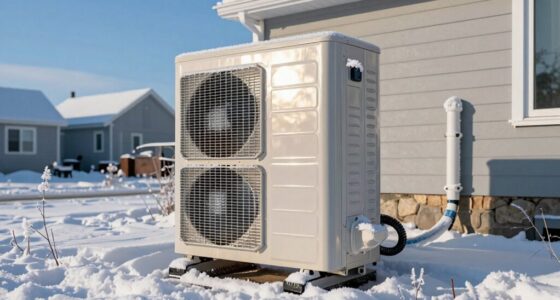
Choosing a hot water heat pump in 2026 means balancing efficiency, capacity, and installation complexity. The ACiQ 50 Gallon Hybrid Heat Pump stands out for its smart controls and quiet operation, making it ideal for indoor use. The Rinnai REHP80 offers a large capacity for big households but requires electrical upgrades. Meanwhile, the Senville Hybrid 50 Gallon delivers impressive energy savings, especially in moderate climates, with the tradeoff of larger space requirements. Understanding these differences helps me pinpoint which model aligns best with my household needs and installation environment.

Get backup power and energy gear delivered free with Prime
- Fast, free delivery on millions of items
- Prime Video, Amazon Music and more included
- Member-only deals all year
Key Takeaways
- The ACiQ model excels in quiet operation and smart controls, suitable for indoor installation in conditioned spaces.
- The Rinnai REHP80 offers the highest capacity, ideal for large households but requires careful electrical planning.
- The Senville hybrid provides exceptional energy savings, especially in moderate climates, though it demands more space.
- All models have tradeoffs around installation complexity, upfront cost, and climate suitability.
- Choosing the right heat pump depends on household size, space, and energy efficiency priorities.
| ACiQ 50 Gallon Electric Residential Hybrid Heat Pump Water Heater Tank |  | Best Overall for Energy Efficiency and Smart Features | Capacity: 50 Gallons | Efficiency: 3.75 UEF | First Hour Rating: 69 Gallons | VIEW ON AMAZON | See Our Full Breakdown |
| Rinnai REHP80 Electric Heat Pump Water Heater 80 Gallon Energy Star |  | Best for Large Households with High Capacity Needs | Capacity: 80 gallons | First-hour delivery: Up to 91 gallons | UEF: 3.90 | VIEW ON AMAZON | See Our Full Breakdown |
| Senville Hybrid Heat Pump Electric Water Heater, ENERGY STAR, 50 Gallon |  | Best for Energy Savings in Moderate Climates | Capacity: 50 gallons | Dimensions: 21.4″W x 66.5″H | Weight: 218 pounds | VIEW ON AMAZON | See Our Full Breakdown |
| hot water heat pump | Capacity | Warranty |
|---|---|---|
| ACiQ 50 Gallon Electric Reside | 50 Gallons | 12 years on tank and parts |
| Rinnai REHP80 Electric Heat Pu | 80 gallons | 10 years on tank and parts |
| Senville Hybrid Heat Pump Elec | 50 gallons | — |
More Details on Our Top Picks
ACiQ 50 Gallon Electric Residential Hybrid Heat Pump Water Heater Tank
The ACiQ 50 Gallon Hybrid Heat Pump offers a compelling mix of efficiency and advanced controls, making it a versatile choice for indoor residential use. Its high UEF of 3.75 indicates excellent energy savings, especially when paired with smart controls that allow for optimized operation. Compared with larger capacity models, it is more suited for smaller households or spaces where quiet operation is a priority. However, it needs a stable indoor temperature above 37°F to perform optimally and consumes a relatively high 5500W, which could impact energy costs. Its safety features and quiet operation make it a solid pick for those prioritizing comfort and smart integration.
Pros:- High efficiency with a UEF of 3.75
- Quiet operation at 49.5 dB(A)
- Smart LED touchscreen controls
- Advanced safety features including leak detection
Cons:- Requires stable indoor temperatures above 37°F
- Relatively high power consumption at 5500W
- Installation might need proper air circulation
Best for: Small to medium households seeking energy efficiency and smart controls
Not ideal for: Homes in unheated spaces below 37°F or those with limited electrical capacity
- Capacity:50 Gallons
- Efficiency:3.75 UEF
- First Hour Rating:69 Gallons
- Power:240V, 5500W
- Temperature Range:109°F – 149°F
- Warranty:12 years on tank and parts
Our verdict“A well-rounded, energy-efficient choice best suited for indoor spaces with stable temperatures and smart home integration.”
Rinnai REHP80 Electric Heat Pump Water Heater 80 Gallon Energy Star
The Rinnai REHP80 is tailored for big families or households needing high hot water output, with a generous 80-gallon capacity and a first-hour rating of 91 gallons. Its high UEF of 3.90 emphasizes energy savings, and the durable glass-lined tank promises longevity. Nonetheless, its reliance on a 240V power supply means some may need electrical upgrades, complicating installation. Despite this, it’s a reliable, energy-efficient solution for those who can accommodate its size and electrical requirements. Its long 10-year warranty on tank and parts underscores durability, but the installation complexity might be a hurdle for some users.
Pros:- Large capacity suitable for big households
- High energy factor of 3.90
- Durable glass-lined tank with 10-year warranty
- Energy Star certified
Cons:- Requires 240V electrical supply, possibly needing upgrades
- Installation complexity for some users
- Larger physical footprint
Best for: Large households or settings with high hot water demand
Not ideal for: Small homes or spaces where electrical upgrades are impractical
- Capacity:80 gallons
- First-hour delivery:Up to 91 gallons
- UEF:3.90
- Voltage:240V
- Warranty:10 years on tank and parts
- Inlet/Outlet:3/4″ MNPT
Our verdict“A robust, high-capacity heat pump ideal for large households that can handle its installation needs.”
Senville Hybrid Heat Pump Electric Water Heater, ENERGY STAR, 50 Gallon
The Senville SENWH-HP50US offers impressive energy savings, reducing electricity bills by up to 70%, thanks to its advanced heat pump technology. Its 50-gallon capacity is suitable for medium to large households, and it is certified for safety and high performance with ENERGY STAR, UL, and AHRI certifications. The main tradeoff is its size—being larger than traditional electric units—plus, its performance depends heavily on the ambient air temperature, which can affect efficiency in colder climates. Despite this, its long warranties and high energy savings make it a compelling choice for those aiming to cut utility costs.
Pros:- Reduces electricity consumption by up to 70%
- Large 50-gallon capacity
- Certified ENERGY STAR, UL, and AHRI
- Long-lasting with 7-year parts and 10-year compressor warranties
Cons:- Larger size requiring ample space
- Higher upfront purchase cost
- Efficiency can decline in low ambient temperatures
Best for: Medium to large households in moderate climates seeking maximum energy savings
Not ideal for: Homes in very cold climates or those with limited space for larger units
- Capacity:50 gallons
- Dimensions:21.4″W x 66.5″H
- Weight:218 pounds
- Power Source:DC
- Warranties:7-year parts, 10-year compressor
- Special Features:Heat Pump System
Our verdict“A high-efficiency choice that can significantly lower energy bills, best suited for temperate environments with space for installation.”

How We Picked
In selecting these products, I prioritized models that are representative of the current market’s best in energy efficiency, capacity, and reliability. I compared their technical specifications, user safety features, and suitability for different household sizes and climates. I also examined installation requirements and warranty coverage, ensuring each option offers a clear advantage for specific user needs. This approach helps identify which heat pump is best suited to various household scenarios, from small homes to large families.
Factors to Consider When Choosing Hot Water Heat Pump
When selecting a hot water heat pump, I focus on capacity, climate suitability, energy efficiency, installation complexity, and long-term costs. Understanding these factors helps me find a model that balances upfront investment with ongoing savings and meets household hot water demands.
Capacity and Household Size
The first consideration is how much hot water your household needs. Smaller homes or apartments often do well with 50-gallon units like the ACiQ or Senville, which provide plenty of hot water for 2-3 people. Larger households, especially those with more than four members, benefit from models like the Rinnai REHP80, which offers 80 gallons and higher first-hour ratings. Choosing the right capacity ensures you won’t run out of hot water while avoiding overspending on a larger unit than necessary.
Climate and Ambient Conditions
Heat pump efficiency depends heavily on the surrounding air temperature. Models like the ACiQ and Senville are optimized for moderate climates and indoor installations, where ambient temperatures stay above 37°F. The Rinnai, with its large tank, can handle colder climates better but requires proper electrical setup. If you live in a cold region, you should prioritize models with proven cold climate performance or consider supplemental heating options.
Energy Efficiency and Operating Costs
All three options excel in efficiency, but the Senville stands out for its potential to cut electricity bills by up to 70%. The ACiQ also offers high efficiency with a UEF of 3.75, making it a smart choice for cost-conscious buyers. The Rinnai’s efficiency is slightly higher at 3.90, but its larger size and electrical demands may offset some savings. Evaluating long-term energy costs is key to making an investment that pays off over time.
Installation and Space Requirements
Installation complexity varies. The ACiQ is designed for indoor use in conditioned spaces, requiring minimal clearance. The Rinnai, being larger, needs more space and electrical upgrades, which could increase initial costs. The Senville’s size might be a constraint in tighter spaces, but its durability and performance often justify the extra room. For those in smaller homes or with limited space, the ACiQ offers easier installation, whereas the Rinnai suits larger, more accommodating setups.
Frequently Asked Questions
How does a heat pump water heater work?
A heat pump water heater extracts heat from the surrounding air using refrigerant cycles, then transfers that heat to water stored in the tank. This process is highly efficient because it moves heat rather than generates it directly, leading to lower energy costs compared to traditional electric water heaters. They are especially effective in moderate climates where ambient air temperatures support efficient operation.
Are heat pump water heaters suitable for cold climates?
Many models are designed with cold climate performance in mind, but efficiency can decrease as outdoor or ambient temperatures drop below their rated thresholds. Indoor installations in heated spaces are generally better, and some units include features to improve performance in colder conditions. If you live in a very cold region, choosing a model with proven cold climate capabilities or considering supplementary heating options is advisable.
What are the main advantages of a hybrid heat pump water heater?
Hybrid heat pump water heaters combine heat pump technology with electric resistance heating, providing reliable hot water supply even in colder conditions or high-demand situations. They consume significantly less electricity than standard electric heaters, reducing long-term operating costs. Their advanced safety features and smart controls also enhance user convenience and safety.
Is installation complex for heat pump water heaters?
Installation complexity varies by model and household setup. Indoor units like the ACiQ are generally straightforward, requiring proper air circulation and enough space. Larger units like the Rinnai may need electrical upgrades and more space, increasing initial setup costs. Proper ventilation and clearance are important to maximize efficiency and ensure safety. Consulting a professional installer is recommended to ensure optimal placement and function.
What maintenance is required for a heat pump water heater?
Heat pump water heaters typically require minimal maintenance, mostly involving periodic checks of filters, refrigerant levels, and safety features. Keeping the air intake clear and ensuring proper ventilation can sustain efficiency. Regularly inspecting for leaks and monitoring performance helps catch issues early. Many models include diagnostic tools or alerts to notify homeowners of maintenance needs.
Conclusion
For small to medium households prioritizing energy efficiency and smart features, the ACiQ Hybrid is a compelling choice. Large families or homes in colder climates with high hot water demands should consider the Rinnai REHP80 despite its higher installation complexity. Those seeking maximum savings and living in moderate climates will find the Senville Hybrid a cost-effective solution, provided space is available. Ultimately, your decision hinges on household size, climate, and whether you prioritize upfront costs or long-term savings.
Columbus Day / Indigenous Peoples' Day Picks
long weekend sales
As an affiliate, we earn on qualifying purchases.