If you’re looking for the best smart thermostats for heat pumps in 2025, I recommend models like ecobee, Honeywell, and Sensi that support multi-stage heating and cooling, Wi-Fi control, and smart home compatibility. They offer energy-saving features, easy installation, and reliable system integration, helping you stay comfortable while cutting energy costs. Keep in mind the importance of proper wiring and system compatibility. Continue onward to discover how to choose the perfect thermostat for your setup.
Key Takeaways
- Ensure the thermostat explicitly supports heat pump systems with auxiliary or emergency heat controls.
- Look for models with multi-stage cooling/heating, defrost management, and compatibility with 24VAC heat pump wiring.
- Prioritize ENERGY STAR certified thermostats for maximum energy savings and advanced features like adaptive scheduling.
- Confirm compatibility with your existing wiring setup, including C-wire requirements or available Power Extender Kits.
- Choose thermostats with smart home integration (Alexa, Google, Apple, Matter) and user-friendly interfaces for remote control and automation.
Honeywell Wi-Fi Smart Color Thermostat
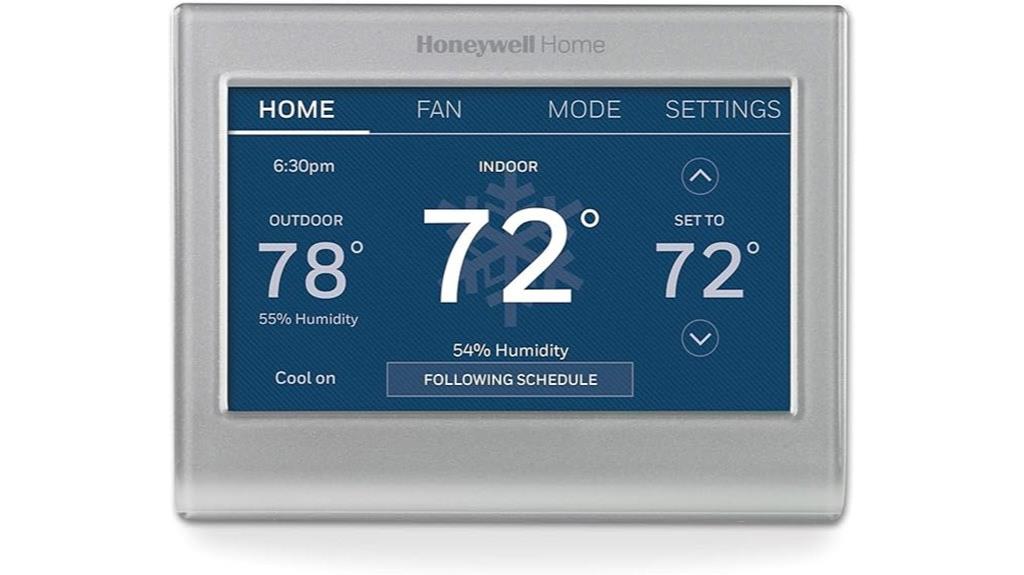
If you’re looking for a smart thermostat that offers both energy savings and advanced control, the Honeywell Wi-Fi Smart Color Thermostat is an excellent choice, especially for homeowners with various heating systems. It features a customizable color touchscreen, a 7-day programmable schedule, and smart response technology that adapts to your habits. Compatible with forced air, hot water, steam, and heat pumps (with electric backup), it’s versatile for different setups. It supports remote control via app, voice commands, and has built-in weather displays, alerts, and energy reports. Easy to install and Energy Star certified, it helps you save energy while maintaining maximum comfort.
Best For: homeowners seeking a versatile, energy-efficient smart thermostat compatible with various heating systems and looking for customizable control options.
Pros:
- Customizable color touchscreen and easy DIY installation for personalized and straightforward setup
- Supports remote control via app, voice commands, and features built-in weather display and alerts
- Energy Star certified with energy reports and utility programs for cost savings and efficiency
Cons:
- Does not work with electric baseboard heat (120-240V) and requires a C-wire for operation
- Discontinued by the manufacturer, which may limit future support or updates
- No batteries required, which could pose challenges if power outages occur
Honeywell Home Smart Thermostat, WiFi, Compatible with Heat Pumps and Conventional Systems
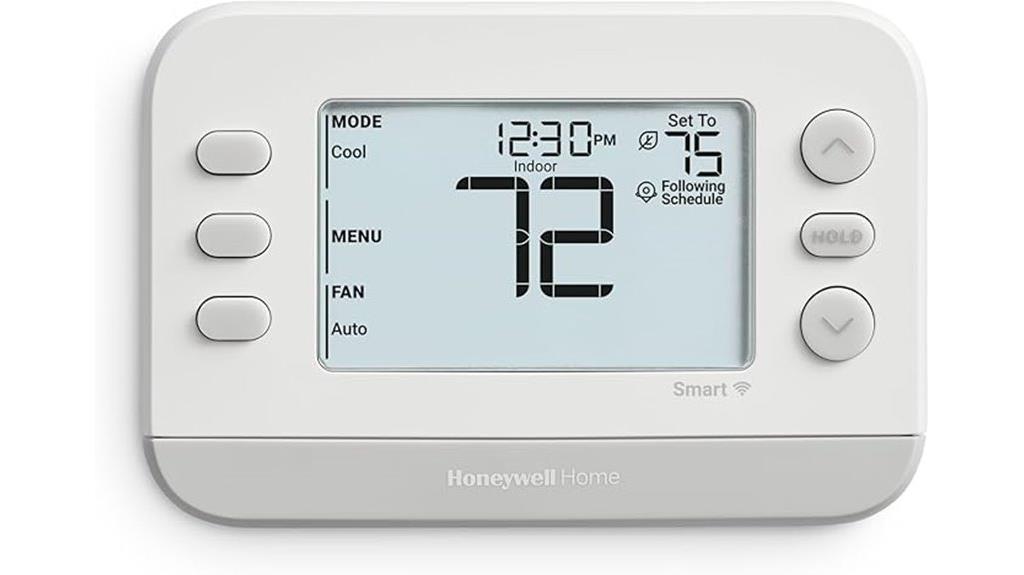
The Honeywell Home Smart Thermostat stands out as an ideal choice for homeowners seeking seamless control over both heat pump and conventional heating and cooling systems. With WiFi connectivity, you can control it remotely via the First Alert app, and it’s compatible with Alexa, Google Assistant, and Apple HomeKit, thanks to Matter certification. It supports up to two heat/two cool conventional systems or heat pumps, with customizable display settings, humidity monitoring, and filter reminders. Its scheduling options and auto-away technology promote energy savings, and the 2-year warranty adds peace of mind. This versatile thermostat combines smart features with user-friendly control for efficient home climate management.
Best For: homeowners seeking a versatile, energy-efficient smart thermostat compatible with multiple home heating and cooling systems and integrated with popular smart home platforms.
Pros:
- Compatible with Alexa, Google Assistant, Apple HomeKit, and Matter for flexible voice control and smart home integration
- Customizable display, humidity monitoring, and filter reminders for personalized comfort and maintenance
- Supports scheduling and auto-away technology to optimize energy savings and reduce utility costs
Cons:
- Requires a C-wire for installation, which may necessitate additional power adapters in some homes
- Limited to up to two heat/2 cool conventional or heat pump systems, not suitable for larger systems
- The setup and configuration process might be complex for users unfamiliar with smart thermostats
Honeywell Smart Color Thermostat with Wi-Fi and Alexa Compatibility
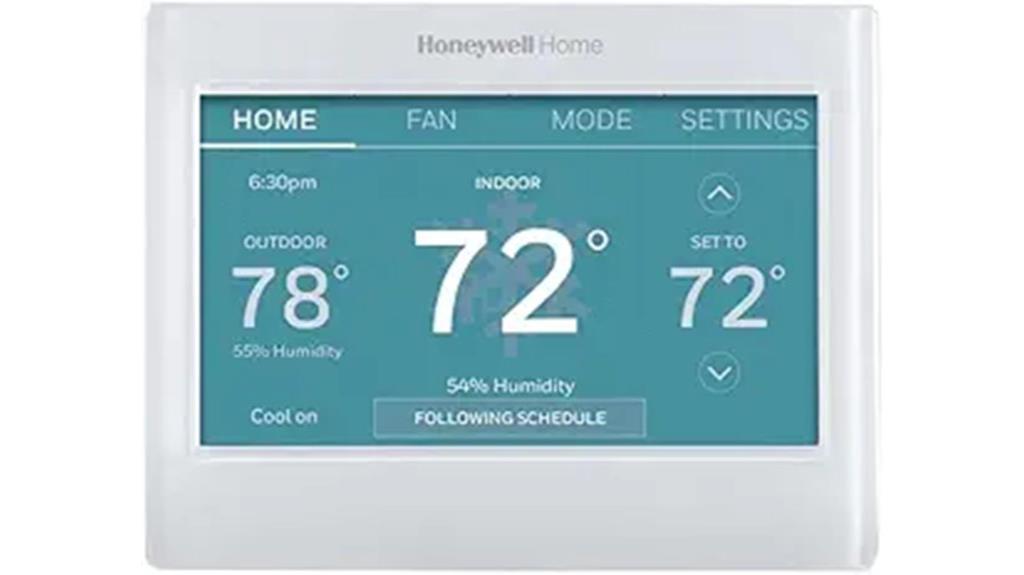
The Honeywell Smart Color Thermostat with Wi-Fi and Alexa Compatibility stands out as an excellent choice for homeowners seeking energy efficiency and convenient control over their heat pump systems. Its high-definition, customizable color touchscreen displays indoor and outdoor temperatures, humidity, and weather forecasts, helping you stay informed at a glance. It’s compatible with various systems, including heat pumps with electric backup, and features Smart Response technology that learns your household’s cycles for ideal comfort. With voice control via Alexa and remote access through the app, it offers seamless integration, energy savings, and smart alerts. No batteries are needed, and it’s easy to install, making it a versatile, user-friendly upgrade.
Best For: homeowners seeking a versatile, energy-efficient smart thermostat with easy remote control and integration with voice assistants.
Pros:
- High-definition, customizable color touchscreen display for easy monitoring and control
- Compatible with various heating and cooling systems, including heat pumps with electric backup
- Supports voice commands via Alexa, Google Assistant, and other smart home platforms
Cons:
- Requires a C-wire or adapter for power, which may necessitate additional installation steps
- Not suitable for electric baseboard heat systems (120-240V)
- Some users may find app setup and integration complex initially
ecobee Smart Thermostat Essential, Wi-Fi Programmable Thermostat

Looking to cut energy costs while maintaining ideal comfort with your heat pump? The ecobee Smart Thermostat Essential is an excellent choice. It’s Energy Star certified and compatible with 85% of systems, including heat pumps. Easy to install with no C-wire needed if you use the Power Extender Kit. It saves up to 23% annually on energy bills and offers smart features like auto-away, scheduling, and energy tracking via the ecobee app. Compatible with Siri, Alexa, and Google Assistant, it gives you versatile control through voice, app, or touchscreen. With positive customer reviews, it’s a reliable, efficient, and user-friendly option for optimizing your heat pump’s performance.
Best For: homeowners seeking an energy-efficient, user-friendly smart thermostat compatible with heat pumps and voice assistants to optimize comfort and reduce energy costs.
Pros:
- Easy DIY installation with no C-wire needed using the Power Extender Kit
- Compatible with major voice assistants like Siri, Alexa, and Google Assistant
- Saves up to 23% annually on heating and cooling costs, paying for itself in six months
Cons:
- Requires optional SmartSensor (sold separately) for room-specific temperature control
- Backlight is not available on the LCD display, which may reduce visibility in low light
- Compatibility check needed via ecobee Support page for systems outside the 85% supported range
Sensi Lite Smart Thermostat
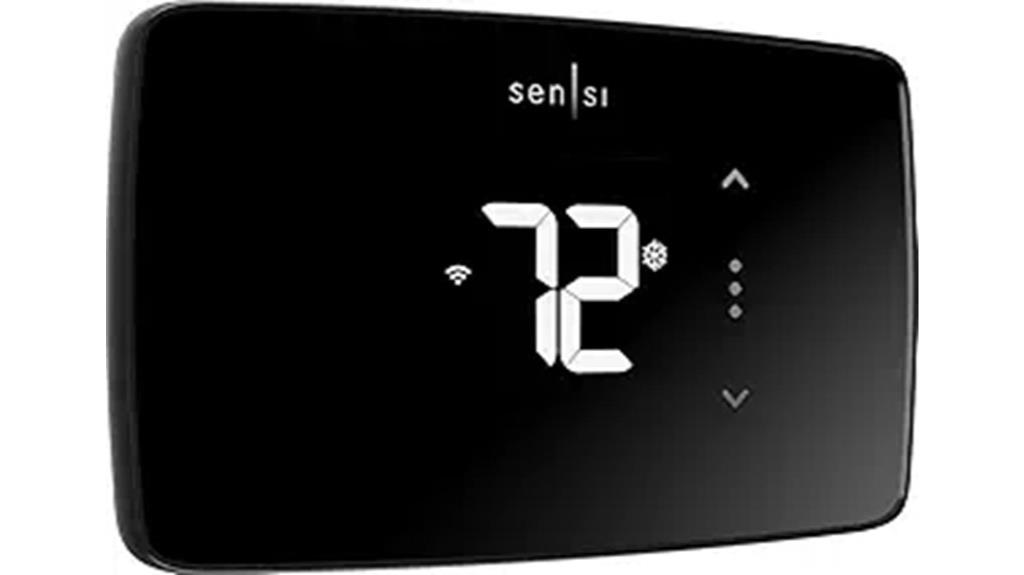
If you want a straightforward, energy-saving thermostat compatible with most HVAC systems, the Sensi Lite Smart Thermostat is an excellent choice. It’s easy to install yourself, thanks to its built-in level and step-by-step instructions. Compatible with most systems, it only needs a C-wire if you have a heat pump or heat/cool system. The thermostat offers flexible scheduling, Wi-Fi connectivity, and remote control via a mobile app. It works with Alexa and both Android and iOS devices. As an ENERGY STAR-certified model, it can help you save around 23% on energy costs while prioritizing your data privacy.
Best For: homeowners seeking an easy-to-install, energy-efficient smart thermostat compatible with most HVAC systems and prioritizing data privacy.
Pros:
- Simple DIY installation with built-in level and clear instructions
- Compatible with a wide range of HVAC systems, including most without a C-wire
- ENERGY STAR-certified, helping save approximately 23% on energy costs
Cons:
- Requires a C-wire only for heat pump and heat/cool systems, which may necessitate additional wiring for some setups
- Lacks advanced features like learning algorithms or compatibility with other smart home ecosystems beyond Alexa
- Limited customization options compared to more advanced smart thermostats
ecobee Smart Thermostat Enhanced with Wifi and Voice Compatibility
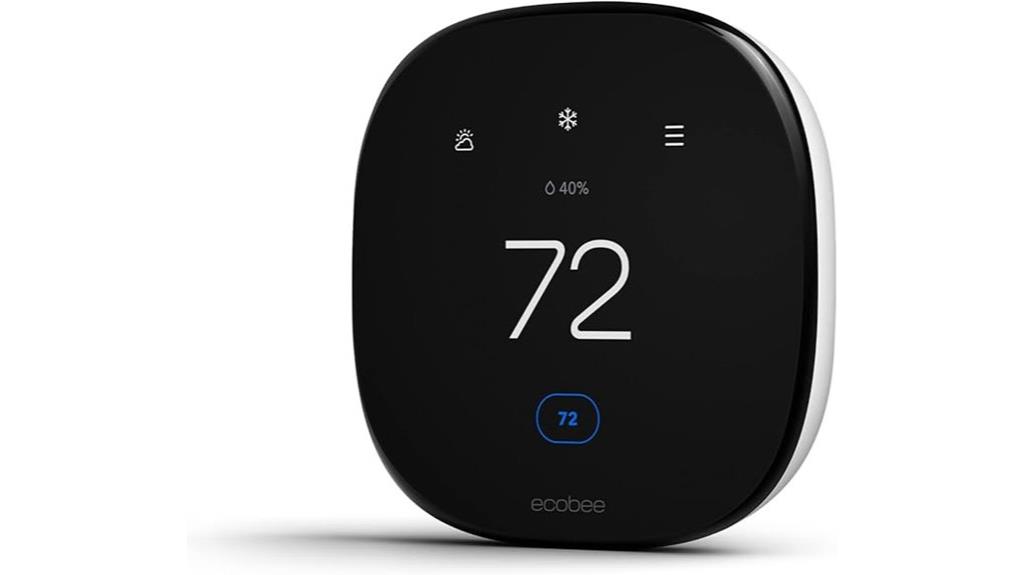
For homeowners with compatible heat pump systems seeking effortless control and energy savings, the ecobee Smart Thermostat Enhanced with Wi-Fi and voice compatibility stands out. It can save up to 26% annually on heating and cooling costs by adjusting temperatures based on occupancy, schedules, and humidity. It preheats or precools your home before you arrive and adapts when you’re away or sleeping. Compatible with most 24 VAC HVAC systems—including gas, oil, electric, and dual fuel—plus smart home platforms like Alexa, Google Assistant, and Apple HomeKit, it offers app control, occupancy sensors, and simple installation for seamless comfort and efficiency.
Best For: homeowners with compatible 24 VAC HVAC systems seeking energy-efficient, smart control and seamless integration with voice assistants and smart home platforms.
Pros:
- Offers up to 26% annual energy savings through adaptive scheduling and occupancy-based adjustments
- Compatible with a wide range of HVAC systems and smart home platforms like Alexa, Google Assistant, and Apple HomeKit
- Easy to install with included accessories and supports app control for remote management
Cons:
- Requires hardwired installation with a 24V power source, which may not suit all homes without existing wiring
- Slightly larger dimensions may be less suitable for small or discreet wall spaces
- Limited battery backup, relying primarily on the included lithium-ion battery for backup power
Amazon Smart Thermostat, Alexa & Ring Compatible

The Amazon Smart Thermostat is an ideal choice for homeowners who want seamless integration with Alexa and Ring devices to control their heat pumps effortlessly. With its compatibility, you can create personalized routines, adjust settings with voice commands, and manage your home climate remotely through the Alexa app. It requires a C-wire for installation and is built on Honeywell’s reliable technology, backed by over a century of experience. Certified ENERGY STAR, it helps save about $50 annually on energy bills. Plus, Amazon provides guidance on rebates, making it a cost-effective upgrade that enhances convenience, efficiency, and smart home integration in your household.
Best For: homeowners seeking effortless smart home climate control with seamless Alexa and Ring integration, energy savings, and remote management.
Pros:
- Compatible with Alexa and Ring devices for easy voice control and automation
- Certified ENERGY STAR, helping save approximately $50 annually on energy bills
- Built on Honeywell’s reliable technology, backed by over 130 years of experience
Cons:
- Requires a C-wire for installation, which may not be available in all homes
- Does not include a display screen; controlled primarily via app and voice commands
- Limited compatibility with non-Alexa or Ring smart home ecosystems
Meross Smart WiFi Thermostat with Voice Control
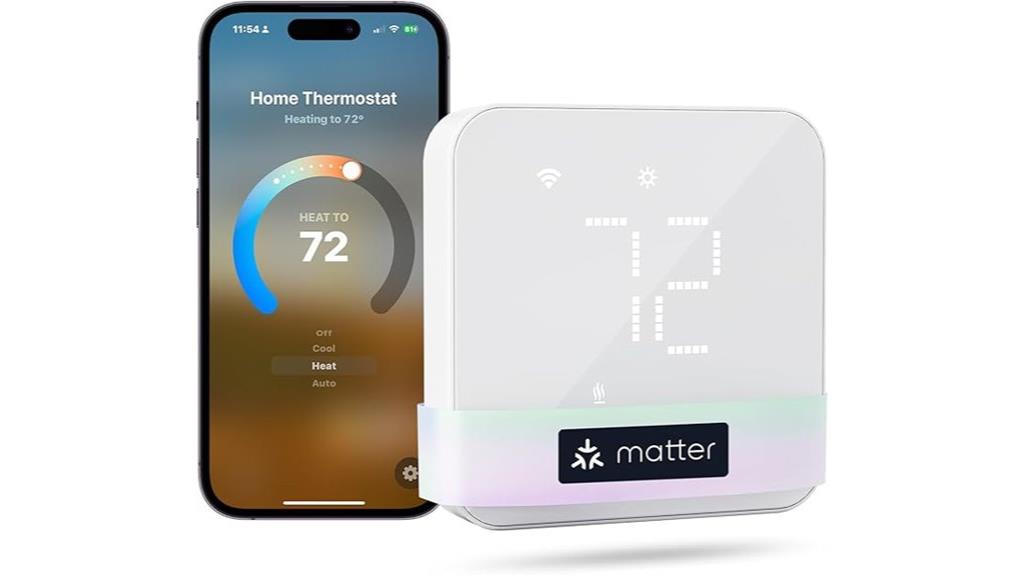
Meross Smart WiFi Thermostat with Voice Control stands out as an excellent choice for homeowners looking for a flexible, easy-to-install solution that supports a wide range of HVAC systems, including heat pumps. It’s compatible with 95% of systems, requiring only a C-wire for proper setup—if you don’t have one, a Meross C-wire adapter solves the issue. Installation takes less than 30 minutes with the Meross app. It supports 2.4GHz Wi-Fi and Matter technology, enabling seamless integration with Apple Home, Alexa, Google, and Samsung SmartThings. Plus, you can control and monitor your system remotely, enjoy scheduling options, and receive useful energy and system alerts.
Best For: homeowners seeking an easy-to-install, versatile smart thermostat compatible with most HVAC systems, including heat pumps, and integrated with popular smart home platforms.
Pros:
- Supports 95% of HVAC systems, including heat pumps, with simple DIY installation under 30 minutes
- Compatible with Wi-Fi, Matter, and major smart home platforms like Apple Home, Alexa, Google, and Samsung SmartThings
- Offers customizable scheduling, remote control, energy tracking, and system alerts for convenience and efficiency
Cons:
- Requires a C-wire for proper operation; without one, a Meross C-wire adapter is necessary
- Not compatible with electric baseboard heaters
- Limited professional support hours, which may delay assistance outside the specified times
ecobee Smart Thermostat Premium with Sensors and Air Quality Monitor
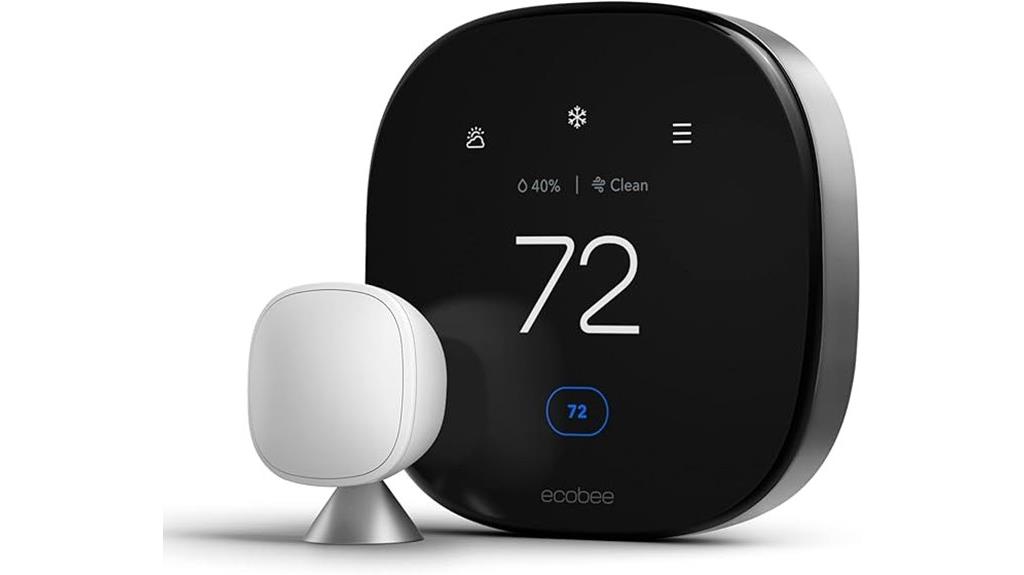
If you’re looking to optimize comfort and energy savings with your heat pump system, the ecobee Smart Thermostat Premium is an excellent choice. It offers up to 26% annual energy savings, is ENERGY STAR certified, and includes a $50 SmartSensor to prevent hot or cold spots in key rooms. With built-in air quality monitoring, smoke detection, and geofencing, it keeps you informed about your home’s environment and occupancy. Compatible with most 24VAC HVAC systems, installation is straightforward with a Power Extender Kit if needed. Plus, it integrates seamlessly with major smart home platforms and supports voice commands, making it a versatile, user-friendly upgrade.
Best For: homeowners seeking an energy-efficient, smart, and easy-to-install thermostat that enhances comfort, air quality, and home automation.
Pros:
- Offers up to 26% annual energy savings and ENERGY STAR certification for eco-friendly operation.
- Features built-in air quality monitoring, smoke detection, and geofencing to keep your home safe and informed.
- Supports seamless integration with popular smart home platforms like Apple HomeKit, Alexa, Google Assistant, and more.
Cons:
- Requires an Apple Home Hub for Siri voice control functionality.
- Slightly larger size may be less suitable for compact wall spaces.
- Premium features and sensors come at a higher price point compared to basic thermostats.
Honeywell Home RTH7600D 7-Day Programmable Touchscreen Thermostat, White
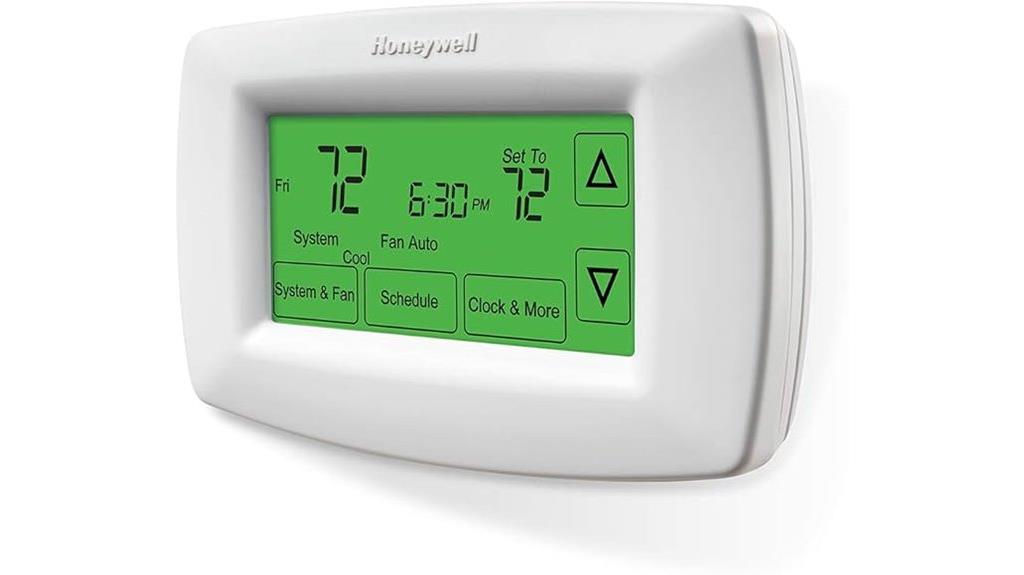
For homeowners seeking an easy-to-use, programmable thermostat compatible with heat pumps, the Honeywell Home RTH7600D stands out with its large, backlit touchscreen display and intuitive scheduling features. It displays current room temperature and set point simultaneously, making adjustments straightforward. The 7-day programming allows for flexible weekly schedules, with four periods per day for precise control. Smart Response Technology learns your system’s startup times, enhancing comfort and efficiency. With support for various systems, including heat pumps with auxiliary heat, and features like filter alerts and low battery warnings, it’s a reliable choice for managing your home’s temperature effortlessly.
Best For: homeowners seeking an easy-to-use, programmable thermostat compatible with heat pumps and various HVAC systems for improved comfort and energy savings.
Pros:
- Large, backlit touchscreen display for easy scheduling and temperature adjustments
- Supports flexible 7-day programming with four periods per day
- Learns system startup times with Smart Response Technology for enhanced comfort and efficiency
Cons:
- Not compatible with warm air furnaces, electric baseboard, or high-voltage systems
- Requires wired connection; no Wi-Fi or smart home integration
- Limited to 24V or 750mV systems, which may not suit all setups
Sensi Smart Thermostat with Wi-Fi and Alexa Compatibility
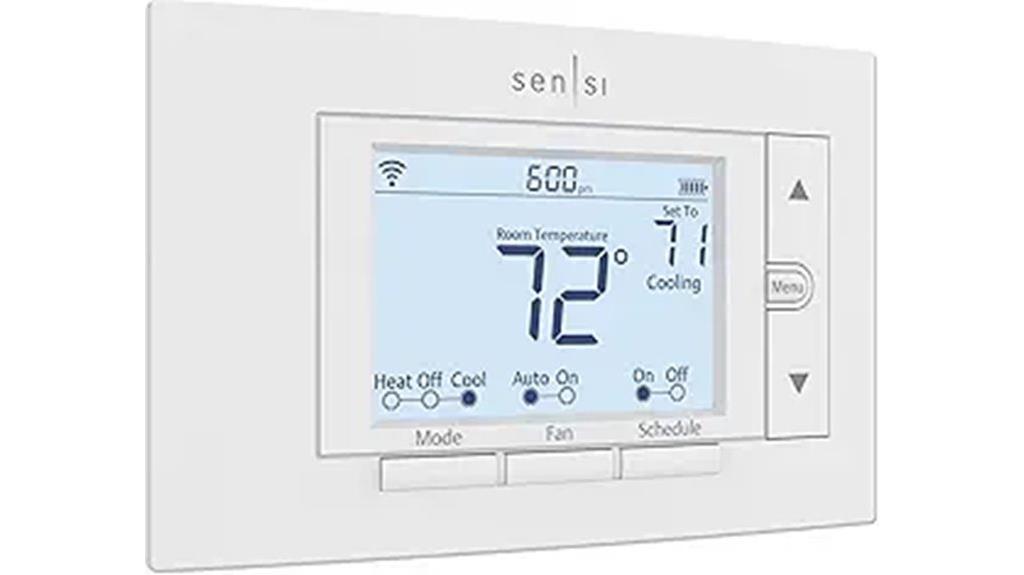
Looking for a smart thermostat that seamlessly integrates with your heat pump and voice control? The Sensi Smart Thermostat with Wi-Fi and Alexa compatibility is an excellent choice. It’s easy to install, often without needing a c-wire, and works with most residential HVAC systems. With a sleek 5-inch LED display and compatibility with Alexa, Google Assistant, and other smart platforms, you can control it hands-free. It helps cut energy bills by about 23%, offers remote access, and monitors system health. Plus, it prioritizes your privacy and provides helpful maintenance alerts, making it a reliable, user-friendly option for smarter, more efficient home heating.
Best For: homeowners seeking an easy-to-install, energy-efficient smart thermostat compatible with voice control and most residential HVAC systems.
Pros:
- Easy DIY installation often without needing a c-wire
- Compatible with Alexa, Google Assistant, and other smart home platforms
- Monitors HVAC performance and provides maintenance alerts to extend system life
Cons:
- Limited to a 3-year warranty, which may be shorter than some competitors
- Requires a mobile device and Wi-Fi for full remote features
- May not support advanced zoning or multi-zone HVAC setups
Emerson Sensi Touch Wi-Fi Smart Thermostat
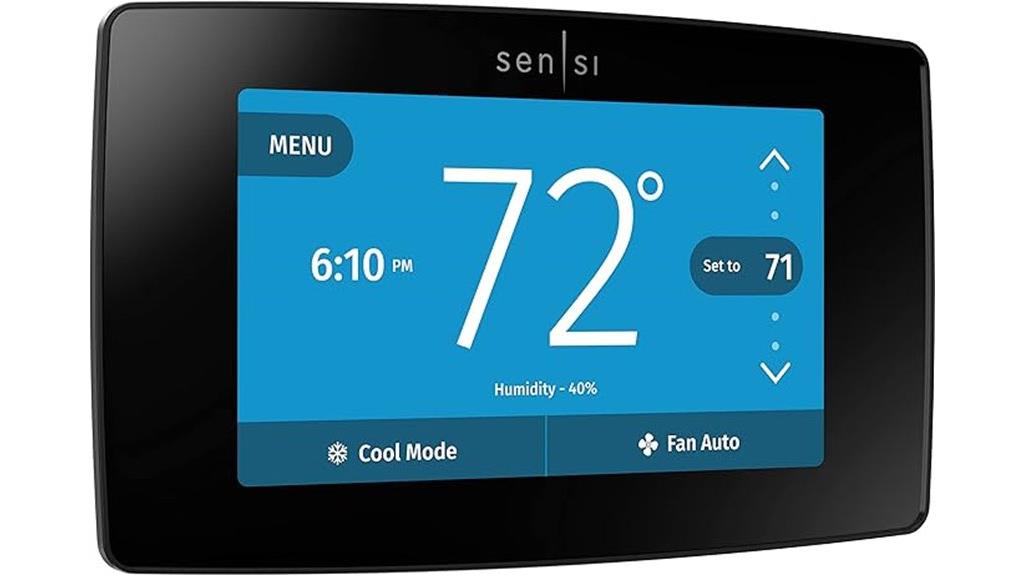
The Emerson Sensi Touch Wi-Fi Smart Thermostat stands out as an excellent choice for homeowners seeking an easy-to-install, modern device that enhances energy efficiency. Its sleek touchscreen display makes it simple to read temperatures and navigate menus, fitting well with any home decor. Designed for DIY installation, it features a built-in level and clear app instructions, making setup straightforward—though a common C-wire is needed. Certified by ENERGY STAR, it can reduce HVAC energy use by around 23%. With remote control via the mobile app, I can easily adjust settings, monitor performance, and receive maintenance alerts, ensuring ideal comfort and efficiency.
Best For: homeowners seeking an easy-to-install, modern smart thermostat that offers energy savings and remote control capabilities.
Pros:
- Sleek, modern touchscreen design that complements home decor
- Easy DIY installation with built-in level and clear app instructions
- ENERGY STAR certified, reducing HVAC energy use by approximately 23%
Cons:
- Requires a common C-wire for operation, which may not be present in all homes
- Limited color options (black, white, silver) may not match all interior styles
- Dependence on Wi-Fi connectivity for remote features, which may be affected by network issues
Honeywell Home RTH6580WF Wi-Fi 7-Day Programmable Thermostat, White
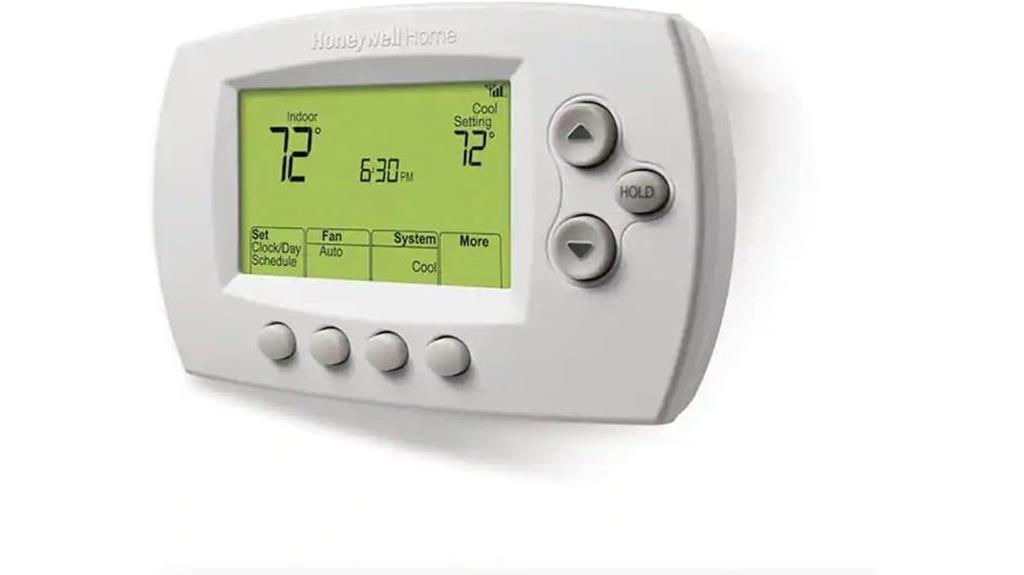
If you want a smart thermostat that offers flexible control and energy savings for heat pumps, the Honeywell Home RTH6580WF Wi-Fi 7-Day Programmable Thermostat is a solid choice. It connects via the Total Connect Comfort or Honeywell Home app, letting you adjust settings anytime, anywhere. Compatible with voice assistants like Alexa and Google Assistant, it supports forced air systems, hot water, steam, and heat pumps with electric backup—though it needs a C-wire. Easy to install yourself, it features a bright digital display and learns your schedule with Smart Response for personalized comfort. ENERGY STAR certified, it helps reduce energy use and lower utility bills.
Best For: homeowners seeking a versatile, energy-efficient smart thermostat compatible with various heating systems and voice assistants.
Pros:
- Easy DIY installation with intuitive controls and a bright, backlit display
- Compatible with popular voice assistants like Alexa and Google Assistant for hands-free control
- Learns your schedule through Smart Response to optimize comfort and energy savings
Cons:
- Requires a C-wire for power; may need an adapter if your system lacks one
- Does not support electric baseboard heat (120-240V)
- Limited to compatible heating systems; not suitable for all setups
Sensi Touch 2 Smart Thermostat with Touchscreen Display
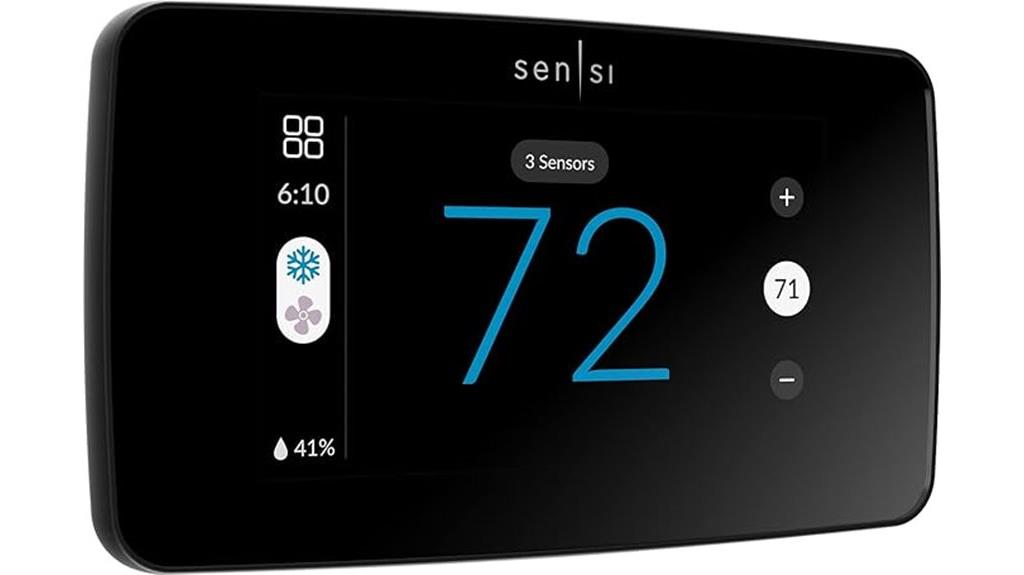
The Sensi Touch 2 Smart Thermostat is ideal for homeowners who want a user-friendly, Wi-Fi-connected device that offers precise control over heat pump systems. Its 5.6-inch LCD touchscreen makes adjusting settings simple and intuitive. Compatible with most HVAC setups, it works with heating, cooling, heat pumps, boilers, and air conditioners, requiring only a common C-wire for installation. With features like flexible scheduling, geofencing, and remote control via the app, I can easily manage my home’s comfort from anywhere. Plus, its energy-saving capabilities reduce HVAC consumption by about 23%, helping me save money while staying comfortable.
Best For: homeowners seeking an easy-to-use, Wi-Fi-enabled smart thermostat that provides precise control and energy savings for various HVAC systems.
Pros:
- User-friendly 5.6-inch LCD touchscreen for intuitive adjustments
- Compatible with multiple HVAC systems including heat pumps, boilers, and air conditioners
- Energy-saving features reduce HVAC energy consumption by approximately 23%
Cons:
- Requires a common C-wire for installation, which may not be available in all homes
- Does not include Sensi Room Sensors (sold separately) for zone control
- Limited to certain smart home integrations, potentially requiring additional devices for broader automation
Honeywell WiFi Smart Thermostat RTH8800WF2022
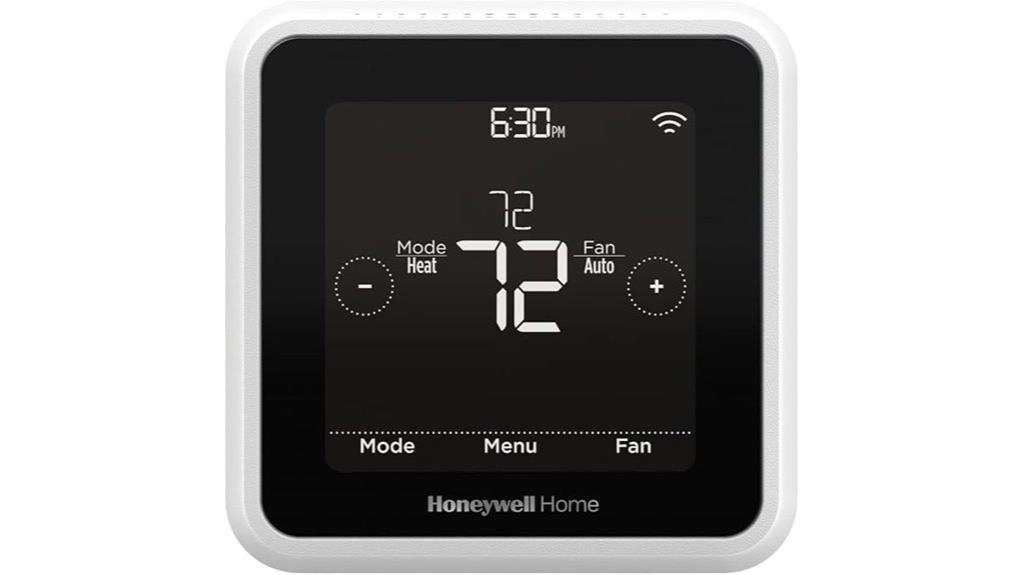
For homeowners with compatible heat pumps seeking a versatile and energy-efficient thermostat, the Honeywell WiFi Smart Thermostat RTH8800WF2022 stands out. It features a 7-day programmable touchscreen, supports Alexa, Google Assistant, and Apple HomeKit, and uses geofencing to optimize comfort and savings. ENERGY STAR certified, it helps reduce energy bills by 8-16% through scheduling and personalized tips. It requires a C-wire for power and works with most systems except heating-only oil furnaces without a C-wire. Control it remotely via smartphone or tablet, making it easy to manage your heat pump efficiently and conveniently.
Best For: homeowners with compatible heat pumps seeking a versatile, energy-efficient WiFi thermostat with smart features and remote control capabilities.
Pros:
- Supports multiple smart home platforms including Alexa, Google Assistant, and Apple HomeKit for seamless voice and app control
- ENERGY STAR certified, helping to reduce energy bills by 8-16% with scheduling and personalized tips
- Features a user-friendly 7-day programmable touchscreen and geofencing technology for customized comfort and energy savings
Cons:
- Requires a C-wire for installation; incompatible with heating-only oil furnaces without a C-wire
- Limited to systems compatible with heat pumps and most cooling/heating setups, excluding some specialized or older systems
- Slightly larger dimensions may require adequate space for installation in some setups
Factors to Consider When Choosing a Smart Thermostat for Heat Pump
When selecting a smart thermostat for your heat pump, I consider compatibility first to guarantee it works seamlessly with my system. I also look at power source needs and energy-saving features to maximize efficiency and convenience. Finally, I prioritize easy installation and smart home integration to make setup simple and control effortless.
Compatibility With Heat Pumps
Choosing a smart thermostat for your heat pump requires careful attention to compatibility to guarantee ideal performance. First, make certain the thermostat explicitly states compatibility with heat pump systems, including those with auxiliary or electric backup heating. It should support multi-stage heating and cooling, which are common in heat pump setups. Check if the device can handle defrost cycles and manage auxiliary heat effectively, as these are vital for proper operation. Look for advanced features like compressor protection and adaptive algorithms that optimize efficiency. Finally, confirm that the thermostat matches your heat pump’s voltage and wiring requirements, typically 24V with a C-wire support. Proper compatibility ensures your system runs smoothly and delivers the energy savings and comfort you expect.
Power Source Requirements
Selecting a smart thermostat for your heat pump hinges on understanding its power source requirements, as proper wiring guarantees reliable operation. Most models need a C-wire to supply continuous power, preventing connectivity issues or display errors. If your system lacks a dedicated C-wire, some thermostats include a Power Extender Kit (PEK) to enable installation without one, but you should verify compatibility first. Heat pumps often have different power needs than traditional systems, making correct wiring essential for ideal performance. Without adequate power, your thermostat might struggle to maintain schedules or connect properly. Always review the manufacturer’s specifications to ensure your existing wiring setup can support the thermostat’s power demands. Proper power sourcing is critical for consistent, trouble-free operation and system efficiency.
Energy Efficiency Features
Have you considered how energy efficiency features can maximize your heat pump’s performance and save you money? Look for thermostats with ENERGY STAR certification, which guarantees proven energy savings. Features like adaptive scheduling, geofencing, and smart response technology optimize operation based on occupancy and patterns, reducing wasted energy. Support for demand response programs is also valuable, as it allows your thermostat to cut energy use during peak times, lowering costs and helping the grid. Compatibility with variable-speed compressors and multi-stage heating or cooling systems further enhances efficiency. Additionally, advanced humidity control and air quality monitoring can improve comfort while preventing unnecessary heating or cooling cycles. These features work together to ensure your heat pump runs efficiently, saving energy and reducing bills over time.
Smart Home Integration
When integrating a smart thermostat with your heat pump system, compatibility is vital to guaranteeing smooth operation and full functionality. First, verify that the thermostat works with heat pump systems and supports features like auxiliary or emergency heat controls. It’s also essential that it integrates seamlessly with your smart home ecosystem—whether that’s Alexa, Google Assistant, Apple HomeKit, or SmartThings—so you can control everything effortlessly. Check if the thermostat offers remote access via a dedicated app, allowing you to manage your heat pump from anywhere. Additionally, look for automation routines and voice control options to boost convenience and energy savings. Finally, ensure it’s compatible with your existing smart devices and protocols, like Matter, to future-proof your setup.
Ease of Installation
Installing a smart thermostat for your heat pump can be straightforward, especially with the right tools and guidance. Many models include detailed instructions, wiring diagrams, and built-in level tools to make setup easier. Compatibility often hinges on having a common C-wire for power; if your system lacks one, an external power adapter or extender kit might be necessary. The installation process typically involves connecting multiple wires for heating, cooling, and auxiliary functions—clear labeling helps prevent errors. Fortunately, most smart thermostats offer step-by-step app guidance, simplifying the process even for DIY enthusiasts. Proper installation guarantees your system runs reliably and maintains accurate temperature control, which is essential for maximizing energy efficiency and comfort. Overall, choosing a model with user-friendly installation features can save time and reduce stress.
Programming Flexibility
Choosing a smart thermostat with flexible programming options is essential for tailoring your heat pump system to your household’s routines and maximizing energy savings. With customizable schedules, you can set different temperatures for various times of the day and days of the week, ensuring comfort when needed and efficiency when you’re away. Support for multiple program modes, like 7-day or 5-1-1, allows you to match your household’s unique schedule. Advanced features such as temporary holds, vacation modes, and auto-changeover help you make seamless adjustments without disrupting your routine. Plus, remote control via smartphone apps makes it easy to override settings as your plans change. Compatibility with utility programs further enhances savings through demand response features, making flexible programming a key factor in choosing the right thermostat.
Monitoring and Alerts
Monitoring and alerts are critical features to contemplate because they keep you informed about your heat pump’s performance and help prevent costly issues. A good smart thermostat provides real-time alerts for system malfunctions, energy consumption, and filter replacements, ensuring your system runs efficiently. Monitoring features that track indoor temperature, humidity, and outdoor weather help maintain ideal comfort and efficiency. Alerts for extreme temperature or humidity levels enable quick action to avoid damage or discomfort. Compatibility with sensors allows for zone-specific monitoring, promoting energy savings across your home. Additionally, integration with mobile apps and smart home systems makes remote monitoring easy, so you stay updated on your heat pump’s status anytime, anywhere. These features empower you to act promptly and keep your system in peak condition.
Frequently Asked Questions
How Do Smart Thermostats Optimize Heat Pump Efficiency?
Smart thermostats maximize heat pump efficiency by learning my schedule and adjusting temperatures automatically, so I don’t waste energy when I’m away or asleep. They use sensors to detect occupancy and outdoor conditions, fine-tuning the system for ideal performance. I appreciate how they provide real-time control via apps, allowing me to tweak settings easily. This way, I stay comfortable while saving on energy costs effortlessly.
Can Smart Thermostats Be Controlled Remotely via Mobile Apps?
Absolutely, smart thermostats can be controlled remotely through mobile apps. I often find myself adjusting my home’s temperature while commuting or on vacation—it’s incredibly convenient. These apps sync seamlessly with my thermostat, giving me full control from anywhere with an internet connection. Whether I want to turn up the heat before arriving home or check the current setting, I love how easy it is to manage my comfort remotely.
Are Smart Thermostats Compatible With Existing Heat Pump Systems?
Yes, smart thermostats are generally compatible with existing heat pump systems, but it’s always best to verify specific models. I recommend reviewing the thermostat’s compatibility list or consulting the manufacturer. Most modern smart thermostats are designed to work seamlessly with common heat pumps, providing enhanced control and energy savings. If you’re unsure, I suggest contacting a professional to ensure proper installation and compatibility.
Do Smart Thermostats Require Professional Installation?
No, smart thermostats don’t always require professional installation. If you’re comfortable with basic wiring and follow the setup instructions, you can usually install them yourself. However, for complex systems or if you’re unsure, I recommend hiring a professional to guarantee everything is wired correctly and safely. This way, you avoid potential issues and get the most efficient performance from your heat pump system.
How Do Smart Thermostats Improve Indoor Air Quality?
Smart thermostats can improve indoor air quality by integrating with air purifiers and ventilation systems, allowing me to control and optimize air circulation. They monitor humidity levels and adjust settings to prevent mold and dust build-up. I also appreciate how they provide real-time data, helping me identify air quality issues early. This proactive approach guarantees my home’s air remains healthier and more comfortable, enhancing my overall living environment.
Conclusion
Choosing the right smart thermostat for your heat pump isn’t just about technology; it’s about creating comfort and saving energy. Like a trusted companion, the perfect thermostat balances advanced features with ease of use, making your home smarter and more efficient. Whether you prefer sleek simplicity or a touchscreen hub, the right choice transforms your space from ordinary to extraordinary. After all, in the dance of comfort and savings, your thermostat leads the way.