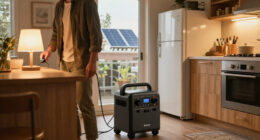
As global temperatures rise in 2025, your air conditioning system’s energy consumption will increase markedly, putting more demand on power grids and increasing environmental impacts. You can reduce this by using technologies like smart thermostats and renewable energy sources such as solar panels or wind turbines. These solutions help manage cooling needs efficiently and cut costs. Keep exploring how integrating these innovations can make your energy use smarter and more sustainable.

Get backup power and energy gear delivered free with Prime
- Fast, free delivery on millions of items
- Prime Video, Amazon Music and more included
- Member-only deals all year
Key Takeaways
- Global temperatures rising in 2025 increase demand for air conditioning, leading to higher energy consumption worldwide.
- Adoption of renewable energy sources like solar and wind helps offset AC electricity use and reduces environmental impact.
- Smart thermostats optimize cooling efficiency, minimizing energy wastage and lowering overall AC energy consumption.
- Integration of renewable energy with smart devices enhances cost savings and supports sustainable cooling solutions.
- Despite technological advances, increased AC use driven by climate change may still strain power grids in 2025.
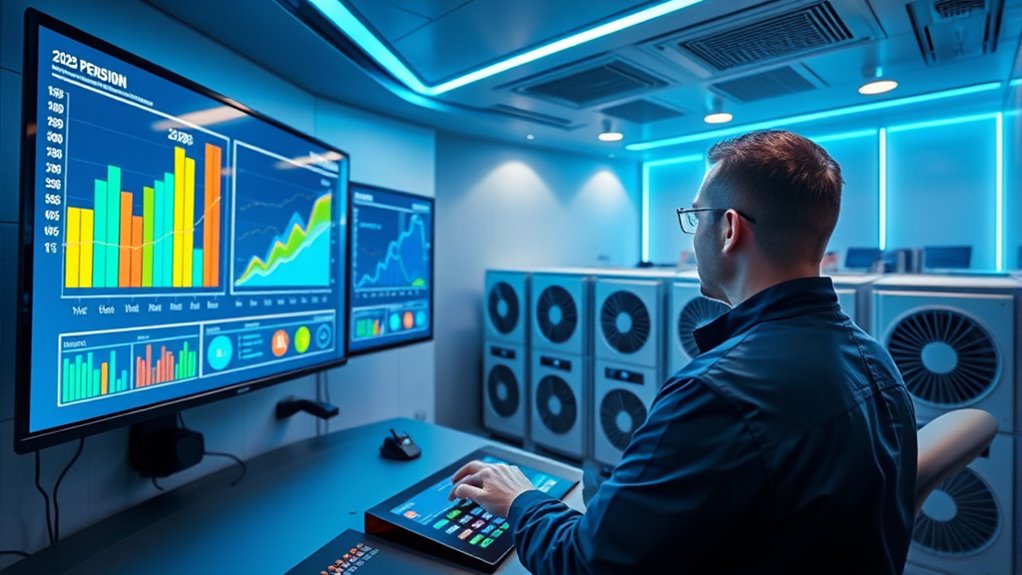
As global temperatures continue to rise, the demand for air conditioning systems is expected to surge in 2025, considerably impacting energy consumption worldwide. This increase isn’t just about comfort; it markedly strains power grids and accelerates environmental challenges. To address this, many consumers are turning to innovative solutions like renewable energy and smart thermostats. These technologies can help you reduce your carbon footprint while maintaining a comfortable indoor climate.
Renewable energy, such as solar and wind power, offers a sustainable way to meet the growing energy needs of air conditioning systems. By integrating solar panels or wind turbines with your home, you can generate clean energy that directly offsets the electricity used by your AC unit. This not only lowers your reliance on fossil fuels but also helps you save on energy bills over time. As the cost of renewable technologies continues to decrease, it becomes increasingly practical for households to harness these resources, making your cooling system more environmentally friendly and cost-effective.
Harness solar and wind energy to make your air conditioning more eco-friendly and cost-efficient.
Smart thermostats are another game-changer in managing energy consumption. These devices learn your schedule and preferences, allowing you to set precise temperatures that optimize comfort without wasting energy. With features like remote control via smartphone apps, you can adjust your AC from anywhere, ensuring it’s only running when needed. Many smart thermostats also incorporate energy-saving modes and real-time usage reports, empowering you to identify patterns and make adjustments that reduce unnecessary cooling. This level of control helps prevent energy wastage during unoccupied hours or when the temperature outside is more tolerable.
Combining renewable energy with smart thermostats creates a powerful synergy for energy efficiency. For example, you could program your thermostat to cool your home during times when your solar panels produce excess electricity, maximizing the use of renewable power. Additionally, smart thermostats can respond to weather forecasts, adjusting cooling levels ahead of heatwaves or cold spells, further trimming energy use. This not only benefits your utility bills but also contributes to broader efforts to reduce greenhouse gas emissions.
As you become more conscious of your energy consumption in 2025, adopting these technologies can make a tangible difference. The integration of renewable energy sources and smart thermostats offers a practical way to keep your home comfortable while minimizing environmental impact. Furthermore, energy-efficient appliances can significantly reduce your overall consumption. By making these choices, you’re contributing to a more sustainable future and helping to manage the increasing demand for cooling in a way that’s smarter, cleaner, and more efficient.
Products Worth Considering

Levoit Eleva 300X HEPA Air Purifier for Home and Bedroom

LEVOIT Vital 200S-P Smart Air Purifier for Large Rooms

Levoit Core 400S-P Smart Air Purifier for Large Rooms
As an affiliate, we earn on qualifying purchases.
Frequently Asked Questions
How Will Renewable Energy Sources Impact AC Energy Consumption in 2025?
Renewable energy sources will considerably reduce your air conditioning system’s reliance on traditional power grids by enabling renewable integration and energy storage. As these technologies improve, you’ll notice cleaner, more sustainable energy powering your AC, helping cut emissions and lower costs. Energy storage allows you to use renewable power even when the sun isn’t shining or the wind isn’t blowing, making your cooling system more efficient and environmentally friendly in 2025.
What Innovations Will Improve AC Energy Efficiency by 2025?
Think of your AC system as a diligent gardener tending to a delicate plant. By 2025, advancements in refrigerants act like a gentle rain, reducing environmental strain, while improved insulation serves as a protective shield, conserving energy. These innovations make your AC more efficient, helping it work smarter rather than harder. Together, they guarantee your comfort while minimizing energy consumption, fostering a more sustainable future.
How Do Different Climate Zones Affect Future AC Energy Use?
Climate zones substantially influence your future AC energy use, as regions with higher temperatures demand more cooling, increasing energy consumption. You’ll need to focus on climate adaptation strategies, like regional cooling solutions, to optimize efficiency. In cooler zones, less energy is necessary, but as climate patterns shift, all areas may require smarter, localized cooling systems. This approach helps you manage energy use effectively, regardless of your area’s specific climate zone.
Will Smart Technology Reduce Overall AC Energy Consumption?
Yes, smart technology will reduce your overall AC energy consumption. With smart thermostats, you can set efficient schedules that adapt to your routines, while AI optimization fine-tunes cooling based on real-time data. These tools work together to minimize waste, maximize comfort, and lower energy bills. As a result, you’ll enjoy a more sustainable home environment and contribute to reducing your carbon footprint.
How Will Government Policies Influence AC Energy Standards in 2025?
Government policies in 2025 will substantially influence AC energy standards by enforcing stricter government mandates and efficiency standards. You’ll see manufacturers compelled to develop more energy-efficient units, reducing overall consumption. These policies encourage innovation and push for environmentally friendly technologies. As a result, your energy bills may decrease, and your environmental impact lessen, because compliance with evolving regulations ensures you benefit from the latest, most efficient air conditioning systems.
Conclusion
By 2025, the energy consumption of air conditioning systems will be so enormous, it’ll make the power grid tremble and the planet gasp for breath! Your cooling units might need their own power plants, and the Earth’s temperature could soar faster than you can say “air conditioning.” So, buckle up—your future comfort might just depend on how creatively you conserve today, or you’ll wake up someday to a world where AC is a luxury only the ultra-rich can afford!