Hard water causes mineral buildup inside your tankless water heater, forming tough scale deposits mainly on heating elements and pipes. This buildup acts as an insulator, making the heater work harder and wasting energy. Over time, the minerals can clog water flow and damage internal parts, drastically shortening your unit’s lifespan. Preventing and managing scale buildup is essential. Keep exploring to discover effective ways to protect your heater and extend its life.

Get backup power and energy gear delivered free with Prime
- Fast, free delivery on millions of items
- Prime Video, Amazon Music and more included
- Member-only deals all year
Key Takeaways
- Mineral buildup from hard water creates scale inside the heater, reducing efficiency and increasing wear on components.
- Scale acts as an insulator, forcing the heater to work harder and shortening its lifespan.
- Lack of regular descaling allows deposits to accumulate rapidly, causing internal damage.
- Mineralized deposits clog water flow, leading to inconsistent hot water supply and potential system failure.
- Ignoring signs of mineralization increases the risk of costly repairs or premature replacement of the unit.
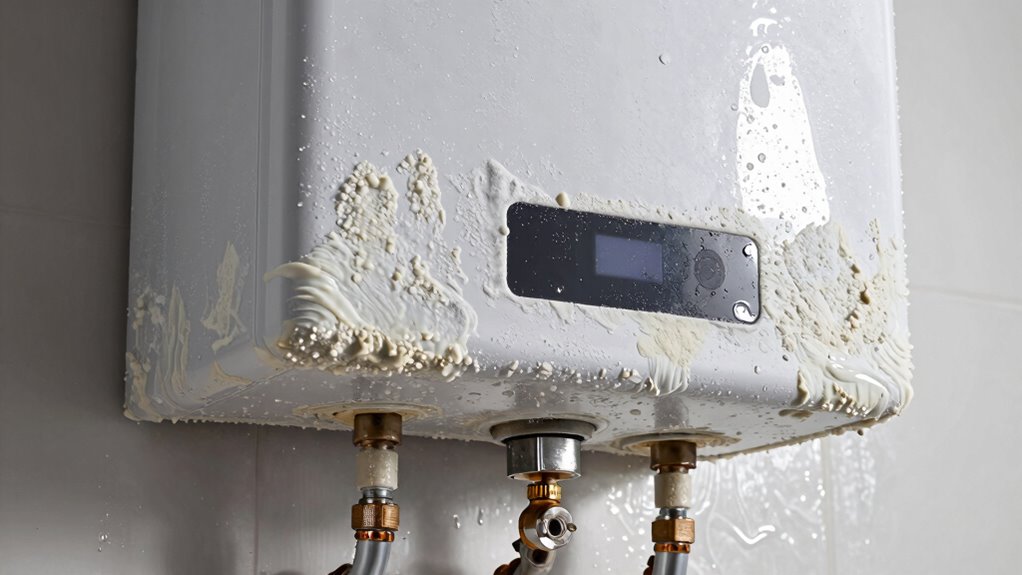
Hard water is a common issue that many households overlook until it starts causing noticeable problems. When water contains high levels of minerals like calcium and magnesium, it undergoes a process called water mineralization. This means those minerals are dissolved into your water supply, which might seem harmless at first. But over time, this mineral buildup leads to a scale buildup inside appliances, especially in your tankless water heater. The scale is a crusty, chalky deposit that forms on the heating elements and within pipes. It’s easy to ignore initially, but it can quickly become a serious problem that shortens the lifespan of your appliance.
As mineralization continues, the scale buildup inside your tankless unit thickens. This layer acts as an insulator, making it harder for the water heater to efficiently transfer heat. Because of this, your system has to work harder to warm the water, which strains its components and increases wear and tear. This extra effort not only wastes energy but also accelerates the deterioration of key parts like the heating elements and valves. If you don’t address the mineralization early, the buildup can lead to blockages or even damage the internal parts, forcing you to replace the entire unit sooner than expected.
The main culprit here is scale buildup, which forms as water mineralization deposits accumulate over time. The deposits gradually clog the flow of water and reduce the heater’s capacity to produce hot water efficiently. When this happens, you might notice inconsistent water temperatures, longer wait times for hot water, or increased energy bills. These signs indicate that mineralization has already caused substantial scale buildup inside your system. Ignoring these symptoms can lead to costly repairs or full unit replacements, which are unnecessary if you catch the problem early. Regularly testing your water’s mineral content can help you identify hard water levels before damage occurs.
Prevention is essential if you want to protect your tankless water heater from the damaging effects of hard water. Installing a water softener can considerably reduce mineralization, preventing scale buildup from forming in the first place. Regular maintenance, such as descaling your unit with vinegar or commercial descaling solutions, can also keep scale deposits at bay. By addressing the mineral content in your water and performing routine upkeep, you extend your water heater’s lifespan and maintain its efficiency. Hard water may be common, but its effects don’t have to be inevitable if you stay proactive and keep scale buildup under control.
water softener for tankless water heater
As an affiliate, we earn on qualifying purchases.
As an affiliate, we earn on qualifying purchases.
Frequently Asked Questions
Can Hard Water Damage Tankless Water Heaters Immediately?
Hard water can cause immediate damage to your tankless water heater by accelerating corrosion risks and promoting mineral buildup. When minerals like calcium and magnesium deposit inside the unit, they can clog components and reduce efficiency. This buildup weakens the system quickly, leading to potential breakdowns. To protect your heater, consider installing a water softener or regular descaling, which helps prevent these issues and extends its lifespan.
Are There Specific Brands More Resistant to Hard Water?
Imagine choosing a Rheem tankless heater, which is known for excellent brand durability and softener efficiency. Certain brands, like Rheem or Navien, often resist the damaging effects of hard water better than others. These brands typically incorporate advanced materials and design features that extend lifespan. When selecting a heater, look for those with proven resistance to mineral buildup, ensuring your investment lasts longer despite hard water challenges.
How Often Should I Flush My Tankless Heater?
You should flush your tankless heater at least once a year as part of regular maintenance tips, especially if your water quality is hard. Hard water causes mineral buildup, reducing efficiency and lifespan. If you notice reduced hot water flow or increased energy use, consider flushing it more often—every six months might be necessary. Regular flushing helps prevent mineral deposits, ensuring your heater runs smoothly and lasts longer.
Can Installing a Water Softener Prevent Damage?
Installing a water softener can definitely prevent damage to your tankless heater. It works by reducing hard water minerals like calcium and magnesium, which cause scale buildup and corrosion. With a water softener, you’ll experience less mineral buildup, extending your heater’s lifespan. Plus, it enhances corrosion prevention, ensuring your system stays efficient longer. Regular maintenance alongside the softener maximizes protection and keeps your hot water system running smoothly.
What Are Signs of Hard Water Damage in a Tankless System?
Think of your tankless system as a delicate sculpture. You’ll notice mineral buildup on the heat exchanger, making it look cloudy or crusty. Reduced water flow or inconsistent hot water signals trouble. These signs also increase corrosion risk, threatening the unit’s lifespan. If you spot these issues early, you can take action, like installing a water softener, to protect your system and keep it running smoothly.
descaling solution for water heater
As an affiliate, we earn on qualifying purchases.
As an affiliate, we earn on qualifying purchases.
Conclusion
If you ignore the quiet whispers of mineral buildup, your tankless water heater might slowly wear down, like an aging artist’s brush losing its sharp edges. Hard water can subtly chip away at its lifespan, leaving you with unexpected repairs. To keep your unit painting a vivid picture of reliability, consider installing a softening system. Gentle care now guarantees your heater continues to serve you well, like a trusted friend, for years to come.
As an affiliate, we earn on qualifying purchases.
tankless water heater scale prevention
As an affiliate, we earn on qualifying purchases.
As an affiliate, we earn on qualifying purchases.
Fall Picks
fall essentials
As an affiliate, we earn on qualifying purchases.