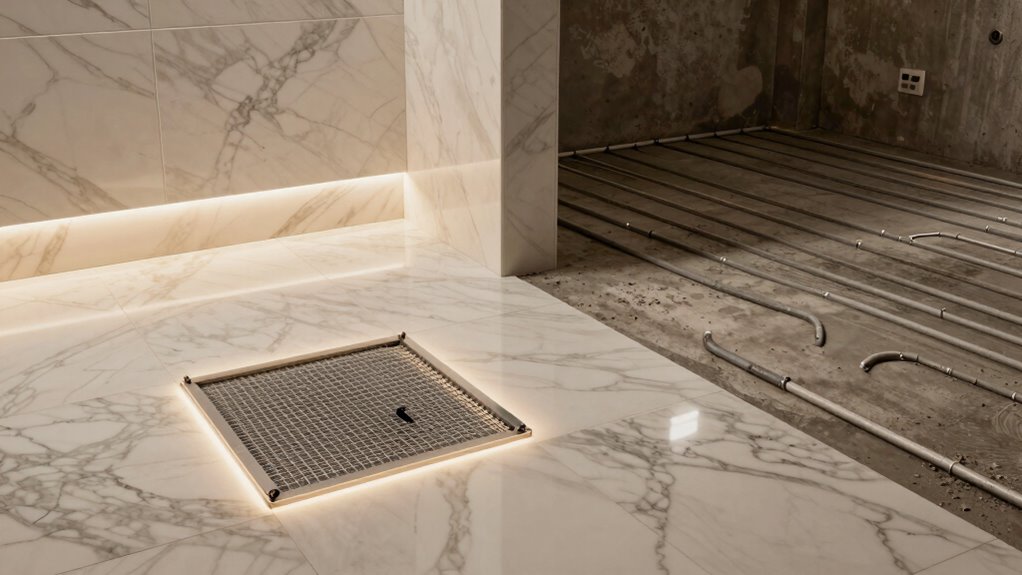

Large bathrooms and basements have different heating needs because they vary in size, moisture, and insulation requirements. Bathrooms often have fewer exterior walls and higher humidity, so you need a focused, moisture-resistant heating plan. Basements are larger, surrounded by concrete, and tend to be damp, requiring multiple zones and better insulation. Tailoring your radiant heating system guarantees efficiency and comfort in each space—continue exploring to discover how to optimize both areas effectively.
Key Takeaways
- Large bathrooms and basements have different space sizes and heat distribution needs requiring tailored heating solutions.
- Basements often require multiple zones and larger mats due to their extensive, open areas.
- Moisture levels differ; bathrooms need moisture barriers, while basements need insulation to prevent dampness.
- Insulation effectiveness varies; proper insulation enhances radiant heating performance in both spaces.
- Customized plans optimize energy efficiency and comfort by addressing each space’s unique structural and environmental factors.

Have you ever wondered why a one-size-fits-all heating mat plan doesn’t work for large bathrooms and basements? The truth is, these spaces have different heating needs, and understanding why can help you make smarter decisions. Radiant heating systems are excellent for warming floors efficiently, but their effectiveness depends heavily on proper insulation considerations. In large bathrooms, radiant heating can quickly create a comfortable environment, but only if the space is well-insulated. Bathrooms tend to have fewer exterior walls exposed to the elements, making it easier for radiant heat to stay inside. However, if the bathroom has poor insulation, heat will escape, and your system won’t perform as efficiently. That’s why it’s essential to evaluate insulation considerations before installing a heating mat. Proper insulation around walls, floors, and even ceilings can greatly boost the efficiency of your radiant heating system, saving you money on energy bills and ensuring consistent warmth.
Proper insulation is key to maximizing radiant heating efficiency in bathrooms and preventing heat loss.
In basements, the situation is different. These spaces are often below ground level, surrounded by concrete walls and floors that tend to absorb and dissipate heat. Without adequate insulation, a heating mat in a basement can struggle to maintain a comfortable temperature. You might find that, despite the system running, the space remains chilly or unevenly heated. To counter this, you need to pay special attention to insulation considerations—adding insulation panels or foam beneath the flooring can help trap heat and prevent thermal loss. Furthermore, because basements often have larger, open areas, you might need multiple heating zones or larger mats to distribute heat evenly. This ensures that every corner of your basement reaches the desired temperature without overworking your system. Additionally, understanding the importance of proper insulation can significantly impact the overall performance and energy efficiency of your radiant heating setup. Proper insulation also plays a crucial role in controlling moisture levels, which is vital for preventing issues like mold and dampness that can compromise your system’s longevity. Incorporating appropriate insulation materials can further enhance the system’s durability and efficiency, especially in moisture-prone areas.
Another key point to consider is the difference in moisture levels. Bathrooms are typically more humid, which can influence the choice of radiant heating mats designed for wet areas. Proper insulation and moisture barriers are vital to protect your system and maximize its lifespan. Meanwhile, basements might have issues with dampness, so insulation should also serve as a moisture barrier, preventing cold, damp air from seeping in and reducing heat loss. Additionally, selecting the right insulation materials can significantly improve the overall performance of your radiant heating system in both spaces.
In the end, understanding the unique insulation considerations and heating requirements of each space will help you select the right radiant heating plan. Large bathrooms benefit from targeted, well-insulated systems, while basements need more extensive insulation strategies to ensure even and efficient heating. Tailoring your approach guarantees your radiant heating system performs at its best, providing comfort and energy savings in both spaces.
moisture resistant radiant heating mats for bathrooms
As an affiliate, we earn on qualifying purchases.
As an affiliate, we earn on qualifying purchases.
Frequently Asked Questions
How Do Heating Mats Differ in Installation for Bathrooms Versus Basements?
You install underfloor heating mats differently for bathrooms and basements because bathrooms need moisture-resistant mats to handle humidity, while basements require mats suited for colder, damp environments. In bathrooms, you focus on waterproofing and proper sealing, whereas in basements, you prioritize insulation and moisture resistance. These differences guarantee efficient heat distribution and durability, preventing damage and ensuring comfort in both spaces.
What Safety Precautions Are Specific to Large Bathrooms and Basements?
Are you aware of the unique safety needs in large bathrooms and basements? You should prioritize moisture management to prevent electrical hazards, especially in damp environments. Always guarantee your heating mats are properly grounded and installed with GFCI outlets to protect against electrical shocks. Regularly inspect for water leaks or moisture buildup, and avoid placing heating mats near water sources. Safety is essential to enjoy cozy warmth without risks.
Can One Heating Mat Plan Be Adapted for Both Spaces?
You can adapt one heating mat plan for both spaces, but you’ll need to ensure floor coverage and moisture barriers. Large bathrooms often require more extensive coverage and moisture-resistant mats to handle humidity and water exposure, while basements need durable mats suited for concrete floors and potential moisture issues. Adjusting the plan guarantees safety and efficiency, preventing damage and maintaining comfort across both spaces.
How Does Room Insulation Affect Heating Mat Efficiency?
Your room insulation greatly impacts heating mat efficiency. Proper wall insulation reduces heat loss through walls, while effective floor sealing prevents drafts and heat escape, guaranteeing your heating mat works ideally. Without good insulation, the warmth generated by the mat diminishes quickly, forcing it to work harder and increasing energy costs. To maximize efficiency, make sure walls are well-insulated and floors properly sealed, especially in large or basement spaces.
What Are the Cost Differences Between Plans for Bathrooms and Basements?
The cost comparison between heating mat plans for bathrooms and basements varies because of size and complexity. Bathrooms, being smaller, typically require less material and installation time, making them more budget-friendly. Basements, on the other hand, often need larger mats and more extensive wiring, increasing costs. When planning your budget, consider these differences carefully to guarantee you allocate enough funds for effective heating. Proper planning helps you avoid overspending and ensures comfort.
large zone electric floor heating mats for basements
As an affiliate, we earn on qualifying purchases.
As an affiliate, we earn on qualifying purchases.
Conclusion
In the end, treating large bathrooms and basements with the same heating plan is like putting a square peg in a round hole—you’re only asking for trouble. By customizing your heating mats to suit each space’s unique needs, you guarantee comfort and efficiency. Remember, “a stitch in time saves nine,” so investing in the right plan now pays off later. Don’t cut corners—your home’s warmth depends on it.
insulation panels for radiant floor heating
As an affiliate, we earn on qualifying purchases.
As an affiliate, we earn on qualifying purchases.
moisture barrier for bathroom floor heating
As an affiliate, we earn on qualifying purchases.
As an affiliate, we earn on qualifying purchases.