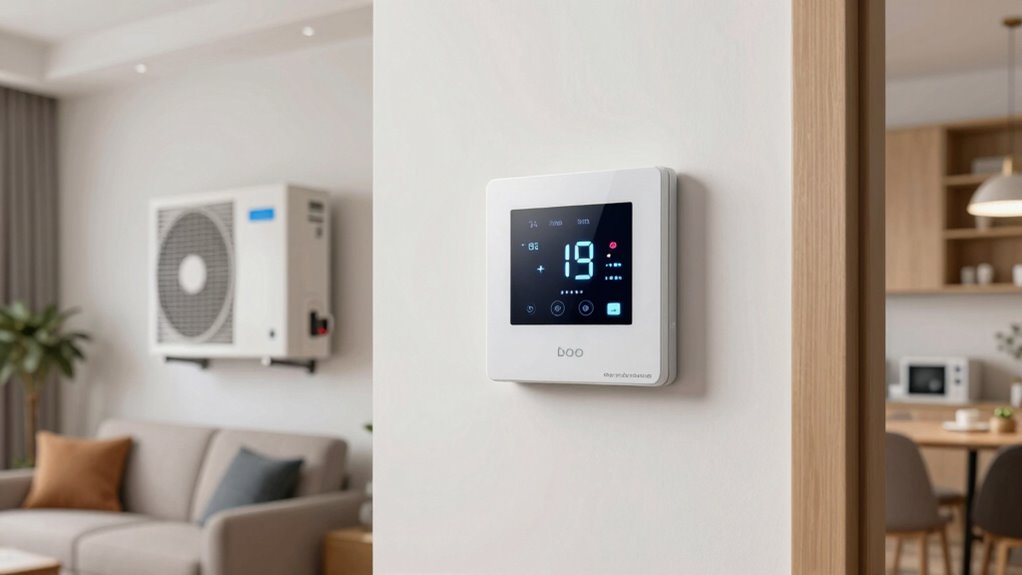

Hybrid controls decide when to switch heat sources by constantly analyzing data from indoor and outdoor sensors, system performance, and utility rates. They monitor factors like outdoor temperature drops or milder weather to switch from heat pump to furnace for efficiency. Changes in utility rates or indoor comfort needs also trigger adjustments. By automating these decisions, you get reliable comfort and energy savings. To discover the detailed decision-making process, keep exploring how these smart systems work.
Key Takeaways
- They analyze indoor temperature and comfort levels to determine if a switch is needed.
- Outdoor weather conditions and temperature influence the choice of heat source.
- System performance data ensures each heat source operates efficiently before switching.
- Utility rates and energy costs are monitored to select the most economical option.
- Real-time sensor data allows automatic, dynamic adjustments based on environmental and system conditions.
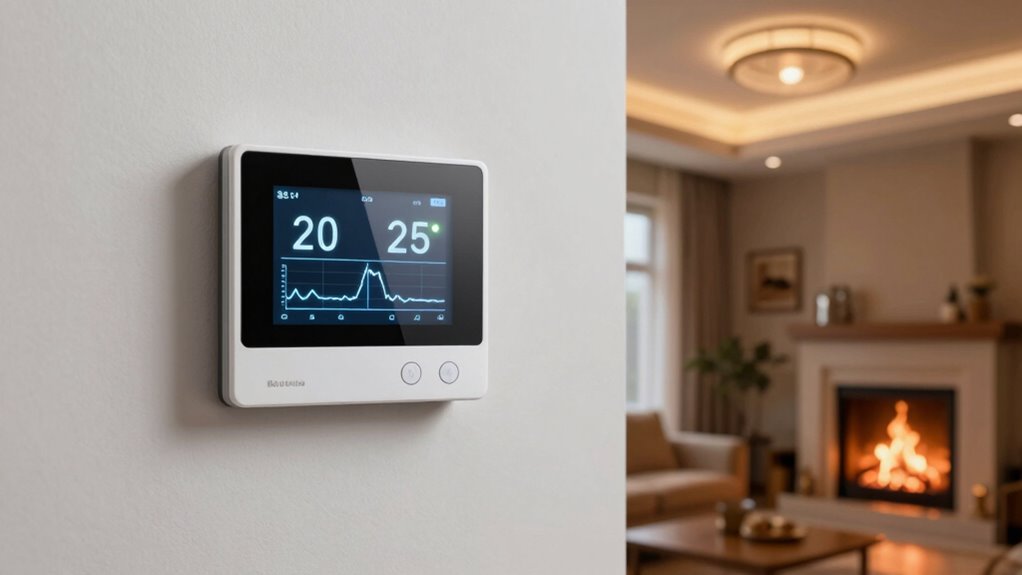
Hybrid control systems offer a practical way to optimize your heating setup by switching between different heat sources as needed. They are designed to balance energy efficiency with user comfort, ensuring you stay warm without wasting energy. When the system detects changes in temperature or weather, it automatically decides which heat source to activate, making your home more efficient and comfortable. This automation means you don’t have to manually switch between a furnace and a heat pump or other systems; instead, the controls do it for you in real time.
Hybrid control systems automatically optimize heating sources for comfort and energy efficiency in real time.
The decision on when to switch is based on a combination of factors that the system continuously monitors. Temperature sensors placed throughout your home give real-time data on indoor conditions, and outdoor sensors track weather patterns. When outdoor temperatures drop markedly, the system might switch from a heat pump—more energy-efficient in moderate weather—to a traditional furnace that provides more reliable heat in colder conditions. Conversely, during milder weather, it might favor the heat pump to save energy, since heat pumps operate more efficiently when the outdoor temperature isn’t too low. Additionally, the system can analyze system performance to ensure each heat source is functioning optimally before switching. Incorporating sensor data enhances the system’s responsiveness and accuracy in decision-making.
The hybrid control system also considers the cost and efficiency of each heat source. If your utility rates fluctuate, the system can prioritize the most economical option at any given moment. For instance, if electricity is cheaper during certain hours, it might use the heat pump more frequently, switching to a furnace only when necessary. This dynamic decision-making helps maximize energy savings without compromising comfort. The system’s ability to adapt to energy consumption patterns ensures it operates at peak efficiency while reducing utility bills. The goal is to use each heat source at its best performance level, reducing energy waste and lowering your utility bills.
User comfort remains a top priority for hybrid controls. The system constantly evaluates indoor temperature comfort levels, making sure your living space stays within your preferred range. If someone adjusts the thermostat or if a room temporarily needs more heat, the system responds instantly, choosing the most efficient source to meet that demand. This balance prevents your home from becoming too cold or overheated, maintaining a steady comfort level while optimizing energy use.
In essence, hybrid controls intelligently decide when to switch heat sources by analyzing real-time data on outdoor weather, indoor temperature, energy costs, and system performance. They automate the process, ensuring you enjoy consistent comfort and energy efficiency without the need for manual intervention. Additionally, integrating smart sensors into the system can enhance its responsiveness by providing more precise data for decision-making. This smart approach not only makes your heating system more responsive but also helps you save money and reduce your environmental impact.

Raypak Crosswind V Pool Heat Pump – Spa and Pool Heater with Free Wi-Fi for Fleet Monitoring, Hybrid Heating for Above Ground and In-Ground Pools
- Expert-Driven Innovation: Leverages 75 years of Raypak expertise
- Durable Construction: Industrial-strength powder-coated metal and titanium heat exchanger
- Energy-Efficient Hybrid Heating: Automatically switches between gas and electric
As an affiliate, we earn on qualifying purchases.
As an affiliate, we earn on qualifying purchases.
Frequently Asked Questions
How Do Hybrid Controls Learn Optimal Switching Times Over Time?
You use machine learning and adaptive algorithms to help hybrid controls learn ideal switching times over time. These systems analyze past performance data, recognizing patterns in temperature, energy use, and outside conditions. By continuously updating their models, they adapt to changing environments, improving decision-making. This way, your hybrid control system automatically adjusts when to switch heat sources, maximizing efficiency and comfort without manual intervention.
Can Hybrid Controls Prioritize Renewable Energy Sources?
Think of hybrid controls as a smart navigator, guiding your energy source management. They can prioritize renewable energy sources by evaluating real-time data, much like choosing the freshest fruit at a market. This renewable prioritization helps reduce reliance on fossil fuels, lowering emissions. Over time, these controls learn to balance energy efficiency and eco-friendliness, ensuring that cleaner sources are used first whenever available, making your system both smarter and greener.
What Are Common Issues Faced by Hybrid Control Systems?
You might face issues like sensor calibration errors, which can cause inaccurate readings, leading to improper heat source switching. System diagnostics are essential to identify faults early, ensuring smooth operation. Common problems include sensor malfunctions, control algorithm glitches, and communication failures between components. Regular maintenance and timely calibration help prevent these issues, keeping your hybrid control system efficient and reliable in managing energy sources.
How Do Hybrid Controls Handle Sudden Temperature Fluctuations?
Think of hybrid controls as a skilled conductor, swiftly adjusting the orchestra to maintain harmony. When sudden temperature fluctuations occur, control algorithms step in, analyzing data to restore temperature stability. They rapidly decide whether to switch heat sources or modulate current ones, ensuring consistent comfort. This quick response prevents temperature swings, keeping your environment steady, much like a conductor ensuring each instrument stays in tune amidst unexpected changes.
Are There Specific Maintenance Requirements for Hybrid Control Systems?
Yes, maintaining your hybrid control system involves regular calibration to guarantee accurate operation and efficiency. You should also check component compatibility, especially after upgrades or repairs, to prevent malfunctions. Keep an eye on sensors and control units, cleaning or replacing them as needed. Following the manufacturer’s guidelines for maintenance schedules helps prolong system lifespan and keeps your heating system running smoothly.

WILLHI WH2408 Temperature Controller 10A 1200W, Digital Thermostat Controlled Outlet Plug Switch for Reptile Terrarium Greenhouse Homebrew Aquarium Seedling Mat, Heating or Cooling Mode (Pack of 1)
- Easy Setup with Intuitive Controls: Two knobs for precise temperature adjustments
- Wide Temperature Range: -58°F to 230°F (-50°C to 110°C)
- Memory Function During Power Outages: Remembers settings to minimize disruptions
As an affiliate, we earn on qualifying purchases.
As an affiliate, we earn on qualifying purchases.
Conclusion
Now that you understand how hybrid controls decide when to switch heat sources, you’re better equipped to optimize comfort and efficiency in your home. These smart systems respond seamlessly to changing conditions, saving energy and money. But aren’t you glad knowing your home adapts effortlessly to your needs? Embracing hybrid controls means embracing a smarter, more responsive way to heat your space—so why settle for less when your comfort is just a switch away?

Aowel 2 Heat/ 1 Cool Non-Programmable Thermostat for Home Heat Pump System and Conventional Single-Stage System, with Room Temperature & Humidity Monitor (White Backlit Screen)
- System Compatibility: Check compatibility before purchase
- Multi-Stage Support: Supports up to 2 Heat, 1 Cool
- System Types: Compatible with various heat pump systems
As an affiliate, we earn on qualifying purchases.
As an affiliate, we earn on qualifying purchases.

Fieldpiece – Job Link System HVACR Wireless Probe Kit – JL3KH6 – Fast Accurate Temps with Rapid Rail Technology – HVAC Tools with Padded Case
- Fast Stabilization: Stabilizes in under 5 seconds with ±1° accuracy
- Rapid Rail Technology: Uses pipe to complete circuit, unaffected by ambient conditions
- Versatile Placement: Can be placed at grilles, returns, ducts, or plenums
As an affiliate, we earn on qualifying purchases.
As an affiliate, we earn on qualifying purchases.