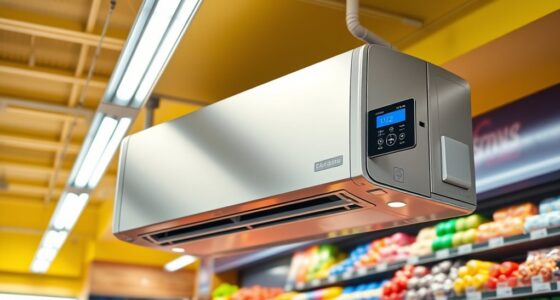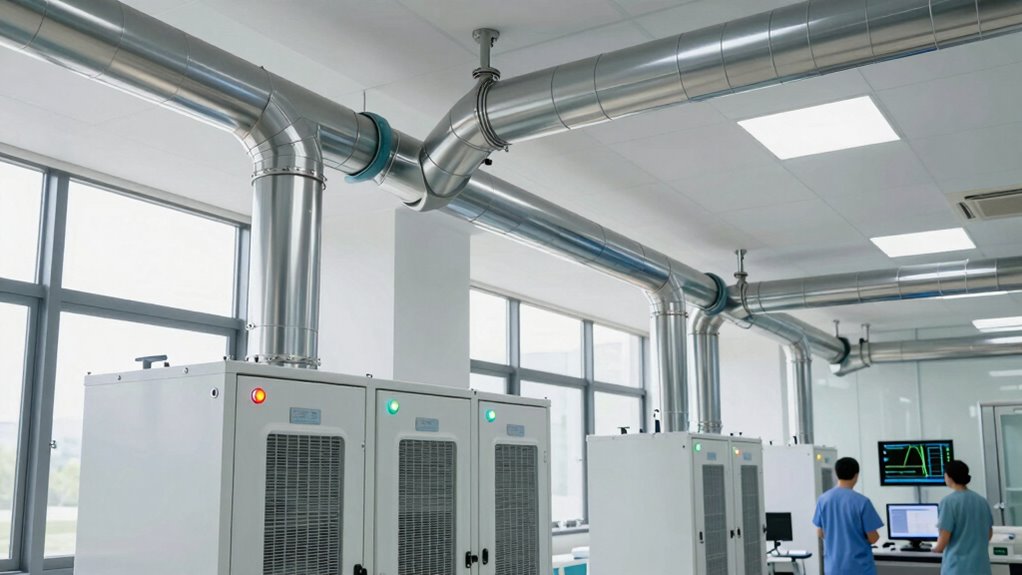

Updated healthcare ventilation regulations require you to choose higher-efficiency filters, like HEPA or ULPA, based on risk levels, and to upgrade airflow systems for better air exchange and contaminant removal. You need to assess existing systems to guarantee they meet new standards, optimize airflow patterns to prevent contamination spread, and regularly maintain filters for safety. Staying compliant enhances patient recovery and staff safety—if you want to find out how these changes impact your facility, keep exploring.

Get backup power and energy gear delivered free — and shop member deals
- Fast, free delivery on millions of items
- Access to Prime Big Deal Days deals on October 6–7
- Prime Video, Amazon Music and more included
Key Takeaways
- New regulations mandate higher Minimum Efficiency Reporting Value (MERV) ratings for air filters in healthcare facilities.
- Increased emphasis on installing HEPA or ULPA filters in critical areas to meet infection control standards.
- Requirements for enhanced ventilation rates to improve air exchange and reduce airborne contaminant levels.
- Mandates continuous monitoring and documentation of filter performance and system airflow efficiency.
- Encourages upgrading ventilation systems to ensure compliance with stricter air quality and safety standards.
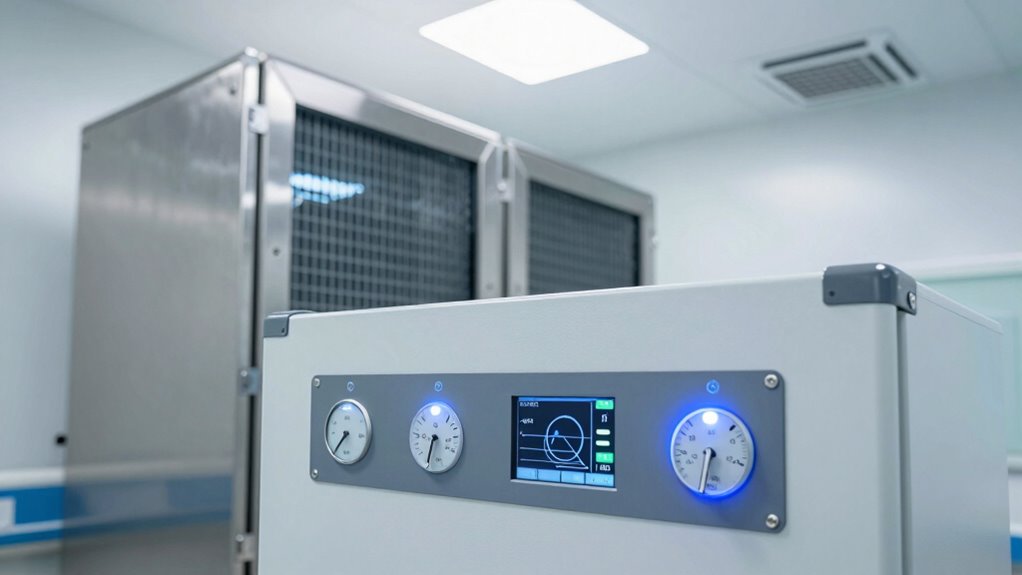
Ensuring proper ventilation in healthcare facilities is vital for maintaining a safe environment for patients and staff alike. The new healthcare ventilation rule emphasizes the importance of controlling airborne contaminants through effective air exchange and adherence to filtration standards. This regulation recognizes that the quality of indoor air directly impacts patient recovery, staff safety, and overall infection control. When you prioritize sufficient air exchange rates, you reduce the risk of airborne disease transmission, especially in settings like operating rooms, isolation units, and emergency departments. The rule specifies minimum air exchange rates for various spaces, urging you to assess your existing ventilation systems and upgrade where necessary, ensuring the continuous removal of stale air and the influx of fresh, filtered air. Proper ventilation system design can significantly enhance the effectiveness of your environmental controls and ensure compliance with new standards. Incorporating professional assessments can help identify areas where your current system may fall short and need improvement.
Filtration standards have also become a central focus of this regulation. You must now select and install HVAC filters that meet or exceed the prescribed minimum efficiencies, such as HEPA or ULPA filters, depending on the risk level of the area. These filters are designed to trap tiny particles, including bacteria, viruses, and other airborne pathogens, significantly reducing the likelihood of cross-contamination. It’s not enough to just install high-quality filters; you need to maintain and replace them regularly to sustain their effectiveness. The rule encourages you to implement a strict maintenance schedule, monitor filter performance, and document replacements—proactively preventing deterioration in air quality. Additionally, incorporating airflow management considerations into your ventilation planning can contribute to better environmental control, as proper airflow and filtration are essential for maintaining consistent indoor conditions. Moreover, this regulation prompts you to reevaluate your ventilation system designs, opting for systems capable of achieving higher air exchange rates while maintaining energy efficiency. You’re encouraged to work with engineers to optimize airflow patterns, ensuring air flows from clean to less-clean areas and minimizing turbulence that can spread contaminants. Properly balancing ventilation capacity and filtration efficiency is crucial to meet these new standards and protect vulnerable patient populations and staff members who are most at risk.
HEPA air filters for healthcare facilities
As an affiliate, we earn on qualifying purchases.
As an affiliate, we earn on qualifying purchases.
Frequently Asked Questions
How Does Ventilation Influence Infection Control in Healthcare Settings?
You influence infection control through proper ventilation by managing airflow dynamics and ensuring adequate air exchange. When airflow directs contaminated air away from patients and staff, it reduces the risk of airborne transmission. Increasing air exchange rates helps remove infectious particles more quickly, creating a safer environment. By understanding and controlling these factors, you can substantially lower infection risks and promote healthier healthcare settings.
What Specific Equipment Is Affected by the New Ventilation Rule?
You might think your current equipment is enough, but the new ventilation rule demands equipment upgrades that prioritize airflow optimization. This affects HVAC systems, air filters, and exhaust fans—things you might overlook. Ironically, these upgrades are essential to prevent infections, yet they often get delayed due to cost. Embracing these changes now guarantees safer environments, proving that investing in proper airflow is the real health insurance for your facility.
Are There Cost Implications for Hospitals Adopting the New Ventilation Standards?
Yes, adopting the new ventilation standards can have significant financial impacts on your hospital. You might face increased equipment costs and installation expenses, which could strain your budget. To manage this, consider adjusting your budgeting strategies by prioritizing essential upgrades and exploring funding options or grants. Planning ahead helps you balance compliance with financial sustainability, ensuring your facility remains safe and efficient without overextending resources.
How Is Staff Training Impacted by Changes in Ventilation Requirements?
You’ll need to update staff awareness and training programs to align with new ventilation requirements. This involves educating staff on proper equipment use, maintenance, and safety protocols to guarantee compliance and peak performance. Training sessions may become more frequent, emphasizing understanding of airflow management and infection control. By prioritizing these updates, you help your team adapt smoothly, reducing risks and maintaining a safe healthcare environment under the new standards.
What Are the Long-Term Benefits of Implementing the New Ventilation Rule?
Implementing the new ventilation rule improves long-term air quality, reducing airborne contaminants and infection risks. As a result, you’ll enhance patient comfort, making your healthcare environment safer and more welcoming. Over time, this proactive change can lower healthcare-associated infections, decrease staff illness, and promote a healthier atmosphere. Focusing on sustained air quality boosts overall care quality, patient outcomes, and staff confidence in the safety of your facility.
As an affiliate, we earn on qualifying purchases.
Conclusion
Imagine standing in a crowded room, where fresh air constantly replaces stale air, making everyone feel safer. That’s what this new healthcare ventilation rule does—it acts like an invisible shield, improving air quality and reducing infection risks. Just like a well-ventilated space keeps you comfortable and healthy, adopting these equipment choices transforms hospitals into safer environments. Embrace this change, and you’ll help create a healthier future where everyone breathes easier.
hospital ventilation system upgrade
As an affiliate, we earn on qualifying purchases.
As an affiliate, we earn on qualifying purchases.
air exchange rate monitor for hospitals
As an affiliate, we earn on qualifying purchases.
As an affiliate, we earn on qualifying purchases.
Halloween Picks
halloween
As an affiliate, we earn on qualifying purchases.