The best heat pump monitoring systems help you manage comfort and track energy use, but these products do not all monitor the same things. I’d put the Honeywell Home T10+ Pro first for households that want room sensors and smart thermostat control, while the Emporia Vue 3 stands out for circuit-level electricity tracking. The Sensi Lite is a simpler choice for buyers who want app-based thermostat control with DIY installation. The main tradeoff is between monitoring energy use directly and managing heating behavior through a thermostat; compatibility with your heat pump also matters. Read on for the full comparison and guidance on matching each option to your home.

Get backup power and energy gear delivered free — and shop member deals
- Fast, free delivery on millions of items
- Access to Prime Big Deal Days deals on October 6–7
- Prime Video, Amazon Music and more included
Key Takeaways
- The T10+ Pro is the strongest comfort-focused pick: its included RedLINK sensor can help address room-to-room temperature differences, while the Emporia Vue 3 is better suited to tracking electricity use by circuit.
- A thermostat is not a whole-home energy monitor: most models here control heating and cooling, but they do not provide the Emporia system’s circuit-level view.
- Heat pump compatibility deserves an early check: wiring, auxiliary heat, and the system’s number of stages can rule out a thermostat before its smart features matter.
- Honeywell’s range serves different installation needs: the T5 and X2S offer simpler thermostat paths, while the T6 Pro models support configurations that may suit more involved systems.
- Sensi Lite and Sensi ST55 prioritize accessible app control: they suit buyers who want a straightforward thermostat experience, while buyers seeking detailed energy data should look at a separate monitor.
| Honeywell Home RTH9600WF Smart Color Wi-Fi Thermostat |  | Best for At-a-Glance Control | Model: RTH9600WF | Connectivity: Wi-Fi | Display: Customizable color touchscreen | VIEW LATEST PRICE | See Our Full Breakdown |
| Honeywell Home Lyric T6 Pro Wi-Fi Programmable Thermostat |  | Best for Conventional Scheduling | Model: TH6220WF2006 | Connectivity: Wi-Fi | Heat pump capacity: Up to 2 heat / 1 cool | VIEW LATEST PRICE | See Our Full Breakdown |
| Honeywell T10+ Pro Smart Thermostat Kit with RedLINK 3.0 Sensor |  | Best for Room-by-Room Comfort | Model: YTHM1004R3000 | Display: Touchscreen | Power: 24 VAC | VIEW LATEST PRICE | See Our Full Breakdown |
| Honeywell Home T5 Smart Wi-Fi Thermostat |  | Best for Geofenced Schedules | Connectivity: Wi-Fi | Scheduling: 7-day flexible scheduling | Temperature control: Location-based geofencing; automatic Home and Away modes | VIEW LATEST PRICE | See Our Full Breakdown |
| Sensi Lite Wi-Fi Smart Thermostat, Alexa Compatible, DIY Installation, ENERGY STAR Certified (ST25) | 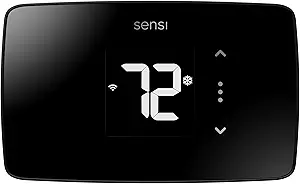 | Best for DIY Installation | Model: ST25 | Connectivity: Wi-Fi, 2.4 GHz | Control methods: App, touch, voice | VIEW LATEST PRICE | See Our Full Breakdown |
| YoLink Thermostat 2 Smart Heat Pump Thermostat (YS4004) |  | Best for Long-Range Sensor Coverage | Model: YS4004 | Connectivity: LoRa | Wireless range: Up to 1/4 mile (2,034 feet) | VIEW LATEST PRICE | See Our Full Breakdown |
| Honeywell TH6320WF2003 Lyric T6 Wi-Fi Programmable Thermostat (3 Heat / 2 Cool) |  | Best for Multi-Stage Systems | Model: TH6320WF2003 | Series: Lyric T6 | Connectivity: Wi-Fi | VIEW LATEST PRICE | See Our Full Breakdown |
| Emporia Vue 3 Home Energy Monitor with 16 Circuit Sensors |  | Best for Circuit-Level Energy Monitoring | Included branch sensors: 16 × 50A sensors | Supported systems: Single phase, single-split phase, and 2-wire; select 3-wire and 3-phase 4-wire Wye systems with additional 200A sensor | Accuracy: ±2% | VIEW LATEST PRICE | See Our Full Breakdown |
| Honeywell Home X2S Smart Wi-Fi Thermostat, White |  | Best for Matter Smart Homes | Heat pump compatibility: Up to 2 heat / 1 cool with electric backup | Conventional system compatibility: Up to 2 heat / 2 cool | Connectivity: 2.4 or 5 GHz Wi-Fi (802.11 b/g/n) | VIEW LATEST PRICE | See Our Full Breakdown |
| Sensi Wi-Fi Smart Thermostat (ST55) |  | Best for DIY Installation | Model: ST55 | Connectivity: Wi-Fi | C-wire: Not required in most applications | VIEW LATEST PRICE | See Our Full Breakdown |
| heat pump monitoring system | Connectivity | Model | Display |
|---|---|---|---|
| Honeywell Home RTH9600WF Smart | Wi-Fi | RTH9600WF | Customizable color touchscreen |
| Honeywell Home Lyric T6 Pro Wi | Wi-Fi | TH6220WF2006 | Manual |
| Honeywell T10+ Pro Smart Therm | — | YTHM1004R3000 | Touchscreen |
| Honeywell Home T5 Smart Wi-Fi | Wi-Fi | — | — |
| Sensi Lite Wi-Fi Smart Thermos | Wi-Fi, 2.4 GHz | ST25 | LCD |
| YoLink Thermostat 2 Smart Heat | LoRa | YS4004 | 4.52-inch LCD |
| Honeywell TH6320WF2003 Lyric T | Wi-Fi | TH6320WF2003 | — |
| Emporia Vue 3 Home Energy Moni | 2.4 GHz Wi-Fi and internet required | — | — |
| Honeywell Home X2S Smart Wi-Fi | 2.4 or 5 GHz Wi-Fi (802.11 b/g/n) | — | — |
| Sensi Wi-Fi Smart Thermostat | Wi-Fi | ST55 | — |
More Details on Our Top Picks
Honeywell Home RTH9600WF Smart Color Wi-Fi Thermostat
The RTH9600WF is my pick for households that want heat pump control to be easy to read and adjust at the wall. Its customizable color touchscreen shows indoor and outdoor conditions and weather, while Wi-Fi, app access, and voice assistant support make remote changes straightforward. Flexible schedules and energy-use features add useful oversight, though this is a thermostat rather than a dedicated heat pump performance monitor: it does not provide the circuit-level energy data of the Emporia Vue 3. Compared with the simpler Honeywell Home T5, the RTH9600WF puts more information on its display, but it also depends on a C-wire or compatible adapter. It suits heat pumps with electric backup; buyers with electric baseboard heat should choose another option.
Pros:- Customizable color touchscreen makes settings and conditions easy to see
- Remote app control and compatibility with Alexa, Google Assistant, and Cortana
- Flexible scheduling and energy-use features
- Displays indoor and outdoor conditions alongside weather information
Cons:- Requires a C-wire or compatible power adapter
- Does not support 120–240V electric baseboard heat
- Heating-only oil furnace compatibility requires a C-wire
Best for: Heat pump owners with electric backup who want a prominent color display, weather information, and remote scheduling.
Not ideal for: Homes with 120–240V electric baseboard heat or no workable C-wire setup.
- Model:RTH9600WF
- Connectivity:Wi-Fi
- Display:Customizable color touchscreen
- Heat pump compatibility:Heat pumps with electric backup
- Voice assistants:Amazon Alexa, Google Assistant, Microsoft Cortana
- Power requirement:C-wire required
- Certification:ENERGY STAR
Our verdict“Choose the RTH9600WF if a clear, information-rich thermostat display matters more than circuit-level heat pump monitoring.”
Honeywell Home Lyric T6 Pro Wi-Fi Programmable Thermostat
The Lyric T6 Pro earns a place for buyers who want scheduled heat pump control with app access and a wall-mounted format. It supports up to 2 heat and 1 cool on a heat pump, giving it a clear fit for common setups, and it works with Alexa and Apple HomeKit. Its more restrained manual display offers less at-a-glance appeal than the RTH9600WF color touchscreen, but that may suit owners who mainly set a schedule and make occasional remote adjustments. The listed compatibility is narrower than the T10+ Pro, which supports more stages and room sensors, so the T6 Pro is a better match for straightforward systems than elaborate zoning needs. Check the wiring and stage requirements before choosing it; the provided data does not establish a heat pump performance dashboard.
Pros:- Supports heat pump and conventional heating and cooling systems
- App-based control over Wi-Fi
- Works with Amazon Alexa and Apple HomeKit
Cons:- Heat pump support is limited to 2 heat and 1 cool stages
- Requires two AA batteries
- Manual display provides less at-a-glance detail than the RTH9600WF
Best for: Owners of a conventional one-stage heat pump who want Wi-Fi scheduling with Alexa or Apple HomeKit control.
Not ideal for: Households needing advanced room-by-room sensor control, higher stage counts, or a highly informative touchscreen.
- Model:TH6220WF2006
- Connectivity:Wi-Fi
- Heat pump capacity:Up to 2 heat / 1 cool
- Conventional system capacity:Up to 2 heat / 2 cool
- Smart home compatibility:Amazon Alexa, Apple HomeKit
- Display:Manual
- Power:AC/DC; 2 AA batteries required
Our verdict“Pick the Lyric T6 Pro for scheduled app control on a compatible, straightforward heat pump system.”
Honeywell T10+ Pro Smart Thermostat Kit with RedLINK 3.0 Sensor
For heat pump owners who need to understand temperature differences across rooms, the T10+ Pro kit is the most targeted choice here. Its included RedLINK 3.0 sensor can measure temperature, humidity, and motion; the system can prioritize comfort zones or average readings, with support for up to 20 sensors. That gives it a different job from the RTH9600WF, whose color screen and weather display favor simple, central control. The T10+ also supports heat pumps up to 4 heat and 2 cool with an equipment interface module, along with dual fuel and radiant hot water. The tradeoff is setup complexity: full room control requires additional sensors, and the system needs 24 VAC. It offers richer room-level context, not circuit-level energy measurement like the Emporia Vue 3.
Pros:- Supports room prioritization or temperature averaging with RedLINK 3.0 sensors
- Sensor data includes temperature, humidity, and motion
- Broad compatibility includes heat pumps, dual fuel, and radiant hot water
- Offers 7-day schedules, geofencing, and temperature and filter alerts
Cons:- Full room-control features require RedLINK 3.0 sensors, which are sold separately
- Requires a 24 VAC system
- More setup and configuration than a simpler option such as the Honeywell Home T5
Best for: Owners of multi-room or multi-stage heat pump systems who want to prioritize comfort using room sensors.
Not ideal for: Buyers seeking a basic thermostat, avoiding added sensor setup, or lacking a 24 VAC system.
- Model:YTHM1004R3000
- Display:Touchscreen
- Power:24 VAC
- Heat pump compatibility:Up to 4 heat / 2 cool with EIM
- Scheduling:7-day programmable, 4 periods per day
- Maximum sensors:20 RedLINK 3.0 sensors
- Sensor range and measurements:200 ft; temperature, humidity, motion
Our verdict“Choose the T10+ Pro if room-to-room comfort control matters more than simple installation or circuit-level energy data.”
Honeywell Home T5 Smart Wi-Fi Thermostat
The Honeywell Home T5 is a sensible fit for heat pump owners who mainly want remote adjustments, a weekly schedule, and automatic Home and Away behavior. Its location-based geofencing can adapt temperature settings around household comings and goings, while monthly energy reports give a basic view of use. Compared with the RTH9600WF, the T5 has a simpler feature set and no listed color display or weather information; in return, its appeal is focused on app-based routine management. It also does not match the T10+ Pro for sensor-driven room prioritization. The listed compatibility notes focus on oil furnace systems, so buyers should confirm their specific heat pump wiring and system support before purchase. A C-wire adapter may be needed, adding an installation hurdle.
Pros:- Remote temperature control from a smartphone or tablet
- Supports 7-day scheduling and location-based Home and Away modes
- Provides monthly energy reports
- ENERGY STAR certified
Cons:- A C-wire power adapter may be required
- The listed compatibility details do not specify heat pump stage support
- Heating-only oil systems require a C-wire
Best for: Heat pump households that want smartphone control and geofenced scheduling for changing daily routines.
Not ideal for: Buyers who need room sensors, a detailed local display, or confirmed support for a particular multistage heat pump without checking compatibility.
- Connectivity:Wi-Fi
- Scheduling:7-day flexible scheduling
- Temperature control:Location-based geofencing; automatic Home and Away modes
- Energy reporting:Monthly energy reports
- Certification:ENERGY STAR
- Power requirement:C-wire power adapter may be required
- Compatibility note:Works with most heat/cool oil furnace systems; heating-only oil systems require a C-wire
Our verdict“Choose the T5 for app-led scheduling and geofencing after confirming it matches your heat pump wiring and system.”
Sensi Lite Wi-Fi Smart Thermostat, Alexa Compatible, DIY Installation, ENERGY STAR Certified (ST25)
The Sensi Lite ST25 is the lineup’s DIY-focused pick: it pairs app, touch, and voice control with step-by-step installation guidance and a built-in level. That makes it more approachable for owners who want everyday heat pump scheduling and remote access without a feature-heavy interface. It also supports geofencing and energy reports, with Alexa and Google Assistant compatibility. Unlike the T10+ Pro, it has no listed room-sensor network for prioritizing temperatures across the home, so it is better suited to a single-zone setup. The power caveat matters: although it can use batteries or a C-wire, a C-wire is required for heat pump and heat/cool-only systems. Its Wi-Fi also works only on 2.4 GHz, which may constrain some home networks.
Pros:- DIY installation guidance and built-in level simplify wall mounting
- Supports remote access, schedules, geofencing, and energy reports
- Works with Amazon Alexa and Google Assistant
- Includes stated privacy protections for personal and thermostat activity data
Cons:- Requires a C-wire for heat pump and heat/cool-only systems
- Wi-Fi is limited to 2.4 GHz
- Does not offer the room-sensor prioritization available with the T10+ Pro
Best for: DIY-minded owners of compatible 24-volt heat pumps who want app control, scheduling, and guided installation.
Not ideal for: Homes without a usable C-wire for heat pump operation, 5 GHz-only networks, or buyers seeking room-by-room sensing.
- Model:ST25
- Connectivity:Wi-Fi, 2.4 GHz
- Control methods:App, touch, voice
- Display:LCD
- Power:Battery or C-wire; C-wire required for heat pump systems
- Heat pump compatibility:Heat pump
- Voice assistants and certification:Amazon Alexa, Google Assistant; ENERGY STAR
Our verdict“Pick the Sensi Lite if you want a guided DIY thermostat for a compatible heat pump and can meet its C-wire and Wi-Fi requirements.”
YoLink Thermostat 2 Smart Heat Pump Thermostat (YS4004)
The YoLink Thermostat 2 stands out when a heat pump is far from the rooms where you want to monitor conditions: its LoRa connection reaches up to 1/4 mile, and it supports up to two external sensors. Dual-stage heating and cooling also give it more specific heat pump control than the Emporia Vue 3, which tracks electrical use at the circuit panel rather than controlling temperature. The tradeoff is a separate YoLink Hub, plus a 24VAC system with a C-wire; that makes this a less straightforward replacement than the Sensi ST55, which does not need a C-wire in most installations. Choose it for distance and room-level sensing, while accounting for the extra hub and wiring requirements.
Pros:- LoRa wireless range reaches up to 1/4 mile
- Supports dual-stage heating and cooling
- Accepts up to two external YS8007-UC sensors
- Works with Alexa, Google Home, IFTTT, and Home Assistant
Cons:- Requires a YoLink Hub sold separately
- 24VAC and C-wire requirements limit compatibility with some installations
Best for: Heat pump owners in large homes or detached spaces who need long-range sensor communication and dual-stage control
Not ideal for: Homeowners without a compatible 24VAC C-wire setup or those who want a thermostat that works without buying a separate hub
- Model:YS4004
- Connectivity:LoRa
- Wireless range:Up to 1/4 mile (2,034 feet)
- Voltage:24VAC
- Display:4.52-inch LCD
- Sensor support:Up to 2 YS8007-UC sensors
- Hub:Required; sold separately
- Smart home compatibility:Alexa, Google Home, IFTTT, Home Assistant
Our verdict“Choose the YoLink Thermostat 2 if long-range sensor coverage and dual-stage heat pump control matter more to you than avoiding a separate hub.”
Honeywell TH6320WF2003 Lyric T6 Wi-Fi Programmable Thermostat (3 Heat / 2 Cool)
The Honeywell Lyric T6 is the stage-control pick in this group, supporting up to 3 heating and 2 cooling stages. That capacity suits a compatible heat pump setup with more operating stages than the Honeywell Home X2S, which supports up to 2 heat and 1 cool stage for heat pumps with electric backup. Wi-Fi and programmable schedules give you remote access and a way to set routines, but the supplied information does not list room sensors or energy monitoring, so this is less useful for tracking temperatures beyond the thermostat itself than the YoLink Thermostat 2. A C-wire is required in many installations, and some systems may call for professional installation. Its main appeal is broad stage support, not sensor coverage.
Pros:- Supports up to 3 heating and 2 cooling stages
- Wi-Fi enables remote control
- Programmable schedules can support routine temperature settings
- Compact 4.09-inch square design
Cons:- C-wire is needed for power in many installations
- Some HVAC configurations may require professional installation
Best for: Owners of compatible multi-stage heat pump systems who want Wi-Fi access and programmable schedules
Not ideal for: Buyers who need room sensors, circuit-level energy tracking, or a thermostat installation that avoids C-wire concerns
- Model:TH6320WF2003
- Series:Lyric T6
- Connectivity:Wi-Fi
- Stages:3 heat / 2 cool
- Type:Programmable thermostat
- Dimensions:4.09 × 4.09 × 1.06 inches
- Country of origin:United States
Our verdict“Pick the Lyric T6 when your compatible heat pump needs more stages than the simpler X2S supports and you can accommodate its wiring needs.”
Emporia Vue 3 Home Energy Monitor with 16 Circuit Sensors
If your main question is how much electricity the heat pump uses, the Emporia Vue 3 offers a different kind of monitoring from thermostat-focused options such as the Honeywell Lyric T6. Its 16 clamp-on sensors track individual circuits as well as whole-home use, which can help you distinguish heat pump consumption from other household loads. Solar and net metering support adds context for homes that generate electricity. This is an energy monitor, not a thermostat: it will not adjust the heat pump’s temperature or provide room-by-room climate sensing like the YoLink Thermostat 2. Installation takes place in the electrical panel and requires compatible wiring, internet, and 2.4 GHz Wi-Fi. One-second data is retained for only three hours, while longer-term records use coarser intervals.
Pros:- Includes 16 branch circuit sensors for individual-load monitoring
- Tracks whole-home and circuit-level electricity use
- Supports solar and net metering
- Provides live reports, notifications, and energy management automations
Cons:- Requires compatible circuit-panel installation, internet, and 2.4 GHz Wi-Fi
- Some configurations need an additional 200A sensor
- One-second data is retained for three hours, and is available only while the app is open
Best for: Heat pump owners who want to track the unit’s circuit-level electricity use, especially in homes with solar or net metering
Not ideal for: Buyers seeking thermostat control, room temperature monitoring, or an installation that does not involve the electrical panel
- Included branch sensors:16 × 50A sensors
- Supported systems:Single phase, single-split phase, and 2-wire; select 3-wire and 3-phase 4-wire Wye systems with additional 200A sensor
- Accuracy:±2%
- Connectivity:2.4 GHz Wi-Fi and internet required
- Installation:Circuit panel with clamp-on sensors
- Data retention:1-second data: 3 hours; 1-minute data: 7 days; 1-hour data: indefinitely
- Certifications:UL Listed and CE Listed
- Warranty:1 year
Our verdict“Choose the Emporia Vue 3 to investigate heat pump electricity use at the circuit panel, while keeping a separate thermostat for temperature control.”
Honeywell Home X2S Smart Wi-Fi Thermostat, White
The Honeywell Home X2S makes the most sense for heat pump owners who want thermostat control to fit into a Matter-based smart home. It supports Matter alongside Alexa, Google Assistant, and Apple HomeKit, a wider named platform mix than the Sensi ST55, whose listed voice assistant support is Alexa. For heat pumps, the X2S handles up to 2 heat and 1 cool stage with electric backup, so the Honeywell Lyric T6 is the better match for systems that need more stages. Scheduling, auto-away, and filter reminders add practical household controls, but a C-wire is required and electric baseboard heat is incompatible. It also does not provide the circuit-level electricity reporting offered by the Emporia Vue 3.
Pros:- Matter-certified with Apple HomeKit, Alexa, and Google Assistant compatibility
- Supports flexible schedules and auto-away
- Includes filter reminders and optional humidity display
- Supports Wi-Fi on both 2.4 and 5 GHz bands
Cons:- Requires a 24VAC C-wire
- Does not support electric baseboard heat
- Heat pump support is limited to 2 heat and 1 cool stage with electric backup
Best for: Heat pump owners with electric backup who want Matter compatibility across Apple, Google, and Alexa smart home setups
Not ideal for: Owners of multi-stage heat pumps needing more than 2 heat and 1 cool stage, or homes without a C-wire
- Heat pump compatibility:Up to 2 heat / 1 cool with electric backup
- Conventional system compatibility:Up to 2 heat / 2 cool
- Connectivity:2.4 or 5 GHz Wi-Fi (802.11 b/g/n)
- Smart home compatibility:Matter, Amazon Alexa, Google Assistant, Apple HomeKit
- Power requirement:24VAC C-wire required
- Operating setpoint:Extended low-heat setpoint of 32°F
- Certifications:ENERGY STAR and Matter
- Warranty:2 years
Our verdict“Choose the X2S for a Matter-connected heat pump with electric backup when its stage limits and C-wire requirement fit your system.”
Sensi Wi-Fi Smart Thermostat (ST55)
The Sensi ST55 is the approachable choice for heat pump owners who want remote control and scheduling without a complicated setup process. Its built-in level and step-by-step app instructions support DIY installation, and a C-wire is not required in most applications. That gives it an installation advantage over the Honeywell Home X2S, which requires a C-wire, though Sensi says some systems still need one. The ST55 also provides energy reports, equipment alerts, and maintenance reminders, giving owners useful operating and upkeep information. Its listed voice assistant support is limited to Alexa, while the X2S offers a broader smart home platform list. The product data does not specify heat pump stage limits, so buyers with complex multi-stage equipment should verify compatibility before choosing it.
Pros:- Built-in level and app instructions support DIY installation
- C-wire is not required in most applications
- Offers remote access and flexible scheduling
- Provides energy reports, equipment alerts, and maintenance reminders
Cons:- Some installations still require a C-wire
- Listed voice assistant compatibility is limited to Alexa
- Product data does not specify heat pump stage support
Best for: Heat pump owners with common HVAC setups who want guided DIY installation, remote access, and maintenance alerts
Not ideal for: Owners of complex multi-stage systems who need documented stage compatibility or buyers seeking broad smart home platform support
- Model:ST55
- Connectivity:Wi-Fi
- C-wire:Not required in most applications
- HVAC compatibility:Works with equipment found in most homes
- Voice assistant:Alexa
- Certification:ENERGY STAR
- Monitoring features:Energy usage reports, equipment alerts, maintenance reminders
Our verdict“Choose the Sensi ST55 for a guided DIY thermostat setup on a compatible heat pump when its unspecified stage support meets your system’s needs.”

How We Picked
I compared these products by asking what a heat pump owner can actually learn or control with each one. The main criteria were compatibility with heat pump wiring and staging, clarity of app-based controls, the type and depth of monitoring, sensor support, installation demands, and how much flexibility each system offers. A thermostat can adjust schedules and setpoints, but that alone does not reveal how much electricity the heat pump or other circuits use; the Emporia Vue 3 fills a different role by measuring electrical use across circuits.
The ranking gives priority to products with a clear fit for heat pump households and a useful monitoring or comfort benefit. The T10+ Pro leads for its included room sensor and thermostat control, while the Emporia earns a distinct place for circuit-level energy visibility. The remaining thermostats are ordered by their apparent fit for different levels of system complexity and setup simplicity. Product names alone do not confirm compatibility, so I would check each model’s current wiring requirements against the heat pump’s control board and any auxiliary heat before choosing.
Factors to Consider When Choosing Best Heat Pump Monitoring Systems
Before choosing, decide what you mean by monitoring. A thermostat helps you observe and control indoor conditions; a circuit monitor measures electrical consumption. That distinction shapes the equipment you need, the installation work involved, and the kind of information you can act on.
Decide Whether You Need Comfort Data or Energy Data
Start with the problem you want to solve. If certain rooms feel too warm or cool, a thermostat with remote room sensors may help it respond to conditions beyond the hallway where the thermostat sits. If you want to know how much electricity the heat pump draws, a thermostat’s runtime estimates may not answer that question; circuit-level measurement can offer a clearer view. Some homes benefit from both approaches, but buying one device and expecting it to do the other’s job leads to disappointment. Identify whether your goal is steadier room temperatures, schedule control, or an electricity-use breakdown. That choice narrows the field before you compare apps or smart-home features.
Confirm Wiring, Stages, and Auxiliary Heat
Heat pumps can use more than one heating stage and may rely on auxiliary or emergency heat in cold weather. A thermostat that supports a basic setup may not handle the specific combination of reversing valve, auxiliary heat, and system stages in your home. Check the existing thermostat terminals and the heat pump’s installation documents, then compare them with the new model’s wiring guide. Pay particular attention to whether a common wire is required or an adapter is supplied. If the wiring is unclear, ask an HVAC professional to identify the system before ordering. A technically capable thermostat is useful only if it can control your equipment correctly.
Treat Installation as Part of the Purchase Decision
DIY installation can be manageable when the existing wiring is clearly labeled and the replacement supports the same system configuration. It becomes less predictable when wires are missing, terminals are repurposed, or the heat pump has separate controls for auxiliary heat. Circuit monitors can involve work inside the electrical panel, which calls for more care than swapping a wall thermostat. Do not assume that an easy-to-use app means an easy installation. Review the manufacturer’s wiring instructions before removing the old thermostat, and take a photo of the connections. If you cannot identify the conductors confidently, use a qualified installer.
Check What the App Measures and Keeps
Apps vary in what they show, so look for the specific information you expect to use. A thermostat app may provide setpoints, schedules, alerts, and indoor readings without reporting actual electricity consumption. A whole-home monitor can show electrical demand by circuit, but it does not replace thermostat scheduling or room-temperature control. Also check whether remote access depends on a stable Wi-Fi connection and whether the features you need require an account or cloud service. Think about who will use the app and whether they need simple controls or detailed charts. Buying for a clear daily task usually matters more than collecting features that will go unused.
Decide When Separate Sensors or a Monitor Are Worth Adding
Room sensors make the most sense when the thermostat’s location does not reflect comfort in the rooms people occupy. They can inform temperature control, but they do not fix poor airflow, insulation gaps, or an undersized system. Circuit monitoring is worthwhile when you need evidence about consumption patterns, such as whether the heat pump is drawing power at unexpected times. That data can point to a question for an HVAC technician, though it does not diagnose a mechanical fault by itself. If your main issue is one uncomfortable room, investigate airflow before investing in energy analytics. Match the extra hardware to a measurable question you want answered.
Choose Flexibility for the Home You Have
Smart-home compatibility can make controls easier, but it should come after equipment compatibility and core monitoring needs. Consider whether household members use voice assistants, whether you want schedules managed in one app, and whether the system may change during a renovation. A thermostat with support for more complex configurations may provide useful headroom, yet extra setup options can add complexity for a simple installation. Conversely, a basic model may be a poor fit if you plan to add sensors or change the heating system. Check the exact model number and supported features rather than relying on a product family name. Buying for likely needs over the next few years can prevent an unnecessary replacement.
Frequently Asked Questions
Can a smart thermostat tell me exactly how much electricity my heat pump uses?
Usually, a thermostat reports temperature, schedules, and equipment operation rather than directly measuring the heat pump’s electrical consumption. Runtime information can help you spot operating patterns, but it is not the same as circuit-level energy measurement. For a more direct view of electrical use, a monitor such as the Emporia Vue 3 is designed to track circuits in the electrical panel. Check that the monitor can identify the circuit serving your heat pump and that its installation fits your panel. Use the resulting data as a guide to questions, not as a substitute for a service diagnosis.
How can I tell whether one of these thermostats supports my heat pump?
Compare the thermostat’s wiring diagram and supported system types with the wires and equipment at your existing control. Verify the reversing-valve connection, heating and cooling stages, auxiliary heat, and any required common wire. Product titles can indicate broad compatibility, but they do not establish that every configuration is supported. If you are uncertain about a terminal or the system’s staging, ask an HVAC professional to check before installation. This step can prevent a thermostat that powers on but cannot control the system properly.
Should I buy a thermostat with room sensors or a separate energy monitor?
Choose room sensors when comfort varies between the thermostat location and rooms where people spend time. Choose a circuit monitor when the unanswered question is how much electricity the heat pump or other major loads consume. The T10+ Pro’s included sensor addresses the first need, while the Emporia Vue 3 is built for the second. One does not replace the other, and neither repairs airflow or equipment faults. If both comfort and energy use matter, consider whether each device’s data will lead to a practical change before adding both.
Is DIY installation a good idea for a heat pump thermostat?
It can be reasonable when the wiring is clearly identified and the new thermostat supports the same heat pump configuration. Read the installation guide before disconnecting anything, and record the existing terminal connections. Extra caution is needed with auxiliary heat, multiple stages, or unusual wiring, since a mistaken connection can affect system operation. Electrical-panel monitors call for separate care because they connect at the breaker panel. If the instructions do not clearly match your setup, a professional installation is the safer route.
Will a thermostat or energy monitor identify why my heat pump is using more power?
Monitoring can show when equipment runs or how electrical use changes, which gives you useful evidence to investigate. It generally cannot determine on its own whether higher consumption comes from weather, settings, airflow, auxiliary heat, or a mechanical problem. Compare usage across similar conditions and note changes in setpoints or schedules. If the data shows an unusual pattern or comfort has worsened, share the readings with an HVAC technician. The monitor helps narrow the question; it does not replace a system inspection.
Conclusion
For most households seeking comfort-focused heat pump control, I’d choose the Honeywell Home T10+ Pro as the best overall pick because its included room sensor addresses temperature differences that a wall thermostat can miss. The Sensi Lite is my best value and beginner option for buyers who want straightforward app control and a DIY-oriented setup, provided their wiring is compatible. For a premium monitoring role centered on electricity use, the Emporia Vue 3 is the specific pick, with circuit-level tracking that thermostats here do not offer. Buyers with more involved heat pump configurations should compare the Lyric T6 Pro models against their system requirements, while those needing a simpler thermostat can start with the Honeywell T5 or X2S. Match the device to the question you need answered, then verify compatibility before installation.
Fall Picks
fall essentials
As an affiliate, we earn on qualifying purchases.