
TL;DR

Get backup power and energy gear delivered free with Prime
- Fast, free delivery on millions of items
- Prime Video, Amazon Music and more included
- Member-only deals all year
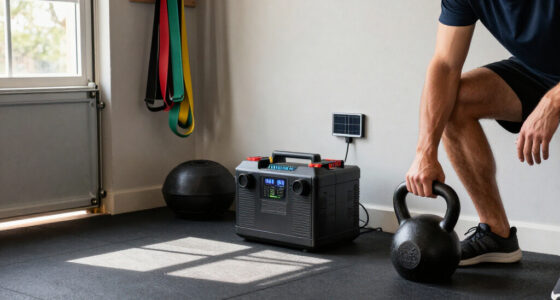
A solar powered battery generator is usually a portable power station: a rechargeable battery with an inverter, outlets, and charging electronics. Match its capacity in watt-hours to how long you need power, and its output in watts to what your appliances draw, including startup surges. Solar recharging depends on sunlight and equipment limits, so treat advertised charge times as best-case estimates.
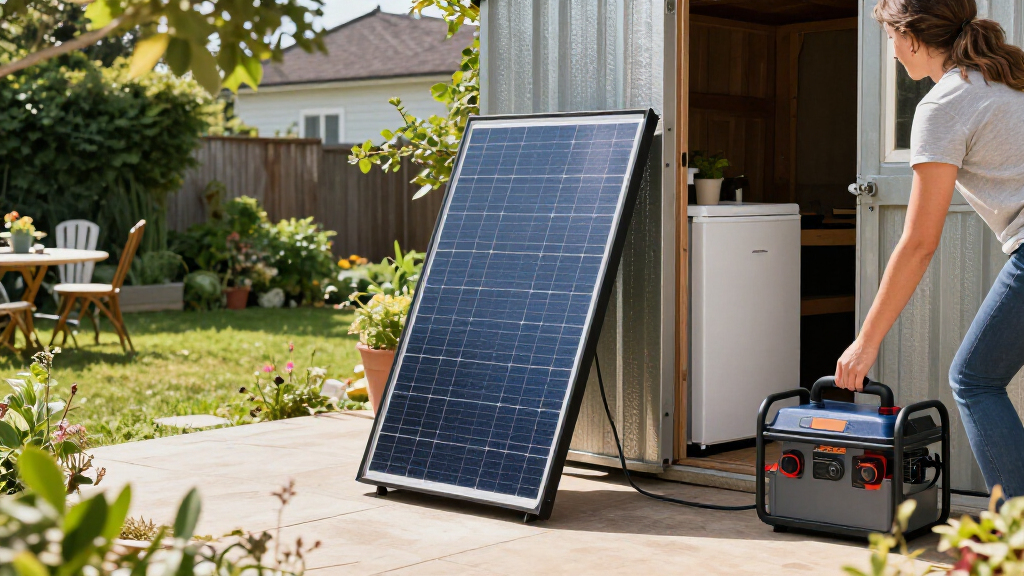
A refrigerator may use modest power once it is running, then demand a sharp burst when its compressor starts. That brief surge can be the difference between a solar powered battery generator that keeps your food cold and one that shuts down. The label’s biggest number won’t tell you the whole story.
A solar powered battery generator is usually a portable power station: a rechargeable battery with an inverter, charging electronics, and outlets. Solar panels recharge the unit; they don’t make it a fuel generator, and the station itself does not generate electricity. While operating, it produces no exhaust and is generally quiet.
You’ll learn how to read capacity and output ratings, estimate runtime, and judge solar charging claims against real sunlight. Those details help you choose a station for a weekend campsite, a CPAP machine, or a short outage without paying for capacity you can’t use—or discovering too late that your appliance needs more power.
A solar powered battery generator is usually a portable power station that stores electricity; panels recharge it.
Compare watt-hours for stored energy with watts and surge ratings for appliance compatibility.
Estimate runtime using usable capacity divided by device draw, then allow for losses and changing loads.
Solar charge times depend on sunlight, panel setup, and the station’s input limits.
Use compatible transfer equipment installed by a licensed electrician to connect backup power to home circuits.
Know what your battery generator can—and can’t—do
A solar powered battery generator stores electricity in a battery and sends it to devices through outlets or USB ports. Most are portable power stations, with an inverter that converts battery power into the alternating current many household appliances use. Solar panels, a wall outlet, or sometimes a vehicle can recharge the battery.
Think of the station as a water tank with a tap: watt-hours (Wh) measure the water stored, while watts (W) describe how quickly it can flow out. Those numbers answer different questions. A station with enough stored energy for a coffee maker may still fail to run it if its inverter cannot handle the appliance’s power draw.
For instance, a camper might use USB ports to charge a phone and run a lantern, then plug a laptop into AC power. A simple power bank can handle the first job, but a station with an inverter can serve more kinds of equipment. Unlike a fuel generator, it burns no fuel and creates no exhaust while operating, although its battery still needs careful handling.
Check the continuous output for appliances that run steadily and the surge rating for startup bursts. Look for pure sine-wave AC output if your equipment calls for it. Outlet types, USB ports, pass-through charging, and solar-input limits vary by model, so check the product manual before planning around a particular feature.
Products Worth Considering

Shark NV752 Rotator Powered Lift-Away TruePet Upright Vacuum, Bordeaux

eufy Security SoloCam E42 4-Camera Kit, 4K Solar Security System

Samsung 48 4K OLED Smart TV (2026) with WireLogic 8ft Ultra High Speed HDMI Cable
As an affiliate, we earn on qualifying purchases.
Match watts and watt-hours to the devices you need
Choose a station by checking both the power your devices need at once and the energy they use over time. Watts (W) measure the rate of electricity use; watt-hours (Wh) measure energy stored. You need enough output for the largest simultaneous load and enough usable capacity to cover the hours you plan to run it.
Make a short load list before you shop. Imagine an outage where you want a 10 W router for eight hours and a 60 W laptop for four hours. Together, those devices use about 320 Wh before losses: 10 × 8 plus 60 × 4. A real station should offer more capacity, since conversion losses and battery-management limits reduce the energy available at the outlets.
Then check each appliance’s draw against the station’s output. A heater’s 1,500 W demand can rule out a compact unit even if its battery holds plenty of energy. Motors and compressors can also need a startup surge above their ordinary running wattage; a refrigerator may draw a brief spike as its compressor kicks in.
- List each device and its wattage from the label or manual.
- Estimate daily use by multiplying watts by hours.
- Add the loads you’ll run at the same time and compare the total with continuous output.
- Check startup demand for appliances with motors, compressors, or heating elements.
- Add a margin for inverter losses and changing use rather than treating the estimate as a guarantee.
This calculation gives you a more useful starting point than choosing by battery size alone.
Estimate runtime without trusting a perfect-world number
Estimate runtime by dividing the station’s usable battery capacity in watt-hours by the device’s power draw in watts. That gives a rough upper bound, not a promise: real runtime is usually lower because of inverter losses, battery-management limits, temperature, and loads that change while running.
For example, suppose a station provides about 900 Wh of usable energy and a laptop draws 60 W from its AC outlet. The simple calculation, 900 ÷ 60, gives 15 hours. In practice, conversion losses and the laptop’s changing activity could shorten that time, so plan for less—especially if you also charge a phone or run a router.
Appliance labels can hide those changing loads. A refrigerator’s compressor switches on and off, a laptop draws less while idle, and a CPAP machine’s power use can vary with settings and accessories. If you need overnight power for a CPAP, check the machine’s own guidance and test the setup at home before relying on it during a trip or outage.
Cold weather can also reduce the energy you can draw from a battery, and a station may limit output to protect itself. Treat a runtime calculator as a planning tool, then leave extra capacity for conditions you can’t predict. A short test with your actual appliance offers a more realistic picture than a best-case estimate on a product page.
Set realistic expectations for solar charging
Solar panels recharge a power station at a rate that changes with sunlight, panel angle, shade, temperature, and the station’s input limit. A panel’s rated wattage is a laboratory maximum, not a daily energy promise. That is why a listed charge time may describe bright, favorable conditions rather than a cloudy afternoon at your campsite.
Suppose you bring a station on a two-night trip and leave its panel partly shaded by a pine tree. Even a panel with a high rating may produce far less power than it could in direct midday sun. Tilting it toward the sun and moving it as the light shifts can help, but the station’s manual still sets the maximum solar input it can accept.
Before mixing panels from different brands, check connector type, voltage, current, and polarity against the power station’s specifications. A plug that fits does not prove electrical compatibility. Some stations can also charge from a wall outlet or a vehicle, which can help when clouds persist or you drive between campsites.
Many models support pass-through charging, which means you can use the station while it charges, but support and restrictions differ. Check the manual, particularly for solar use. For dependable backup, plan around the energy you already have stored and treat solar as a variable way to refill it—not an uninterrupted source of power.
Compare battery chemistry, cost, and daily convenience
Battery chemistry affects a station’s weight, price, and rated cycle life, so two units with similar capacity can suit different users. Many newer models use lithium iron phosphate (LFP) cells, which are typically rated for more charge cycles than conventional lithium-ion chemistries such as NMC. A cycle-life rating comes from specified test conditions; the battery still loses capacity with use and age.
That tradeoff matters if you use a station every week. A camper who takes it out twice each summer may value low weight and purchase price more than a high cycle rating. Someone who charges it often at home could put more weight on the maker’s cycle-life and capacity-retention claims, while checking how those claims were tested.
Recent models include larger expandable systems, faster AC charging, higher solar input, and app-based monitoring. These features can make a station easier to manage, but specifications change quickly. Confirm the current model’s charging time, cycle rating, and expandable capacity in manufacturer documentation before buying.
Compare the features you’ll actually use, not just the largest advertised number:
- LFP chemistry may suit frequent cycling, depending on the model and price.
- Modular batteries can add capacity, but check compatibility and expansion costs.
- Fast AC charging can shorten a wall recharge, though solar charging follows different limits.
- App monitoring can show input and output, but does not replace checking the manual.
For example, an app that shows the station is drawing 45 W while a laptop is plugged in helps refine your runtime estimate on the next trip.
Use a portable station safely during outages
A portable power station can run selected devices during an outage, but a standard model cannot safely power a home by plugging it into an ordinary wall outlet. Home circuits need compatible equipment, and larger appliances can exceed a portable unit’s output or capacity. For a circuit connection, use suitable transfer equipment installed by a licensed electrician.
Picture a winter outage: you want to run a router, charge phones, and keep a small lamp on. A station with suitable outlets and enough stored energy may cover those specific needs. A central air conditioner or electric range is a different scale of load and may call for a much larger system and professionally installed equipment.
Unlike a fuel generator, the battery unit makes no exhaust while operating, so it can be used indoors when the manufacturer’s instructions allow it. Keep it dry, away from excessive heat, and protected from impact. Use the supplied charging equipment and follow the manual’s limits for charging and ventilation.
Never feed power into house wiring through an ordinary outlet. Backfeeding can put utility workers and occupants at risk; use a properly installed transfer system for home circuits.
For electrical, roof, or structural work related to a backup installation, hire a licensed professional and follow local permits and code requirements. The fact that a battery station is portable does not make every connection or installation a DIY job.
Frequently Asked Questions
How is a solar powered battery generator different from a fuel generator?
A solar powered battery generator stores electricity in a battery and supplies it through outlets, often after converting it with an inverter. Solar panels can recharge it. It produces no exhaust while operating and is generally quiet, while a fuel generator burns fuel and needs engine maintenance.
How do I calculate the capacity I need?
List each device’s wattage and the hours you expect to use it, then multiply watts by hours to estimate watt-hours. Add the devices you may run at the same time and allow extra capacity for inverter losses. Check continuous output and startup surges separately; battery capacity alone does not tell you whether an appliance will run.
How long can a power station run a refrigerator or CPAP machine?
There is no universal runtime because power use varies by model, settings, and use pattern. Divide usable battery capacity by the device’s average draw for a rough estimate, then allow for conversion losses and changing loads. For medical equipment such as a CPAP, check its guidance and test your setup before depending on it.
Can a portable power station run a whole house or central air conditioner?
Usually not by itself. Large appliances and home circuits can demand more output and energy than a portable station provides, and connecting circuits requires suitable transfer equipment. Have a licensed electrician install that equipment; never plug a station into a household outlet to feed home wiring.
Can I use solar panels from a different brand?
Sometimes, if the panel’s connector, voltage, current, and polarity match the station’s requirements. Check the power station’s solar-input specifications and manual before connecting another brand’s panel. A connector that fits is not enough to show compatibility.
Is a solar powered battery generator worth the price?
It depends on how you’ll use it. A battery station avoids on-site exhaust and routine engine upkeep, but it can cost more per unit of stored energy and recharge slowly from small panels. Compare noise, maintenance, access to recharge power, required runtime, and appliance demands against a fuel generator before choosing.
Conclusion
Choose a station by starting with the devices you need to run, how long you need them, and whether they create a startup surge. Then match both watt-hours and watt output to that list, leaving room for losses and imperfect charging weather.
Think of solar as a refill, not a promise that the power will never run out. A careful match can keep your campsite lit or your router humming while rain taps the window.