TL;DR

Get backup power and energy gear delivered free with Prime
- Fast, free delivery on millions of items
- Prime Video, Amazon Music and more included
- Member-only deals all year
Green Mountain Power has connected more than 5,500 Vermont homes to a battery programme that can provide backup power and support the electric grid. The utility says the network is the state’s largest power source, though it does not generate electricity on its own and the report gives no measure of how much grid demand it displaces.
Green Mountain Power has connected more than 5,500 Vermont homes to batteries that can provide backup power during outages and be coordinated to support the grid. The utility says the combined network has become Vermont’s largest power source, but the batteries store electricity rather than generate it, and the report does not quantify how much conventional generation they replace.
The programme leases two batteries to participating households for $55 a month over 10 years. Pollyanna Bladyka, who lives in Springfield, joined in 2024 after frequent outages led her to consider buying a gas generator. She said the generator would have cost $12,000. Since installing the batteries, she says, her home has not lost power. The report says her system could supply her home for up to two days if she limits use of appliances such as the dishwasher and washing machine.
Green Mountain Power can call on enrolled batteries when the grid needs support, while reserving some stored power for customers, particularly during outages. The network also coordinates other resources, including electric vehicle batteries, commercial demand response and several utility-scale batteries. The utility says about half of homes in its home battery programme also have rooftop solar, which can generate electricity.
GMP’s programme began as a pilot in 2017. Enrolment rose after state regulators lifted a cap in 2023, and the utility says more than 2,500 people have enrolled since then. GMP serves more than 75% of Vermont and has set a goal of eliminating all power outages by 2030; the report says batteries are one part of that effort, alongside measures such as putting power lines underground.
How Batteries Support Vermont’s Grid
The network links customer-owned or leased equipment into a resource the utility can coordinate across the grid. During periods of high demand, stored electricity and demand response may reduce pressure on the system and lessen the need for additional power plants. That potential matters as electricity demand rises and utilities add more distributed resources such as rooftop solar.
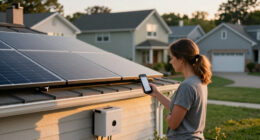
For participating households, the immediate value is backup power. Rural Vermont’s cold winters can make prolonged outages especially difficult, according to the report. Bladyka said the batteries have ended the interruptions to her morning routine. Megan Browning, another participant with rooftop solar and two batteries, said her household stayed powered when a windstorm knocked out a nearby line and affected other homes.
The project illustrates how a utility can combine many small energy resources into a coordinated system. It does not establish that batteries alone can replace conventional power plants: the network depends on stored electricity, solar generation and other grid resources, and the report provides no figures for its total capacity or electricity supplied.
A Pilot That Grew After 2023
Virtual power plants group consumer devices such as home batteries, solar panels, smart thermostats and electric vehicle batteries under software coordination. They can shift or reduce demand and make stored electricity available when the grid needs it. The devices remain distributed among homes and businesses rather than operating as a single conventional generating station.
Green Mountain Power launched its battery programme as a pilot in 2017. Participation accelerated in 2023 after regulators removed a programme cap, according to the utility. The report describes the Vermont network as potentially among the largest battery programmes in the United States; that assessment comes from Kate Peters, a virtual power plant expert at consultancy The Brattle Group.
““didn’t even notice a flicker””
— Megan Browning, a programme participant
Capacity and Replacement Figures Missing
The report does not state the network’s total battery capacity, how much electricity it supplies during peak periods, or how often GMP calls on household batteries. It also gives no quantified comparison showing how much additional power plant construction the programme has avoided. The claim that the network is Vermont’s largest power source is attributed to the report, but its measurement basis is not specified.
Individual outage experiences do not establish how the programme performs across all participants or during a prolonged regional emergency. Bladyka’s stated two-day backup estimate depends on limiting electricity use, and the report does not detail battery performance across different homes or conditions.
GMP’s 2030 Reliability Goal
Green Mountain Power says it aims to eliminate all power outages by 2030, using the battery programme alongside other measures, including undergrounding power lines. The report says Vermont is testing how far the virtual power plant model can go, but does not give a timetable or specific benchmarks for that work.
The next useful measures to watch are programme enrolment, the network’s available capacity, how often the utility calls on batteries and whether reported reliability improves across its service area. The utility’s 2030 goal remains a target, not a confirmed outcome.
Key Questions
What is Vermont’s home battery programme?
Green Mountain Power leases two home batteries to participating customers for $55 per month over 10 years. The utility can coordinate the batteries to support the grid while keeping some reserve power for customers.
How many homes take part?
The report says more than 5,500 Vermont residents have similar home battery systems. GMP says more than 2,500 people enrolled since regulators lifted a programme cap in 2023.
Do the batteries generate electricity?
No. Batteries store electricity and release it when needed. Some participating homes also have rooftop solar, which can generate power; the report says roughly half of the homes in the battery programme have solar panels.
Can a home battery keep a house powered during an outage?
Participants interviewed for the report said their homes stayed powered during outages. Bladyka said her system could run her home for up to two days if she limits appliance use. That is her reported estimate, not a guarantee for every home or outage.
Has the programme replaced Vermont power plants?
The report says the network can reduce demand and may lessen the need to build additional fossil fuel power plants. It does not provide figures showing that specific plants have closed or been replaced, or quantify how much generation the batteries displace.
Source: hn
Halloween Picks
halloween
As an affiliate, we earn on qualifying purchases.