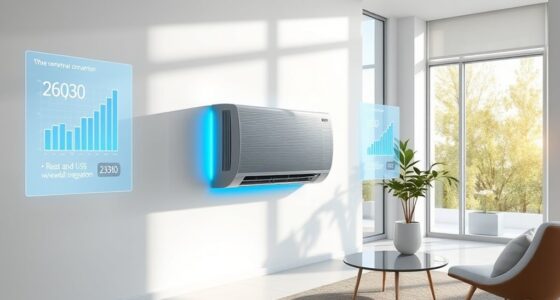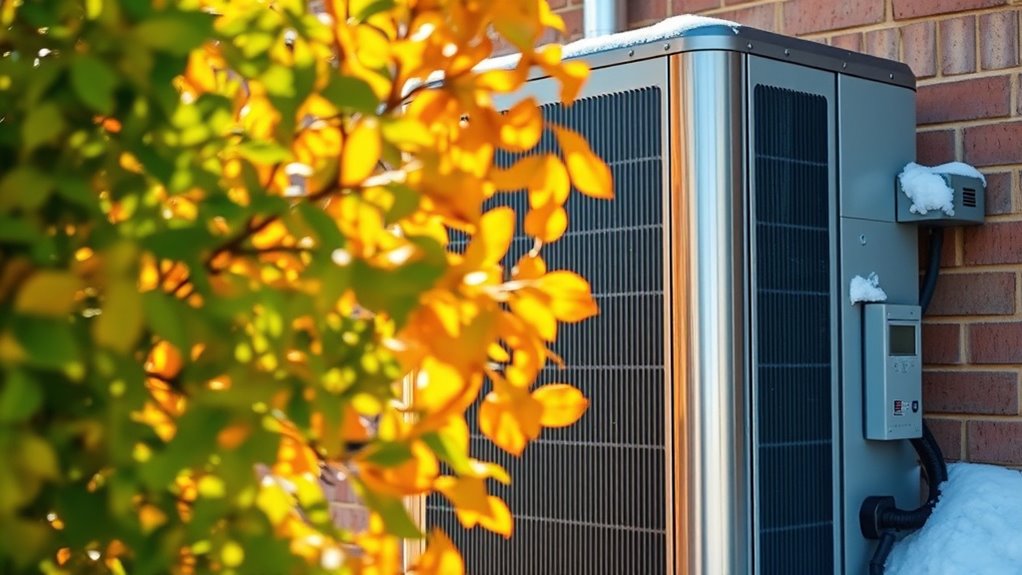

Your heat pump’s energy use varies with the seasons. In colder months, it works harder to draw heat from freezing outdoor air, reducing efficiency and increasing electricity bills. During milder seasons, it runs more smoothly, saving energy and money. Proper maintenance and insulation can improve performance year-round. If you want to understand how seasonal changes impact your system and find ways to optimize your energy use, there’s more to discover ahead.
Key Takeaways
- Heat pump efficiency decreases in winter due to colder outdoor temperatures, increasing energy consumption.
- Milder seasons like spring and fall enable heat pumps to operate more efficiently with lower energy use.
- Cold weather raises the need for supplemental heating, further elevating energy demands and costs.
- Proper insulation and maintenance help mitigate seasonal efficiency fluctuations and reduce energy consumption.
- Seasonal planning and smart thermostats optimize heat pump performance across different weather conditions.
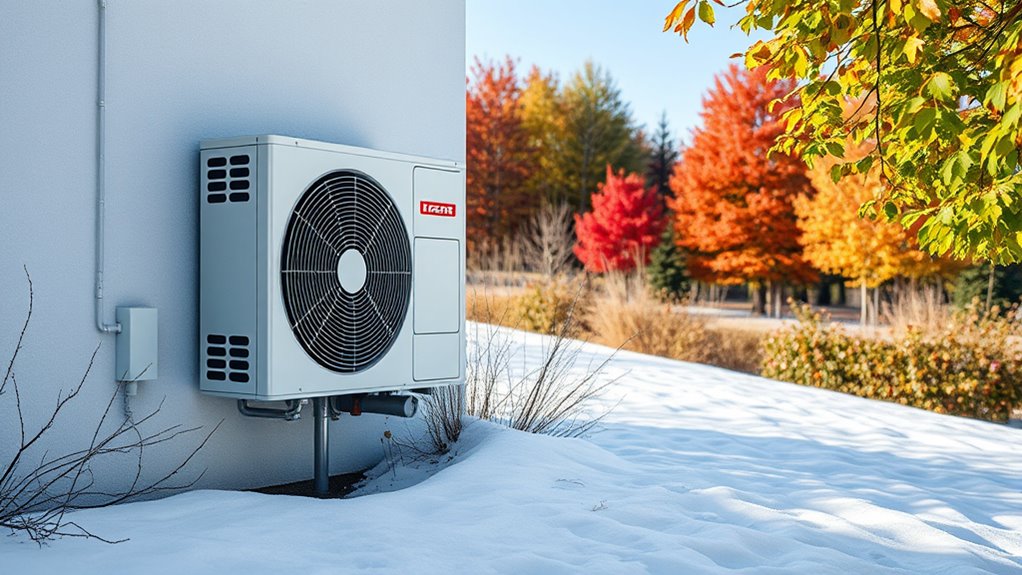
Heat pumps are an efficient way to heat and cool your home, but their energy use varies considerably across seasons. This fluctuation isn’t just about comfort; it also impacts the climate impact of your heating and cooling choices. During winter, your heat pump works harder to extract heat from the cold outdoor air, leading to efficiency fluctuations that can affect energy consumption. Conversely, in milder seasons like spring and fall, the system operates more efficiently because it doesn’t need to work as hard to maintain your indoor climate. This variation means that your energy bills and environmental footprint can change dramatically depending on the time of year.
In colder months, as outdoor temperatures drop, the efficiency of your heat pump decreases. The system has to consume more electricity to compensate for the lower heat extraction from the outside air, which can lead to increased energy use and higher costs. This isn’t just a financial concern; it also influences the climate impact of your home’s heating. When your heat pump runs more frequently and for longer periods, it results in higher greenhouse gas emissions, especially if your electricity comes from fossil fuels. Understanding these efficiency fluctuations helps you anticipate when your system might strain more and plan accordingly, perhaps by supplementing with other heating methods during the coldest days.
During milder weather, your heat pump operates at peak efficiency because it doesn’t have to work as hard to maintain your desired indoor temperature. This means less energy consumption and a smaller climate impact. You might notice that your energy bills drop during these seasons, and your system’s reduced workload lessens wear and tear, extending its lifespan. The efficiency fluctuations across seasons underscore the importance of selecting a heat pump rated for your climate and ensuring it’s properly maintained. Proper insulation and sealing your home can also minimize the workload on your heat pump, further reducing energy use and climate impact throughout the year.
Additionally, storage conditions such as storing the system in a cool, dark place can help prolong its lifespan and maintain efficiency over time. Understanding seasonal variations helps you make smarter choices about your heating and cooling. By adjusting your thermostat settings and scheduling maintenance before the coldest months, you can optimize efficiency and reduce your environmental footprint. While heat pumps are designed to adapt to changing conditions, recognizing how climate impact and efficiency fluctuations influence your system’s performance empowers you to operate it more sustainably. In the end, being aware of these seasonal shifts allows you to balance comfort, cost, and climate responsibility effectively.
Frequently Asked Questions
How Do Climate Zones Affect Heat Pump Efficiency?
Climate zones directly impact your heat pump‘s efficiency by influencing how well it adapts to local temperatures. In colder zones, your system needs to work harder, reducing zone-specific efficiency, while in milder climates, it runs more effectively. To maximize performance, you should consider climate adaptation strategies tailored to your zone, ensuring your heat pump operates at its best year-round and saves you energy and money.
What Maintenance Extends Heat Pump Lifespan During Seasonal Changes?
While seasonal changes challenge your heat pump, proper maintenance keeps it running smoothly. You should regularly replace filters to guarantee airflow stays efficient and check refrigerant levels to prevent strain during temperature swings. These simple steps act as a shield against wear and tear, extending your heat pump’s lifespan. Staying proactive with filter replacement and refrigerant checks helps your system perform at its best, season after season.
Can Heat Pumps Handle Extreme Winter Temperatures Effectively?
Heat pumps can handle extreme winter temperatures effectively, especially when equipped with efficient defrost cycles and ample compressor capacity. The defrost cycle prevents ice buildup on the outdoor coil, maintaining performance, while a larger compressor ensures sufficient heating power in cold weather. Regular maintenance, like checking filters and refrigerant levels, also helps your heat pump operate at its best during harsh winter conditions, keeping you warm and saving energy.
How Does Outdoor Air Quality Impact Heat Pump Performance?
You might think outdoor air quality doesn’t matter for your heat pump, but it really does. Air pollution can clog filters and reduce efficiency, making your system work harder. Regular air filtration helps maintain performance and indoor air quality, especially during high pollution days. Keep an eye on local air quality reports and change filters promptly to make certain your heat pump runs smoothly and stays energy-efficient, no matter the outdoor conditions.
Are There Rebates for Upgrading to More Efficient Seasonal Models?
Yes, you can find rebate programs and efficiency incentives for upgrading to more advanced seasonal heat pump models. These programs often offer financial rebates that help offset the cost of energy-efficient systems, making your upgrade more affordable. Check with your local utility company or government agencies, as they frequently provide incentives for installing high-efficiency heat pumps. Taking advantage of these rebates can markedly reduce your overall investment while improving your system’s performance.
Conclusion
You see, understanding seasonal shifts helps you streamline your heat pump’s efficiency. By tracking temperatures and tuning settings, you turn tiny tweaks into tremendous savings. Embrace the ebb and flow of energy use, and you’ll master the motives behind your machine’s movements. With mindful management, you maximize comfort, minimize costs, and make the most of seasonal swings. Stay savvy, stay sustainable, and let your heat pump work wisely through every weather wonder.