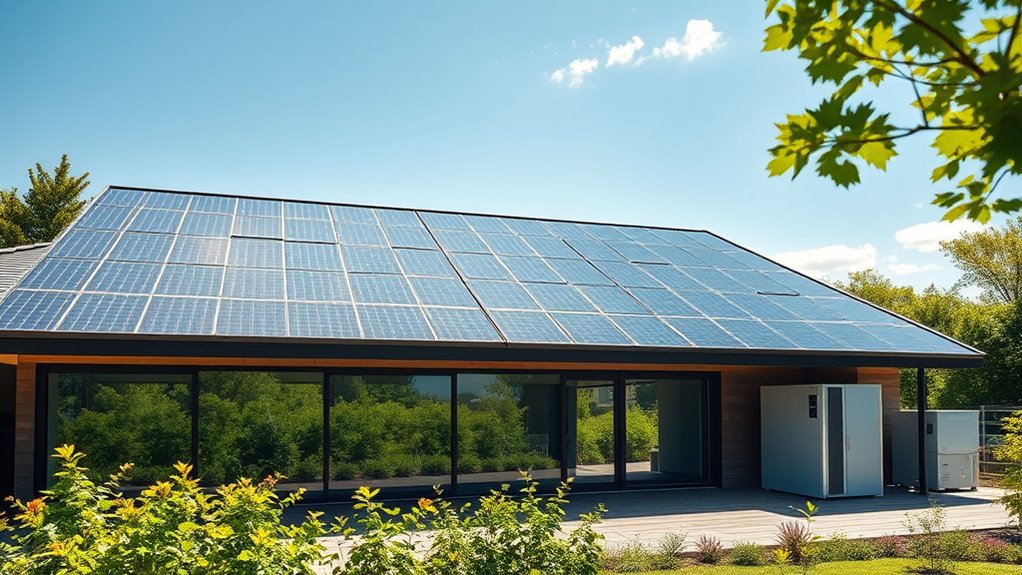

To achieve net-zero energy homes with efficient technologies, you should integrate high-performance solar panels with tracking systems to maximize sunlight capture. Pair these with reliable energy storage like lithium-ion batteries to store excess power for cloudy days or nighttime use. Smart energy management systems help optimize the flow of electricity, reducing reliance on the grid. With careful design and continuous innovations, your home can become more sustainable and energy independent—discover how these technologies work together to reach your goals.
Key Takeaways
- Integrate high-efficiency solar panels with tracking systems to maximize energy capture during peak sunlight.
- Use appropriately sized energy storage solutions, like lithium-ion batteries, to store excess solar power for later use.
- Design and optimize systems to balance energy production and consumption automatically with smart management systems.
- Incorporate advanced solar tech and real-time monitoring to enhance overall system efficiency and resilience.
- Reduce reliance on fossil fuels and lower carbon footprint through combined solar energy and efficient storage solutions.
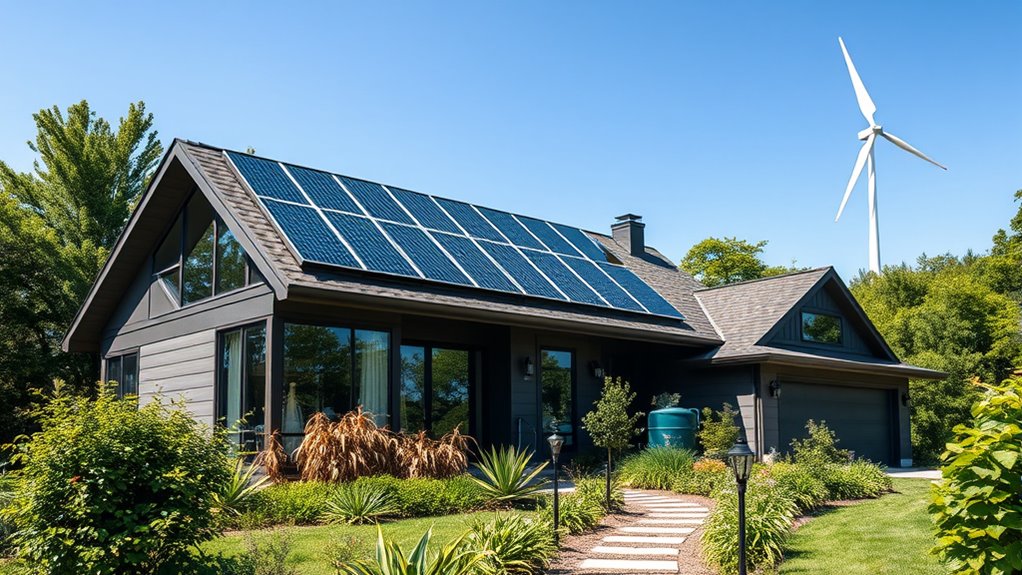
Have you ever wondered if it’s possible for a home to generate as much energy as it consumes? Achieving a net-zero energy home is all about making smart choices in how you produce and store energy. Solar integration plays a central role here, allowing your home to harness the sun’s power efficiently. By installing high-quality solar panels, you can capture sunlight and convert it into electricity during the day. The key is to optimize this system so it works seamlessly with your home’s energy needs. Modern solar technologies make it possible to maximize energy production, even when sunlight isn’t at its peak. For instance, using panels with higher efficiency ratings or tracking systems that follow the sun can substantially boost energy capture.
Achieving a net-zero home involves smart solar tech and efficient energy storage solutions.
But capturing solar energy is just part of the story. To truly achieve net-zero, you need effective energy storage solutions. Energy storage allows your home to store excess power generated during sunny periods and draw from it when the sun isn’t shining—like at night or on cloudy days. Advanced batteries, such as lithium-ion systems, are becoming more affordable and capable, giving you reliable storage capacity. When combined with solar integration, energy storage ensures your home remains powered even during low-generation times, reducing reliance on the grid and lowering your overall energy bills. Additionally, integrating energy management systems can help optimize the entire process and improve efficiency.
Integrating these technologies isn’t complicated, but it does require careful planning. You want your solar system to be appropriately sized to meet your home’s energy demands and your storage capacity to match your usage patterns. A well-designed system will automatically balance energy production and consumption, making your home more resilient and efficient. Many modern energy management systems can monitor your energy flow in real-time, helping you make smarter decisions and optimize performance.
The benefits of combining solar integration with energy storage extend beyond cost savings. They help lessen your environmental impact by decreasing your reliance on fossil fuels. Plus, with smart technology, you gain greater control over your energy use, making your home more sustainable and self-sufficient. Overall, by investing in these efficient technologies, you’re taking a notable step toward a net-zero energy home—one that produces as much energy as it consumes, reducing your carbon footprint and supporting a healthier planet.
Frequently Asked Questions
What Are the Initial Costs of Building Net-Zero Energy Homes?
You’ll find that the initial costs of building net-zero energy homes vary, but a thorough cost analysis helps you understand the expenses involved. While upfront costs are higher due to advanced insulation, solar panels, and efficient systems, you can explore financing options like grants, loans, or incentives to offset these costs. Investing now can lead to significant savings over time with lower energy bills and increased property value.
How Do Net-Zero Homes Perform in Extreme Weather Conditions?
You might think net-zero homes struggle in extreme weather, but they actually offer strong resilience and climate adaptability. Advanced insulation, airtight construction, and energy-efficient systems help maintain comfort during storms, heatwaves, or cold snaps. These homes are designed to adapt to changing conditions, reducing your reliance on external energy sources and enhancing safety. So, with proper design, your net-zero home performs reliably, even in the most challenging weather scenarios.
What Government Incentives Are Available for Net-Zero Home Construction?
You can take advantage of various government incentives for net-zero home construction, such as renewable energy subsidies and tax credits. These programs often help offset the costs of installing solar panels, energy-efficient systems, and advanced insulation. By applying for these incentives, you make your project more affordable and sustainable. Check local, state, and federal programs regularly, as they frequently update available benefits to support eco-friendly building practices.
How Long Is the Typical Payback Period for Net-Zero Investments?
You’ll typically see a payback period of around 7 to 10 years for net-zero energy investments. Did you know that most homeowners recover their costs within this timeframe through energy savings? Your cost recovery depends on initial investments and local energy prices, but with efficient tech, you can expect a reasonable investment timeline. Staying informed helps you maximize your savings and make smarter choices for your home.
Can Existing Homes Be Retrofitted to Achieve Net-Zero Energy Status?
Yes, you can retrofit existing homes to achieve net-zero energy status. Start by upgrading to energy-efficient appliances and adding solar panel integration to reduce your energy consumption and generate renewable power. You might need to enhance insulation and seal leaks for better efficiency. These upgrades can substantially lower your energy bills and carbon footprint, making your home more sustainable and aligned with net-zero goals.
Conclusion
By embracing efficient technologies, you can build net-zero energy homes that reduce environmental impact, save money, and promote sustainability. Yet, achieving this goal requires dedication and innovation, balancing energy use with renewable solutions. You have the power to make a difference—creating a future where comfort meets responsibility. It’s a journey of progress and persistence, where smart choices today lead to a cleaner, greener tomorrow. Together, you can turn vision into reality.