Tight homes trap pollutants, moisture, and stale air, which can harm your indoor air quality and health. ERVs and HRVs are designed to solve this problem by providing continuous ventilation that exchanges indoor air with fresh outdoor air, while also recovering energy to save on utility costs. They help maintain ideal humidity and improve comfort without drafts or noise. Stick with us to discover how these systems can make your home healthier and more efficient.

Get backup power and energy gear delivered free with Prime
- Fast, free delivery on millions of items
- Prime Video, Amazon Music and more included
- Member-only deals all year
Key Takeaways
- ERVs and HRVs improve indoor air quality by exchanging stale indoor air with fresh outdoor air.
- They address moisture and pollutant buildup caused by tightly sealed homes.
- These systems reduce the workload on HVAC units, enhancing energy efficiency.
- ERVs and HRVs recover energy from outgoing air, lowering utility costs.
- They help maintain optimal humidity levels and prevent indoor health issues.
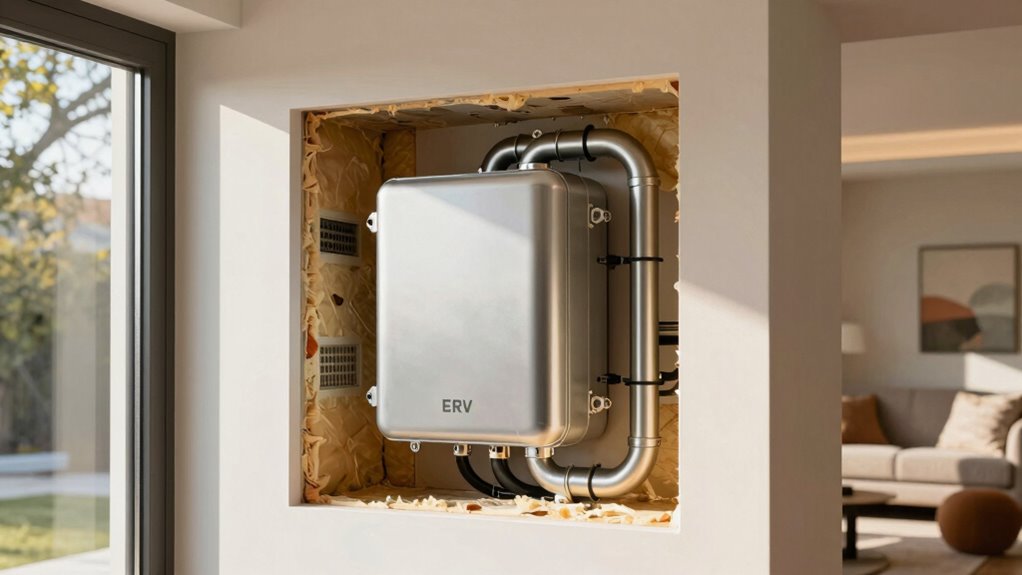
Proper ventilation is essential for maintaining a healthy indoor environment, but many homes struggle with humidity control, poor air quality, and energy inefficiency. When your home is tightly sealed to improve energy efficiency, it can inadvertently trap pollutants, moisture, and stale air inside. This buildup leads to decreased air quality, which can cause health issues like allergies, respiratory problems, and general discomfort. At the same time, without proper ventilation, your heating and cooling systems work harder to maintain a comfortable temperature, wasting energy and increasing utility bills.
Proper ventilation is vital for healthy indoor air, especially in tightly sealed, energy-efficient homes.
This is where Energy Recovery Ventilators (ERVs) and Heat Recovery Ventilators (HRVs) come into play. These systems are designed specifically to address the challenges of tightly sealed homes by providing fresh air while conserving energy. ERVs and HRVs work by continuously exchanging stale indoor air with fresh outdoor air. The key difference is that ERVs transfer both heat and humidity between incoming and outgoing air streams, helping to maintain indoor humidity levels and improve overall air quality. HRVs focus solely on heat transfer, making them ideal in colder climates where humidity isn’t as much of a concern.
By installing an ERV or HRV, you actively improve your home’s air quality. These systems remove indoor pollutants like dust, pollen, mold spores, and volatile organic compounds, replacing stale air with cleaner, fresh air. This constant exchange prevents the buildup of indoor contaminants and helps you breathe easier. Additionally, because these systems recover a significant portion of the energy from outgoing air, they help your home retain heat during winter and coolness in summer, boosting energy efficiency.
Using an ERV or HRV also means your HVAC system doesn’t have to work as hard. When fresh air is introduced efficiently and with minimal energy loss, your heating and cooling systems operate more effectively, reducing overall energy consumption. This not only saves money on utility bills but also lessens your home’s carbon footprint. Furthermore, these ventilators are designed to be low maintenance and reliable, providing continuous, efficient ventilation without the noise or drafts associated with traditional exhaust fans or open windows.
In essence, ERVs and HRVs are built to solve the tight-home ventilation problem by balancing air quality with energy efficiency. They ensure your home stays fresh and healthy without sacrificing comfort or increasing costs. If you’re living in a well-sealed house, investing in one of these systems can make a noticeable difference, improving your indoor environment while keeping your energy bills in check.
As an affiliate, we earn on qualifying purchases.
Frequently Asked Questions
How Do ERVS and HRVS Differ in Energy Efficiency?
ERVs and HRVs differ in energy efficiency mainly through their impact on energy consumption and ventilation effectiveness. ERVs transfer both heat and moisture, reducing energy loss and maintaining indoor humidity, which improves overall efficiency. HRVs focus solely on heat exchange, offering excellent ventilation effectiveness but less moisture control. If you prioritize energy savings and moisture management, ERVs tend to be more efficient, especially in climates with high humidity.
Can ERVS and HRVS Be Installed in Existing Homes?
Yes, you can install ERVs and HRVs in existing homes, but retrofit challenges exist. You’ll need to carefully plan the installation, often involving ductwork modifications, which can be complex. While installation costs vary, investing in these ventilation systems improves indoor air quality and energy efficiency. Be prepared for potential challenges, but the long-term benefits of better air circulation and energy savings make it worthwhile.
What Maintenance Do ERVS and HRVS Require?
Think of your ERV or HRV as a living system that needs care to keep breathing easy. You’ll need to guarantee filters regularly to maintain air quality and prevent dust buildup. Also, keep an eye on the system’s performance, and troubleshoot any strange noises or reduced airflow. Routine checks ensure your ventilation system runs smoothly, prolonging its life and ensuring a healthy, comfortable home environment.
Are ERVS and HRVS Suitable for All Climate Zones?
Yes, ERVs and HRVs are suitable for most climate zones, but you should consider indoor air circulation and noise levels. In colder climates, HRVs efficiently exchange heat, improving comfort, while ERVs help manage humidity in warmer areas. Keep noise levels in mind, especially if you prefer quiet indoor spaces. Overall, choosing the right system depends on your climate and specific indoor air quality needs.
How Do ERVS and HRVS Impact Indoor Air Quality?
ERVs and HRVs dramatically improve your indoor air quality, making it feel like air is invigorated by a mountain breeze every moment. They boost ventilation effectiveness, ensuring stale air leaves and fresh air circulates efficiently. With cleaner air, allergens and pollutants drop markedly, reducing respiratory issues. You’ll notice a breath of fresh air in your home, creating a healthier, more comfortable environment that feels like a gust of fresh mountain air—every single day.
As an affiliate, we earn on qualifying purchases.
Conclusion
By choosing ERVs or HRVs, you actively improve air quality, enhance energy efficiency, and create a healthier home environment. These systems address the ventilation problem head-on, ensuring you breathe cleaner air, reduce energy waste, and maintain comfort all year round. When you prioritize proper ventilation, you protect your home, support your well-being, and embrace sustainable living. Ultimately, investing in ERVs or HRVs empowers you to solve the tight-home ventilation problem effectively and confidently.
As an affiliate, we earn on qualifying purchases.
air exchange system for tight homes
As an affiliate, we earn on qualifying purchases.
As an affiliate, we earn on qualifying purchases.
Halloween Picks
halloween
As an affiliate, we earn on qualifying purchases.