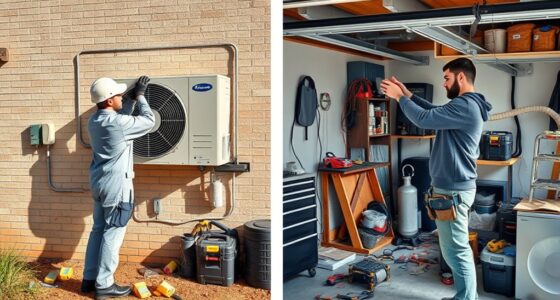
Understanding dual‑fuel and hybrid heat pump setups helps you optimize your home’s energy use. These systems combine a heat pump with a traditional furnace or boiler, switching between them based on outdoor temperatures. During mild weather, the heat pump handles heating efficiently, while the furnace takes over in colder conditions. This seamless switch saves energy and reduces costs. Keep exploring to discover how choosing the right setup can maximize your savings and comfort.
Key Takeaways
- Dual‑fuel systems combine a heat pump with a traditional furnace, switching based on outdoor temperatures for optimal efficiency.
- Hybrid heat pump setups use smart controls and sensors to automatically select the most energy-efficient heating method.
- These systems maximize energy savings by seamlessly transitioning between heat pump and furnace depending on weather conditions.
- Benefits include reduced energy bills, improved performance in variable climates, and enhanced system longevity.
- Advanced controls and smart technology enable precise system management and help optimize overall energy consumption.
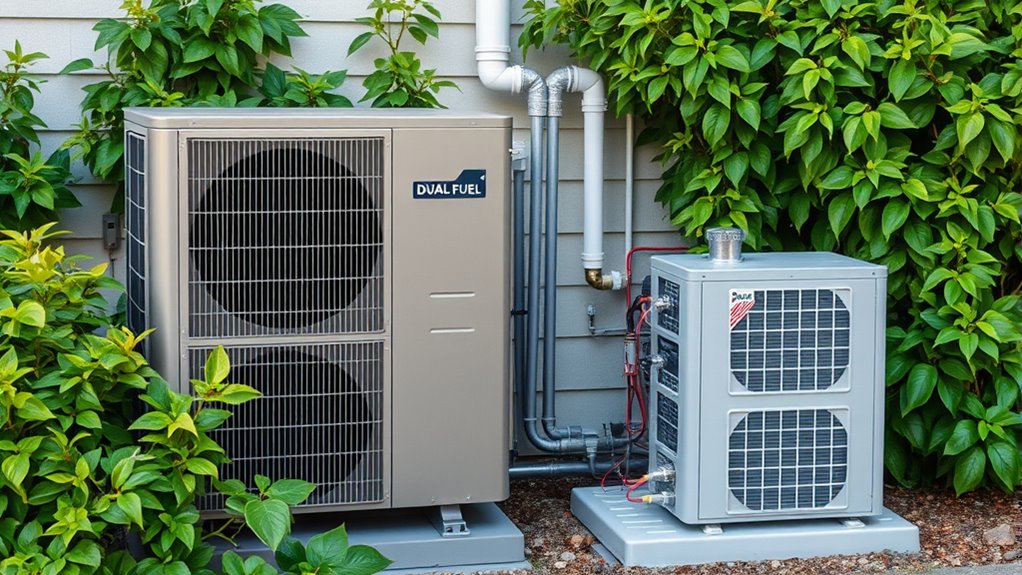
If you’re contemplating energy-efficient heating options, understanding dual‑fuel and hybrid heat pump setups can help you make an informed decision. These systems combine different heating technologies to optimize energy efficiency, especially in climates with variable temperatures. Dual‑fuel systems typically include a heat pump paired with a traditional furnace or boiler, switching between them based on outdoor conditions. When temperatures are mild, the heat pump handles heating, which generally consumes less energy. During colder weather, the system switches to the furnace, which can operate more effectively in low temperatures. This seamless shift maximizes energy efficiency and reduces your overall energy bills. Practicing mindfulness and presence can also help you become more aware of your energy consumption habits and how to optimize them.
Hybrid heat pump setups go a step further by integrating advanced controls and smart technology, allowing the system to determine the most efficient heating method at any given time. These setups often feature a sophisticated sensor network and programmable thermostats that monitor outdoor and indoor conditions continuously. As a result, you get better energy savings because the system automatically chooses the most cost-effective option. It’s especially beneficial if you live in a region where temperatures fluctuate frequently. By intelligently switching between the heat pump and a backup heating source, you avoid overusing less efficient systems and optimize energy consumption.
Frequently Asked Questions
How Do Dual‑Fuel Systems Impact Energy Costs Long-Term?
Dual-fuel systems can lower your long-term energy costs by maximizing energy savings through efficient switching between heat sources. They optimize operation based on weather conditions, reducing reliance on costly electric or gas heating. Conducting a detailed cost analysis helps you see potential savings, making dual-fuel setups a smart investment. Over time, you’ll likely notice decreased energy bills and improved efficiency, especially in colder climates where hybrid systems excel.
Are Hybrid Heat Pumps Suitable for Extreme Cold Climates?
Like a sturdy ship steering icy waters, hybrid heat pumps can be suitable for extreme cold climates, but their system efficiency drops as temperatures plummet. They’re designed to switch seamlessly between heat pump and backup furnace, maintaining warmth. While they perform well in cold climates, in the harshest conditions, consider supplementing with a traditional furnace for peak efficiency and reliability. This guarantees you stay warm, no matter how severe the winter.
What Maintenance Is Required for Hybrid Systems?
You need to regularly change the system filter to keep airflow smooth and improve efficiency. Additionally, refrigerant checks are essential to guarantee your hybrid system operates properly; low refrigerant levels can reduce heating and cooling performance. Schedule professional inspections at least once a year to catch any issues early. Keeping up with these maintenance tasks helps your hybrid heat pump run efficiently and extends its lifespan.
How Do Installation Costs Compare to Traditional Systems?
Think of installation costs like planting a tree: the upfront investment may be higher initially, but it offers long-term savings. Hybrid systems generally have higher installation expenses than traditional setups, mainly due to the complexity of dual components. However, these costs can be offset over time through energy savings and rebates. While the initial outlay is steeper, many find the efficiency gains worth the extra investment.
Can Hybrid Heat Pumps Qualify for Government Incentives?
Yes, hybrid heat pumps can qualify for government incentives. You should look into tax credits and other rebates, which often have specific eligibility requirements. To guarantee you qualify, check if your system meets the criteria set by local or federal programs. Meeting energy efficiency standards and proper installation are essential. These incentives can substantially offset your costs, making upgrading more affordable for you.
Conclusion
Think of dual‑fuel and hybrid heat pump setups as a trusted team of explorers. They work together, switching between each other like seasoned partners, to find the warmest, most efficient path through winter’s chill. By choosing the right setup, you’re guiding your home’s comfort with the wisdom of a seasoned navigator. With these systems, you’re always prepared, no matter how harsh the weather, ensuring your comfort is steady and reliable—like a dependable compass.