To integrate a heat pump into your existing HVAC system, start by evaluating compatibility and conducting a site evaluation to guarantee your grounds and ductwork support the upgrade. You may need duct sealing or resizing for better airflow and electrical upgrades to meet the new system’s power needs. Proper sizing and calibration are essential for efficiency and comfort. Working with HVAC professionals will help you optimize system performance and get the most long-term benefits — learn more about making it work for you.

Get backup power and energy gear delivered free with Prime
- Fast, free delivery on millions of items
- Prime Video, Amazon Music and more included
- Member-only deals all year
Key Takeaways
- Assess existing system compatibility, including ductwork, electrical capacity, and refrigerant requirements, before planning heat pump integration.
- Optimize ductwork through sealing, insulation, or resizing to ensure efficient airflow and even temperature distribution.
- Ensure electrical system capacity and thermostat compatibility meet the demands of the new heat pump.
- Conduct load calculations to select properly sized units, preventing inefficiency or short cycling.
- Work with qualified HVAC professionals to plan, install, and calibrate the system for maximum performance and energy savings.
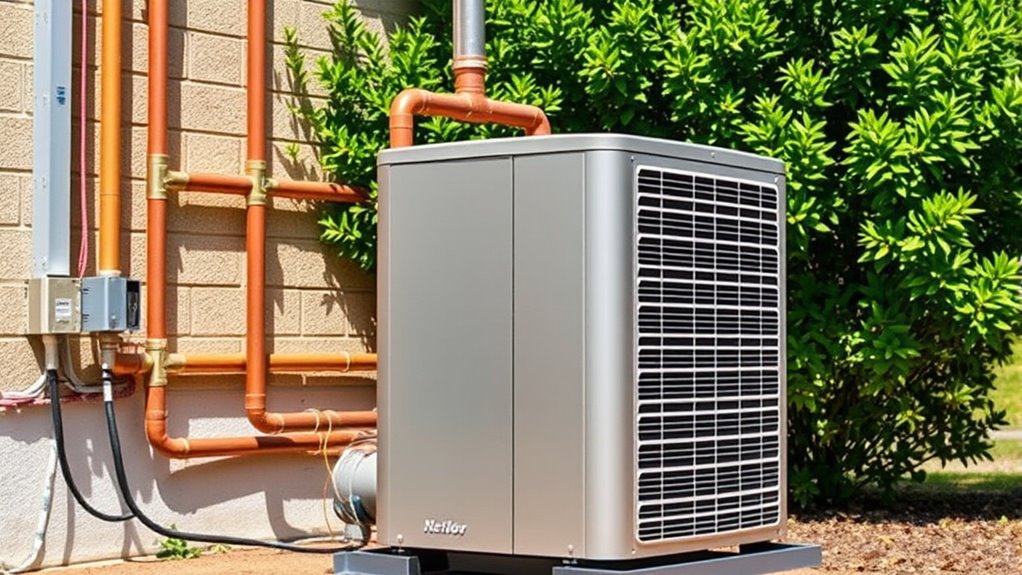
Integrating a heat pump into your HVAC system can substantially improve energy efficiency and reduce your heating and cooling costs. When considering this upgrade, one of the first things to evaluate is geothermal compatibility. If your property has access to a suitable site—like ample land or a designated area for ground loops—you might consider a geothermal heat pump. These systems leverage the stable temperatures underground to provide efficient heating and cooling, making them an excellent long-term investment. However, not all existing systems are immediately compatible with geothermal technology, so you’ll need to assess whether your current setup can accommodate the necessary ground loop installation or if modifications are needed.
Assess geothermal compatibility and site suitability before upgrading to a ground-source heat pump.
Ductwork modifications are often essential when integrating a heat pump into your existing HVAC system. Many older systems rely on duct networks that aren’t optimized for the airflow and temperature requirements of modern heat pumps. You might find that your ducts need sealing, insulation, or resizing to ensure even distribution and efficiency. Properly designed ductwork minimizes energy loss, allowing the heat pump to operate at peak performance. Before installation, a professional assessment can help identify areas where ductwork adjustments are necessary, preventing future issues like uneven heating or increased energy consumption.
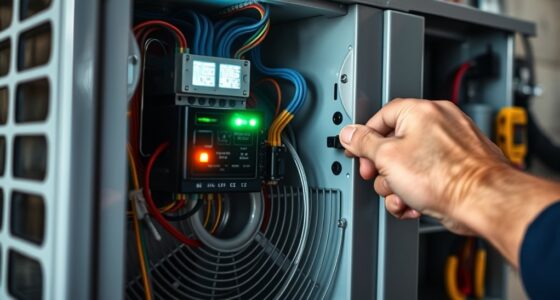
It’s also vital to consider your current system’s compatibility with a heat pump’s refrigerant and electrical requirements. Some systems may need upgrades to accommodate the new equipment, including electrical panel capacity or additional wiring. A qualified HVAC technician can evaluate your existing infrastructure and recommend necessary upgrades to guarantee seamless integration. They’ll also help determine if your current thermostat is compatible or if you need a smart thermostat capable of managing the heat pump’s features effectively.
Another important aspect is the size of the heat pump relative to your home. An undersized unit won’t provide adequate heating or cooling, leading to increased energy use, while an oversized model can cause short cycling and inefficiency. Professional load calculations can help you select the right capacity, ensuring your system is tailored for your space. Once installed, proper commissioning and calibration will optimize performance and energy savings.
Additionally, understanding the performance metrics and features of different heat pump models can help you choose the most efficient and suitable system for your needs. Ultimately, integrating a heat pump into your existing HVAC system requires careful planning, especially regarding geothermal compatibility and ductwork modifications. By working with experienced professionals, you can guarantee your system is correctly configured, maximizing efficiency and comfort. This upgrade not only reduces your energy bills but also contributes to a more sustainable home environment, making the effort well worth it.
heat pump for existing HVAC system
As an affiliate, we earn on qualifying purchases.
As an affiliate, we earn on qualifying purchases.
Frequently Asked Questions
What Are the Cost Implications of Retrofitting a Heat Pump?
Retrofitting a heat pump involves a cost analysis that considers equipment, installation, and potential retrofit challenges. You might face unexpected expenses due to duct modifications or electrical updates. While upfront costs can be significant, energy savings over time can offset these expenses. Be prepared for retrofit challenges like compatibility issues with existing systems. Overall, investing in a heat pump can boost efficiency, but plan for both initial costs and possible adjustments.
How Long Does the Integration Process Typically Take?
Like the turning of seasons, the installation timeline varies, but typically, you can expect the process steps to take from a few days to a week. This timeframe depends on your existing system’s complexity and the retrofit’s scope. The process involves assessment, electrical modifications, and system integration. You’ll find that swift coordination and clear communication streamline the integration, helping you enjoy the efficiency of your new heat pump sooner.
Can Existing Ductwork Support a Heat Pump Efficiently?
Your existing ductwork can support a heat pump efficiently if it’s compatible with duct size and layout. Check duct compatibility to guarantee proper airflow, and consider insulation requirements to prevent energy loss. If your ducts are leaky, undersized, or poorly insulated, you may need to upgrade or seal them before installation. Properly maintained ductwork ensures your heat pump operates at peak efficiency, saving you energy and money long-term.
Are There Specific Brands Recommended for Seamless Integration?
You might think all brands get along perfectly, but when it comes to seamless integration, Brand compatibility varies greatly. Ironically, choosing a well-known name like Trane or Carrier often reduces integration challenges, as they design systems with compatibility in mind. Still, you should verify that the heat pump you select aligns with your existing system to avoid surprises, ensuring a smooth handover without unexpected headaches or costly modifications.
What Maintenance Is Required After Integration?
After integrating your heat pump, you need to regularly check system compatibility to guarantee it functions efficiently. Keep an eye on refrigerant levels, as proper refrigerant considerations are essential for peak performance. Schedule annual professional inspections, clean filters, and ensure ductwork remains sealed. These steps help prevent issues, maximize energy savings, and extend your system’s lifespan, guaranteeing your integrated HVAC operates smoothly throughout the seasons.
As an affiliate, we earn on qualifying purchases.
Conclusion
By integrating a heat pump into your existing HVAC system, you can enjoy energy savings and increased comfort year-round. For example, imagine a homeowner who added a heat pump to their traditional furnace, reducing their heating costs by 30% during winter. With proper planning and professional help, you can seamlessly upgrade your system, just like they did, and reap the benefits of efficient, versatile climate control all year long.
smart thermostat compatible with heat pump
As an affiliate, we earn on qualifying purchases.
As an affiliate, we earn on qualifying purchases.
As an affiliate, we earn on qualifying purchases.
Fall Picks
fall essentials
As an affiliate, we earn on qualifying purchases.