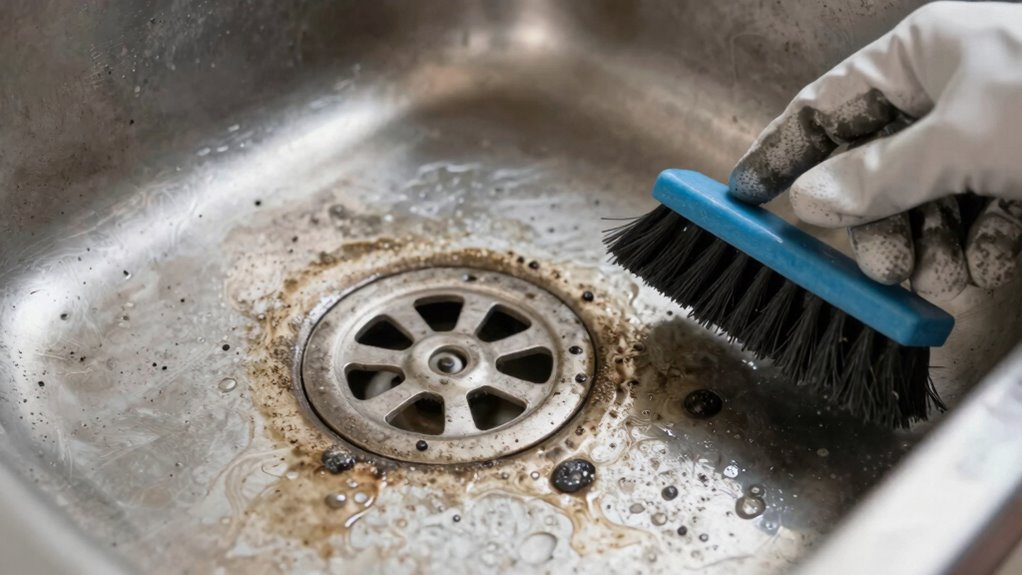

To prevent water damage, turn off your AC and locate the drain pan beneath the evaporator coil. Remove debris like leaves and dust using a damp cloth or vacuum. Scrub the surface with a soft brush and rinse with clean water. Apply a disinfectant like vinegar or a mold inhibitor, then dry it thoroughly. Regularly inspecting and cleaning your drain pan keeps mold, odors, and water damage at bay—keep going to learn more tips for effective maintenance.

Get backup power and energy gear delivered free with Prime
- Fast, free delivery on millions of items
- Prime Video, Amazon Music and more included
- Member-only deals all year
Key Takeaways
- Turn off the HVAC unit before cleaning to prevent water spills and electrical hazards.
- Remove debris from the drain pan and clean with a mild detergent and soft brush.
- Rinse thoroughly and apply a disinfectant like vinegar or mold inhibitor to prevent mold growth.
- Wipe dry and ensure the drainage system is clear to avoid water stagnation.
- Schedule regular inspections and cleanings, especially in humid environments, to prevent water damage.
A dirty drain pan can lead to unpleasant odors and reduced efficiency in your air conditioning system. When grime, dirt, and debris accumulate in the pan, they can obstruct proper water drainage, causing water to stagnate and fostering mold growth. This not only impacts the air quality in your home but also hampers air circulation, making your system work harder to cool your space. Regularly cleaning the drain pan is essential to prevent these issues before they turn into costly water damage and health hazards.
Start by turning off your air conditioning unit and locating the drain pan, which is usually situated beneath the evaporator coil. Remove any visible debris, such as leaves or dust, with a damp cloth or vacuum hose. To effectively clean the pan, mix a solution of mild detergent and warm water. Use a soft brush or sponge to scrub the entire surface, paying special attention to corners and crevices where mold spores and dirt tend to hide. This thorough cleaning helps eliminate mold spores and bacteria, preventing mold buildup that can compromise air quality and cause unpleasant odors.
Turn off your AC, locate the drain pan, and remove debris with a damp cloth or vacuum.
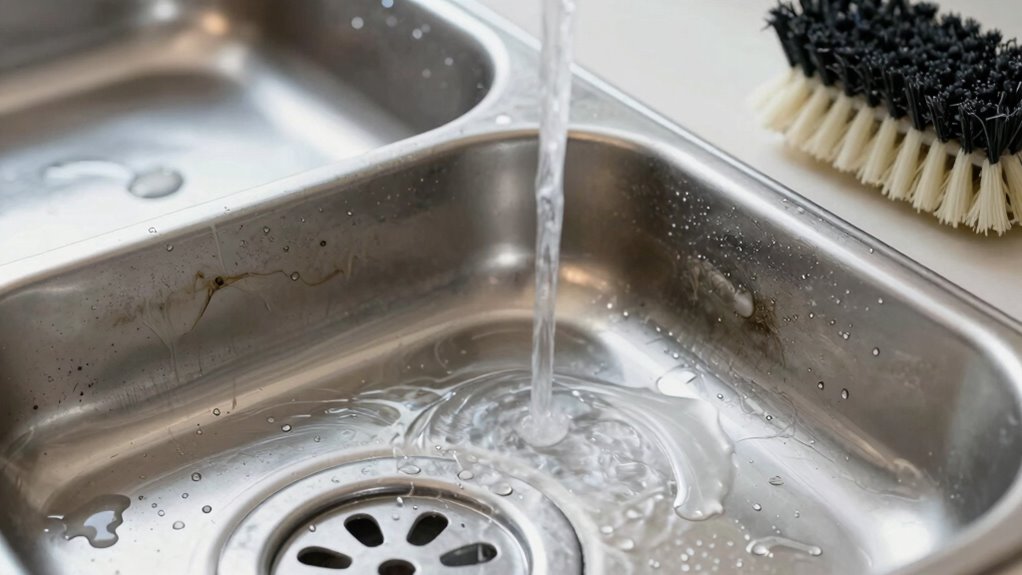
Once you’ve scrubbed the pan, rinse it with clean water to wash away loosened dirt and residue. To further prevent mold growth and guarantee ideal air circulation, consider applying a mixture of one part vinegar to three parts water or a commercial mold inhibitor designed for HVAC systems. These solutions not only disinfect but also create a barrier that discourages mold from returning. Additionally, proper drain pan maintenance is crucial to ensure your system’s longevity and optimal performance. Ensuring that your system’s drainage system remains clear and functional can significantly extend the lifespan of your HVAC unit. After applying the solution, wipe the pan dry with a clean cloth or towel to prevent water from sitting and encouraging mold growth again.
Regular maintenance of your drain pan is vital, especially if you notice persistent odors or reduced airflow. Schedule inspections and cleanings at least once every few months, or more frequently if you have pets or live in a humid climate. Properly maintained drain pans promote good air circulation within your system, which guarantees efficient cooling and better indoor air quality. Mold prevention is the key to avoiding health issues and costly repairs. When your drain pan is clean and free of debris, dirt, and mold, your air conditioning system can operate smoothly, providing you with cool, fresh air without the risk of water damage or musty smells.
As an affiliate, we earn on qualifying purchases.
Frequently Asked Questions
How Often Should I Clean My Drain Pan?
You should clean your drain pan at least once every three months to maintain proper drain pan maintenance. A regular cleaning schedule helps prevent mold, bacteria, and water damage from clogs or standing water. If you notice excessive dirt or debris, clean it more often. Keeping your drain pan in good shape guarantees your HVAC system runs efficiently and avoids costly repairs, so make it part of your routine maintenance.
Can I Use Bleach to Disinfect the Drain Pan?
Yes, you can use bleach to disinfect your drain pan, but it’s better to evaluate bleach alternatives for drain pan maintenance. Bleach can be harsh and may damage certain materials over time. Instead, use a mixture of vinegar and baking soda, or a commercial disinfectant designed for HVAC systems. These options effectively kill bacteria and mold while keeping your drain pan in good shape and preventing water damage.
What Tools Are Best for Cleaning a Drain Pan?
For drain pan cleaning, you should choose tools like a soft-bristle brush or a sponge to scrub away debris without scratching surfaces. A plastic or silicone scraper helps remove stubborn grime, while a small screwdriver or pin can clear clogged drain holes. Use a bucket or bowl to hold cleaning solutions. Proper tool selection guarantees thorough cleaning, keeping your drain pan free of mold and buildup, preventing water damage.
How Do I Prevent Mold Buildup in the Drain Pan?
To prevent mold buildup in your drain pan, prioritize regular drain pan maintenance by cleaning it weekly with a mixture of vinegar and water. Make sure you remove standing water promptly and dry the area thoroughly after cleaning. Mold prevention relies on controlling moisture, so keep the drain pan dry and well-ventilated. Sealing any leaks and inspecting it regularly also help maintain a mold-free environment, protecting your home from water damage.
Is It Necessary to Replace a Damaged Drain Pan?
If your drain pan shows significant damage, replacing it is often necessary. You should perform a thorough drain pan inspection to assess the extent of the damage, looking for cracks, rust, or warping. Replacement considerations include ensuring the new pan fits properly and is made of durable material. Ignoring damage could lead to leaks and water damage, so don’t hesitate to replace it if repairs aren’t sufficient to prevent further issues.
As an affiliate, we earn on qualifying purchases.
Conclusion
By regularly cleaning your drain pan, you’re preventing it from becoming a nightmare like a ticking time bomb. Think of it as giving your AC a health check-up—small efforts now save you from big repairs later. Don’t wait until water leaks and damage take over; stay ahead of the problem. With a little routine maintenance, your drain pan stays clear and your home stays dry, just like a well-oiled machine running smoothly.
air conditioner drain pan cleaner
As an affiliate, we earn on qualifying purchases.
As an affiliate, we earn on qualifying purchases.
vacuum hose for cleaning HVAC drain pans
As an affiliate, we earn on qualifying purchases.
As an affiliate, we earn on qualifying purchases.
Halloween Picks
halloween
As an affiliate, we earn on qualifying purchases.