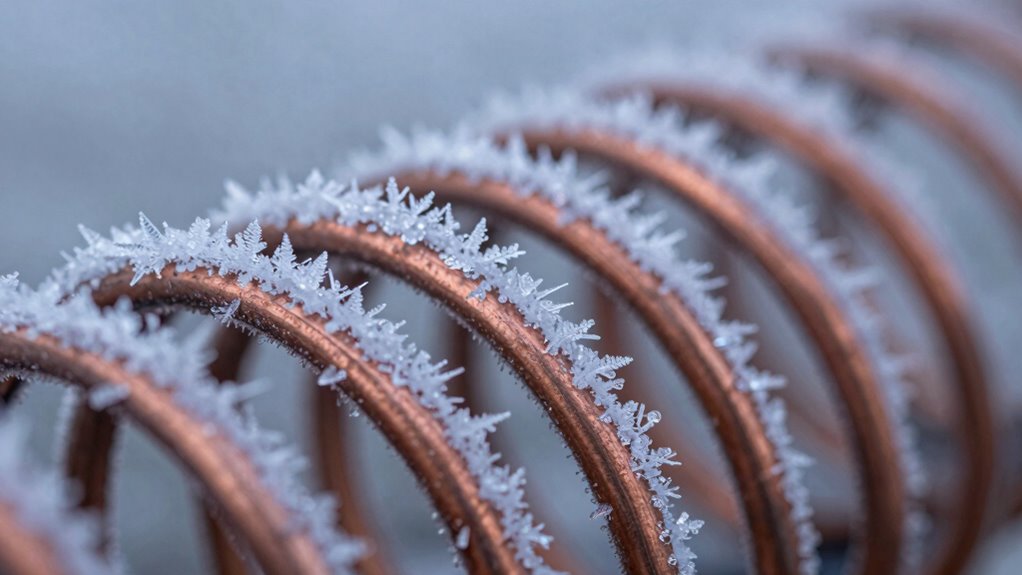

Frost forms on coils when moisture in the air condenses and freezes due to the cold temperatures created by the refrigerant during normal operation. This is often a sign your system is working as it should, especially in freezers and coolers. Small amounts of frost help the heat exchange process, but too much can cause issues. If you want to discover what causes excessive frost and how to prevent it, keep exploring the details below.

Get backup power and energy gear delivered free — and shop member deals
- Fast, free delivery on millions of items
- Access to Prime Big Deal Days deals on October 6–7
- Prime Video, Amazon Music and more included
Key Takeaways
- Frost forms when coil temperatures drop below the dew point, causing moisture to condense and freeze, indicating proper heat absorption.
- A controlled amount of frost is normal and signals the refrigerant cycle is functioning correctly.
- Frost acts as an insulator, but excessive buildup can hinder heat transfer and reduce system efficiency.
- Regular defrost cycles melt excess frost, maintaining optimal coil performance and system operation.
- Proper maintenance and insulation prevent excessive frost and ensure the system operates smoothly.
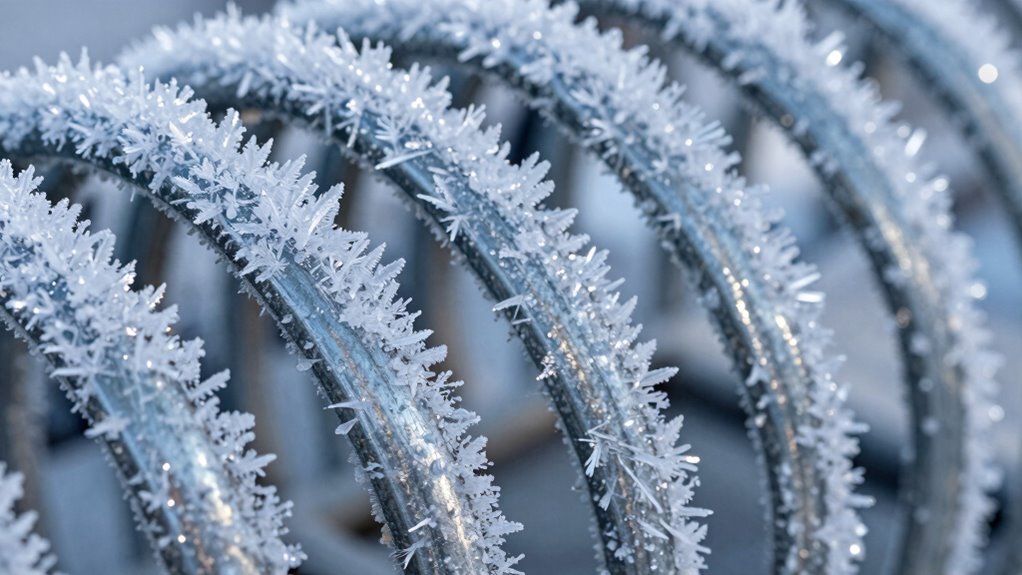
Have you ever wondered why frost forms on coils in your refrigeration or air conditioning system? It’s a common sight, but understanding why it happens can help you grasp how your system works and when frost might be a problem. At the core of this process is the refrigerant cycle, which involves the movement of refrigerant through various components to absorb and release heat. When your system operates correctly, the refrigerant evaporates inside the coils, pulling heat from the surrounding air or contents. As the refrigerant absorbs heat, the coil’s temperature drops, sometimes below the dew point of the moisture in the air, leading to frost formation.
Frost on coils isn’t inherently bad. In fact, a certain amount of frost can be a sign that your system is functioning as it should, especially in refrigeration units like freezers or coolers. The key is to understand when frost becomes problematic. If frost builds up excessively, it can insulate the coils and hinder heat transfer, making your system work harder and less efficiently. That’s why coil insulation is essential. Proper insulation helps maintain the desired temperature around the coils, preventing unnecessary frost buildup and ensuring the refrigerant cycle runs smoothly. When insulation is damaged or inadequate, the cold surface of the coils cools the surrounding air too much, causing excess moisture to freeze onto the coils.
You should also be aware that frost formation is often a sign that the system is operating in a normal cycle. During the cooling process, the refrigerant absorbs heat, and the coil temperature drops. When the system is working correctly, a thin layer of frost can develop and then melt away during defrost cycles, which your system might perform automatically. These defrost cycles are designed to remove excess frost and restore proper heat exchange. If frost persists beyond these cycles, or if it’s thick and extensive, it indicates potential issues like low refrigerant levels, restricted airflow, or faulty sensors. Regular maintenance and system checks can help identify these problems before they lead to system failure. Additionally, understanding the refrigerant cycle is crucial for diagnosing and preventing frost-related issues.
In essence, frost on coils is a natural part of the refrigeration process when conditions are right. A well-maintained system with proper coil insulation and a healthy refrigerant cycle will manage frost effectively. It’s also important to recognize proper maintenance as a key factor in preventing system issues related to frost buildup. When frost becomes excessive or doesn’t melt during defrost cycles that are supposed to remove it, you need to investigate further. Regularly checking for refrigerant levels and ensuring proper airflow can help prevent problems. Maintaining your system’s components and understanding the role of frost helps you keep it running efficiently and avoid unnecessary breakdowns.
refrigerator coil frost removal kit
As an affiliate, we earn on qualifying purchases.
As an affiliate, we earn on qualifying purchases.
Frequently Asked Questions
Can Frost Damage My Coils Over Time?
Yes, frost can damage your coils over time if left unmanaged. When frost forms, it hampers heat transfer, causing your system to work harder. To prevent damage, you should regularly check insulation maintenance and guarantee refrigerant levels are correct. Proper maintenance reduces frost buildup, keeps your coils in good shape, and prolongs your system’s lifespan. Addressing these issues promptly helps avoid costly repairs and maintains efficient operation.
How Can I Prevent Frost Buildup on Coils?
You can prevent frost buildup on coils by making insulation improvements and performing regular maintenance. While some might think frost is harmless, it can reduce efficiency and cause damage over time. Guarantee your coils are well-insulated to limit moisture contact, and regularly clean and check for leaks or insulation issues. These steps keep your system running smoothly, prevent frost accumulation, and extend the lifespan of your equipment.
Does Frost Affect Cooling Efficiency?
Frost can lower cooling efficiency because it acts as an insulator, blocking heat transfer. When temperature fluctuations and humidity levels rise, frost buildup worsens, further reducing performance. You might notice your system works harder to cool, increasing energy consumption. Regularly defrosting coils and maintaining ideal humidity levels help prevent excessive frost, ensuring your cooling system stays efficient and effective.
Is Frost Formation Different in Various Climates?
Frost formation varies widely with climate and seasonal changes. In colder climates, coils can be covered in a thick layer of frost, sometimes spanning several inches, which can impact efficiency. Conversely, milder regions see minimal frost buildup. You’ll notice that climate variations influence how often and how much frost forms on coils, affecting maintenance needs and system performance throughout the year. Recognizing these patterns helps optimize your cooling system’s efficiency.
When Should I Call a Professional for Frost Issues?
You should call a professional if DIY troubleshooting and seasonal maintenance don’t solve your frost issues. If you notice persistent frost buildup, unusual ice formation, or if your system isn’t functioning efficiently despite your efforts, it’s time to seek expert help. Professionals can diagnose underlying problems, such as refrigerant leaks or airflow issues, ensuring your system operates correctly and preventing potential damage from unresolved frost buildup.
automatic defrost system for freezer
As an affiliate, we earn on qualifying purchases.
As an affiliate, we earn on qualifying purchases.
Conclusion
Remember, a little frost on your coils isn’t always a problem. For instance, in a small café, a slight layer of frost on the refrigeration coils kept the drinks cold without overworking the compressor. As long as it’s manageable and doesn’t block airflow, that frost can actually be a sign your system is working efficiently. Keep an eye on it, and you’ll guarantee your fridge runs smoothly—frost included!
refrigerant leak detection tools
As an affiliate, we earn on qualifying purchases.
As an affiliate, we earn on qualifying purchases.
coil insulation for refrigeration units
As an affiliate, we earn on qualifying purchases.
As an affiliate, we earn on qualifying purchases.
Fall Picks
fall essentials
As an affiliate, we earn on qualifying purchases.