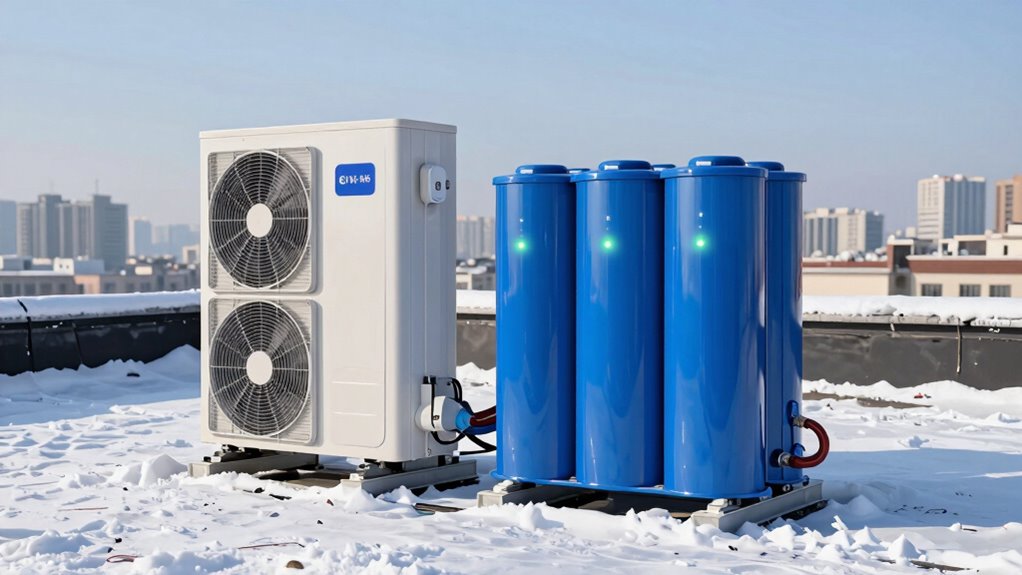

Battery storage changes the heat pump backup conversation by providing you with greater control, efficiency, and independence during outages. Instead of relying solely on traditional backup systems, you can store surplus energy to power your heat pump seamlessly when the grid is down. This makes your system more reliable and cost-effective while reducing reliance on expensive generators. If you want to discover how this combined solution can improve your energy safety and savings, keep exploring the details.

Get backup power and energy gear delivered free — and shop member deals
- Fast, free delivery on millions of items
- Access to Prime Big Deal Days deals on October 6–7
- Prime Video, Amazon Music and more included
Key Takeaways
- Battery storage enables seamless, cost-effective backup power for heat pumps during outages, reducing reliance on traditional generators.
- It enhances energy independence by storing surplus renewable energy to power heat pumps when grid power is unavailable.
- Improved control over energy use allows optimized operation of heat pumps, lowering energy costs and increasing efficiency.
- Battery systems facilitate strategic energy management, ensuring heat pumps operate during peak demand for savings.
- Integration of batteries transforms backup from a simple fail-safe to a comprehensive, sustainable energy solution for heat pumps.
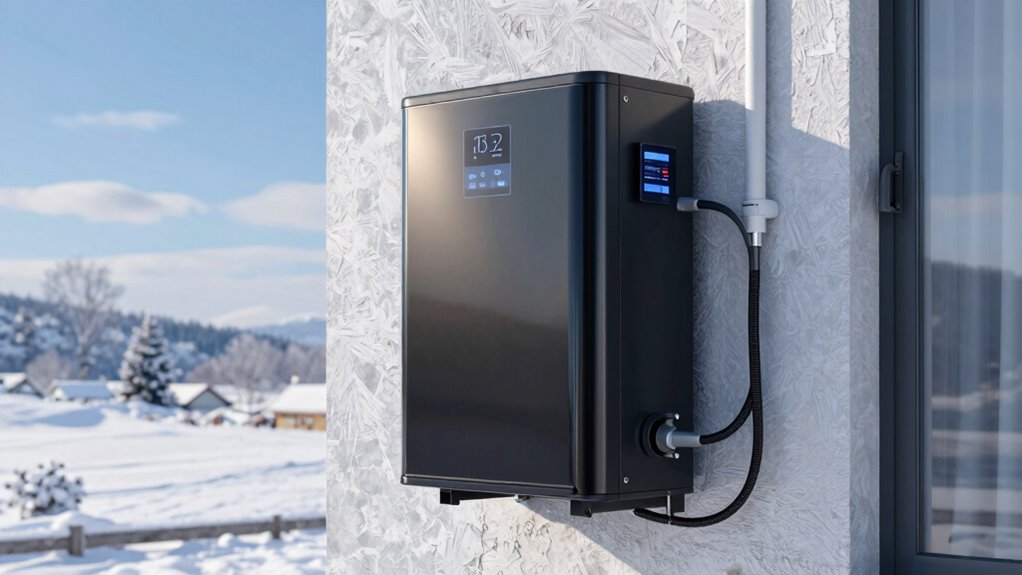
Have you ever wondered how integrating battery storage with heat pumps can revolutionize your energy use? When you combine these technologies, you gain more control over your power supply, especially during outages or grid fluctuations. Battery storage acts as a reliable backup, but its true potential goes far beyond just keeping the lights on. It enables you to achieve greater grid independence, meaning you rely less on the utility’s infrastructure and more on your own stored energy. This shift can notably reduce your dependence on the grid, especially during peak hours when electricity prices soar. As a result, your energy costs decrease because you’re drawing less from the grid and storing your own excess energy.
Using battery storage with heat pumps transforms how you think about backup power. Traditionally, backup systems are costly and often limited to generators or uninterruptible power supplies that run only during outages. But with batteries, backup becomes more integrated, seamless, and cost-effective. You can store surplus energy generated during sunny or windy days, then use that stored power to run your heat pump when needed, even if the grid is down. This setup not only guarantees continuous comfort but also reduces your overall energy expenses. Over time, the savings from lower utility bills and fewer outages can outweigh the initial investment in a battery system. Additionally, battery technology continues to improve, making these systems more efficient and affordable for homeowners. As these advancements develop, they further increase the cost-effectiveness of integrating batteries with heat pumps, making it an increasingly attractive option. Moreover, the development of energy storage solutions plays a crucial role in enhancing the overall reliability and flexibility of home energy systems. As the energy management capabilities of these systems grow, homeowners can optimize their energy usage more precisely, leading to even greater savings.
Battery storage enables seamless backup, reducing costs and ensuring continuous comfort even during outages.
The interplay between battery storage and heat pumps also opens the door to smarter, more efficient energy management. You can program your system to maximize self-consumption, using stored energy during high-demand periods and minimizing reliance on the grid. This strategic approach enhances your energy independence, making you less vulnerable to external price hikes or supply disruptions. Plus, with advancements in battery technology, costs continue to decline, making this integrated approach more accessible and financially attractive. As a result, you benefit from both immediate cost reductions and long-term savings, all while contributing to a more sustainable and resilient energy grid.
In essence, battery storage changes the backup conversation from a simple fail-safe to a detailed energy management solution. It shifts your home from being a passive consumer to an active participant in energy generation and storage. By pairing batteries with heat pumps, you open new levels of grid independence and cost reduction, giving you more control over your energy future. This integration isn’t just about backup anymore; it’s about optimizing your entire energy system for efficiency, savings, and resilience. Additionally, understanding home energy systems can help you make more informed decisions about future upgrades and investments.
home battery storage system for heat pumps
As an affiliate, we earn on qualifying purchases.
As an affiliate, we earn on qualifying purchases.
Frequently Asked Questions
How Does Battery Storage Affect Heat Pump Efficiency During Outages?
Battery storage keeps your heat pump running efficiently during outages by providing stored renewable energy, which enhances grid independence. When the power goes out, your battery supplies consistent energy, preventing efficiency drops caused by fluctuating grid conditions. This setup supports renewable integration, allowing your heat pump to operate smoothly without relying solely on the grid. As a result, you enjoy reliable heating and cooling, even during interruptions, while maximizing renewable energy use.
What Are the Cost Differences Between Traditional Backup and Battery-Backed Heat Pumps?
Imagine installing a traditional backup system costing $5,000, versus a battery-backed heat pump that might run $12,000 initially. The cost comparison shows batteries are pricier upfront but offer savings through energy efficiency and reduced maintenance. Installation considerations include space for batteries and wiring. Although more expensive initially, batteries can provide long-term savings and enhanced reliability, making them a smart investment for energy independence.
How Long Can a Battery Storage System Power a Heat Pump During an Outage?
You can typically power a heat pump with battery storage for several hours during an outage, depending on the battery’s capacity, the heat pump’s energy consumption, and your usage. Keep in mind, battery lifespan and installation challenges affect how long your system functions reliably. Larger, well-installed batteries tend to last longer and provide more backup time, but they may involve more complex installation processes and higher upfront costs.
Are There Specific Battery Types Best Suited for Heat Pump Backup?
You should consider lithium-ion batteries for heat pump backup, as their chemistry offers high energy density and long cycle life, making them ideal for sustained power needs. Look for batteries with ample storage capacity to guarantee your heat pump runs during outages. These batteries provide reliable performance, quick response times, and durability, ensuring your heat pump stays operational when you need it most.
What Maintenance Is Required for Battery Storage Systems Paired With Heat Pumps?
Imagine your battery storage system, like a well-maintained car battery, needs regular checkups. You should monitor battery lifespan and follow maintenance schedules, such as inspecting connections and keeping the system clean. For example, a homeowner noticed improved performance after quarterly checks, ensuring the battery’s longevity. Routine maintenance, like updating software and checking for corrosion, keeps your heat pump backup reliable, preventing unexpected failures and extending battery life.
solar battery backup for heat pumps
As an affiliate, we earn on qualifying purchases.
As an affiliate, we earn on qualifying purchases.
Conclusion
By bundling battery storage with your heat pump, you boost reliability, reduce risks, and bring balance to your backup plans. This powerful pairing provides peace of mind, preventing power pauses and problem-solving potential problems. With this winning combination, you’ll enjoy a seamless, sustainable, and secure heating solution. Embrace the energy evolution, empower your environment, and experience the ease of an enhanced, efficient, and eco-friendly energy ecosystem.
home energy storage for backup power
As an affiliate, we earn on qualifying purchases.
As an affiliate, we earn on qualifying purchases.
As an affiliate, we earn on qualifying purchases.
Fall Picks
fall essentials
As an affiliate, we earn on qualifying purchases.