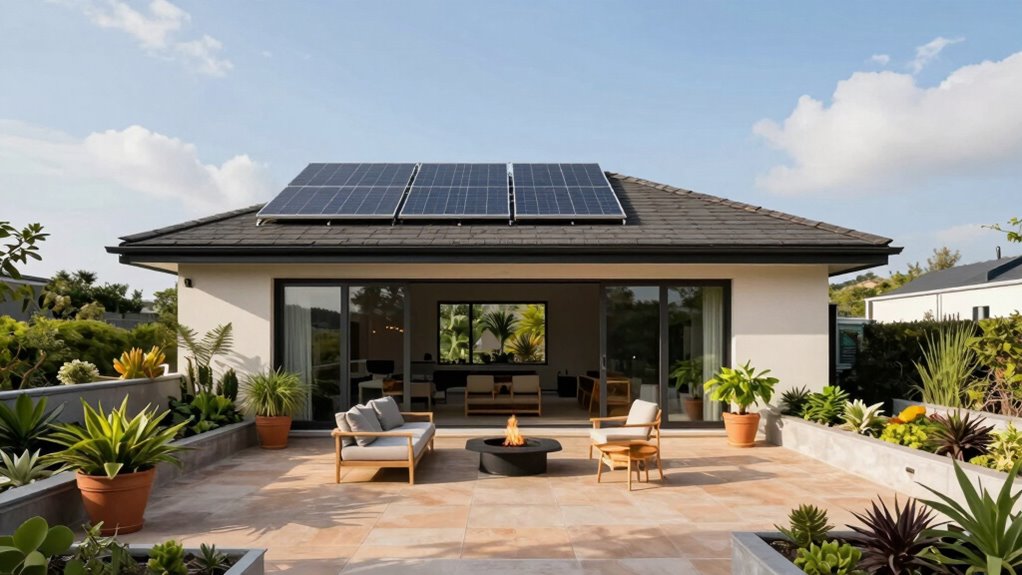

When choosing between roof-mounted and ground-mounted solar, consider more than just space. Think about installation costs, with roof systems usually being cheaper initially, but ground mounts offering better efficiency through ideal panel positioning. Site conditions matter too—shaded or flat roofs may limit roof options, while ground setups allow flexibility for future expansion. Maintenance, long-term savings, and technological improvements also influence your decision. To find out what best fits your situation, explore the detailed factors ahead.

Get backup power and energy gear delivered free with Prime
- Fast, free delivery on millions of items
- Prime Video, Amazon Music and more included
- Member-only deals all year
Key Takeaways
- Installation costs and effort vary, with roof mounts being cheaper and easier to install initially.
- Ground-mounted systems offer better panel positioning for higher efficiency and future expansion.
- Roof condition, shading, and orientation significantly impact the viability and performance of roof-mounted setups.
- Long-term energy savings depend on system efficiency, which can be optimized with ground mounts.
- Future technological advancements and upgrades may influence the overall value of each mounting option.

Are you trying to decide between a roof-mounted or ground-mounted solar system? This choice isn’t just about available space; it’s about understanding how each option impacts your system’s performance, costs, and long-term benefits. When considering a roof-mounted system, you’ll often find that installation costs are lower because the panels are integrated into your existing structure, reducing the need for additional groundwork. However, solar panel efficiency can be affected by factors like roof orientation, shading, and tilt. If your roof faces the right direction and is free of shade, a roof-mounted system can be highly effective. But if your roof isn’t ideal—say, it’s shaded, flat, or faces away from the sun—you may see a dip in efficiency, which can mean fewer savings over time.
On the other hand, ground-mounted systems usually involve higher installation costs because they require more site preparation, foundation work, and sometimes additional equipment like mounting poles or racks. Yet, they offer greater installation flexibility in positioning the panels at the optimal angle and orientation, which can significantly improve solar panel efficiency. This means you might generate more electricity per panel, offsetting the initial higher investment. Plus, ground mounts are easier to access for maintenance and cleaning, helping you keep your system performing at its best. Additionally, advancements in solar technology are continuously improving system performance and reliability, influencing your long-term return on investment. These technological improvements can also enable better integration with other energy solutions, enhancing overall system value. Moreover, choosing a ground-mounted system can provide more opportunities for future expansion, which might be limited with roof-mounted setups.
Ground-mounted systems offer better positioning, higher efficiency, and easier maintenance despite higher initial costs.
Your decision should also factor in how much space you have available. If your roof has enough unobstructed area and is structurally sound, it’s often the simplest and most cost-effective route. But if your roof is limited, poorly oriented, or heavily shaded, a ground-mounted solution might ultimately produce more power, making it worth the extra upfront costs. Keep in mind that ground-mounted systems can be expanded more easily in the future if you want to add more panels.
Finally, think about your long-term goals and budget. While roof-mounted systems tend to be less expensive initially, the potential for higher efficiency with ground mounts can lead to greater savings over the system’s lifespan. Additionally, the technology used in solar panels continues to improve, which can influence your decision based on future upgrades or enhancements. Weighing installation costs against expected energy gains will help you determine which mount type aligns best with your needs. Whether you prioritize cost, efficiency, or future flexibility, understanding these factors will guide you toward the right choice beyond just available space.
As an affiliate, we earn on qualifying purchases.
Frequently Asked Questions
How Does Local Climate Influence the Mounting Choice?
Your local climate influences your mounting choice considerably. If you face harsh weather, you’ll want a system that offers better weather resilience, like ground mounts that can be easily adjusted or repaired. In areas prone to high winds or heavy snowfall, roof mounts with secure, climate-adapted designs protect your panels. Considering climate adaptation ensures your solar setup endures, maximizing efficiency and longevity in any weather conditions.
What Are the Long-Term Maintenance Differences?
Are you prepared for the long-term upkeep? Roof mounts often face durability concerns due to weather exposure, requiring regular inspections and potential repairs. Ground mounts, while easier to access, demand ongoing maintenance to prevent corrosion and pest issues. Aesthetic considerations also play a role; roof mounts stay out of sight but may need more frequent cleaning or repairs. Ultimately, your choice impacts how much maintenance you’ll need over the years.
Can Mixed Mounting Options Optimize Energy Production?
Yes, mixed mounting options can optimize energy production by offering greater panel orientation and mounting flexibility. You can position panels to maximize sunlight exposure throughout the day, regardless of roof limitations or shading issues. Combining roof and ground mounts allows you to tailor each panel’s orientation for peak efficiency, improving overall system output. This strategic approach helps you harness more energy, especially in locations with varied sun angles or space constraints.
How Does Shading Impact Roof Versus Ground Mounts?
Shading can seriously throw a wrench in your plans by reducing sun exposure, which impacts energy output. Roof mounts often face more shading issues from nearby structures or trees, while ground mounts offer better control over shading, especially if you clear obstructions. You can’t afford to let shading cast a shadow on your solar gains, so consider how shade impact varies between roof and ground setups to maximize efficiency.
Are There Specific Permits Required for Ground Mounts?
You’ll likely need specific permits for ground mounts, depending on your local regulations. Check permit requirements in your area, as they can vary widely. Zoning restrictions may also apply, especially if your property has height limits or setback rules. Contact your city or county planning department to get detailed info. Obtaining these permits guarantees your installation complies with local laws and avoids future legal or safety issues.
ground-mounted solar panel system
As an affiliate, we earn on qualifying purchases.
As an affiliate, we earn on qualifying purchases.
Conclusion
When choosing between roof and ground mounts, remember it’s about more than just space—it’s about your unique needs and environment. Did you know that ground-mounted systems can be installed with ideal angles year-round, boosting efficiency by up to 25%? So, weigh your options carefully. Whether you prioritize ease or performance, making the right choice can considerably impact your solar investment’s success. Your decision today powers a brighter tomorrow.
As an affiliate, we earn on qualifying purchases.
As an affiliate, we earn on qualifying purchases.
Fall Picks
fall essentials
As an affiliate, we earn on qualifying purchases.