
In agriculture spaces, you use heating mainly to raise and maintain warm temperatures, ensuring healthy plant growth and animal comfort, especially during colder months. Dehumidification, on the other hand, focuses on controlling moisture levels to prevent mold, mildew, and disease, which can harm crops and livestock. While both systems work together to create ideal conditions, their core functions are different: heat manages temperature, and dehumidification keeps humidity in check. To discover how these systems coordinate effectively, keep exploring further details.

Get backup power and energy gear delivered free — and shop member deals
- Fast, free delivery on millions of items
- Access to Prime Big Deal Days deals on October 6–7
- Prime Video, Amazon Music and more included
Key Takeaways
- Heating primarily raises temperature to support plant growth and livestock comfort, especially during cold seasons.
- Dehumidification reduces excess moisture to prevent mold, disease, and crop or livestock health issues.
- Heating systems focus on temperature stability, while dehumidifiers target humidity control for optimal environment balance.
- Heating often uses boilers or radiant heaters, whereas dehumidification employs desiccant, refrigeration, or ventilation systems.
- Both systems are integrated but managed separately to efficiently meet specific environmental needs.
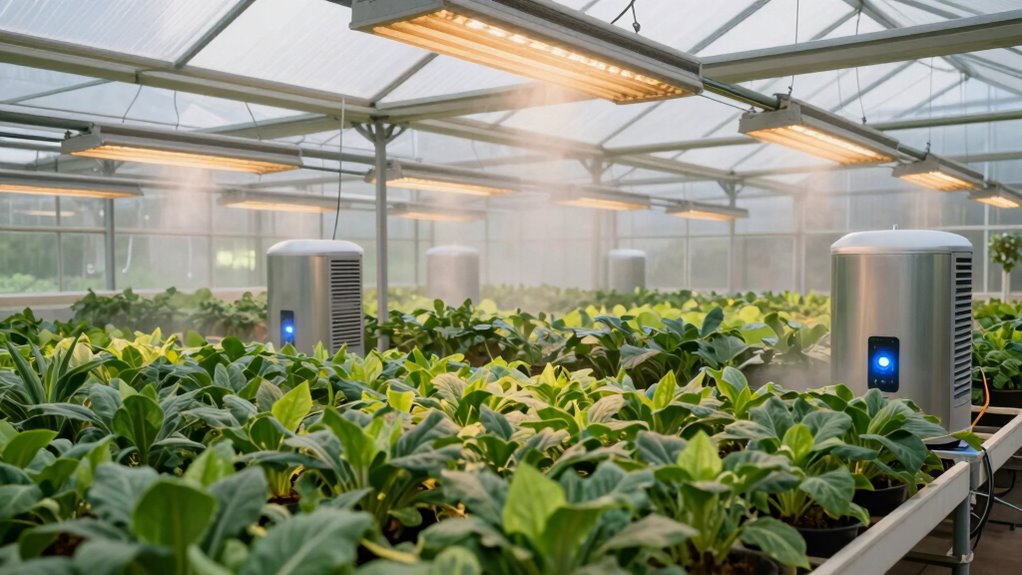
Have you ever wondered how farmers maintain ideal conditions in their agriculture spaces? It’s a complex task that involves carefully balancing temperature and humidity levels to guarantee crops and livestock thrive. To do this, they rely on a combination of climate control strategies that are tailored to their specific needs. Heating and dehumidification are two key components of these strategies, but each serves a distinct purpose and is often approached differently.
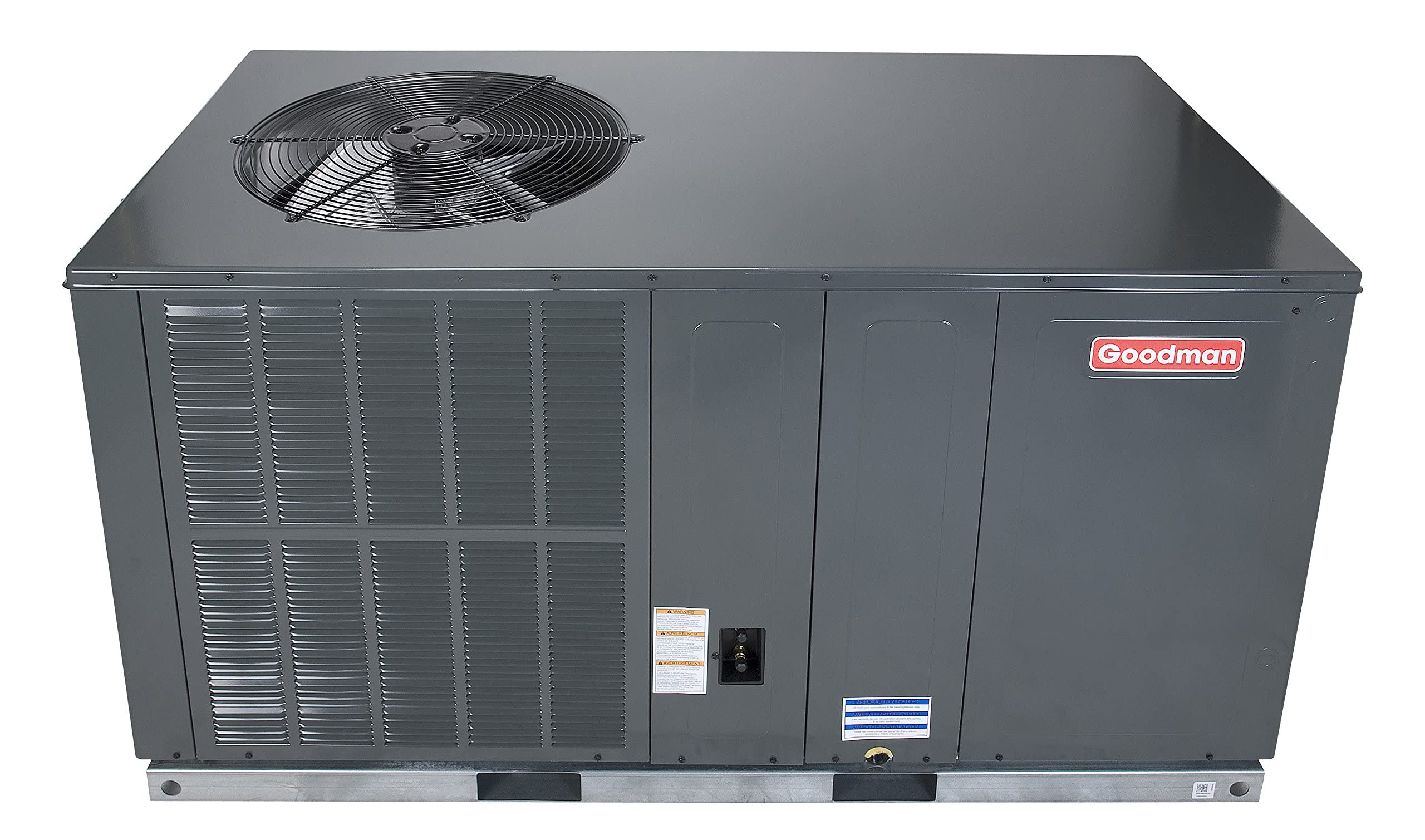
When it comes to heating, your goal is to raise the temperature to create a warm environment that promotes healthy growth. This is especially important during colder months or in regions with harsh winters. Farmers often use various heating systems, such as boilers, radiant heaters, or heat exchangers, to distribute warmth evenly across the space. The primary focus here is to maintain a consistent temperature that prevents stress on plants or animals. Energy efficiency considerations are vital in this process; using high-efficiency systems, insulation, and smart controls helps reduce energy consumption and operating costs. Insulation, for example, minimizes heat loss, allowing you to maintain a stable environment with less energy input. Additionally, proper climate control strategies are essential for balancing temperature and humidity effectively. Effective climate control often involves integrating different systems to optimize both heating and moisture levels simultaneously.
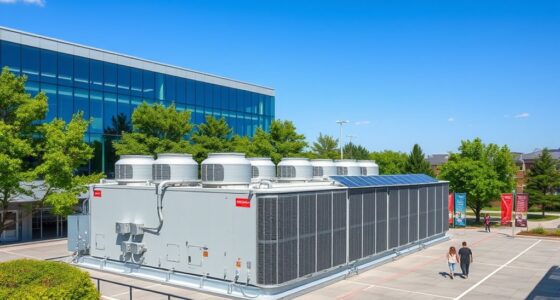
Dehumidification, on the other hand, is fundamentally about controlling moisture levels. Excess humidity can cause mold, mildew, and disease, which threaten both plant health and livestock well-being. Unlike heating, which adds warmth, dehumidification removes excess moisture from the air. You might use desiccant dehumidifiers, refrigeration-based systems, or ventilators to extract moisture effectively. The goal is to create a balanced environment where humidity remains within ideal ranges, preventing problems caused by overly humid conditions. Energy efficiency considerations also come into play here; choosing energy-efficient dehumidifiers and optimizing ventilation can greatly cut energy costs while maintaining proper humidity levels. Proper moisture control also reduces the need for frequent heating, as dry environments typically retain heat better. In addition, maintaining proper humidity levels can improve the overall air quality, which is crucial for healthy livestock and plant growth.
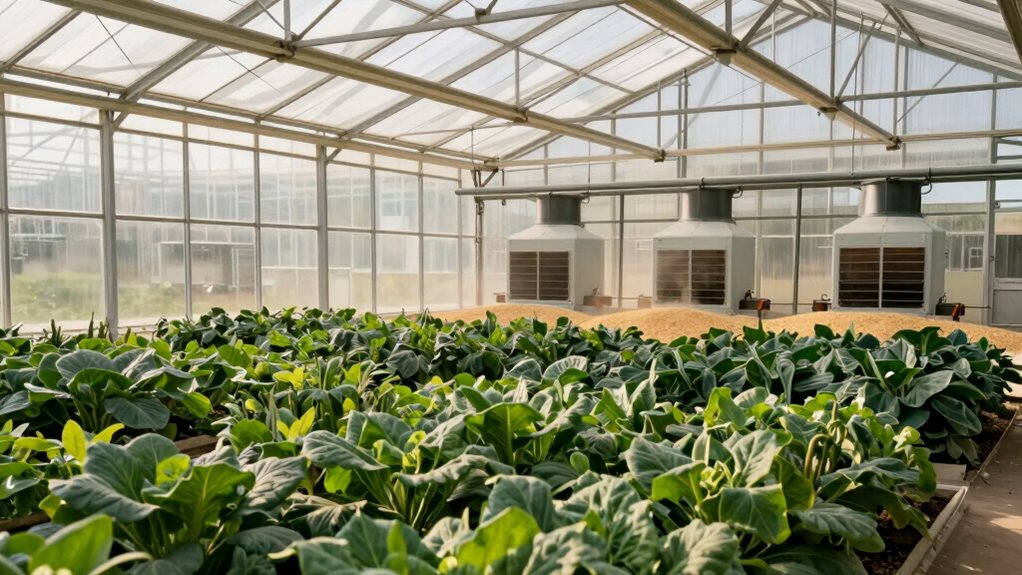
In many cases, these systems work together but are managed differently based on the specific needs of your agriculture space. Heating strategies aim to keep temperatures consistent and warm, especially during cold seasons, while dehumidification focuses on preventing moisture buildup that could harm crops or livestock. Both require careful planning to guarantee they are energy-efficient, minimizing costs without sacrificing environmental control. By understanding these distinctions and applying appropriate climate control strategies, you can optimize conditions in your agricultural space, leading to healthier plants, better yields, and happier animals—all while keeping energy use in check.
As an affiliate, we earn on qualifying purchases.
Frequently Asked Questions
How Do Climate Variations Affect Heating and Dehumidification Choices in Agriculture?
Climate variations directly influence your choices for heating and dehumidification in agriculture. You adjust microclimates to meet crop-specific needs, ensuring ideal growth conditions. In colder climates, you prioritize heating to maintain temperature, while in humid areas, dehumidification becomes essential to prevent mold and disease. By understanding local climate patterns, you can tailor your climate control systems, creating a balanced environment that promotes healthy crop development and maximizes yields.
What Are the Energy Efficiency Considerations for Different Agriculture Heating Systems?
Prioritize energy-efficient heating systems like heat pumps or infrared heaters to optimize crop growth and reduce costs. Focus on energy optimization by sealing leaks, insulating spaces, and utilizing thermostats to regulate temperature effectively. Consider renewable energy sources, such as solar or biomass, to lower operational expenses and environmental impact. By adopting these strategies, you guarantee healthy crop development while minimizing energy consumption and maximizing efficiency.
How Do Seasonal Changes Impact Humidity Control Strategies in Farms?
Seasonal changes greatly influence your humidity control strategies on the farm. You should rely on humidity sensors to monitor real-time moisture levels and make seasonal adjustments accordingly. In colder months, you might need more dehumidification to prevent mold, while in warmer seasons, less is required. Regularly calibrate sensors and adapt your systems to changing conditions, ensuring ideal humidity levels for healthy crops and livestock year-round.
What Are the Cost Differences Between Heating and Dehumidification Equipment?
Imagine you’re managing a greenhouse and want to compare costs. Heating equipment, like gas furnaces, generally has a lower initial cost but higher operational expenses, while dehumidifiers have a higher upfront price but save money long-term through energy efficiency. A thorough cost analysis reveals that equipment comparison shows dehumidification is more cost-effective over time, especially in humid climates. Your decision depends on upfront budget and long-term savings.
How Do Pest Control Needs Influence Climate Management in Agriculture Spaces?
You need to manage pest control by controlling climate conditions because pests thrive in certain environments. Pest habitats and insect proliferation increase if humidity is too high or temperatures are ideal for them. By adjusting heating and dehumidification, you can make your space less inviting to pests, reducing their habitat and slowing their reproduction. This targeted climate management helps protect your crops without relying solely on chemical controls.
As an affiliate, we earn on qualifying purchases.
Conclusion
In the world of agriculture, heating and dehumidification aren’t just tools—they’re the secret weapons to releasing record-breaking harvests and thriving crops. Without them, your plants could be gasping for air or baking under the sun, turning your farm into a disaster zone. Mastering these elements means transforming your space into a lush, unstoppable powerhouse of productivity. Think bigger, act faster, and harness the power of perfect climate control—because your farm’s future depends on it!
refrigeration dehumidifiers for agriculture
As an affiliate, we earn on qualifying purchases.
As an affiliate, we earn on qualifying purchases.
As an affiliate, we earn on qualifying purchases.
Fall Picks
fall essentials
As an affiliate, we earn on qualifying purchases.