In mixed-use buildings, each space has unique heating, cooling, and ventilation needs, making HVAC coordination complex. Without proper control, you risk energy waste, higher costs, and discomfort for occupants. If systems aren’t synchronized, some areas may be over-conditioned while others aren’t conditioned enough. Smart controls and automation can help manage these challenges, ensuring efficiency and comfort across all zones. Keep exploring to discover how better coordination can truly transform your building’s performance.

Get backup power and energy gear delivered free — and shop member deals
- Fast, free delivery on millions of items
- Access to Prime Big Deal Days deals on October 6–7
- Prime Video, Amazon Music and more included
Key Takeaways
- Diverse spaces in mixed-use buildings require tailored heating, cooling, and ventilation to ensure occupant comfort.
- Lack of coordination leads to energy waste and higher operational costs across different zones.
- Poorly synchronized systems cause temperature and airflow imbalances, reducing overall efficiency.
- Building automation and smart controls enable proactive climate management and responsive adjustments.
- Effective HVAC coordination enhances occupant satisfaction while minimizing energy consumption and environmental impact.
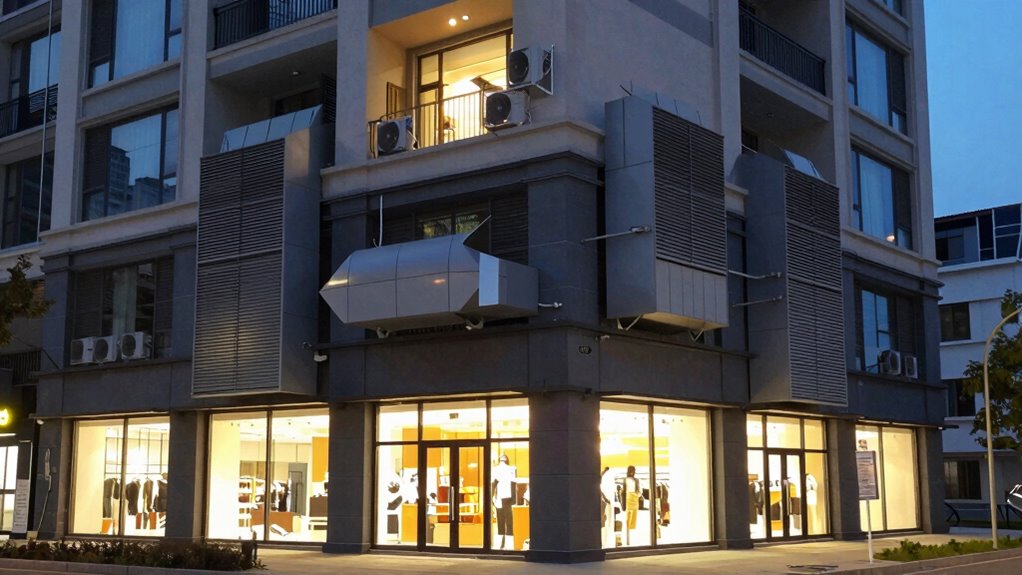
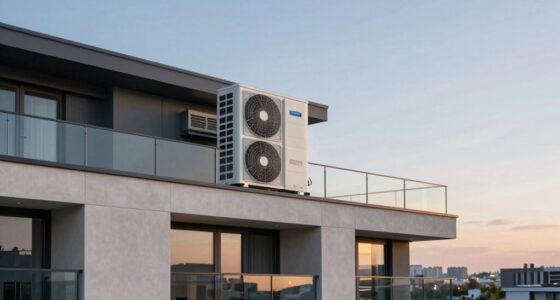
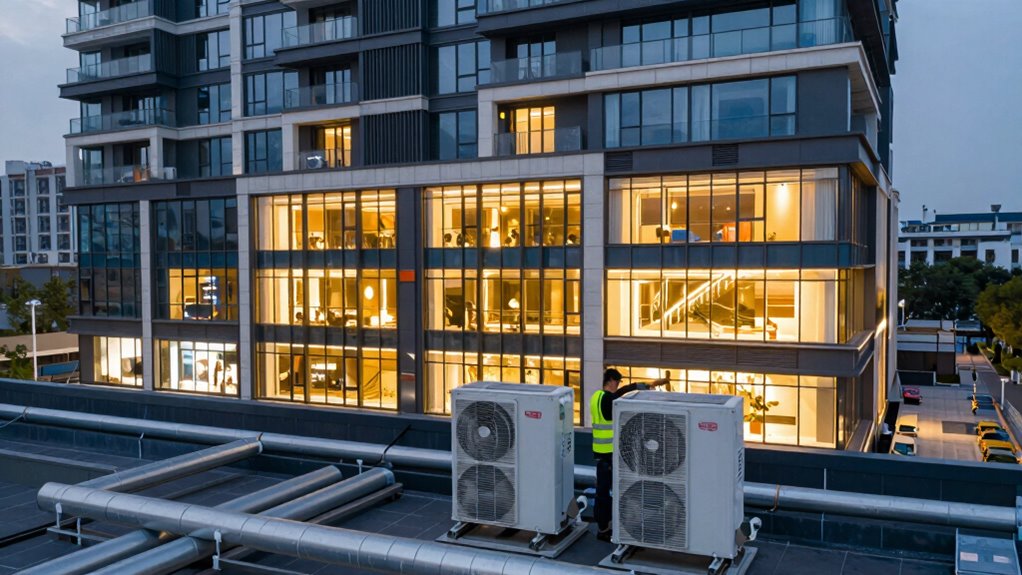
Have you ever wondered how HVAC systems manage to serve the diverse needs of mixed-use buildings? These complex structures combine residential, commercial, retail, and sometimes even industrial spaces, each with its own unique heating, cooling, and ventilation requirements. Without proper coordination, the HVAC system can struggle to deliver energy efficiency and occupant comfort across all areas. When systems aren’t synchronized, you end up wasting energy by over-conditioning some spaces while neglecting others. This not only inflates utility costs but also increases the building’s carbon footprint. On the other hand, a well-coordinated HVAC approach ensures that energy is used efficiently, reducing operational costs and environmental impact.
Effective HVAC coordination in mixed-use buildings boosts energy efficiency and occupant comfort across diverse spaces.
In mixed-use buildings, occupant comfort is crucial—people need a consistent indoor climate, no matter where they are. Without effective HVAC coordination, some zones may be too hot or too cold, leading to discomfort and dissatisfaction among tenants or visitors. Imagine entering a retail store that’s uncomfortably warm because the system isn’t balancing airflow properly, or living in a residential unit that’s too chilly during winter because the heating system isn’t integrated with the overall building controls. Proper coordination helps tailor the climate control to meet each space’s specific needs without wasting energy. It ensures that the HVAC system responds dynamically, adjusting airflow, temperature, and humidity levels based on occupancy patterns and usage. Additionally, integrating building automation systems can significantly enhance this process by providing real-time data and control.
Furthermore, leveraging smart controls can enable predictive adjustments that improve overall system responsiveness and efficiency. These advanced systems can analyze data trends and optimize performance proactively, reducing the likelihood of inefficiencies and system failures. Achieving this level of coordination requires an all-encompassing strategy, including energy management systems and smart controls that communicate across different zones. These systems can optimize energy consumption by predicting demand and adjusting operations proactively. For instance, during off-peak hours, the system can reduce heating or cooling in unoccupied areas, conserving energy while maintaining occupant comfort where it matters most. Regular maintenance and smart design choices also play a role in preventing inefficiencies and ensuring that all parts of the building are integrated seamlessly. Moreover, proper zoning is essential to effectively segment and control different areas to maximize efficiency and comfort.
In the end, the key to managing a mixed-use building effectively is recognizing that HVAC isn’t just about individual systems working in isolation; it’s about creating a cohesive network that serves everyone’s needs. When you invest in better HVAC coordination, you’re not only enhancing occupant comfort but also considerably improving energy efficiency. This balanced approach results in lower operational costs, happier tenants, and a more sustainable building overall. It’s about making sure that every space, whether residential or commercial, receives the right amount of conditioned air—efficiently and comfortably.
As an affiliate, we earn on qualifying purchases.
Frequently Asked Questions
How Does HVAC Zoning Differ in Mixed-Use Buildings?
In mixed-use buildings, HVAC zoning differs by offering greater zoning flexibility, allowing you to tailor temperature control for each area. You can set specific zones for residential, commercial, or retail spaces, ensuring comfort and efficiency. This zoning flexibility helps you optimize energy use, prevent temperature conflicts, and improve occupant satisfaction, making the building more adaptable to diverse space needs while maintaining precise temperature control.
What Are the Energy Efficiency Challenges in Mixed-Use HVAC Systems?
Think of energy efficiency challenges in mixed-use HVAC systems like juggling fire—demanding and risky. You face issues like balancing renewable integration with diverse heating and cooling needs, which can waste energy if improperly managed. Poor coordination impacts indoor air quality, making spaces uncomfortable or unhealthy. To overcome this, you need smart controls and design strategies that optimize energy use while maintaining excellent indoor environments.
How Do HVAC Systems Impact Tenant Comfort Across Different Spaces?
Your HVAC system directly impacts tenant comfort by maintaining ensure indoor air quality and thermal comfort across diverse spaces. Properly coordinated HVAC ensures consistent temperature control and fresh air supply, preventing hot or cold spots. When systems are well-integrated, tenants enjoy a comfortable environment regardless of their location within the building. This not only boosts satisfaction but also promotes productivity and health, making HVAC coordination essential in mixed-use buildings.
What Are the Best Practices for Integrating HVAC With Building Automation?
You should integrate HVAC with building automation systems by using smart sensors to monitor air quality and temperature in real-time. Automate controls to optimize airflow, reduce noise, and maintain consistent air quality across different spaces. Prioritize noise control by zoning systems to prevent disturbances. Regularly calibrate equipment, and use data analytics to improve efficiency. This approach guarantees comfort, enhances air quality, and minimizes disruptions, creating a seamless environment for all tenants.
How Can Maintenance Be Optimized for Complex Mixed-Use HVAC Systems?
To optimize maintenance for complex mixed-use HVAC systems, you should prioritize maintenance scheduling that aligns with system demands and occupancy patterns. Incorporate HVAC system redundancy to guarantee continuous operation during maintenance, reducing disruptions. Regularly monitor system performance and proactively address issues, which helps extend equipment lifespan. By planning maintenance strategically and leveraging redundancy, you keep all zones comfortable and operational, minimizing downtime and costly repairs.
smart building automation systems
As an affiliate, we earn on qualifying purchases.
As an affiliate, we earn on qualifying purchases.
Conclusion
Think of a mixed-use building as a busy orchestra, where each instrument must play in harmony for the symphony to succeed. Proper HVAC coordination is like a skilled conductor, ensuring all sections—residential, commercial, and retail—perform seamlessly together. When they work in tune, comfort and efficiency flourish. Without this harmony, chaos erupts. So, prioritize HVAC coordination to keep your building’s symphony playing smoothly, creating a harmonious environment where all elements thrive.
As an affiliate, we earn on qualifying purchases.
zone-specific thermostats for commercial buildings
As an affiliate, we earn on qualifying purchases.
As an affiliate, we earn on qualifying purchases.
Halloween Picks
halloween
As an affiliate, we earn on qualifying purchases.