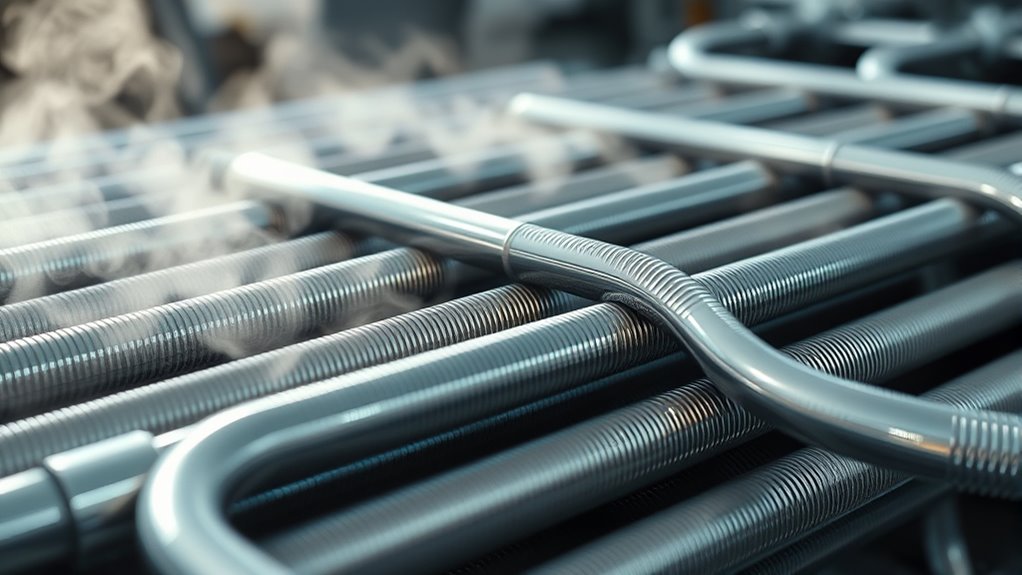

To guarantee effective thermal transfer in heat exchangers, focus on selecting materials with high thermal conductivity like copper, aluminum, or stainless steel, which maximize heat flow. Proper design minimizes energy losses and prevents fluid contamination while optimizing contact between fluids. Material compatibility with the fluids is vital for durability and longevity. If you keep exploring, you’ll discover how design choices and material properties work together to improve heat exchanger performance efficiently.

Get backup power and energy gear delivered free — and shop member deals
- Fast, free delivery on millions of items
- Access to Prime Big Deal Days deals on October 6–7
- Prime Video, Amazon Music and more included
Key Takeaways
- Selecting materials with high thermal conductivity, like copper or aluminum, enhances heat transfer efficiency in heat exchangers.
- Proper design ensures optimal flow paths and surface contact between fluids, maximizing heat exchange.
- Compatibility of materials with operating fluids prevents corrosion and maintains system integrity.
- Balancing material cost, durability, and thermal properties leads to more effective and reliable heat exchanger performance.
- Understanding principles of thermal transfer helps optimize heat exchanger design for minimal energy loss and higher efficiency.

Have you ever wondered how heat is efficiently transferred between two fluids without mixing them? It’s a fascinating process that hinges on careful design choices and understanding the principles of thermal transfer. One essential factor is material selection. The materials used in heat exchangers must conduct heat effectively while resisting corrosion and maintaining durability under operating conditions. Metals like copper, aluminum, and stainless steel are popular because they have high thermal conductivity, which allows heat to pass quickly from one fluid to the other. Choosing the right material also involves considering the fluids involved, their temperatures, and potential chemical reactions. For example, if you’re working with corrosive fluids, stainless steel might be the best choice despite its higher cost, because it guarantees longevity and prevents contamination. Proper material selection is fundamental for optimizing heat transfer efficiency and reducing maintenance costs over time. Additionally, understanding the thermal conductivity of materials helps in designing more effective heat exchangers by maximizing heat transfer rates.
As an affiliate, we earn on qualifying purchases.
Frequently Asked Questions
How Do Fouling and Scaling Affect Heat Exchanger Efficiency?
Fouling and scaling reduce heat exchanger efficiency by creating insulating layers that hinder heat transfer. You can combat this through fouling mitigation and scaling prevention techniques, such as regular cleaning or chemical treatments. By maintaining clean surfaces, you guarantee better thermal performance. These measures help preserve heat exchange effectiveness, lower energy costs, and extend equipment lifespan, making your system more reliable and efficient over time.
What Are the Latest Innovations in Heat Exchanger Materials?
You should explore recent innovations like advanced coatings and composite materials, which greatly improve heat exchanger performance. Advanced coatings prevent fouling and corrosion, extending lifespan and maintaining efficiency. Composite materials offer enhanced thermal conductivity, strength, and lightweight properties, enabling better heat transfer and easier maintenance. These innovations help you achieve more durable, efficient heat exchangers, reducing downtime and operational costs. Staying updated on these developments ensures ideal system performance and longevity.
How Do Different Flow Arrangements Impact Thermal Transfer?
You’ll find that flow arrangements substantially impact heat transfer efficiency; for example, counter-flow setups can boost efficiency by up to 30% compared to parallel-flow systems. Different flow patterns, like cross-flow or mixed flow, influence how well heat transfers between fluids, with some designs promoting turbulent flow that enhances heat transfer. By choosing the right flow pattern, you can optimize performance and maximize thermal transfer in your heat exchanger system.
What Maintenance Practices Ensure Long-Term Heat Exchanger Performance?
You should regularly implement cleaning protocols to prevent fouling and buildup, which can hinder performance. Additionally, focus on corrosion prevention by inspecting for leaks, using proper materials, and applying protective coatings. These practices help guarantee your heat exchanger operates efficiently over the long term. Consistent maintenance not only maintains ideal thermal transfer but also extends the equipment’s lifespan, reducing costly downtime and repairs.
How Are Heat Exchangers Sized for Specific Applications?
You size heat exchangers for specific applications by analyzing the required flow rate and heat transfer needs. You optimize flow rate to guarantee efficient thermal transfer without causing excessive pressure drops. Additionally, you select materials suitable for your operating conditions—considering corrosion resistance, thermal conductivity, and durability. By balancing these factors, you ensure the heat exchanger fits your application’s demands, providing reliable performance and long-term efficiency.
As an affiliate, we earn on qualifying purchases.
Conclusion
In brief, understanding heat exchangers helps you optimize thermal transfer efficiently. Imagine a factory using a shell-and-tube heat exchanger to recover waste heat from exhaust gases, reducing energy costs. By focusing on design and materials, you can enhance performance and save money. So, whether you’re designing a new system or improving an existing one, mastering these principles lets you maximize heat transfer, making your processes more sustainable and cost-effective.
As an affiliate, we earn on qualifying purchases.
As an affiliate, we earn on qualifying purchases.
Fall Picks
fall essentials
As an affiliate, we earn on qualifying purchases.