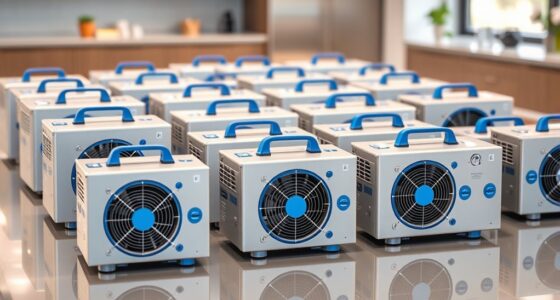
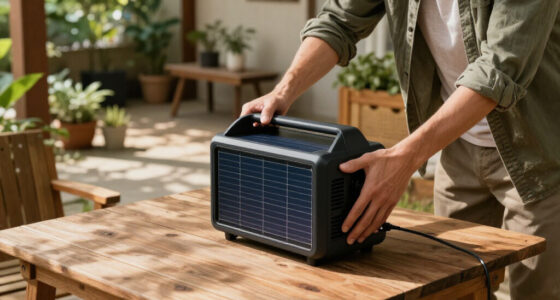
The best home solar energy systems depend on whether you need portable backup, a starter setup, or enough storage and inverter capacity for larger off-grid loads. My best overall pick is the AUECOOR 9.36 kWh system, which pairs substantial battery storage with a 12 kW split-phase inverter; the ECO-WORTHY 10 kW system with 32.2 kWh of storage stands out for buyers who need longer backup, while the Jackery Solar Generator 1000 v2 is the simplest portable choice. The main tradeoffs are system scale, battery capacity, installation complexity, and how much output your panels can actually provide through changing weather. A high-wattage inverter alone does not mean a system can run heavy loads for long. Read on for the full comparison and guidance on matching a system to your home and power needs.

Get backup power and energy gear delivered free with Prime
- Fast, free delivery on millions of items
- Prime Video, Amazon Music and more included
- Member-only deals all year
Complete the kit


Key Takeaways
- Battery capacity changes the backup picture: the ECO-WORTHY 10 kW kit with 32.2 kWh of storage offers far more stored energy than systems with 5.12 or 10.24 kWh batteries, but its larger scale calls for more planning.
- Inverter rating and stored energy solve different problems: a 10 or 12 kW inverter can support larger simultaneous loads, while battery capacity determines how long those loads can run.
- Panel wattage varies widely across the lineup: the Renogy 400W kits and Jackery 200W panel suit smaller needs, while the larger ECO-WORTHY and AUECOOR arrays target more substantial off-grid generation.
- Portable power is a different category of convenience: the Jackery is easier to move and set up than assembled off-grid kits, but its 1,024Wh battery and 200W panel are not substitutes for whole-home storage.
- More system capacity can mean more installation work: the large battery-and-inverter kits offer greater potential, while compact 12V and 24V kits are easier to match to modest loads but have less headroom.


More Details on Our Top Picks
Jackery Solar Generator 1000 v2 with 200W Solar Panel, 1024Wh LiFePO4 Battery
Jackery’s portable format suits targeted backup better than whole-home coverage: its 1,024Wh battery and 1,500W AC output can run selected devices, while the included 200W panel can replenish the station when conditions allow. The 10ms UPS switchover is useful for compatible equipment that needs a quick change to battery power, and the LFP chemistry is rated for more than 4,000 cycles. Compared with the ECO-WORTHY 1170W Solar Power System, this is much easier to move and set up, but it has a fraction of the storage and output. Its emergency 50-minute charge mode must be enabled in the app, and the panel and generator ship separately. I’d choose it for flexible, modest backup—not as a substitute for a permanently installed household system.
Pros:- Portable 23.4-pound station with a foldable handle
- 1,500W AC output with a 3,000W surge peak
- LFP battery rated to retain over 70% capacity after 4,000 cycles
- Includes a 200W solar panel and offers 10ms UPS switchover
Cons:- Limited storage and solar input compared with complete home-scale kits
- Emergency fast charging requires enabling the mode in the app
- Generator and solar panel ship separately
Best for: People who need movable backup for essential devices, short outages, or travel and want a solar panel included.
Not ideal for: Households seeking to run several major appliances or cover prolonged outages; its 1,024Wh capacity and 200W panel are modest beside the larger off-grid kits.
- Battery capacity:1,024Wh
- Battery chemistry:LFP (LiFePO4)
- AC output:1,500W
- Surge capacity:3,000W
- Solar panel included:200W
- UPS switchover:10ms
- Weight:23.4 lb
- Warranty:5 years
Our verdict“Choose the Jackery for portable, small-load solar backup, not whole-home power or long periods without grid access.”
ECO-WORTHY 1170W Solar Power System with 48V Battery and 3500W Inverter
This complete 48V kit bundles six bifacial panels, a LiFePO4 battery, inverter, controller, cables, and mounting accessories, reducing the work of matching separate core components. Its 2,560Wh usable storage and 3,500W inverter offer a meaningful step up from the portable Jackery Solar Generator 1000 v2, while remaining far smaller than the 32.2kWh ECO-WORTHY 10kW Off-Grid Solar Kit. The panels’ stated 25% conversion efficiency and the inverter’s built-in 80A MPPT controller give the system a substantial solar foundation for an off-grid cabin or a defined set of household loads. The tradeoff is limited storage for extended backup, plus a battery charging specification of 32°F and above. It also arrives in multiple packages, which may not come together.
Pros:- Includes six panels, battery, inverter, cables, mounts, and accessories
- Bifacial N-type panels are specified at 25% conversion efficiency
- 3,500W inverter includes an 80A MPPT controller and Wi-Fi monitoring
- LiFePO4 battery is rated for more than 4,000 cycles
Cons:- 2,560Wh usable storage is modest for sustained household backup
- Battery charging is specified only at temperatures of 32°F and above
- Components ship in multiple packages that may arrive separately
Best for: Cabin owners and hands-on off-grid buyers who want panels, battery, inverter, and installation accessories in one mid-scale kit.
Not ideal for: Households expecting several days of whole-home backup or charging below 32°F; its storage is limited relative to the larger ECO-WORTHY kits.
- Total solar panel capacity:1,170W (6 × 195W)
- Panel type:N-type bifacial monocrystalline
- Panel conversion efficiency:25%
- Battery:48V 50Ah LiFePO4
- Usable battery energy:2,560Wh
- Inverter output:3,500W
- Inverter surge power:7,000W
- MPPT controller:80A built in
- UPS switching time:20ms
Our verdict“Pick this kit for a bundled, mid-scale off-grid setup, but choose a larger-storage system for extended household backup.”
AUECOOR 9.36 kWh Off-Grid Solar System with 12 kW Split-Phase Inverter, 2,400 W Panels, 51.2 V 200 Ah Battery, and Combiner Box
The AUECOOR kit pairs a 12kW inverter with 120V/240V split-phase output, making it a stronger fit for off-grid setups with larger loads or equipment that needs 240V than the ECO-WORTHY 1170W system. Its 20 panels provide 2,400W of rated solar input, and the 9.36kWh battery includes a BMS, charge balancing, status display, and RS485/CAN communication. Support for up to 15 batteries offers a route to more storage if the installation calls for it. This is a more involved, fixed system than the portable Jackery Solar Generator 1000 v2, and it is not specified for grid-tied operation. Its panel array is also relatively modest beside the inverter’s rated output, so buyers should match expected loads and local solar conditions rather than treating 12kW as continuous solar production.
Pros:- 12,000W pure sine wave inverter supports 120V/240V split-phase output
- Includes 20 panels, battery, combiner box, cables, and mounting hardware
- Battery has a built-in BMS, charge balancing, LCD, and RS485/CAN communication
- Supports parallel connection of up to 15 batteries
Cons:- Designed for off-grid use; grid-tied operation is not specified
- The 2,400W panel array is small relative to the inverter’s 12,000W rating
- A fixed installation requires more planning and setup than a portable station
Best for: Off-grid property owners who need split-phase 120V/240V output, battery monitoring, and a system that can be expanded with additional batteries.
Not ideal for: Buyers seeking a portable power station, a specified grid-tied system, or high solar generation to match the inverter’s full output.
- System capacity:9.36kWh
- Inverter output:12,000W
- Inverter output voltage:120V/240V split phase
- Solar panels:20 × 120W monocrystalline
- Battery:51.2V, 200Ah
- Charge controller:MPPT
- Battery communication:RS485 and CAN
- Parallel battery support:Up to 15 batteries
- Warranty:10-year limited warranty
Our verdict“Choose AUECOOR when 120V/240V off-grid output and expandable battery storage matter more than portability or grid-tied use.”
ECO-WORTHY 10kW Off-Grid Solar Kit with 10,620W Panels and 32.2kWh Battery Storage
With 10,620W of panels and 32.2kWh of storage, this kit is the strongest choice here for buyers planning substantial off-grid household coverage. The 10kW split-phase inverter handles 120V or 120V/240V loads, while dual MPPT controllers and Wi-Fi monitoring give owners tools to track generation and system status. Compared with the AUECOOR 9.36kWh system, it supplies much more battery storage and a larger panel array, but it also demands significantly more space, installation planning, and electrical expertise. The panels are large and heavy, and professional installation is recommended. The advertised daily generation depends on favorable conditions, so I would size expectations around site, season, and shading rather than relying on a maximum figure. This is a substantial off-grid installation, not a portable or casual backup purchase.
Pros:- 10,620W panel array paired with 32.2kWh of LiFePO₄ storage
- 10,000W continuous split-phase inverter supports 120V and 240V loads
- Dual MPPT controllers and Wi-Fi monitoring
- Expandable design supports parallel batteries and up to six inverters
Cons:- Professional installation is recommended, adding complexity to setup
- Panels measure 89.68 × 44.65 inches and weigh 69.9 lb each
- Daily generation claims depend on favorable solar and site conditions
Best for: Owners of larger off-grid homes or properties with room for a substantial panel array and professional installation.
Not ideal for: Small homes, renters, or buyers wanting a simple backup appliance; the large panels, heavy batteries, and installation needs call for dedicated space and expertise.
- Total solar panel capacity:10,620W (18 × 590W)
- Battery storage:32.2kWh (2 × 16.076kWh)
- Battery type:LiFePO₄
- Inverter output:10,000W continuous; 20,000W peak
- Output voltage:120V or 120V/240V split phase
- Panel efficiency:25%
- MPPT controllers:Dual
- Battery management system:PACE 200A BMS
- Installation:Professional installation recommended
Our verdict“Choose this ECO-WORTHY kit for a large, professionally installed off-grid home system with substantial storage and 240V capability.”
ECO-WORTHY Solar Panel and LiFePO4 Home Backup System, 10 kW Inverter
This 10kW hybrid kit emphasizes monitored, protected battery backup: its two 48V 314Ah LiFePO₄ batteries provide more than 30kWh of usable energy, and the system includes six 590W panels, an inverter, and cables. Its active-balancing BMS, multiple communication options, and stated fire-suppression and alarm features give buyers more battery-status and protection tools than the ECO-WORTHY 1170W starter kit. Against the larger ECO-WORTHY 10kW Off-Grid Solar Kit, this model lists a smaller six-panel array, so its 3,540W of panel capacity may refill a large battery more slowly when sunlight is limited. The panels are sizable, and the batteries ship on a pallet by truck. I’d favor it for owners prioritizing substantial storage and monitoring, while checking delivery logistics and inverter version details before ordering.
Pros:- Two LiFePO₄ batteries provide more than 30kWh of usable energy
- 10kW hybrid inverter supports 120V and 240V output
- Battery BMS includes active balancing, circuit breaker, fire suppression, and alarm
- Monitoring and communication options include Bluetooth, Wi-Fi, RS232, RS485, and CAN
Cons:- Six panels provide 3,540W of solar capacity, less than the 10,620W array in ECO-WORTHY’s 10kW off-grid kit
- Large panels and pallet delivery require space and delivery planning
- The exterior inverter version is selected at random
Best for: Homeowners seeking substantial LiFePO₄ backup storage, app-based monitoring, and built-in battery safety features in a 120V/240V system.
Not ideal for: Buyers with limited installation space, a need for a large solar array to recharge storage quickly, or those who cannot accommodate pallet freight delivery.
- Solar panels:6 × 590W N-type
- Total panel capacity:3,540W
- Battery:2 × 48V 314Ah LiFePO₄
- Usable energy:30kWh+
- Inverter:10kW hybrid
- Output voltage:120V and 240V
- MPPT tracking efficiency:99.9%
- Battery cycle life:9,000+ cycles at 80% depth of discharge
- Panel efficiency:25%
Our verdict“Pick this kit if substantial battery backup and monitoring matter more than having a large panel array included.”
3000W 24V Off-Grid Solar Power System Kit with 1440W Solar Panels, 5.12kWh Battery and Pure Sine Wave Inverter
I’d shortlist this kit for a cabin or backup setup that needs a substantial inverter without stepping up to a 48V, 5kW system. Its 3,000W pure sine wave inverter can support many household electronics and motor-driven appliances, while 5.12kWh of LiFePO4 storage gives essentials power after the panels stop producing. Compared with the ECO-WORTHY 5 kW Off-Grid Solar System Kit, this one has less inverter and panel capacity, but its four-battery configuration and included combiner box make the component package clear and fairly self-contained. The tradeoff is installation: twelve rigid panels and several separate components need room and careful wiring. I’d also treat daily generation as weather-dependent, not a guaranteed output. This is a better fit for moderate loads than for running a whole home without load planning.
Pros:- 3,000W pure sine wave output suits many sensitive electronics and motor-driven appliances.
- Four LiFePO4 batteries provide 5.12kWh of stated storage.
- 60A MPPT controller includes system protections, temperature compensation, and an LCD.
- PV combiner box and battery and solar extension cables are included.
Cons:- Twelve rigid panels and multiple components require considerable installation space and wiring work.
- The 24V, 3,000W inverter offers less headroom than the 48V, 5,000W ECO-WORTHY kit.
- Actual daily solar generation varies with sunlight and site conditions.
Best for: Cabin owners or households building an off-grid backup system for essential appliances, electronics, and moderate simultaneous loads.
Not ideal for: Buyers seeking a compact, plug-and-play backup unit or enough inverter and battery capacity for sustained whole-home loads.
- Solar panel capacity:1,440W (12 × 120W)
- Battery capacity:5.12kWh
- Battery configuration:4 × 12.8V, 100Ah LiFePO4 batteries
- Inverter output:3,000W continuous; 6,000W peak
- Inverter conversion:24V DC to 120V AC
- Charge controller:60A MPPT; stated tracking efficiency above 99%
- PV combiner box:4-to-1
Our verdict“Choose this kit for a component-rich, moderate-capacity off-grid setup, but compare it with higher-output 48V kits if you expect heavier loads.”
ECO-WORTHY 5 kW Off-Grid Solar System Kit with 2,340 W Panels
The ECO-WORTHY 5 kW kit prioritizes inverter headroom: its 48V, 5,000W inverter gives a cabin or home backup setup more room for concurrent appliances than the 3,000W inverter in the 3000W 24V Off-Grid Solar Power System Kit. It pairs that output with 2,340W of panels and a 51.2V, 100Ah LiFePO4 battery, plus cables and Z brackets. That makes it a useful step up for buyers who want a coordinated off-grid package rather than sourcing core parts separately. The main compromise is storage: the stated battery capacity is 5.12kWh, so a higher-wattage inverter does not mean long runtime for heavy loads. DIY buyers also need to handle mounting and wiring, and the supplied panel dimensions describe each panel rather than the full array footprint.
Pros:- 5,000W off-grid inverter offers more AC load headroom than the 3,000W kit in this roundup.
- Includes 2,340W of monocrystalline panels and a LiFePO4 battery.
- Cables and Z brackets are included to support a coordinated installation.
- Panels are described as suitable for roof, ground, or shed mounting.
Cons:- The 5.12kWh battery capacity may limit runtime when powering larger loads.
- DIY installation requires electrical wiring and panel mounting.
- Full-system dimensions and installation footprint are not specified.
Best for: Cabin owners and backup-system builders who need more simultaneous AC load capacity than a 3,000W inverter provides.
Not ideal for: Households that need extended runtime for heavy loads or buyers who cannot manage panel mounting and system wiring.
- Solar panel output:2,340W total (12 × 195W)
- Inverter:48V, 5,000W off-grid
- Battery:51.2V, 100Ah LiFePO4
- Panel efficiency:25% stated
- Maximum amperage capacity:100A
- Output voltage:120V
- Panel dimensions:58.86 × 26.18 × 1.18 in each
- Included components:Panels, inverter, battery, cables, and Z brackets
Our verdict“Pick this system when inverter capacity matters more than extended stored energy, and plan for a careful DIY or professional installation.”
ECO-WORTHY 10 kW Off-Grid Solar System Kit with 2,340 W Panels and 10.24 kWh Battery Storage
I’d put this ECO-WORTHY kit on the shortlist when a home system needs 120V and 240V output, not merely a bigger inverter rating. Its 10,000W inverter and 10.24kWh of battery storage exceed the more modest ECO-WORTHY 5 kW kit’s stated inverter and battery capacities, while app monitoring gives owners a way to check battery status remotely. The twelve bifacial panels may also collect some rear-side light, although the benefit depends on mounting and surroundings. The notable imbalance is that the array remains 2,340W: a large inverter does not create more solar energy, and replenishing the batteries depends on available sun. Professional installation is recommended, so this is less suited to a hands-on beginner than a smaller kit. I’d choose it for voltage flexibility and stored energy, not assume it can power every load indefinitely.
Pros:- 10,000W maximum continuous inverter output supports larger load plans than the ECO-WORTHY 5 kW kit.
- 120V/240V AC output accommodates a wider range of household equipment.
- Two batteries provide 10.24kWh of stated storage.
- Bifacial panels and mobile battery monitoring add generation potential and visibility.
Cons:- Professional installation is recommended, adding complexity for DIY buyers.
- The 2,340W panel array may constrain how quickly the 10.24kWh battery bank can recharge.
- The stated 9.36kWh daily output assumes four hours of full sunshine.
Best for: Homeowners or experienced off-grid planners who need both 120V and 240V output and want app-based battery monitoring.
Not ideal for: Buyers seeking a beginner-friendly install, a compact system, or a large solar array to recharge storage quickly in limited sun.
- Solar panel array:2,340W total (12 × 195W bifacial panels)
- Panel conversion efficiency:25% stated
- Battery storage:10.24kWh total
- Battery configuration:2 × 48V (51.2V), 100Ah batteries
- Inverter output:10,000W maximum continuous
- AC output:120V/240V
- Stated daily energy output:9.36kWh under 4 hours of full sunshine
- Inverter parallel support:Up to 6 units
Our verdict“Choose this kit for split-voltage capability and larger storage, provided your site and installation plan can make use of its inverter capacity.”
ECO-WORTHY 1200W 24V Off-Grid Solar System with Lithium Batteries
For buyers who value stored energy more than peak solar input, this ECO-WORTHY system makes a distinct trade: 7.168kWh of LiFePO4 storage paired with a panel array listed at 1,170W maximum power. That battery capacity is higher than the 5.12kWh in the 3000W 24V Off-Grid Solar Power System Kit, which can help cover essentials through longer periods without production. Its 3,000W pure sine wave inverter also gives it useful appliance flexibility, and the six-zone bifacial panel design is intended to reduce the effect of partial shading. The catch is the title says 1,200W, while the supplied specs list 1,170W maximum power; I’d plan around the lower stated figure. Like other multi-component kits, it needs installation space and proper wiring, and the stated daily output assumes four hours of sunlight.
Pros:- 7.168kWh of LiFePO4 storage exceeds the 5.12kWh battery capacity of the 3000W 24V kit.
- 3,000W pure sine wave inverter provides 120V AC output.
- Six-zone bifacial panel design is intended to limit partial-shading effects.
- Bluetooth monitoring is listed with a range of up to 82 feet.
Cons:- Listed maximum panel power is 1,170W, below the 1,200W in the product title.
- The stated 4.68kWh daily output assumes four hours of sunlight.
- A multi-component 24V system still requires installation space and wiring.
Best for: Cabin, RV, shed, or backup-power owners who want a larger battery reserve with a 3,000W inverter.
Not ideal for: Buyers who need the highest panel input in this group or want specifications without a discrepancy between the title and listed maximum power.
- Solar panels:6 × 195W bifacial panels
- Listed maximum panel power:1,170W
- Battery configuration:2 × 12.8V, 280Ah LiFePO4
- Battery storage:7.168kWh
- Charge controller:60A MPPT
- Inverter:3,000W pure sine wave
- Output voltage:120V
- Stated daily power output:4.68kWh under 4 hours of sunlight
Our verdict“Choose this kit when battery reserve is the priority, but use the listed 1,170W maximum—not the title’s 1,200W—in your planning.”
Renogy 400W Premium Solar Kit with 40A MPPT Charge Controller
The Renogy kit is the smallest and simplest solar option in this batch: 400W of panels, a 40A MPPT controller, mounting hardware, cables, and a Bluetooth module. That makes it better suited to a modest 12V setup than the ECO-WORTHY off-grid kits, which bundle larger inverters and battery banks for cabins or household backup. Its N-type cells and stated cell efficiency of up to 25% are useful panel details, while app monitoring can help owners check system information from up to 82 feet away. But this is not a complete home solar power system: the supplied components do not include an inverter or battery. Buyers need to add those separately, and 400W of panel capacity will not match the larger arrays in this roundup. I’d treat it as a starter or expansion kit for limited DC needs.
Pros:- Four 100W panels and a 40A MPPT controller form a straightforward 400W kit.
- N-type cells are listed with up to 25% cell efficiency.
- Bluetooth module supports app monitoring up to 82 feet away.
- Includes mounting brackets, cables, and an adapter kit.
Cons:- No battery or inverter is listed among the included components.
- 400W panel capacity is far below the multi-kilowatt arrays in the ECO-WORTHY off-grid kits.
- Monitoring range is limited to the stated 82 feet.
Best for: 12V system builders, RV owners, or homeowners adding modest solar charging who already have or plan to buy a battery and inverter.
Not ideal for: Buyers who need a complete off-grid home system, substantial AC appliance capacity, or included battery storage.
- Maximum power:400W
- Output voltage:12V DC
- Solar panels:4 × 100W monocrystalline panels
- Charge controller:40A MPPT
- Cell type and efficiency:N-type; up to 25% cell efficiency
- Temperature coefficient:-0.29%/℃
- Bluetooth range:Up to 82 ft
- Included components:Bluetooth module, Z-brackets, cables, and adapter kit
Our verdict“Pick this Renogy kit for a modest 12V solar build or expansion, not as a ready-to-run home backup system.”
Renogy 400W 12V Premium Solar Kit with 40A MPPT Charge Controller
Four 100W monocrystalline panels and a 40A MPPT controller make this a straightforward foundation for a modest off-grid 12V system, such as an RV, shed, or small cabin. The included brackets, cabling, adaptor kit, and Bluetooth module reduce the number of separate components a DIY buyer needs to source and make phone-based monitoring available. Compared with the ECO-WORTHY 600W 24V kit, this Renogy is less capable and lacks an included battery and inverter, but its 12V format may suit buyers who already have compatible equipment. The tradeoff is that it is a component kit, not a ready-to-power household package: you must provide storage and power conversion yourself. At 56.4 lb, the panels and hardware also call for planning during transport and installation.
Pros:- Four 100W monocrystalline panels provide 400W of total panel capacity.
- 40A MPPT controller supports more efficient panel-to-battery charging than a basic PWM controller.
- Bluetooth module allows phone-based system monitoring and adjustments.
- Includes Z-brackets, cables, and an adaptor kit for installation.
Cons:- Battery and inverter are not included, so the kit alone cannot store energy or supply household AC power.
- The 56.4 lb total weight requires care when transporting and mounting the components.
- Panel warranty is limited to five years for material and workmanship.
Best for: DIY RV, shed, and small-cabin owners building a 12V system around batteries and an inverter they already own.
Not ideal for: Buyers who want a complete solar-and-battery package, or who need a higher-voltage system with an included inverter and storage.
Our verdict“Choose this Renogy kit if you want a supported 12V DIY solar foundation and already have compatible storage and an inverter.”
ECO-WORTHY 600W 24V Solar Panel Kit with 3000W Inverter and 100Ah LiFePO4 Battery
For buyers who want panels, storage, and AC power in one package, this 24V kit bundles a 3000W pure sine wave inverter with a 100Ah LiFePO4 battery and three bifacial panels. Its 60A MPPT controller and Bluetooth/WiFi monitoring give a new off-grid system owner more visibility and room to expand than the Renogy 400W 12V kit, which supplies panels and a controller but leaves battery and inverter selection to the buyer. The included battery, however, limits current inverter output to 2560W, so the inverter’s headline capacity does not mean every load can run at full power from this battery. The listed daily energy estimate is up to 2.34 kWh with four peak sun hours; buyers with larger daily needs should compare it with higher-capacity systems. Multiple-package shipping and series-panel wiring add setup planning.
Pros:- Includes three 195W bifacial panels, a 100Ah LiFePO4 battery, and a 3000W pure sine wave inverter.
- 24V architecture supports expansion of panels and battery storage.
- Bluetooth and WiFi monitoring includes 30-day performance history.
- Battery includes low-temperature protection and a safety switch.
Cons:- Included battery limits current inverter output to 2560W, below the inverter’s 3000W rating.
- Up to 2.34 kWh daily energy is an estimate based on four peak sun hours, not a guaranteed yield.
- Ships in multiple packages, and the recommended three-panel series arrangement requires careful setup.
Best for: Cabin, workshop, or backup-power buyers who want a compact 24V system with included battery and inverter, plus an expansion path.
Not ideal for: Households with high continuous loads or substantial overnight energy needs that exceed the included battery’s output and storage.
Our verdict“Pick this ECO-WORTHY kit if you want an expandable, bundled 24V starter system and your loads fit the included battery’s limits.”
ECO-WORTHY 10 kW Off-Grid Solar Power System with 2,950 W Panels and 16.1 kWh Battery
This system pairs a 10,000W split-phase inverter with a substantial 16.076 kWh LiFePO₄ battery, giving it the battery reserve and output options to serve larger off-grid loads than the ECO-WORTHY 600W 24V starter kit. Its 120V or 120/240V output can support equipment that needs split-phase power, while battery monitoring and parallel expansion offer useful system visibility and growth potential. The main mismatch is the array: five panels provide just 2,950W of PV capacity, far below the inverter’s continuous output rating. That inverter rating describes available power, not how quickly the panels can replenish the battery or how much energy the system produces each day. Large glass panels, pallet freight, and recommended professional installation make this a substantial project rather than a casual DIY kit.
Pros:- 10,000W continuous inverter output with 20,000W peak output.
- 16.076 kWh LiFePO₄ battery provides substantial energy storage.
- 120V and 120/240V split-phase output supports a wider range of equipment.
- Battery supports Bluetooth, Wi-Fi, and PC monitoring, plus parallel expansion.
Cons:- The 2,950W panel array is much smaller than the inverter’s 10,000W continuous output capacity.
- Pallet freight delivery and professional installation add logistical and setup demands.
- Bifacial panel gains depend on site layout and conditions rather than being assured.
Best for: Off-grid property owners who need split-phase 120/240V power and substantial battery storage, and can arrange professional installation.
Not ideal for: DIY buyers seeking a simple install or households expecting the included 2,950W array to sustain high loads and recharge a large battery quickly.
Our verdict“Choose this system for high-output off-grid loads and large battery storage only if you can work around its comparatively modest included solar array.”
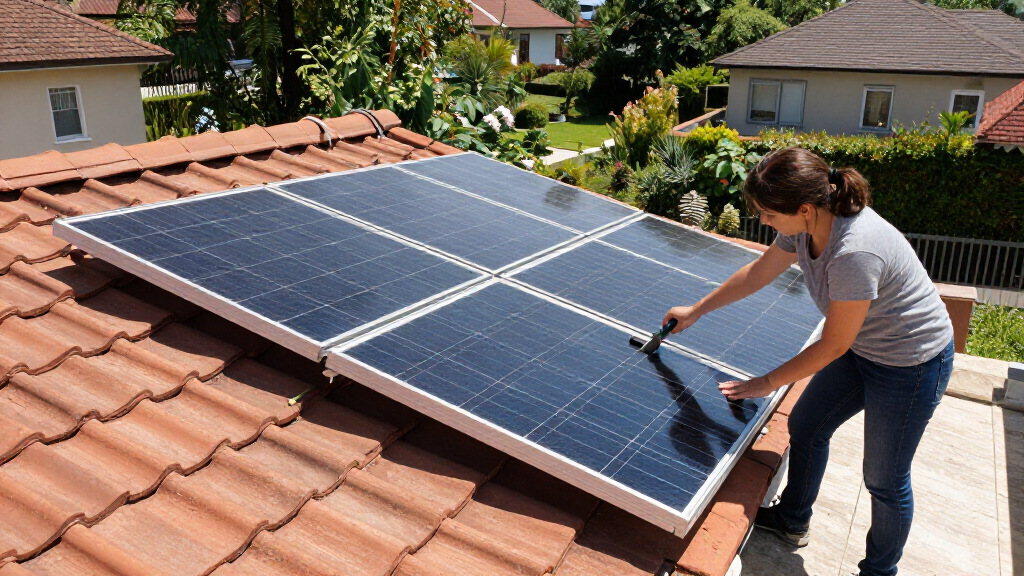
How We Picked
I compared these systems on the factors that change how they work for a homeowner: panel output, usable battery capacity, inverter rating, system voltage, and intended scale. I also looked at how clearly each kit’s listed components fit together and whether its configuration appears aimed at portable backup, small off-grid loads, or larger home power needs. A strong inverter rating is useful only when the battery and solar input can support the buyer’s actual use, so I treated these specifications as a system rather than ranking by the biggest number.
The ranking favors balanced capability and clear buyer fit over maximum capacity alone. The AUECOOR system leads for its combination of a substantial battery and high-output split-phase inverter; the ECO-WORTHY system with 32.2 kWh storage is a stronger match for extended backup, but its size makes it less approachable. Smaller Renogy and ECO-WORTHY kits rank lower for whole-home ambitions, yet they can be sensible for starter setups, limited loads, or buyers who value a less demanding project. Product roles reflect those distinctions, not a claim that one system suits every home.
Factors to Consider When Choosing Best Home Solar Energy Systems
Before choosing a system, I would work backward from the power you need rather than starting with a panel or inverter headline. The products here range from a portable 1,024Wh power station to large off-grid kits, so comparing them as if they solve the same problem can lead to an expensive mismatch. These checks help narrow the field before you commit to an installation plan.
Size the Loads You Actually Need to Run
List the appliances you want to power and note both their running watts and startup surges. A refrigerator, pump, or other motor-driven appliance may draw more power briefly when it starts, so an inverter that looks adequate on paper can still trip under real use. Add up the loads you expect to run at the same time, not every appliance in the house. Then decide which circuits are essential during an outage and which can stay off. This avoids paying for a large inverter when the real need is limited backup. If you want whole-home coverage, have a qualified installer review the electrical panel and transfer arrangement before selecting equipment.
Match Battery Capacity to Backup Hours
Battery capacity tells you how much energy is stored, not how much power the inverter can deliver at once. Estimate daily energy use for the circuits you plan to back up, then allow for conversion losses and avoid planning to drain a battery completely. A system with 5.12 kWh may cover selected essentials for a shorter period, while a much larger bank can support longer use or more loads. Actual runtime changes with appliance demand, battery settings, temperature, and charging conditions. A common mistake is choosing a high-wattage inverter and assuming it also provides long backup time. Prioritize storage when outage duration matters more than running many appliances simultaneously.
Check Solar Input Against Your Charging Goals
Panel wattage sets a ceiling under favorable conditions, not a promise of daily energy. Shade, roof direction, season, weather, and panel placement all affect how much power reaches the battery. A small array may work for topping up a portable station or supporting modest loads, but it may struggle to recharge a large battery after heavy use. Compare the system’s panel capacity with the battery size and your expected daily consumption. If the balance is unclear, ask the seller or installer for expected production in your location rather than relying on an idealized figure. More panels can shorten recovery time, but only if the charge controller and inverter accept the array’s voltage and current.
Treat Installation and Electrical Compatibility as Part of the Purchase
Off-grid kits are not all plug-and-play, even when they arrive with panels, batteries, and an inverter. Check whether mounting hardware, wiring, breakers, disconnects, grounding parts, and other balance-of-system components are included or need separate sourcing. Verify voltage compatibility across the panels, charge controller, battery bank, and inverter before connecting anything. Larger split-phase systems may be able to support different household loads, but they also bring more involved wiring and code requirements. A 12V or 24V kit can be easier to fit into a small project, though it is not automatically the right choice for a home’s existing electrical setup. Use a qualified electrician for grid connections and work that falls under local permitting rules.
Choose Portability or Fixed-Home Capacity
A portable power station is appealing when you need backup that can move between rooms, a vehicle, or a campsite. That convenience comes with less panel area and battery capacity than the larger home-oriented kits in this roundup. Fixed systems can support a broader set of loads, but they take more space, installation planning, and equipment coordination. Decide whether you need power at one outlet, selected home circuits, or an off-grid property before comparing specifications. Avoid buying a portable unit as a stand-in for whole-home backup if you expect it to run several large appliances for extended periods. Conversely, a large stationary kit may be unnecessary for charging devices and keeping a few essentials running.
Plan for Expansion, Maintenance, and Replacement
Ask whether the system supports additional panels or batteries and what limits apply to the inverter and charge controller. Expansion is useful only when new components are electrically compatible and the system can safely manage them. Check battery chemistry, warranty terms, service access, and replacement availability as well as the headline capacity. Keep inverter and battery equipment within the manufacturer’s temperature and ventilation guidance, and plan how you will monitor faults or charging performance. A modular starter kit may make sense if you have a defined growth plan, but buying undersized equipment with the assumption that any battery can be added later can create extra cost. For a fixed home system, include maintenance access and future component replacement in the layout.
Frequently Asked Questions
Can one of these systems run my whole house during an outage?
Not automatically: whole-home backup depends on the home’s peak load, the inverter’s output and phase configuration, battery capacity, and how the system connects to the electrical panel. The AUECOOR kit’s 12 kW split-phase inverter and the larger ECO-WORTHY systems are more aligned with substantial loads than the Jackery or 400W Renogy kits. Even a large inverter does not guarantee long runtime if the battery is small or the household uses power heavily. Have an electrician review your service, essential circuits, and local requirements before treating any kit as whole-home backup. Many households get a more practical result by backing up selected circuits.
How much battery storage do I need for overnight backup?
Start with the energy used overnight by the appliances you intend to keep running, measured in kilowatt-hours, then add headroom for conversion losses and unexpected demand. Do not estimate from inverter wattage alone: inverter capacity describes the power available at a moment, not how long the battery can provide it. A 5.12 kWh battery and a 32.2 kWh battery serve very different backup durations, but the larger one may be excessive if you only need lights, communications, and a refrigerator. Check whether the listed capacity is nominal or usable and follow the manufacturer’s guidance on discharge limits. A few days of appliance measurements can make the estimate far more reliable.
Is a portable solar generator enough for home emergency backup?
A portable unit such as the Jackery Solar Generator 1000 v2 can be useful for phones, lights, and selected small appliances, especially when mobility and simple setup matter. Its 1,024Wh battery and 200W panel place it in a different class from the larger fixed off-grid systems in this roundup. It is unlikely to provide extended power for multiple high-draw appliances without careful load management and frequent recharging. Check the unit’s continuous and surge output against each appliance before relying on it. If you need to support home circuits or long outages, compare a larger battery system and a properly installed transfer setup.
Should I choose more panels or a larger battery first?
Choose based on the bottleneck you expect. If the battery is too small to cover nighttime or outage use, additional panels will not add stored energy unless they can recharge it before demand returns. If the battery is already large but takes too long to refill, more compatible solar input may help, subject to the charge controller’s limits and local sun conditions. For seasonal or cloudy locations, a larger battery can provide a buffer but cannot replace energy that the panels fail to generate over time. Compare expected daily consumption, charging opportunities, and desired backup hours before expanding either side of the system. When the kit’s panel-to-battery balance is unclear, request a location-specific production estimate.
Can I connect an off-grid kit to my existing home wiring?
Some systems can be integrated with household circuits, but a kit should not be connected to a home panel by improvising cables or backfeeding a wall outlet. Safe integration may require a transfer switch or other approved equipment, correct grounding and overcurrent protection, and permits under local rules. Split-phase capability, inverter limits, and compatibility with the home’s electrical service all affect what is possible. Have a licensed electrician confirm the design and identify which circuits can be supported. If you only need temporary power for individual devices, using the manufacturer-approved outlets may avoid panel work, but it will not provide whole-home circuit backup.
Conclusion
For the broadest mix of storage and high-output capability, I recommend the AUECOOR 9.36 kWh system as best overall, provided you are prepared for an off-grid installation. The ECO-WORTHY 1170W system is my best-value direction for buyers seeking a smaller 48V setup, while the ECO-WORTHY 10 kW kit with 32.2 kWh storage is the premium fit for buyers who prioritize a larger reserve and can manage the scale. Beginners who want portable, straightforward backup should start with the Jackery Solar Generator 1000 v2, not a large fixed kit. For a compact solar project or modest loads, the Renogy 400W kits offer a smaller starting point; for larger inverter capacity with a more limited battery, compare the ECO-WORTHY 10 kW options carefully. Match the battery to the hours you need, the inverter to the loads you run together, and the panel array to your ability to recharge.