The best ducted fan coil units depend on whether you need a hydronic air handler, electric backup heat, or a complete ducted heat-pump system. My best overall pick is the Cooper & Hunter 36,000 BTU Hyper Heat for buyers seeking higher-capacity ducted heating and cooling; the First Company 4HBC3RH stands out for hydronic systems, while the DELLA 17,000 BTU is a smaller concealed-duct option. The main tradeoffs are system type, heating performance, capacity, duct compatibility, and how much installation work the equipment requires. These products are not all interchangeable, so matching the unit to your existing heat source and ductwork matters as much as comparing specifications. Read on for the full breakdown, selection criteria, and guidance on which type suits your home.

Get backup power and energy gear delivered free with Prime
- Fast, free delivery on millions of items
- Prime Video, Amazon Music and more included
- Member-only deals all year
Key Takeaways
- System type separates the field: the First Company 4HBC3RH is a hydronic fan coil, while the Cooper & Hunter, DELLA, ROVSUN, and Senville options are ducted heat-pump systems; the 18HX5 adds electric heat.
- Capacity is not a simple ranking: the 36,000 BTU Cooper & Hunter and Senville suit different loads than the 17,000 BTU DELLA and ROVSUN, so a larger unit is not automatically a better fit.
- Cold-weather heating is a standout distinction: Cooper & Hunter’s Hyper Heat positioning makes it the clearest match here for buyers prioritizing heat-pump performance in colder conditions.
- Existing infrastructure can decide the winner: hydronic homes may favor the 4HBC3RH, while homes needing electric backup should examine the 18HX5 rather than assume a mini-split system will integrate easily.
- Efficiency and convenience do not replace system design: ROVSUN’s stated 20.3 SEER2 and Wi-Fi features are useful differentiators, but duct sizing, static pressure, controls, and professional commissioning still shape results.
| Cooper & Hunter 36,000 BTU Ducted Mini Split Heat Pump, Hyper Heat, 230V |  | Best for Flexible Installation | Cooling capacity: 36,000 BTU | System size: 3 ton | Voltage: 230V | VIEW LATEST PRICE | See Our Full Breakdown |
| First Company 4HBC3RH Horizontal Hydronic Fan Coil Unit |  | Best for Hydronic Systems | Model: 4HBC3RH | Type: Ceiling-mount horizontal hydronic fan coil | Application: Chilled and hot water | VIEW LATEST PRICE | See Our Full Breakdown |
| DELLA 17,000 BTU Concealed Ducted Mini Split AC Heat Pump |  | Best for Small, Quiet Zones | Capacity: 17,000 BTU | Coverage area: Up to 600 sq. ft. | Voltage: 208–230V | VIEW LATEST PRICE | See Our Full Breakdown |
| Senville 3-Ton Central Air Conditioning Heat Pump System, 36,000 BTU | 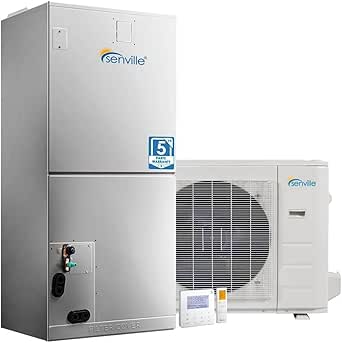 | Best for Large-Area Heating | Model: SENDC-36HF | Cooling capacity: 36,000 BTU | Coverage: Up to 2,000 sq. ft. | VIEW LATEST PRICE | See Our Full Breakdown |
| First Company 18HX5 Horizontal Fan Coil Unit, 1.5 Ton, 5 kW Electric Heat |  | Best for Existing DX Ductwork | Model: 18HX5 | Capacity: 1.5 tons | Heating: 5 kW electric heat | VIEW LATEST PRICE | See Our Full Breakdown |
| ROVSUN 17,000 BTU Ducted Mini Split Heat Pump, 20.3 SEER2, Wi-Fi, 230V | 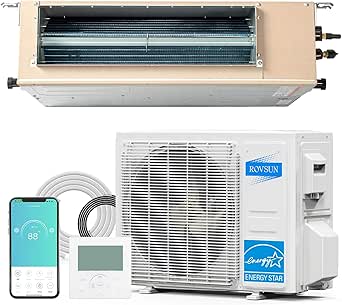 | Best Smart-Connected Pick | Cooling capacity: 17,000 BTU | Heating capacity: 18,000 BTU | Coverage: Up to 1,000 sq. ft. | VIEW LATEST PRICE | See Our Full Breakdown |
| ducted fan coil unit | Voltage | Noise level | Cooling capacity | Refrigerant |
|---|---|---|---|---|
| Cooper & Hunter 36,000 BTU Duc | 230V | 39.5 dB | 36,000 BTU | R-454B |
| First Company 4HBC3RH Horizont | — | — | — | — |
| DELLA 17,000 BTU Concealed Duc | 208–230V | 33 dB | — | — |
| Senville 3-Ton Central Air Con | 208/230V | 41 dB | 36,000 BTU | R-454B |
| First Company 18HX5 Horizontal | — | — | — | — |
| ROVSUN 17,000 BTU Ducted Mini | 230 V | 36 dB in mute mode | 17,000 BTU | R-454B |
More Details on Our Top Picks
Cooper & Hunter 36,000 BTU Ducted Mini Split Heat Pump, Hyper Heat, 230V
I’d put the Cooper & Hunter near the top for buyers whose duct layout calls for more than one air-handler orientation. Its horizontal, upflow, or downflow installation offers more placement flexibility than the horizontal-only First Company 4HBC3RH hydronic unit. The 36,000 BTU capacity and Hyper Heat operation also make it a stronger fit for larger areas and cold-weather heating than the smaller DELLA 17,000 BTU system. An anti-cold-air startup can reduce chilly drafts while the system warms up, and the included 25-foot kit helps with planning the refrigerant-line run. The tradeoff is that this is a complete mini-split heat-pump system, not a hydronic coil or a simple replacement fan coil: it needs a new outdoor unit and licensed installation. Auxiliary electric heat is available, but sold separately.
Pros:- Three permitted air-handler orientations can suit varied duct and mechanical-room layouts.
- Hyper Heat supports operation in sub-zero conditions.
- Anti-cold-air startup helps limit cold drafts during heating startup.
- Includes a 25-foot line set and communication cables.
Cons:- Requires a new outdoor unit rather than serving as an indoor-only replacement.
- Auxiliary electric heat is sold separately.
- Professional installation is intended; it is not a straightforward DIY replacement.
Best for: Homeowners planning a new ducted heat-pump system who need flexible air-handler orientation and cold-weather heating.
Not ideal for: Buyers replacing a hydronic fan coil or seeking a drop-in indoor-only unit; this system requires a compatible new outdoor unit and professional installation.
- Cooling capacity:36,000 BTU
- System size:3 ton
- Voltage:230V
- SEER:17.2
- Refrigerant:R-454B
- Noise level:39.5 dB
- Installation configurations:Horizontal, upflow, or downflow
- Fan speeds:3
- Included installation kit:25-foot line set and communication cables
Our verdict“Choose this system when flexible ducted placement and cold-weather heat matter more than keeping an existing outdoor unit or hydronic setup.”
First Company 4HBC3RH Horizontal Hydronic Fan Coil Unit
For a home or building already served by hot- and chilled-water lines, I’d favor the First Company 4HBC3RH over refrigerant-based options such as the Cooper & Hunter 36,000 BTU system. Its hydronic design works with water-loop equipment rather than requiring a mini-split outdoor condenser, and its 600 CFM airflow suits a more modest ducted application. The copper-tube, three-row coil supports heat transfer, while the insulated condensate pan addresses moisture around a ceiling-mounted unit. Its limits are specific: the coil connection is right-hand as standard, the drain connection is left-hand, and the manual air vent calls for periodic attention. At 50 pounds, it also needs adequate ceiling support. This is a purpose-built water-system choice, not a direct substitute for a refrigerant DX fan coil.
Pros:- Supports both chilled-water cooling and hot-water heating.
- Copper-tube, three-row coil is suited to water-based heat transfer.
- Insulated sandwich-type drain pan helps manage condensation.
- Compact horizontal profile is designed for ceiling mounting.
Cons:- Right-hand coil connection and left-hand drain connection can constrain piping layouts.
- Manual air vent requires periodic maintenance.
- The 50-pound unit needs robust ceiling support.
Best for: Property owners with existing chilled- and hot-water infrastructure who need a ceiling-mounted horizontal fan coil for a smaller ducted zone.
Not ideal for: Buyers without hydronic piping, or installers whose layout needs a different coil-connection orientation or a lighter ceiling unit.
- Model:4HBC3RH
- Type:Ceiling-mount horizontal hydronic fan coil
- Application:Chilled and hot water
- Coil:Copper tube, 3 rows
- Motor:120V, 3-speed
- Airflow:600 CFM
- Coil and drain connections:Right-hand coil; left-hand drain
- Dimensions:36-1/8 in. W × 21-1/2 in. D × 10 in. H
- Weight:50 lb
Our verdict“Pick this model for a compatible hydronic system and skip it if you need a refrigerant-based mini-split or central heat-pump package.”
DELLA 17,000 BTU Concealed Ducted Mini Split AC Heat Pump
The DELLA is the most compact-scale heat-pump choice in this group: its 17,000 BTU capacity and stated coverage of up to 600 square feet suit a smaller zone far better than the 36,000 BTU Cooper & Hunter or Senville systems. A concealed duct design keeps the indoor unit out of sight, while the 33 dB noise level and app and Alexa controls appeal to buyers who want quiet operation and remote access. Its 20.3 SEER2 rating is also higher than the Cooper & Hunter’s listed 17.2 SEER, though those figures use different rating labels and should not be treated as a direct like-for-like comparison. The compromise is limited coverage and a required professional installation. It also needs refrigerant adjustment if line sets exceed 25 feet, so installation routing deserves attention.
Pros:- 33 dB listed noise level supports quiet operation.
- Concealed ducted format keeps the indoor equipment out of sight.
- App and Alexa compatibility allow remote control.
- 20.3 SEER2 rating and inverter operation target efficient performance.
Cons:- Stated coverage is limited to up to 600 square feet.
- Professional installation is required.
- Refrigerant adjustment is needed if the line set exceeds 25 feet.
Best for: Owners creating a concealed, independently controlled ducted zone of up to 600 square feet who value quiet operation and smart controls.
Not ideal for: Buyers heating or cooling a large home or seeking a DIY installation; this unit has limited stated coverage and requires professional setup.
- Capacity:17,000 BTU
- Coverage area:Up to 600 sq. ft.
- Voltage:208–230V
- Noise level:33 dB
- Airflow:500 CFM
- Minimum operating temperature:-13°F
- Dimensions:19.25 in. D × 35.37 in. W × 7.87 in. H
Our verdict“Choose the DELLA for a small, quiet, smart-controlled ducted zone, not as a substitute for a higher-capacity whole-home system.”
Senville 3-Ton Central Air Conditioning Heat Pump System, 36,000 BTU
I’d shortlist the Senville for buyers who need a packaged ducted heat-pump system sized for a broad area and want documented low-temperature heating capability. Its 36,000 BTU capacity and stated coverage up to 2,000 square feet put it in the same broad capacity class as the Cooper & Hunter, while its heating specification reaches down to -22°F. The included outdoor condenser, indoor air handler, wired remote, and 16-foot kit make this a system purchase rather than the hydronic-only First Company 4HBC3RH. That completeness comes with real installation demands: the condenser weighs 356.2 pounds, and a licensed technician is required. The 41 dB listed noise level is also higher than the DELLA’s 33 dB, and the limited warranty excludes labor. I’d choose it for cold-climate, larger-area needs—not for a small zone or a simple coil replacement.
Pros:- 36,000 BTU capacity and stated coverage up to 2,000 square feet suit larger spaces.
- Heating is specified down to -22°F.
- Inverter compressor provides variable-speed operation.
- Includes the condenser, air handler, wired remote, and 16-foot installation kit.
Cons:- Requires licensed professional installation and a new outdoor unit.
- The 356.2-pound condenser can complicate delivery and placement.
- Limited warranty covers parts and compressor but not labor.
Best for: Owners planning a professionally installed ducted system for a large area who need heat-pump operation down to very low outdoor temperatures.
Not ideal for: Buyers replacing only an indoor fan coil, working with limited equipment access, or prioritizing low listed noise and labor-inclusive warranty coverage.
- Model:SENDC-36HF
- Cooling capacity:36,000 BTU
- Coverage:Up to 2,000 sq. ft.
- Heating capability:Down to -22°F (-30°C)
- Voltage:208/230V
- Refrigerant:R-454B
- Noise level:41 dB
- Included components:Outdoor condenser, indoor air handler, wired remote, 16-foot installation kit
- Condenser weight:356.2 lb
Our verdict“Choose the Senville for a new large-area ducted system in a cold climate, provided professional installation and heavy-equipment placement are workable.”
First Company 18HX5 Horizontal Fan Coil Unit, 1.5 Ton, 5 kW Electric Heat
For a replacement project that already has compatible direct-expansion equipment, the First Company 18HX5 offers a more focused solution than buying a complete system like the Senville or Cooper & Hunter. This 1.5-ton horizontal DX fan coil includes 5 kW of electric heat, which can provide supplemental or backup heating without relying solely on the heat pump. Its uncased format may suit a custom cabinet or an existing enclosure, but it also means the installer must plan how the unit will be housed and sealed. Compared with the hydronic 4HBC3RH, this model is designed for a DX setup rather than chilled- and hot-water piping. The product data does not specify airflow, efficiency, or compatibility with a particular outdoor unit, so I’d verify those details before purchase. Its 208–230V power requirement also rules out some simpler electrical setups.
Pros:- Includes 5 kW of electric heat.
- Horizontal configuration can suit existing ducted layouts.
- 1.5-ton capacity serves smaller applications than the 3-ton systems in this roundup.
- Uncased format can fit custom or existing equipment enclosures.
Cons:- Uncased design may require a separate cabinet or careful enclosure planning.
- Requires 208–230V single-phase power.
- Listed data does not provide airflow or efficiency figures for system matching.
Best for: HVAC contractors and owners replacing a compatible horizontal DX fan coil who need a 1.5-ton unit with built-in electric heat.
Not ideal for: Buyers without existing compatible DX equipment, those needing a finished cabinet, or projects requiring documented airflow and efficiency figures before selection.
- Model:18HX5
- Capacity:1.5 tons
- Heating:5 kW electric heat
- Configuration:Horizontal, uncased DX fan coil
- Electrical:208–230V, single-phase, 60 Hz
- Height:10 in.
- Width:37-1/4 in.
- Depth:21 in.
- Weight:58 lb
Our verdict“Pick the 18HX5 for a compatible DX replacement where electric backup heat is needed, but verify system matching and enclosure requirements first.”
ROVSUN 17,000 BTU Ducted Mini Split Heat Pump, 20.3 SEER2, Wi-Fi, 230V
The ROVSUN is a strong fit for buyers who want a compact ducted system with app and voice controls, rather than the higher capacity of the Cooper & Hunter 36,000 BTU or Senville 3-ton systems. Its 17,000 BTU cooling and 18,000 BTU heating capacities are specified for spaces up to 1,000 sq. ft., while inverter operation can adjust output instead of running only at full capacity. Alexa and Google Assistant compatibility, plus a wired controller, give it more control options than a basic ducted setup. The listed 36 dB mute mode may also suit rooms where quieter operation matters. The tradeoff is a more involved installation: professional HVAC work is recommended, an additional power cord is required, and no remote is included. I’d choose it for connected controls and mid-size coverage, not for a large whole-home system.
Pros:- Provides cooling, heating, and dehumidification in one system
- Inverter operation adjusts compressor speed to help manage energy use
- App and voice control support Alexa and Google Assistant
- Installation kit includes 16.4 ft copper lines and a signal cord
Cons:- Professional HVAC installation is recommended
- An additional power cord is required
- No remote control is included
Best for: Owners of a well-sized space up to 1,000 sq. ft. who want ducted heating and cooling with app, voice, and wired control options.
Not ideal for: Buyers seeking a DIY-ready installation, a complete power-cord package, a handheld remote, or capacity for a large home.
- Cooling capacity:17,000 BTU
- Heating capacity:18,000 BTU
- Coverage:Up to 1,000 sq. ft.
- Efficiency:20.3 SEER
- Noise level:36 dB in mute mode
- Voltage:230 V
- Refrigerant:R-454B
- Controls:Wired controller, app, and voice control; compatible with Alexa and Google Assistant
- Installation kit:16.4 ft copper lines and signal cord; additional power cord required
Our verdict“Choose the ROVSUN for smart-connected ducted heating and cooling in a space up to 1,000 sq. ft.; skip it if you need a larger-capacity or simpler-install package.”
How We Picked
I ranked these options by how clearly each serves a distinct ducted-air need: complete heat-pump systems, hydronic fan coils, and units with electric heat are judged against their intended role rather than treated as direct substitutes. I weighed stated capacity, heating approach, efficiency information where provided, voltage and system requirements, and features that affect daily operation. I also considered how much a buyer must verify before installation, since ducted equipment can be a poor fit even when its headline capacity looks suitable.
The Cooper & Hunter takes the lead for its 36,000 BTU capacity and Hyper Heat positioning, while the First Company 4HBC3RH ranks highest for buyers with hydronic infrastructure. The DELLA and ROVSUN provide lower-capacity concealed-duct alternatives, with ROVSUN distinguished by its stated efficiency and Wi-Fi. Senville offers a 3-ton complete-system path, and the First Company 18HX5 fills the specific electric-heat role. Because published details do not establish compatibility with every home, I treat installation requirements and load calculations as key limits, not minor footnotes.
Factors to Consider When Choosing Best Ducted Fan Coil Units
Before choosing among ducted fan coil units, I would first identify what the equipment is expected to connect to: a heat-pump outdoor unit, a hydronic loop, or an electric heat source. The following checks help avoid buying a unit that is capable on paper but mismatched to the building.
Match the Unit to Your Heat Source
A fan coil is not always a complete heating-and-cooling system. Hydronic units rely on hot or chilled water supplied by a boiler, chiller, or other plant, while ducted mini-splits pair with a compatible outdoor heat-pump unit. Electric-heat models add another route, but their electrical demand and operating costs differ from heat-pump heating. A common mistake is to compare equipment by capacity alone without checking the required source connections and controls. If replacing an existing air handler, confirm whether the old system uses water coils, refrigerant lines, or electric resistance heat. The right match can preserve useful infrastructure; the wrong one may require expensive changes beyond the unit itself.
Size From a Load Calculation, Not Square Footage Alone
Nominal capacity is a starting point, not a room-by-room sizing answer. Insulation, window area, ceiling height, air leakage, climate, and occupancy all affect the heating and cooling load. Oversizing can cause short cycling and uneven comfort, while undersizing may leave the system unable to keep up during extreme weather. Buyers often treat a 3-ton label as a universal home-size recommendation, but two homes with the same floor area can have very different loads. Ask for a Manual J or equivalent load calculation and verify that the selected system’s output suits local design conditions. This matters especially when comparing the 17,000 BTU options with the 36,000 BTU systems.
Check Duct Static Pressure and Layout
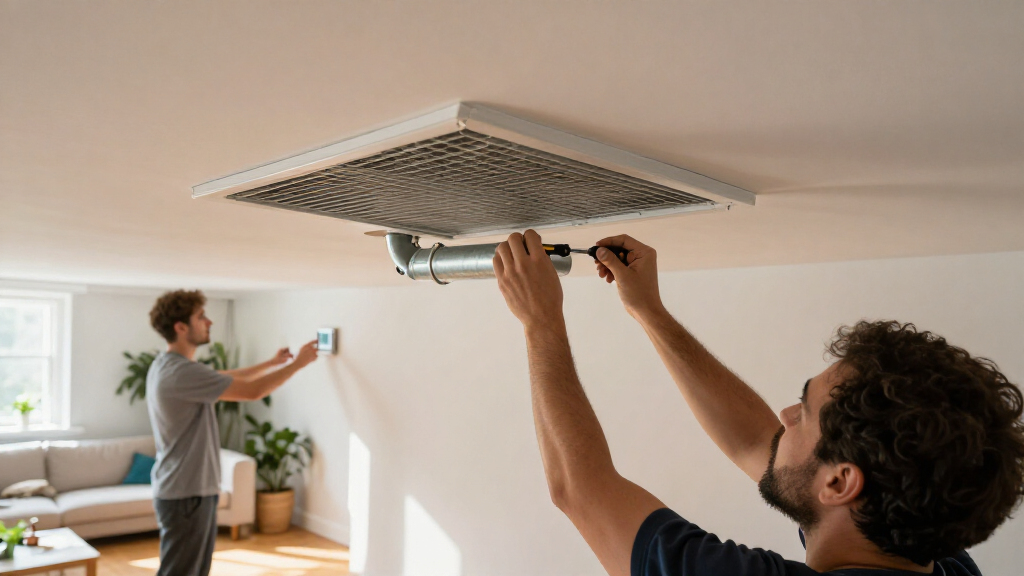
Ducted equipment must move air through the installed duct network, so the blower and duct design need to work together. Narrow, long, or poorly balanced ducts can restrict airflow, create noise, and reduce comfort even when the unit itself is correctly sized. Before buying, have an installer compare the unit’s fan capability and approved static-pressure range with the existing system. Return-air capacity deserves attention too; adding supply outlets without enough return air can undermine performance. If ducts need major repairs or resizing, include that work in the project decision rather than expecting a new fan coil to solve old airflow problems. Concealed placement is convenient, but access panels and service clearance still need a planned location.
Compare Heating Performance Across Your Climate
Heat-pump capacity and efficiency can change as outdoor temperatures fall, so a headline rating does not tell the whole winter story. Check published performance at the outdoor temperatures typical of your area, along with any required backup heat. Hyper Heat positioning makes the Cooper & Hunter a candidate for colder conditions, but buyers should still confirm the model’s output at local design temperatures. Electric resistance backup can provide dependable heat, although it may draw substantial power during extended use. Hydronic systems depend on the temperature and availability of the water source. Ask whether the chosen system can meet the building load without relying heavily on backup heat.
Verify Electrical, Controls, and Service Requirements
Voltage, circuit capacity, thermostat compatibility, communication wiring, and condensate drainage can all affect installation scope. A 230V system may require electrical work if the home lacks a suitable circuit, and Wi-Fi features only help when the controls and home network support the intended setup. Check which thermostat or controller is included and whether it can manage the functions you need, such as heating modes or zoning. Also ask where filters are located and how they can be reached; a concealed unit that is difficult to service may create recurring maintenance friction. Confirm parts availability and who can service the system locally before committing. These details often matter more to ownership than a small difference in a published efficiency figure.
Know When Paying More for a Complete System Makes Sense
A complete ducted heat-pump package can simplify equipment matching, but it may cost more to install than replacing a fan coil that can reuse a sound hydronic plant or existing components. The lower-cost path is not always the lower-cost project: refrigerant piping, electrical upgrades, duct repairs, and controls can change the total. Conversely, retaining old equipment solely to avoid an upgrade can leave a home with poor efficiency or unreliable operation. Compare installed scope, warranty coverage, commissioning, and likely backup-heat use rather than judging the equipment in isolation. Paying for a better-fit system makes the most sense when it addresses a real load, climate, or compatibility need. Ask for written confirmation of what the installer includes and what remains outside the quoted work.
Frequently Asked Questions
Can I replace a hydronic fan coil with a ducted mini-split heat pump?
Possibly, but the systems use different heat sources and connections, so this is not usually a direct equipment swap. A hydronic coil uses water piping, while a mini-split system requires a compatible outdoor unit, refrigerant lines, controls, and electrical supply. The existing ducts may be reusable, but their airflow and static pressure still need to suit the new air handler. Have an HVAC contractor compare the full installation scope, including removal, piping, wiring, drainage, and controls. If your home already has a working boiler or chilled-water plant, retaining a hydronic fan coil may be simpler than converting the system.
Should I choose a 17,000 BTU unit or a 36,000 BTU unit?
Choose based on a heating and cooling load calculation, not the assumption that more capacity provides more comfort. The 17,000 BTU DELLA and ROVSUN options are aimed at smaller loads than the 36,000 BTU Cooper & Hunter and Senville systems, but actual suitability depends on climate, insulation, layout, and duct design. An oversized unit can cycle frequently and struggle to manage comfort evenly, while an undersized unit may run short of capacity during severe weather. Ask for the unit’s output at local outdoor design temperatures, not just its nominal rating. If the estimate relies only on floor area, request a more detailed calculation before ordering.
Is a hydronic fan coil a better choice than a heat pump?
Neither is universally better; the answer depends on the equipment already serving the home and the cost of operating it. A hydronic fan coil can make sense when a suitable boiler or chilled-water source is already installed and maintained. A heat pump may offer an all-in-one route to heating and cooling, but it requires compatible outdoor equipment and can need backup heat in colder conditions. Compare seasonal operating costs using local utility rates and the system’s performance data, rather than relying on the technology label alone. Installation and service availability should also factor into the choice.
What should I confirm before buying a concealed ducted unit?
Confirm the unit fits the available service space and that installers can reach the filter, drain pan, electrical connections, and controls after it is concealed. Ask for a duct-static-pressure review and verify the required return-air path, since restricted airflow can lead to noise and poor comfort. Check the outdoor-unit match, line-set requirements, voltage, condensate routing, and thermostat compatibility. If the unit will serve multiple rooms, have the duct layout and balancing plan reviewed rather than assuming one capacity rating guarantees even temperatures. Get the installation responsibilities and commissioning steps in writing.
Does a higher SEER2 rating guarantee lower heating and cooling bills?
No. SEER2 is a cooling efficiency measure, so it does not by itself describe winter heating performance or predict a household’s total bills. Actual energy use depends on climate, thermostat settings, duct leakage, system sizing, installation quality, and how often backup heat runs. The ROVSUN’s stated 20.3 SEER2 is a useful comparison point for cooling, but buyers should also request heating performance data and confirm the rating applies to the matched system configuration. A properly sized, commissioned unit can outperform a higher-rated system that is poorly installed or mismatched to the home.
Conclusion
For a broad mix of ducted heating and cooling needs, I would start with the Cooper & Hunter 36,000 BTU Hyper Heat as the best overall pick, particularly where colder-weather heat-pump performance matters. The First Company 4HBC3RH is my best fit for homes already set up for hydronic heating or cooling, while the ROVSUN 17,000 BTU is the value-oriented choice for buyers who want a smaller concealed-duct heat pump with stated 20.3 SEER2 efficiency and Wi-Fi. For a premium complete-system option at 3-ton capacity, compare the Senville against the Cooper & Hunter based on climate performance and installer support. Beginners should begin with a contractor’s load calculation and compatibility check before selecting among the DELLA 17,000 BTU and other mini-split options. Choose the First Company 18HX5 when its electric-heat configuration matches the home’s requirements; skip it if you specifically need a complete heat-pump system. Across all six, the best choice is the one that fits the heat source, ducts, and calculated load—not simply the largest capacity or most prominent feature.