
Understanding the fan curve helps you choose the right ventilation equipment by showing how airflow and pressure change under different conditions. It guides you to select a fan that operates efficiently within its ideal range, reducing noise, energy use, and system wear. Properly matching the fan to your home’s ductwork prevents uneven airflow and potential damage. If you want to learn how to apply these insights to your replacement, there’s more to discover below.
Key Takeaways
- Understanding the fan curve helps select the right fan size for optimal airflow and energy efficiency.
- Proper duct sizing based on the fan curve prevents noise, uneven airflow, and system strain.
- Operating within the fan’s optimal performance range minimizes noise and extends equipment lifespan.
- Reviewing the fan curve ensures the new unit meets ventilation needs without overworking or under-ventilating.
- Matching fan performance to system requirements reduces energy costs and avoids premature equipment failure.

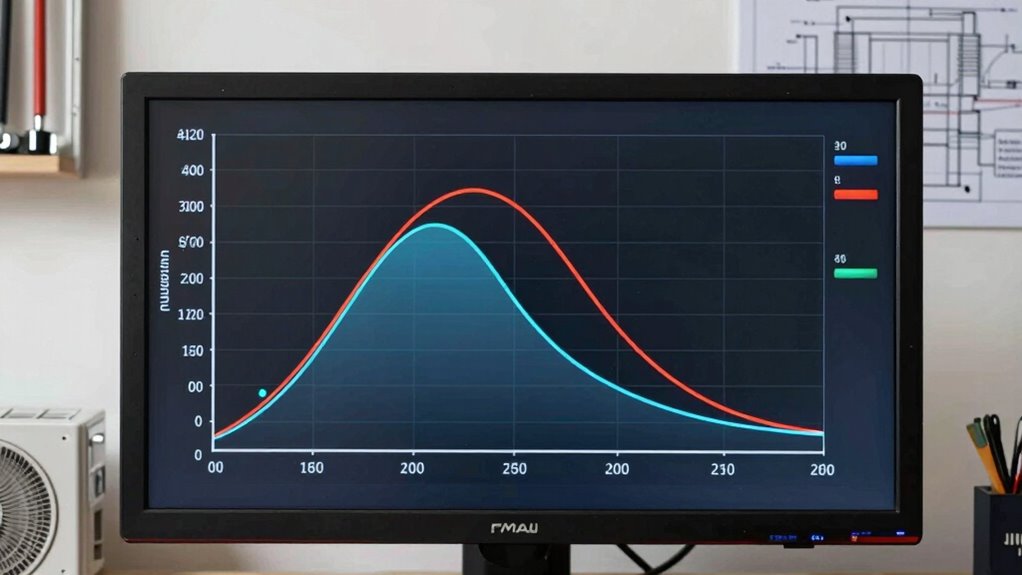
Understanding the fan curve concept can help you enhance your home’s ventilation system for better comfort and energy efficiency. When you’re considering replacing your HVAC equipment or upgrading your ventilation setup, it’s vital to grasp how a fan’s performance varies with different operating conditions. The fan curve is a graph that shows the relationship between the airflow a fan can produce and the pressure it faces. Essentially, it helps you understand how the fan will perform once installed, guaranteeing you select the right size and type for your home.
One of the most important aspects of the fan curve is how it influences duct sizing. If your ducts are too narrow or too wide, they can cause the fan to operate inefficiently, leading to increased energy consumption and uneven airflow. A fan operating at the wrong point on its curve may struggle to deliver adequate ventilation or may cause excessive noise. Selecting a fan requires understanding how it performs at different points on its performance curve, ensuring optimal operation. Proper duct sizing, guided by the fan curve, guarantees that your system runs smoothly, providing enough airflow without overworking the fan. When the ductwork is correctly matched to the fan, you’ll notice better air distribution, improved comfort, and less strain on your system.
Proper duct sizing guided by the fan curve ensures efficient airflow and reduces system strain.
Noise levels are another critical factor influenced by the fan curve. As you move along the curve, the fan’s noise output can increase, especially if it’s operating at a high pressure or airflow rate that’s not suited for your home’s setup. Selecting a fan that operates within an ideal range on its curve minimizes noise, making your living space quieter and more comfortable. Understanding how different fans perform at various points on their curves allows you to choose models that balance airflow and noise, ensuring you don’t sacrifice comfort for efficiency. Additionally, correctly matching the fan to your home’s needs can prevent unnecessary wear and tear, extending the lifespan of your equipment. Recognizing the horsepower of electric dirt bikes and their power output can also give you insight into the energy demands of different systems, helping you select more efficient options. Being aware of system efficiency and how it relates to fan performance can further optimize your setup for long-term savings.
Additionally, understanding the fan curve can help you identify potential issues before they become costly problems, such as inefficient operation or premature equipment failure. When replacing or upgrading your ventilation equipment, pay close attention to the fan curve specifications provided by manufacturers. Look for a fan that matches your home’s ventilation needs without pushing it to its limits, which can cause excessive noise or energy use. Properly understanding and applying the fan curve will help you avoid common pitfalls like under-ventilation, excessive noise, or high energy bills. By considering duct sizing and noise levels in relation to the fan’s performance curve, you’re taking a proactive step toward creating a more comfortable, energy-efficient home. This knowledge empowers you to make smarter decisions, ensuring your ventilation system functions effectively for years to come.

MOUNTO 12-Inch Heavy Duty Cylinder Axial Fan with 25-Foot Vinyl Hose | High-Performance Portable Blower/Exhaust Fan | 2900 CFM Directional Airflow for Crawl Spaces, Attics, Basements
High-Performance Airflow: Delivers 2900 CFM of directional airflow, ideal for ventilation in confined spaces such as crawl spaces,…
As an affiliate, we earn on qualifying purchases.
As an affiliate, we earn on qualifying purchases.
Frequently Asked Questions
How Do Fan Curves Impact Energy Efficiency?
Fan curves directly impact your energy efficiency by helping you understand fan performance at different speeds. When you select a system aligned with the fan curve, it optimizes energy use by avoiding over- or under-performance. This guarantees your equipment runs efficiently, reducing energy consumption and lowering costs. Properly matching your fan’s performance to your home’s needs allows for better energy optimization, saving you money and extending equipment lifespan.
Can Fan Curves Help Reduce HVAC Costs?
Yes, fan curves can help reduce HVAC costs through fan curve optimization and proper equipment calibration. By adjusting your system to operate at ideal fan speeds, you minimize energy waste and improve efficiency. Regular calibration ensures the fan curve matches your home’s needs, preventing overworking your HVAC. This targeted approach lowers energy bills, extends equipment lifespan, and maintains consistent comfort, making fan curve management an effective cost-saving strategy.
Are Fan Curves Applicable to All Types of HVAC Equipment?
While fan curves are powerful, they don’t apply to all HVAC equipment due to fan curve limitations and equipment compatibility issues. You might find some systems, like older units or specialized equipment, don’t respond predictably to fan curve adjustments, leading to inefficiencies or damage. Always check your system’s specifications and consult professionals, as improper application can cause more harm than good, making compatibility essential for peak performance.
How Often Should Fan Curves Be Reviewed or Adjusted?
You should review and adjust fan curves during regular fan calibration, ideally once a year or whenever you notice system inefficiencies. Regular checks help optimize your system’s performance, ensuring it runs efficiently and comfortably. By maintaining accurate fan curves, you support system optimization, reducing energy costs and prolonging equipment life. Keep an eye on how your system responds, and don’t hesitate to calibrate fans when needed to maintain peak efficiency.
What Signs Indicate a Fan Curve Mismatch?
Imagine your HVAC system suddenly gets louder, and you notice uneven airflow across vents. These are signs of a fan curve mismatch. You might also experience increased fan noise or system imbalance, where some rooms are warmer or cooler than others. If you see these issues, it’s time to review your fan curve. A proper match guarantees smooth operation, quieter performance, and balanced airflow throughout your home.

Air Duct Sizing Calculator
Air Duct Calculator
As an affiliate, we earn on qualifying purchases.
As an affiliate, we earn on qualifying purchases.
Conclusion
Understanding the fan curve helps you make smarter decisions when replacing HVAC equipment, ensuring best efficiency and comfort. Did you know that properly matching your fan system can reduce energy bills by up to 30%? By grasping this concept, you’ll avoid costly mistakes and enjoy a more reliable, energy-efficient home. Stay informed, ask your HVAC professional the right questions, and keep your home comfortable without overspending. Your wallet and comfort will thank you!

Voltset 4 Inch Duct Fan, Inline Ventilation Exhaust Fan, 280 CFM Duct Intake High Efficiency Air Fan for Vent Bathroom, Kitchen, Grow Tent, Hydroponics, 3D Printer
High-Efficiency 280 CFM Airflow – Powerful 2200 RPM motor delivers exceptional ventilation capacity. This 4 inch duct fan…
As an affiliate, we earn on qualifying purchases.
As an affiliate, we earn on qualifying purchases.

VIVANTECH Professional-Grade Hot Wire Anemometer with Backlit LCD – Accurate Air Flow Meter for HVAC, Ducts, and Ventilation Systems, Wind Speed Meter Measures CFM/CMM, Temperature (℃/℉)
Versatile Measurement Options: Measures both wind speed (in m/s, km/h, ft/min, knots, MPH) and air flow (CFM or…
As an affiliate, we earn on qualifying purchases.
As an affiliate, we earn on qualifying purchases.