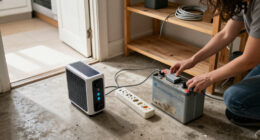
Choosing between microinverters and string inverters depends on your roof’s layout and shading. Microinverters maximize energy output by optimizing each panel independently, making them ideal for shaded or complex roofs. String inverters are cheaper upfront and work well on uniform, sunny roofs but can be affected by shading and mismatched panels. If you’re weighing these options, you’ll find useful details that can help you make the best choice for your all-electric home as you explore further.

Get backup power and energy gear delivered free with Prime
- Fast, free delivery on millions of items
- Prime Video, Amazon Music and more included
- Member-only deals all year
Key Takeaways
- Microinverters optimize individual panel performance, ideal for shaded or complex roof layouts in all-electric homes.
- String inverters offer cost-effective, simpler installation suited for uniform roofs with consistent sunlight.
- Microinverters provide higher long-term energy gains but at a higher initial cost.
- String inverters are less affected by panel mismatch, suitable for straightforward, evenly sunlit systems.
- System design, shading, and budget constraints are key factors in choosing between microinverters and string inverters.
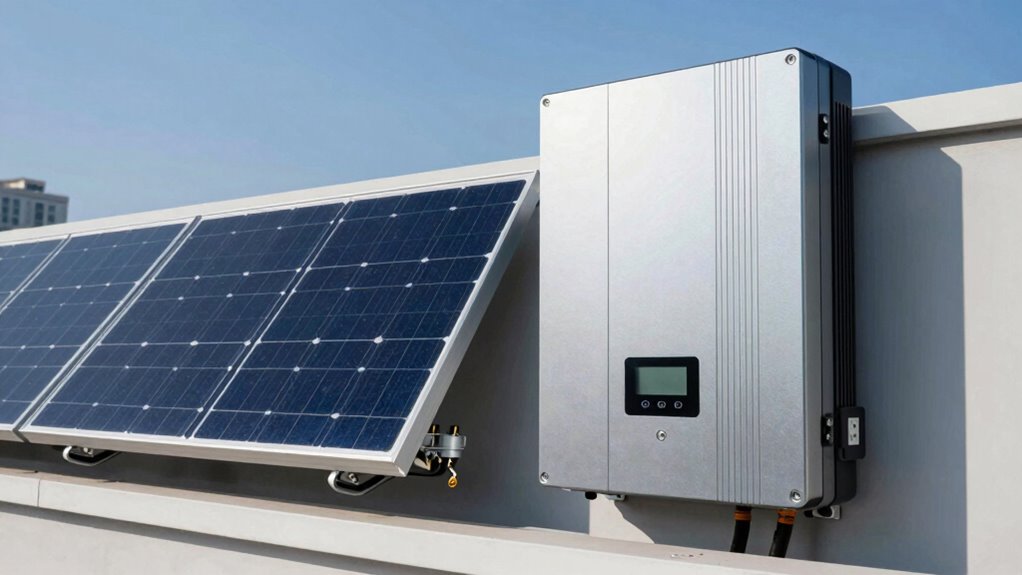
When choosing the right inverter for your all-electric home’s solar system, understanding the differences between microinverters and string inverters is essential. Both options convert DC electricity from your solar panels into usable AC power, but they do so differently, affecting your system’s overall performance and your budget. Microinverters are installed on each individual panel, meaning they maximize each panel’s output independently. This setup can boost solar panel efficiency, especially if your roof has shading issues or panels are oriented differently. Because each panel operates independently, a problem with one doesn’t drag down the entire system’s output. This can lead to higher energy production over time, which is particularly beneficial for homes relying heavily on solar power. However, microinverters typically come with higher inverter installation costs because you’re installing one on every panel, increasing the initial investment.
On the other hand, string inverters connect multiple panels in series, forming a string, and convert the combined DC power into AC. They are generally less expensive to install upfront, thanks to fewer components and simpler wiring. But if one panel underperforms or is shaded, the entire string’s efficiency drops, which can hurt your overall solar panel efficiency. This means your system might produce less energy during certain times of the day or year, potentially increasing your long-term energy costs. String inverters are often a more cost-effective choice for installations with uniform sunlight exposure and consistent panel orientation, but they offer less flexibility compared to microinverters. Additionally, advancements in inverter technology have improved the performance and durability of both types, making the decision more about system design and budget considerations. Moreover, the integration of smart grid capabilities in newer inverter models can optimize energy management and increase system resilience.
Furthermore, choosing between microinverters and string inverters can influence your system’s long-term reliability, especially as inverter technology continues to evolve. When evaluating your options, consider your roof’s shading patterns, the complexity of your system, and your budget. If you want maximum energy harvest and are willing to pay a premium upfront, microinverters might be the better choice. They tend to be more resilient to shading and panel mismatch, ensuring you get the most out of your investment over time. Conversely, if your roof is relatively uniform and cost savings are a priority, string inverters can provide a reliable, more affordable solution. Keep in mind that the higher inverter installation costs for microinverters can be offset by increased energy production and reduced maintenance needs, making them a compelling choice for many all-electric homes aiming for ideal solar performance.
As an affiliate, we earn on qualifying purchases.
Frequently Asked Questions
How Do Microinverters Handle Shading Issues Differently From String Inverters?
Microinverters handle shading issues better by allowing each module to operate independently, so shading on one panel doesn’t affect others. This improves overall system performance. You’ll find module compatibility and installation complexity are simpler with microinverters since they work individually. Conversely, string inverters link modules, so shading reduces efficiency across the entire string. This makes microinverters a smarter choice for shaded or complex roof layouts, ensuring consistent energy production.
What Are the Long-Term Maintenance Costs for Microinverters Versus String Inverters?
Think of microinverters as tiny, diligent workers, often costing more over time due to frequent replacements, while string inverters are like sturdy, seasoned veterans with lower maintenance costs. When comparing expenses, microinverters may have higher long-term costs, especially given their more complex installation process. String inverters generally require less maintenance, making them more budget-friendly in the long run, especially if you prefer simplicity in upkeep.
Can Microinverters Improve Overall System Efficiency in All-Electric Homes?
Microinverters can markedly improve your system’s efficiency optimization because they allow each panel to operate independently, reducing energy loss from shading or dirt. While the initial cost analysis might be higher, their ability to maximize power output enhances overall performance. Over time, this can lead to better energy savings, making them a smart choice for all-electric homes seeking reliable, efficient solar energy systems.
Are Microinverters More Compatible With Future Home Energy Upgrades?
Yes, microinverters are more compatible with future home energy upgrades. They easily integrate with the power grid, allowing you to add more panels or upgrade your system without major rewiring. Microinverters also support energy storage compatibility, making it simple to incorporate batteries later on. This flexibility guarantees your home can adapt to evolving energy technologies, providing a seamless upgrade path for increased efficiency and energy management.
How Do Inverter Warranties Compare Between Microinverters and String Inverters?
Ever wondered which inverter offers better peace of mind? Microinverters typically come with longer warranties, often around 25 years, compared to 10-12 years for string inverters. This extended coverage can make microinverters more appealing, especially with battery integration in mind. When considering cost comparison, remember that longer warranties might mean higher upfront costs but could save you money on repairs later, giving you better protection for your home energy investments.
string inverter for solar system
As an affiliate, we earn on qualifying purchases.
As an affiliate, we earn on qualifying purchases.
Conclusion
Choosing between microinverters and string inverters depends on your home’s specific needs, but did you know that microinverters can boost solar system efficiency by up to 25% in shaded or complex roofs? If you value maximizing energy production and flexibility, microinverters might be the better choice. They also improve system reliability since a single panel issue won’t affect the entire array. Ultimately, understanding your roof’s conditions helps you make the smartest, most cost-effective decision for your all-electric home.
As an affiliate, we earn on qualifying purchases.
solar inverter for all-electric home
As an affiliate, we earn on qualifying purchases.
As an affiliate, we earn on qualifying purchases.
Halloween Picks
halloween
As an affiliate, we earn on qualifying purchases.