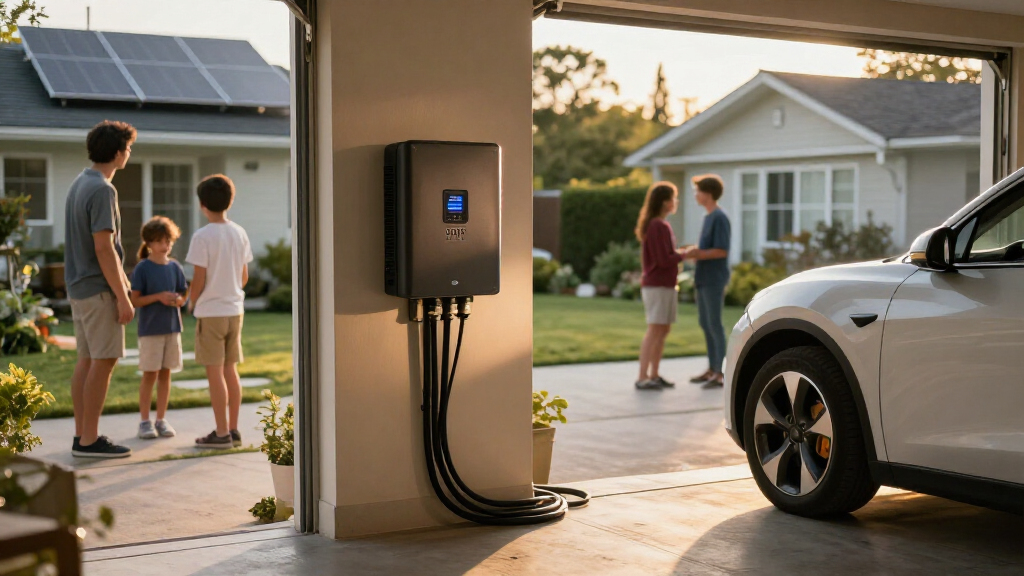

For most homes that need backup power and room to expand, I’d start with the WattCycle 48V 12kW Split-Phase Hybrid Solar Inverter with 200A Bypass, which pairs high output with split-phase service. The POWLAND 12,000W is another strong candidate for homes needing 120/240V output, while the VEVOR 6400W may suit buyers with more modest loads and a 48V battery bank. The main tradeoffs are capacity versus system cost and complexity, plus whether a 24V or 48V battery setup matches your household’s needs. Solar input limits, battery compatibility, and installation requirements matter as much as the wattage printed on the unit. Read on for the full breakdown and guidance on matching an inverter to your home.

Get backup power and energy gear delivered free with Prime
- Fast, free delivery on millions of items
- Prime Video, Amazon Music and more included
- Member-only deals all year
Key Takeaways
- 48V models dominate the higher-output choices: WattCycle, POWLAND, EcoSolLi, and SUNGOLDPOWER are positioned for larger systems than the many 24V, roughly 4kW options.
- Split-phase output is a defining difference: The WattCycle 12kW split-phase models and POWLAND list 120/240V support, a feature to verify for homes with 240V loads.
- MPPT count changes system flexibility: EcoSolLi and SUNGOLDPOWER list dual MPPT controllers, which can help when solar arrays have different orientations or conditions.
- Similar wattage does not mean similar fit: The 4kW-class models span 12V/24V and 24V designs, with different stated MPPT capacities and AC output details.
- Headline power needs verification: Buyers should compare continuous output, surge handling, solar input limits, and battery specifications rather than choosing by a wattage label alone.
| SUMRY 4000W Hybrid Solar Inverter, 24V DC to 120V AC, Pure Sine Wave |  | Best for Battery-Free Daytime Solar | Peak output: 8,000W | Battery input: 24V DC | AC output: 120V, 60Hz | VIEW LATEST PRICE | See Our Full Breakdown |
| VEVOR 6400W 48V Hybrid Solar Inverter with 120A MPPT Charge Controller |  | Best for 120V/240V Split-Phase Home Loads | Model: VS8048AMN | Inverter output: 6,400W | Peak output: 8,960W | VIEW LATEST PRICE | See Our Full Breakdown |
| WattCycle 48V 12kW Split-Phase Hybrid Solar Inverter with 200A Bypass |  | Best for High-Capacity Whole-Home Systems | Battery voltage: 48V | AC output: 12,000W, 120V/240V split phase | Peak output: 18,000VA | VIEW LATEST PRICE | See Our Full Breakdown |
| SWIPOWER 4000W 24V Hybrid Solar Inverter |  | Best for a Straightforward 24V, 120V Setup | Continuous output: 4,000W | Peak output: 8,000W for up to 5 seconds | Battery voltage: 24V DC | VIEW LATEST PRICE | See Our Full Breakdown |
| Y&H 4200W Hybrid Solar Inverter, 12V/24V, 230V Pure Sine Wave with 100A MPPT Controller |  | Best for Flexible 12V/24V Battery Builds | Model: SUN-4.2K12V/24V-HV-EU | Battery voltage: 12V or 24V DC | Output power: 2,300W at 12V; 4,200W at 24V | VIEW LATEST PRICE | See Our Full Breakdown |
| EcoSolLi 12,000W 48V Hybrid Solar Inverter with WiFi and Dual MPPT |  | Best for High-Capacity Split-Phase Homes | Battery voltage: 48V | Battery voltage range: 40–58.6V DC | Output power: 12,000W | VIEW LATEST PRICE | See Our Full Breakdown |
| Xijia 4000W Hybrid Solar Inverter, 24V DC to 120V AC |  | Best for Batteryless Daytime Solar Use | Continuous output power: 4,000W | Peak output power: 8,000W | Input voltage: 24V DC | VIEW LATEST PRICE | See Our Full Breakdown |
| SUNGOLDPOWER 10,000W 48V Solar Hybrid Inverter with Dual MPPT Controllers |  | Best for Flexible Charging and Scheduling | Battery voltage: 48V DC | Output power: 10,000W | Peak output power: 20,000W | VIEW LATEST PRICE | See Our Full Breakdown |
| 4000W 24V Hybrid Solar Inverter Charger |  | Best for Integrated Backup Switching | Continuous power: 4,000W | Surge power: 8,000W | DC input: 24V | VIEW LATEST PRICE | See Our Full Breakdown |
| VEVOR 6000W Hybrid Solar Inverter with 120A MPPT Controller |  | Best for 230V Single-Phase Systems | Peak output power: 6,500W | Battery system voltage: 48V | AC output voltage: 220/230V | VIEW LATEST PRICE | See Our Full Breakdown |
| WattCycle 48V 12kW Hybrid Inverter with 120/240V Split Phase |  | Best for Large Split-Phase Homes | Input voltage: 48V DC | Output: 120/240V AC split phase | Maximum solar input: 24,000W | VIEW LATEST PRICE | See Our Full Breakdown |
| Aninerel 4200W Solar Hybrid Inverter with 120A MPPT Controller |  | Best for Battery-Free Solar Operation | Battery voltage: 24V DC | Continuous output: 4,200W | Surge output: 8,400W | VIEW LATEST PRICE | See Our Full Breakdown |
| POWLAND 12,000W Hybrid Solar Inverter with WiFi, 48V DC to 120V/240V AC Split Phase |  | Best for Expandable 48V Systems | Model: MLV-10K | Input voltage: 48V DC | Output voltage: 120V/240V AC split phase | VIEW LATEST PRICE | See Our Full Breakdown |
| Lonsge 4000W 24V Hybrid Solar Inverter with 140A MPPT Controller |  | Best for Flexible 24V Battery Setups | Input voltage: 24V DC | Output voltage: 120V AC | Waveform: Pure sine wave | VIEW LATEST PRICE | See Our Full Breakdown |
| SUMRY 3600W Hybrid Solar Inverter Charger, 24V DC to 120V AC |  | Best for Integrated Charging on a 24V System | Model: ECO-LV 3.6KW PLUS | Input voltage: 24V DC | Peak output: 7,200W | VIEW LATEST PRICE | See Our Full Breakdown |
More Details on Our Top Picks
SUMRY 4000W Hybrid Solar Inverter, 24V DC to 120V AC, Pure Sine Wave
The SUMRY stands out among the 24V, 120V options for its stated ability to run loads directly from solar without a battery, provided the solar input meets the required conditions. That can suit a daytime-use setup where avoiding battery storage is a priority. Its 4,000W rated output, 140A MPPT controller, and pure sine wave output also make it a more capable choice than a small backup-focused unit such as the SUMRY 3600W. The tradeoff is that battery-free operation is conditional, not a substitute for stored power after sunset or through weak sunlight. It accepts several battery chemistries, but the 24V system is a different fit from the VEVOR 6400W, which uses 48V and offers split-phase output. I would read the manual closely before planning an installation around its operating modes.
Pros:- Can operate from solar without a battery when specified input conditions are met.
- 140A MPPT controller and up to 5,600W maximum PV input support a substantial solar array.
- Pure sine wave 120V output suits many sensitive household appliances.
- Configurable solar, battery, and utility priorities support different power-use plans.
Cons:- Battery-free operation depends on specific solar input conditions.
- 24V battery architecture is less suited to buyers seeking a 48V split-phase home system.
- Installation and operating modes call for careful manual review.
Best for: Homeowners building a 24V, 120V solar setup who expect to use power mainly during sunny hours and want the option of battery-free operation under specified conditions.
Not ideal for: Households that need dependable overnight backup, 120V/240V split-phase service, or operation without carefully matching solar input to the inverter’s battery-free requirements.
- Peak output:8,000W
- Battery input:24V DC
- AC output:120V, 60Hz
- Waveform:Pure sine wave
- MPPT controller:140A
- Maximum PV input:5,600W, 350V DC
- Supported batteries:AGM, gel, lead-acid, lithium-ion, LiFePO4
Our verdict“Choose the SUMRY if daytime solar use and conditional battery-free operation matter more than 240V service or assured stored-power backup.”
VEVOR 6400W 48V Hybrid Solar Inverter with 120A MPPT Charge Controller
For homes that need both 120V and 240V split-phase output, the VEVOR offers a more direct fit than the 120V-only SUMRY 4000W. Its 48V battery input and 6,400W low-frequency inverter put it in a higher-capacity class than the 24V units, while the 120A MPPT controller combines solar charging and inversion in one enclosure. Support for lithium, lead-acid, and custom battery settings gives buyers some flexibility when building the storage side of a system. The tradeoff is a substantial 78.5-pound body, so mounting and installation need more planning than with the lighter SUMRY. Wi-Fi is not included, which matters if remote monitoring is part of your setup. I’d choose it for split-phase capability over compactness or app-based oversight.
Pros:- Provides 120V/240V split-phase output for compatible household loads.
- 6,400W inverter rating and 8,960W peak output offer more capacity than the 24V 4,000W options here.
- Integrated 120A MPPT controller combines solar charging and inversion.
- Supports lithium, lead-acid, and custom battery types.
Cons:- At 78.5 pounds, it requires a sturdy mounting location and more installation planning.
- Wi-Fi is not included for remote monitoring.
- Requires a 48V battery system, so it will not directly suit a 12V or 24V bank.
Best for: Homeowners with a 48V battery bank who need a single inverter for 120V household circuits and 240V loads, such as compatible larger appliances.
Not ideal for: Buyers with a 24V battery system, limited installation space, or a requirement for built-in Wi-Fi monitoring.
- Model:VS8048AMN
- Inverter output:6,400W
- Peak output:8,960W
- Battery voltage:48V
- AC output:120V/240V split phase
- Solar charge controller:120A MPPT
- Waveform:Pure sine wave
- Weight:78.5 lb
- Wi-Fi:Not included
Our verdict“Pick the VEVOR when 48V storage and 120V/240V split-phase service outweigh its heavy build and lack of Wi-Fi.”
WattCycle 48V 12kW Split-Phase Hybrid Solar Inverter with 200A Bypass
The WattCycle is the high-capacity choice in this batch: its 12,000W split-phase output, 24,000W maximum solar input, and 250A charging capability place it well beyond the 4,000W SUMRY and SWIPOWER units. That headroom suits larger household systems, while the 200A bypass and generator start/stop control can help coordinate backup sources. Wi-Fi monitoring and support for up to six parallel units also make it more expandable than the VEVOR 6400W, which does not include Wi-Fi. Those capabilities come with a less forgiving system commitment: it requires a 48V battery bank and is likely excessive for modest loads or a small solar array. Buyers should also plan around system-level installation and compatibility rather than treating it as a simple plug-in upgrade.
Pros:- 12,000W 120V/240V split-phase output supports substantially larger loads than the 4,000W models.
- Up to 24,000W solar input and 250A charging support large array and battery plans.
- Generator start/stop control and 200A bypass add useful backup-system functions.
- Wi-Fi monitoring and parallel operation of up to six units support expansion.
Cons:- Requires a 48V battery system.
- Its capacity and system features may be unnecessary for smaller homes or modest arrays.
- Installation requires planning for a large, high-power system and compatible components.
Best for: Homeowners planning a large 48V solar-and-battery system with split-phase loads, generator integration, and room to expand inverter capacity.
Not ideal for: Small-home or cabin owners with modest loads, limited solar input, or a 12V/24V battery setup who would not use the added capacity and system controls.
- Battery voltage:48V
- AC output:12,000W, 120V/240V split phase
- Peak output:18,000VA
- Bypass capacity:200A
- Maximum solar input:24,000W
- Maximum charging current:250A
- Generator support:Automatic start/stop control
- Parallel capacity:Up to 6 units
- Monitoring:Wi-Fi
Our verdict“Choose the WattCycle for a planned large-scale 48V split-phase system; skip it if your home needs only modest inverter capacity.”
SWIPOWER 4000W 24V Hybrid Solar Inverter
The SWIPOWER is a clear-fit option for buyers who want 4,000W of 120V power from a 24V battery system, with a 140A MPPT controller built in. Like the SUMRY 4000W, it can run directly from solar without a battery in suitable conditions and offers selectable solar, battery, and grid priorities. That makes the two closer alternatives than the 48V VEVOR 6400W, which is aimed at split-phase loads and a different battery architecture. The SWIPOWER’s tempered-glass touchscreen gives the controls a defined home, but the listing also specifies only a one-year warranty. Its peak output lasts up to five seconds, so buyers should not treat the 8,000W figure as continuous capacity. I’d favor it for a conventional 120V setup, not for 240V appliances or an expansion-minded whole-home system.
Pros:- 4,000W continuous pure sine wave output for 120V loads.
- 140A MPPT controller supports up to 5,600W of solar input.
- Can run without a battery under suitable solar conditions.
- Touchscreen and selectable solar, battery, and grid priorities provide on-unit control.
Cons:- Uses a 24V battery system and provides 120V output only.
- 8,000W peak output is specified for up to five seconds, not as a sustained rating.
- Listed warranty is one year.
Best for: Households with a 24V battery bank seeking a 120V inverter, integrated MPPT charging, and flexible source priorities for everyday loads.
Not ideal for: Buyers who need 120V/240V split phase, a 48V system, long peak-load support, or a warranty longer than the listed one year.
- Continuous output:4,000W
- Peak output:8,000W for up to 5 seconds
- Battery voltage:24V DC
- AC output:120V
- Waveform:Pure sine wave
- Solar charge controller:140A MPPT
- Maximum solar input:5,600W, 350V DC
- Display:6.25-inch LCD touchscreen with tempered glass
- Warranty:1 year
Our verdict“The SWIPOWER suits a 24V household setup that needs 120V power and solar charging, but not split-phase service or sustained surge capacity.”
Y&H 4200W Hybrid Solar Inverter, 12V/24V, 230V Pure Sine Wave with 100A MPPT Controller
The Y&H offers a different kind of flexibility from the SUMRY and SWIPOWER: it accepts 12V or 24V battery systems, with output reaching 4,200W at 24V but falling to 2,300W at 12V. That makes it a useful option for buyers adapting an existing low-voltage battery setup, while its 100A MPPT controller and 4,000W maximum PV input cover a smaller solar array than the 140A, 5,600W controllers in the two 24V alternatives. Its biggest limitation for many North American homes is the 230V, 50Hz output; the listing warns that 110V devices need a step-up transformer, so it is not a direct match for typical 120V household circuits. Compared with the split-phase VEVOR, it also lacks 120V/240V service. I’d select it only when the voltage standard and battery fit are intentional.
Pros:- Supports both 12V and 24V battery systems.
- Provides pure sine wave 230V AC output.
- Built-in 100A MPPT controller supports solar charging.
- Includes multiple charging modes and overload, over-temperature, and short-circuit protection.
Cons:- 230V output is not directly compatible with 110V devices without a step-up transformer.
- Output is limited to 2,300W when used with a 12V battery system.
- Its 100A controller and 4,000W maximum PV input are lower than the SWIPOWER and SUMRY 24V models.
Best for: Buyers with a compatible 12V or 24V battery setup who need 230V AC output for appliances and value multiple battery-voltage options.
Not ideal for: North American homeowners expecting direct 120V appliance compatibility, 120V/240V split-phase service, or full 4,200W output from a 12V battery bank.
- Model:SUN-4.2K12V/24V-HV-EU
- Battery voltage:12V or 24V DC
- Output power:2,300W at 12V; 4,200W at 24V
- AC output:230V, 50Hz
- Waveform:Pure sine wave
- MPPT charge current:100A
- MPPT operating range:55–500V
- Maximum PV power:4,000W
- Communication:RS485
Our verdict“Choose the Y&H when you need its 12V/24V flexibility and 230V output; skip it if your home is built around standard 120V circuits.”
EcoSolLi 12,000W 48V Hybrid Solar Inverter with WiFi and Dual MPPT
The EcoSolLi stands out for homeowners who need 12,000W output and the option of 120V/240V split-phase from one 48V system. Its two MPPT controllers let separate solar arrays be managed independently, which can help when roof sections have different orientations. Compared with the SUNGOLDPOWER 10,000W, this model offers higher stated output, while both support 48V batteries, dual MPPT, and battery-free operation. It also supports up to six units in parallel, giving larger systems room to grow. The tradeoff is a 59 lb chassis and monitoring through the Smart Value app; buyers should confirm app and communications compatibility before choosing it. This is a stronger fit for substantial home loads than for a small backup setup.
Pros:- 12,000W output with 120V/240V split-phase or 120V single-phase operation
- Two MPPT controllers support separate solar-array inputs
- Works with several battery chemistries or without a battery
- Can connect up to six units in parallel
Cons:- At 59 lb, installation and mounting require planning
- Remote monitoring requires the Smart Value app
- Its higher output may be unnecessary for modest household backup needs
Best for: Homeowners building a 48V system for substantial household loads who need split-phase output, dual solar inputs, and a path to parallel expansion.
Not ideal for: Buyers with a small backup system, limited installation help, or a preference for a lighter unit and simpler monitoring setup.
- Battery voltage:48V
- Battery voltage range:40–58.6V DC
- Output power:12,000W
- Output voltage:120V/240V split phase or 120V single phase
- Solar controllers:2 MPPT
- Maximum PV open-circuit voltage:500V DC
- Maximum parallel units:6
- Battery compatibility:AGM, Gel, lead-acid, lithium-ion, LiFePO4, or batteryless
- Weight:59 lbs
Our verdict“Choose the EcoSolLi for a high-capacity 48V home system that needs split-phase output and room to expand.”
Xijia 4000W Hybrid Solar Inverter, 24V DC to 120V AC
The Xijia suits buyers prioritizing daytime solar use over whole-home 240V capability. Its built-in 140A MPPT controller accepts up to 5,600W of PV input, and it can run compatible loads directly from solar when production is sufficient. That can make it a practical 24V choice for a cabin, workshop, or selected home circuits. Compared with the similarly rated 4000W 24V Hybrid Solar Inverter Charger, the Xijia lists several selectable 100–120V output settings, while the other model adds a built-in AC charger and automatic transfer switch. The Xijia’s key limitation is its 24V battery platform for stored energy and backup, plus output restricted to 100–120V. Buyers needing 240V household loads or integrated transfer switching should look elsewhere.
Pros:- 140A MPPT controller supports up to 5,600W PV input
- Can power compatible loads from solar without a battery when input is sufficient
- Pure sine wave output with 4,000W continuous and 8,000W peak power
- Supports several 24V battery chemistries and selectable power priorities
Cons:- Stored-energy and backup operation require a compatible 24V battery
- Output is limited to the listed 100–120V settings
- Does not list the built-in AC charger and transfer switch found on the comparable 4000W 24V Hybrid Solar Inverter Charger
Best for: Cabin and home users with compatible 120V loads who want to use solar directly during the day and add a 24V battery for backup.
Not ideal for: Households needing 120V/240V split-phase, 240V appliances, or a listed built-in automatic transfer switch.
- Continuous output power:4,000W
- Peak output power:8,000W
- Input voltage:24V DC
- Output voltage:100V, 105V, 110V, 115V, or 120V AC
- Solar charge controller:Built-in 140A MPPT
- Maximum PV input:5,600W
- Maximum solar voltage:350V DC
- Compatible battery types:LiFePO4, lithium-ion, AGM, Gel, and lead-acid
- Weight:8.5 kg
Our verdict“Pick the Xijia for a 24V, 120V-focused setup that can use daytime solar directly and does not need split-phase output.”
SUNGOLDPOWER 10,000W 48V Solar Hybrid Inverter with Dual MPPT Controllers
The SUNGOLDPOWER is a flexible 48V option for households that want to tune how solar, batteries, and other power sources work together. Its dual MPPT controllers, charging current up to 200A, and time-slot scheduling make it more configurable than the simpler 6,000W VEVOR model, particularly for buyers coordinating charging around changing household needs. It supports 120V or 120V/240V output and several battery types, with battery-free operation also listed. Its 10,000W rating sits below the EcoSolLi’s 12,000W, so the EcoSolLi is the more compelling fit for buyers prioritizing maximum stated output and parallel expansion. Here, the tradeoff is physical: at 54 lb and 26 inches long, this is a substantial unit, and the output description does not confirm simultaneous 120V/240V operation.
Pros:- Two built-in MPPT controllers manage solar charging
- Up to 200A battery charging and time-slot scheduling
- Supports 120V or 120V/240V output and multiple battery chemistries
- Battery-free operation is supported
Cons:- 54 lb weight and 26-inch length call for ample mounting space
- The output is listed as 120V or 120V/240V rather than clearly simultaneous
- Its 10,000W rating is lower than the EcoSolLi’s 12,000W output
Best for: Homeowners building a configurable 48V system who value dual solar inputs, high battery-charging capacity, and time-slot scheduling.
Not ideal for: Buyers who need the highest listed output, a compact installation, or confirmation of simultaneous 120V/240V output.
- Battery voltage:48V DC
- Output power:10,000W
- Peak output power:20,000W
- Output voltage:120V or 120V/240V
- Solar controllers:2 built-in MPPT controllers
- Maximum battery charging current:200A
- Maximum PV open-circuit voltage:500V DC
- Communication:CAN, USB, and RS485
- Weight:54 lb
Our verdict“Choose this model when flexible charging schedules and dual MPPT matter more than the EcoSolLi’s higher stated output.”
4000W 24V Hybrid Solar Inverter Charger
This 24V inverter makes the most sense for buyers who want solar charging, AC charging, and a built-in automatic transfer switch in one unit. That integration can simplify a small off-grid or backup arrangement, while configurable power priorities help determine which source serves loads first. Like the Xijia, it provides 4,000W continuous output, 8,000W surge capacity, and batteryless daytime operation when solar is sufficient. The distinction is that this model specifically lists AC charging and transfer switching; the Xijia instead lists selectable output voltages from 100V to 120V. This inverter remains a 120V-only, 24V option, not a split-phase home solution. Its 24V battery is recommended for steadier operation, and buyers need to check appliance startup surges and battery-management compatibility before installation.
Pros:- Combines inverter, MPPT solar charging, AC charging, and automatic transfer switching
- 4,000W continuous output with 8,000W surge capacity
- Supports multiple 24V battery chemistries and configurable power priorities
- Can run compatible loads from daytime solar without a battery when input is sufficient
Cons:- Provides 120V output only, unlike the 48V split-phase options in this roundup
- A 24V battery is recommended for more stable operation and backup
- Battery charging settings, BMS compatibility, and appliance surge needs require checking
Best for: Owners of 120V cabins, RVs, or backup circuits who want solar charging, AC charging, and automatic source switching in one inverter.
Not ideal for: Homes needing 240V or split-phase output, or buyers who cannot verify battery settings and appliance startup requirements.
- Continuous power:4,000W
- Surge power:8,000W
- DC input:24V
- AC output:120V pure sine wave
- MPPT solar charging current:140A
- Maximum PV input:5,600W
- Maximum solar input voltage:350V DC
- Maximum AC charging current:110A
- Automatic transfer switch:Built-in
Our verdict“Pick this model for a 120V backup or off-grid system where integrated AC charging and transfer switching are priorities.”
VEVOR 6000W Hybrid Solar Inverter with 120A MPPT Controller
The VEVOR is a 48V choice for buyers whose household loads are suited to 220/230V single-phase output, rather than North American 120V appliances. Its built-in 120A MPPT controller, 6,500W maximum solar input, and support for lithium, lead-acid, or custom batteries put inverter and solar charging in one unit. It is lighter than the SUNGOLDPOWER 10,000W and has a smaller listed maximum output, making it a more modest option for homes that do not need 10–12kW capacity. The major catch is electrical compatibility: powering 110/120V appliances requires a separate transformer, and the product description does not list split-phase output. WiFi monitoring is included, but updates arrive every five minutes, so it is better for periodic checks than live system tracking.
Pros:- Combines a 6,000W inverter with a built-in 120A MPPT controller
- Supports up to 6,500W of solar input
- Works with lithium, lead-acid, and custom 48V battery systems
- Includes WiFi monitoring and multiple electrical protection features
Cons:- 110/120V appliances need a separate transformer
- Single-phase 220/230V output is not a substitute for listed 120V/240V split phase
- WiFi monitoring data updates every five minutes
Best for: Homeowners with 48V batteries and 220/230V single-phase loads who want a mid-capacity inverter with built-in MPPT charging.
Not ideal for: Buyers whose appliances require native 110/120V or 120V/240V split-phase output, or who want near-real-time WiFi data.
- Peak output power:6,500W
- Battery system voltage:48V
- AC output voltage:220/230V
- Phase:Single-phase
- Solar charge controller:120A MPPT
- Maximum solar input power:6,500W
- Solar input voltage range:60–500V DC
- Solar energy conversion efficiency:Up to 94%
- Weight:19.8 lbs
Our verdict“Choose the VEVOR for a 48V system built around 220/230V single-phase loads, but skip it if your home needs native 120V or split phase.”
WattCycle 48V 12kW Hybrid Inverter with 120/240V Split Phase
For a home that needs 120/240V split-phase power and room to grow, this WattCycle pairs a 12kW inverter with dual MPPT inputs and a stated maximum 24kW solar input. Its built-in inverter, AC charger, and solar controller reduce the number of separate power components to coordinate, while the under-10ms UPS transfer is aimed at keeping backed-up loads supplied through an outage. Compared with the 24V Aninerel 4200W, this is in a different scale class: it can serve larger loads, but calls for a capable 48V battery bank and a more substantial system plan. WiFi monitoring and expansion to six units add flexibility, though that headroom may be unnecessary for a modest home. I would also confirm the installation requirements and system sizing before relying on its high input and output figures.
Pros:- Combines inverter, AC charger, and dual MPPT solar controller
- 120/240V split-phase output suits a wider range of household circuits
- Supports up to 24kW solar input and parallel expansion to six units
- WiFi monitoring and under-10ms UPS transfer are included
Cons:- Requires a 48V battery system and substantial supporting equipment
- Its high solar and output capacity may be unnecessary for smaller homes
- System sizing and installation need careful planning around the large stated capacities
Best for: Homeowners building a 48V backup system for substantial household loads, split-phase appliances, and possible future expansion.
Not ideal for: Owners of small 24V systems or limited solar arrays who do not need split-phase output or high power capacity.
- Input voltage:48V DC
- Output:120/240V AC split phase
- Maximum solar input:24,000W
- MPPT channels:2
- Maximum battery charging current:250A
- UPS transfer time:<10ms
- Parallel capacity:Up to 6 units (72kW)
- Connectivity:WiFi
Our verdict“Choose this WattCycle for a high-capacity 48V home system that needs split-phase output and expansion room, not for a small backup setup.”
Aninerel 4200W Solar Hybrid Inverter with 120A MPPT Controller
The Aninerel’s clearest differentiator is its stated ability to operate without a battery when PV input reaches at least 130V DC. That gives a solar-first setup another operating option, though it is not a substitute for stored energy when clouds or nighttime arrive. Its 4,200W continuous output and 120A MPPT controller put it in the same general 24V home-scale category as the Lonsge 4000W, while the Aninerel lists a higher maximum PV array power of 6,200W. RS485, RS232, dry-contact connections, and a WiFi module offer useful monitoring and integration paths. The tradeoff is the 24V battery requirement for battery-backed use and IP21 protection, which makes exposed outdoor placement a poor fit. I would choose it over the larger WattCycle only for a smaller system where its battery-free mode matters more than split-phase capacity.
Pros:- Can operate without a battery when PV input is at least 130V DC
- 4,200W continuous output with 8,400W surge capacity
- 120A MPPT controller supports up to 6,200W of PV array power
- Includes WiFi monitoring plus RS485, RS232, and dry-contact interfaces
Cons:- Battery-free operation depends on PV input reaching the specified threshold
- 24V battery architecture is less suited to large home loads than the 48V WattCycle
- IP21 protection may limit placement in exposed outdoor locations
Best for: Solar-first homeowners or workshop owners who want a 24V inverter with battery-free operation under suitable PV conditions and multiple communications interfaces.
Not ideal for: Buyers needing dependable overnight backup without a battery, or those planning exposed outdoor installation where IP21 protection is unsuitable.
- Battery voltage:24V DC
- Continuous output:4,200W
- Surge output:8,400W
- MPPT charge current:120A
- Maximum PV array power:6,200W
- Maximum PV input voltage:500V DC
- MPPT voltage range:60–450V
- Battery-free operation:Requires PV input of at least 130V DC
- Interfaces:RS485, RS232, dry contact
Our verdict“Pick the Aninerel if battery-free daytime operation and communications options matter more than 48V scale or outdoor exposure tolerance.”
POWLAND 12,000W Hybrid Solar Inverter with WiFi, 48V DC to 120V/240V AC Split Phase
POWLAND combines 48V battery support, dual MPPT, WiFi, and split-phase output with parallel expansion for up to six units, making it appealing to builders who want a system that can grow. Its feature mix resembles the WattCycle 12kW: both target larger split-phase installations rather than compact 24V backups. The key difference is that the supplied POWLAND data gives conflicting output figures—12kW in the product description and 10,000W in the specifications—so I would verify the exact rated capacity before sizing circuits or batteries. The listed OLED display and battery-free operation add flexibility, but battery-free use and grid export may call for extra equipment or configuration. That uncertainty makes it a less straightforward capacity choice than the WattCycle, even though its parallel capability keeps it in contention for phased system builds.
Pros:- Supports solar, grid, and compatible 48V LiFePO4 or lead-acid batteries
- Dual MPPT and WiFi monitoring are included
- Parallel connection supports up to six units
- Pure sine wave output with an OLED display
Cons:- Product information conflicts between 12kW and 10,000W output figures
- Battery-free operation and grid export may require extra equipment or configuration
- At 46 lb, it is a substantial unit to mount and handle
Best for: Experienced home-system planners who want a WiFi-equipped 48V split-phase inverter with parallel expansion and can confirm the rated output before purchase.
Not ideal for: Buyers who need an unambiguous output rating for immediate system design or want battery-free and grid-export functions to work without added configuration.
- Model:MLV-10K
- Input voltage:48V DC
- Output voltage:120V/240V AC split phase
- Listed output power:10,000W in specifications; product description also states 12,000W
- Waveform:Pure sine wave
- Maximum parallel units:6
- Display:OLED
- Dimensions:24.41 × 17.13 × 5.12 in
- Weight:46 lb
Our verdict“Consider POWLAND for an expandable 48V split-phase build only after confirming its actual rated output and configuration requirements.”
Lonsge 4000W 24V Hybrid Solar Inverter with 140A MPPT Controller
The Lonsge is a practical fit for buyers who want a 24V, 120V-only home or off-grid system and value compatibility across several battery chemistries. Its 140A MPPT controller and stated 5,600W maximum solar input give it more solar-controller capacity on paper than the 4,200W Aninerel, although the Aninerel offers a higher listed PV array limit and battery-free operation. Lonsge’s pure sine wave output suits household electronics, and the listed protections address common electrical fault conditions. The tradeoff is the 4,000W output ceiling and single-voltage 120V output: this is not a substitute for the 120/240V split-phase WattCycle or POWLAND when a home needs split-phase circuits. I would match it to a modest 24V load plan and check array and battery compatibility rather than choosing it for expansion headroom.
Pros:- 140A MPPT controller with stated solar input up to 5,600W
- Supports LiFePO4, AGM, GEL, flooded, and lead-acid batteries
- Pure sine wave 120V output suits typical household electronics
- Lists overload, over-temperature, short-circuit, over-voltage, and reverse-polarity protection
Cons:- Requires a 24V battery system
- 120V output does not provide the split-phase flexibility of the WattCycle or POWLAND
- 4,000W output capacity may limit use with larger household loads
Best for: Owners of modest 24V homes, cabins, or RV-based systems who want 120V output and flexibility across common lithium and lead-acid battery types.
Not ideal for: Households with 240V appliances, large loads, or plans that call for split-phase service or a 48V architecture.
- Input voltage:24V DC
- Output voltage:120V AC
- Waveform:Pure sine wave
- MPPT controller:140A
- Maximum solar input:5,600W
- Maximum PV input voltage:350V DC
- Supported batteries:LiFePO4, AGM, GEL, flooded, and lead-acid
- Dimensions:13.78 × 4.33 × 16.54 in
Our verdict“Choose the Lonsge for a moderate 24V, 120V system with varied battery options, and skip it if you need 240V split phase.”
SUMRY 3600W Hybrid Solar Inverter Charger, 24V DC to 120V AC
This SUMRY is aimed at a smaller 24V backup system where combining inverter, MPPT controller, and AC battery charging is more useful than split-phase power. It lists 3,600W rated output, a 120A solar controller, and a 100A AC charger, giving owners a straightforward set of charging paths from solar and AC. Compared with the Lonsge 4000W, it has lower rated output but adds a specified AC charger; compared with the Aninerel, its battery-free mode has a different condition, requiring PV above 120V and no grid connection. That makes the mode useful for qualifying solar-only setups, not a replacement for battery backup. The LCD is built in, while remote monitoring requires an optional module. Its 24V, 120V-only design also rules it out for buyers needing split-phase service.
Pros:- Combines inverter, 120A MPPT controller, and 100A AC battery charger
- Supports AGM, gel, lead-acid, lithium-ion, and LiFePO4 batteries
- Can operate without a battery under specified solar and grid conditions
- LCD and multiple electrical protections are included
Cons:- Battery-free operation requires PV input above 120V and no grid connection
- Remote monitoring module is optional and sold separately
- 3,600W output and 120V-only operation are less suited to large or split-phase home loads
Best for: Owners of smaller 24V backup systems who want integrated AC and solar battery charging, an onboard LCD, and support for several battery chemistries.
Not ideal for: Households needing 240V split-phase output, higher output than 3,600W, or built-in remote monitoring without buying an optional module.
- Model:ECO-LV 3.6KW PLUS
- Input voltage:24V DC
- Peak output:7,200W
- Output voltage:110V/120V AC
- Solar charge controller:120A MPPT
- AC battery charger:100A
- Maximum PV input power:4,200W
- PV input voltage range:60–500V DC
Our verdict“Pick this SUMRY for a compact 24V system that benefits from integrated AC charging, but not for split-phase or high-load household backup.”

How We Picked
I ranked these hybrid solar inverters by how clearly their stated specifications map to common home needs: AC output and voltage, battery-bank voltage, solar charge-controller capacity, MPPT configuration, and listed features such as WiFi or bypass capability. I gave more weight to models that disclose details relevant to whole-home or larger-load planning, especially 48V systems and 120/240V split-phase output. I also considered whether a product’s stated configuration appears suited to a specific buyer rather than treating higher wattage as automatically better.
The ranking reflects fit and disclosed information, not a claim of hands-on testing or a substitute for checking the manufacturer’s documentation. Several listings share similar output classes, so their place depends on details such as input voltage options and MPPT features. Before buying, confirm continuous and surge ratings, PV voltage and current limits, battery chemistry support, grid and generator behavior, certifications, and installation requirements; missing specifications can change which model is the safer fit.
Factors to Consider When Choosing Hybrid Solar Inverters For Home
I’d choose a hybrid inverter by working backward from the home’s loads and wiring, then checking that the battery and solar array fit its limits. The following points address decisions that can be missed when comparing product names and headline wattage alone.
Match AC Output to the Loads You Need to Keep Running
Write down which appliances need backup and whether they run at the same time; a refrigerator, well pump, and cooking equipment can create a very different demand from lights and electronics. Separate continuous draw from startup surges, since motors and compressors may briefly demand more power than their normal running load. A unit labeled 4,000W is not automatically able to handle every combination of loads up to that number, so check both continuous and surge ratings in its manual. For homes with 240V appliances, confirm true 120/240V split-phase output rather than assuming a 120V inverter can serve them. Oversizing the inverter can add system expense and complexity, while undersizing it can force you to shed loads during an outage.
Choose Battery Voltage Around System Scale
The 24V models in this roundup suit smaller systems, while the listed 48V models are aimed at larger power setups. For the same power, a higher-voltage battery system generally carries less current, which can affect cable sizing and losses, but it requires compatible batteries and equipment. Do not select voltage by the inverter alone: confirm the battery’s nominal voltage, allowable charge and discharge current, and communication compatibility. A mismatch can prevent proper charging or limit the power available even when the inverter’s wattage looks sufficient. If you are expanding an existing system, staying with its established voltage may be more practical than rebuilding around a larger inverter.
Check Solar Array Limits Before Planning Panel Strings
MPPT count describes the number of solar inputs that can track array conditions separately; it does not by itself tell you how much solar power the inverter can accept. Check the maximum PV voltage, operating voltage range, input current, and permitted solar wattage before choosing panel count or wiring. Two MPPTs can be useful when arrays face different directions or receive different shade, but they do not remove string-design limits. A common mistake is to connect panels based only on total watts and overlook cold-weather open-circuit voltage, which can exceed an input limit. Have the final string design checked against the inverter manual and local electrical requirements.
Confirm Battery and Grid Operating Compatibility
“Hybrid” can describe different operating arrangements, so verify how the unit handles solar, batteries, utility power, and a generator rather than assuming every model behaves alike. Check supported battery chemistries, charging profiles, low-voltage cutoffs, and whether communication protocols are available for the battery you plan to use. If you want backup during grid outages, confirm transfer behavior and whether the inverter can operate as intended when the grid is absent. Also check whether grid export is supported and permitted; backup capability does not automatically mean a system can send power to the utility. A qualified installer can resolve these details before equipment choices become expensive to change.
Plan for Installation, Protection, and Service
Inverter output is only one part of a safe home system: conductors, breakers, disconnects, grounding, ventilation, and battery protection all need to match the design. Check the unit’s enclosure and installation instructions for suitable mounting conditions, clearance, and environmental limits. WiFi monitoring may make system status easier to view, but it does not replace local protections or a clear maintenance plan. Ask who will support the product, what documentation is available, and how warranty service works in your location. Before purchase, confirm local code requirements and whether a licensed electrician or solar installer must complete or inspect the work.
Frequently Asked Questions
Is a 24V inverter enough for a typical home backup system?
It can serve a limited backup setup, especially when the goal is to run selected lights, electronics, and a few appliances rather than the whole home. The 24V, roughly 4kW choices here are not interchangeable, so check each model’s continuous output, surge rating, and battery-current requirements. Higher loads can draw substantial current from a 24V bank, making battery and cable specifications especially important. If you need several large appliances or plan to expand, compare the 48V options and have the load plan reviewed before committing.
Do I need a split-phase inverter for my house?
You need 120/240V split-phase output if the backed-up circuits include equipment that requires 240V, such as many well pumps, dryers, or central air systems. A 120V model may still work for a carefully selected set of standard household circuits, but it will not supply a 240V load just because its wattage is high. Check the appliance nameplates and your panel layout, then confirm the inverter’s wiring and output arrangement in its documentation. The WattCycle split-phase models and POWLAND list this capability, but installation details still need verification.
Is dual MPPT worth choosing over a single MPPT?
Dual MPPT can be useful when solar panels are split across roof faces with different sun exposure or when shading affects one array more than another. If all panels share the same orientation and conditions, a single tracker may be sufficient, depending on its voltage and current limits. Compare the actual PV input specifications and string options rather than treating the number of trackers as a measure of total solar capacity. In this roundup, EcoSolLi and SUNGOLDPOWER list dual MPPT controllers, but that feature only helps when the array design can make use of separate inputs.
Can I connect any lithium battery to these hybrid inverters?
No. Battery voltage, permitted charge and discharge current, chemistry settings, and communication support must match the inverter. A lithium battery may operate without a communication link on some systems, but that does not mean every model supports its control requirements or warranty conditions. Check the inverter’s approved battery information and the battery maker’s instructions before purchase, including any required cables or settings. Ask the installer to confirm that the battery bank can provide the current needed for the loads you intend to run.
What should I verify before buying an inverter based on its wattage label?
Confirm continuous AC output, surge duration and capacity, output voltage, and whether the rating applies to the operating conditions you expect. Then check maximum PV input voltage and current, allowed solar wattage, battery voltage, and charger limits. The product names in this group include several high wattage figures, but those labels alone do not establish compatibility with a home’s panel, battery, or solar strings. Request the full manual and installation diagram, and have a qualified professional verify the design before ordering equipment.
Conclusion
For a broad home-backup plan with higher output and split-phase capability, my best overall pick is the WattCycle 48V 12kW Split-Phase Hybrid Solar Inverter with 200A Bypass, subject to confirming its full specifications and compatibility. For best value among the more modestly sized options, I’d compare the VEVOR 6400W 48V against the smaller 24V units based on your battery and load plan, rather than wattage alone. For a premium, larger-array direction, the EcoSolLi 12,000W stands out for its listed dual MPPT and WiFi features; the SUNGOLDPOWER 10,000W also merits a look for dual MPPT. Beginners should prioritize clear manuals, supported battery lists, and installer availability over the most ambitious output rating. For homes with 240V loads, focus on the listed WattCycle split-phase models or POWLAND; for compact, lower-demand systems, compare the 24V SUMRY, SWIPOWER, Y&H, Xijia, Aninerel, Lonsge, and 4000W charger options against the exact loads and battery setup. My final choice would be the model whose verified specifications match the home’s circuits, array, and battery—not simply the largest number on its label.